
For many, sharing a meal is a social pleasure. But for others, it’s an exercise in endurance. The rhythmic crunch of chips, the wet smacking of lips, or the steady pace of chewing can provoke rage, anxiety, or an overwhelming urge to flee. This isn’t mere annoyance—it’s a neurological phenomenon known as misophonia. While often dismissed as oversensitivity, misophonia is increasingly recognized as a legitimate condition that disrupts daily life. Understanding why certain sounds, especially eating noises, trigger such strong reactions is key to empathy, management, and support.
What Is Misophonia?
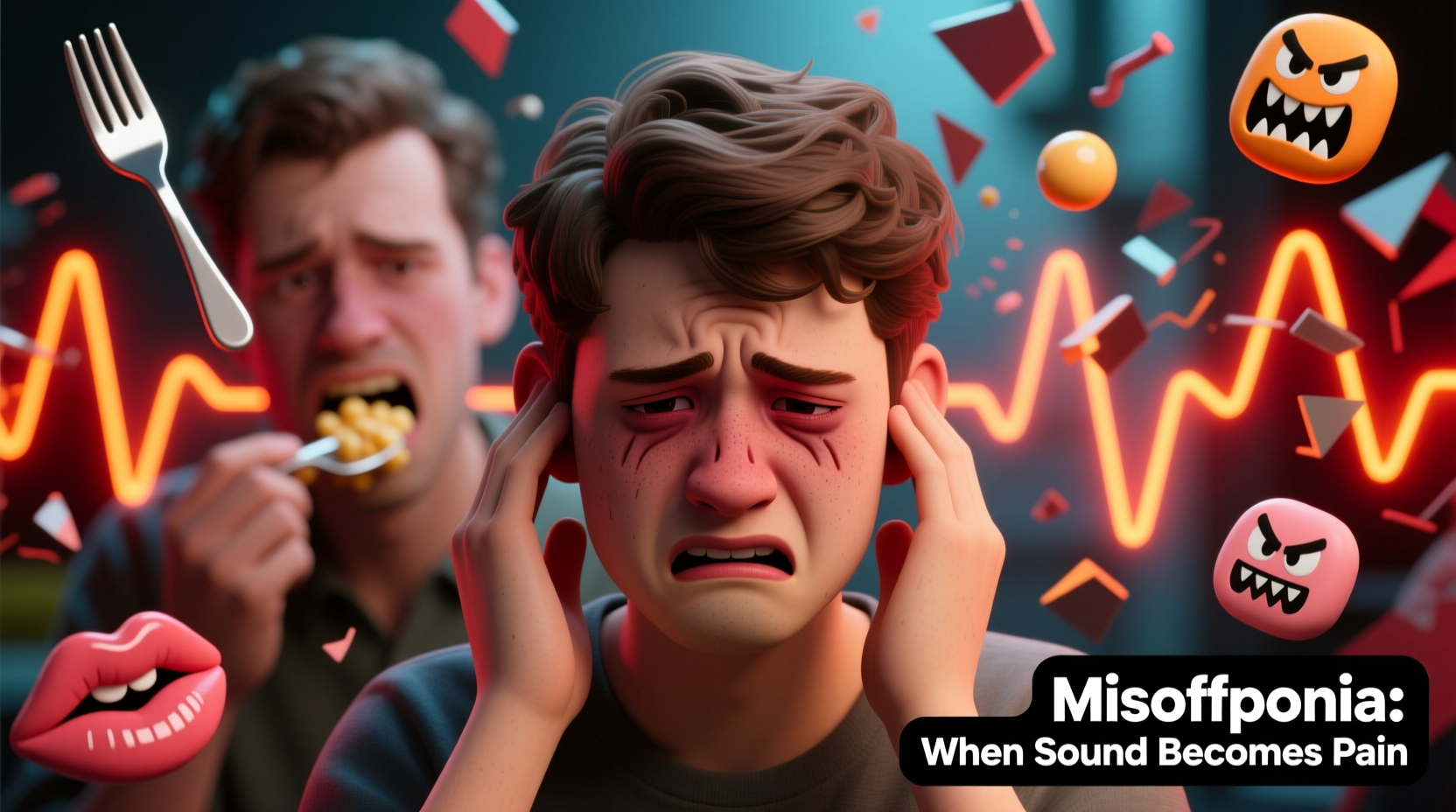
Misophonia, derived from the Greek words meaning “hatred of sound,” is a disorder characterized by extreme emotional and physiological reactions to specific, often repetitive sounds. These are typically human-generated: chewing, breathing, throat clearing, pen clicking, or typing. Unlike hyperacusis (general sensitivity to volume) or phonophobia (fear of sound), misophonia is selective. A person may tolerate loud music but snap at the sound of someone slurping soup.
The reaction is immediate and disproportionate. It's not just irritation—it's anger, disgust, panic, or even a fight-or-flight response. Brain imaging studies suggest that in people with misophonia, auditory stimuli activate not only the hearing centers but also regions tied to emotion and memory, like the anterior insular cortex and the amygdala.
“Misophonia isn't about the ears—it's about the brain’s abnormal connection between sound and emotional processing.” — Dr. Jennifer Jo Brout, Clinical Psychologist and Misophonia Researcher
The Science Behind Chewing Triggers
Why chewing? Among all possible triggers, oral sounds—especially those related to eating—are among the most common and distressing. There are several reasons this might be the case:
- Biological Salience: Mouth sounds are evolutionarily significant. In primal settings, they signaled safety (sharing food) or threat (predators feeding). Today, these cues may still subconsciously register as socially relevant.
- Repetition and Predictability: Chewing is rhythmic and often prolonged. The brain latches onto patterns, and when those patterns are linked to negative emotional responses, the effect compounds over time.
- Social Context: Eating is a communal activity. Being unable to tolerate the sounds during meals isolates individuals, increasing stress and helplessness.
A 2017 study published in Current Biology found that people with misophonia show heightened activity in the anterior insular cortex when exposed to trigger sounds. This region integrates sensory input with emotional state. Simultaneously, the amygdala—a hub for fear and aggression—becomes hyperactive, explaining the visceral reactions.
Crucially, the brain doesn’t respond this way to all sounds. It’s highly specific. One person might be fine with gum popping but triggered by lip smacking. Another may tolerate their own chewing but react violently to a coworker’s quiet crunching.
Common Triggers and Emotional Impact
While chewing is a primary culprit, misophonia encompasses a wide range of sounds. Below is a comparison of common triggers and their typical emotional responses.
| Trigger Sound | Emotional Response | Physiological Reaction |
|---|---|---|
| Chewing (crunchy foods) | Anger, disgust | Increased heart rate, muscle tension |
| Smacking lips | Irritation, anxiety | Sweating, shallow breathing |
| Throat clearing | Frustration, hostility | Clutching objects, jaw clenching |
| Pen clicking | Hyperfocus, agitation | Pacing, restlessness |
| Breathing (heavy or nasal) | Disgust, panic | Rapid heartbeat, dizziness |
The emotional toll is significant. Sufferers often report avoiding restaurants, family dinners, or open-office environments. Some isolate themselves emotionally, fearing judgment or outbursts. Over time, chronic exposure without relief can lead to depression, social anxiety, or strained relationships.
Diagnosis and Management Strategies
Misophonia is not yet formally classified in the DSM-5 (Diagnostic and Statistical Manual of Mental Disorders), though efforts are underway. Diagnosis is typically clinical, based on patient history and exclusion of other conditions like OCD, PTSD, or autism spectrum disorders, which can include sound sensitivities.
There is no cure, but several evidence-informed approaches help manage symptoms:
- Cognitive Behavioral Therapy (CBT): Helps reframe thoughts around trigger sounds and develop emotional regulation techniques.
- Tinnitus Retraining Therapy (TRT): Combines sound therapy with counseling to reduce the brain’s negative associations with sound.
- Mindfulness and Relaxation: Breathing exercises and meditation can lower baseline stress, making reactions less severe.
- Environmental Modifications: Using white noise machines, earplugs, or noise-canceling headphones in high-risk settings.
- Communication: Explaining misophonia to family or coworkers reduces conflict and fosters understanding.
Medication is not standard, though beta-blockers or anti-anxiety drugs may be prescribed in severe cases to manage physical symptoms of arousal.
Step-by-Step Guide to Managing a Trigger Episode
When a trigger occurs, having a plan reduces chaos. Follow this sequence:
- Pause and Recognize: Acknowledge the reaction without judgment. Say internally, “This is my misophonia responding.”
- Ground Yourself: Use a grounding technique—name five things you see, four you feel, three you hear (non-trigger), two you smell, one you taste.
- Controlled Breathing: Inhale for four counts, hold for four, exhale for six. Repeat for one minute.
- Distance if Possible: Excuse yourself calmly. Even stepping into another room for 90 seconds can reset your nervous system.
- Post-Episode Reflection: Later, reflect: What triggered it? Could preparation have helped? What worked?
Real-Life Experience: Living With Misophonia
Meet Sarah, a 32-year-old graphic designer from Portland. Since her teens, she’s struggled with the sound of chewing. Family dinners were unbearable. “My brother would eat popcorn while watching TV, and I’d feel my chest tighten. I once threw a glass of water across the room—not at him, but out of sheer frustration.”
She avoided lunch with colleagues and ate alone at her desk. After years of feeling broken, she found a therapist specializing in sound sensitivities. Through CBT and mindfulness, she learned to anticipate triggers and use distraction techniques. She now uses discreet earbuds playing low-level pink noise during team lunches. “I still react,” she says, “but I don’t lose control. That’s freedom.”
Sarah’s story reflects a common journey: isolation, misunderstanding, then gradual empowerment through knowledge and tools.
Do’s and Don’ts for Supporting Someone With Misophonia
If someone in your life has misophonia, your support can make a profound difference. Here’s what helps—and what harms.
| Do’s | Don’ts |
|---|---|
| Ask how you can help—don’t assume. | Don’t tell them they’re overreacting. |
| Be mindful of your eating habits in shared spaces. | Don’t mimic or exaggerate sounds as a joke. |
| Offer quiet zones or flexible seating. | Don’t force them to “tough it out.” |
| Use headphones or play background noise. | Don’t take their avoidance personally. |
| Educate others to reduce stigma. | Don’t minimize their experience. |
“Validation is the first step to healing. When someone says, ‘That must be hard,’ it reduces shame and opens the door to coping.” — Dr. Arjan Schröder, Misophonia Expert, Amsterdam UMC
FAQ: Common Questions About Misophonia
Is misophonia a mental illness?
No, misophonia is not classified as a mental illness, though it often co-occurs with anxiety, OCD, or depression. It’s best understood as a neurophysiological disorder involving abnormal brain connectivity between auditory and emotional systems.
Can children have misophonia?
Yes, symptoms often emerge between ages 8 and 12. Children may become aggressive, withdraw from meals, or complain of headaches during noisy situations. Early recognition allows for supportive strategies before patterns solidify.
Are there tests for misophonia?
There’s no definitive diagnostic test, but specialists use structured interviews like the Amsterdam Misophonia Scale (AMIS) to assess severity. Audiological exams rule out hearing disorders, and psychological evaluations check for overlapping conditions.
Conclusion: Toward Understanding and Relief
The hatred of chewing sounds isn’t irrational—it’s a real, neurologically rooted response. Dismissing it as “just being sensitive” overlooks the suffering behind the reaction. Misophonia challenges how we think about sound, emotion, and social norms. As awareness grows, so do tools for management and compassion.
If you experience misophonia, know you’re not alone. Seek professionals who understand the condition. If you know someone who does, listen without judgment. Small accommodations—like eating quietly or offering space—can restore dignity and connection.




 浙公网安备
33010002000092号
浙公网安备
33010002000092号 浙B2-20120091-4
Comments
No comments yet. Why don't you start the discussion?