
It’s a moment many have experienced: tweezers in hand, focused on shaping an unruly brow, only to suddenly—achoo!—sneeze without warning. What seems like a random bodily glitch is actually a well-documented neurological phenomenon. For some individuals, plucking eyebrow hairs triggers an involuntary sneeze, a response rooted in the complex network of nerves that govern facial sensation. This article explores the science behind this curious reflex, explains why it happens, who is most likely to experience it, and how to manage or minimize the reaction.
The Anatomy Behind the Sneeze Reflex
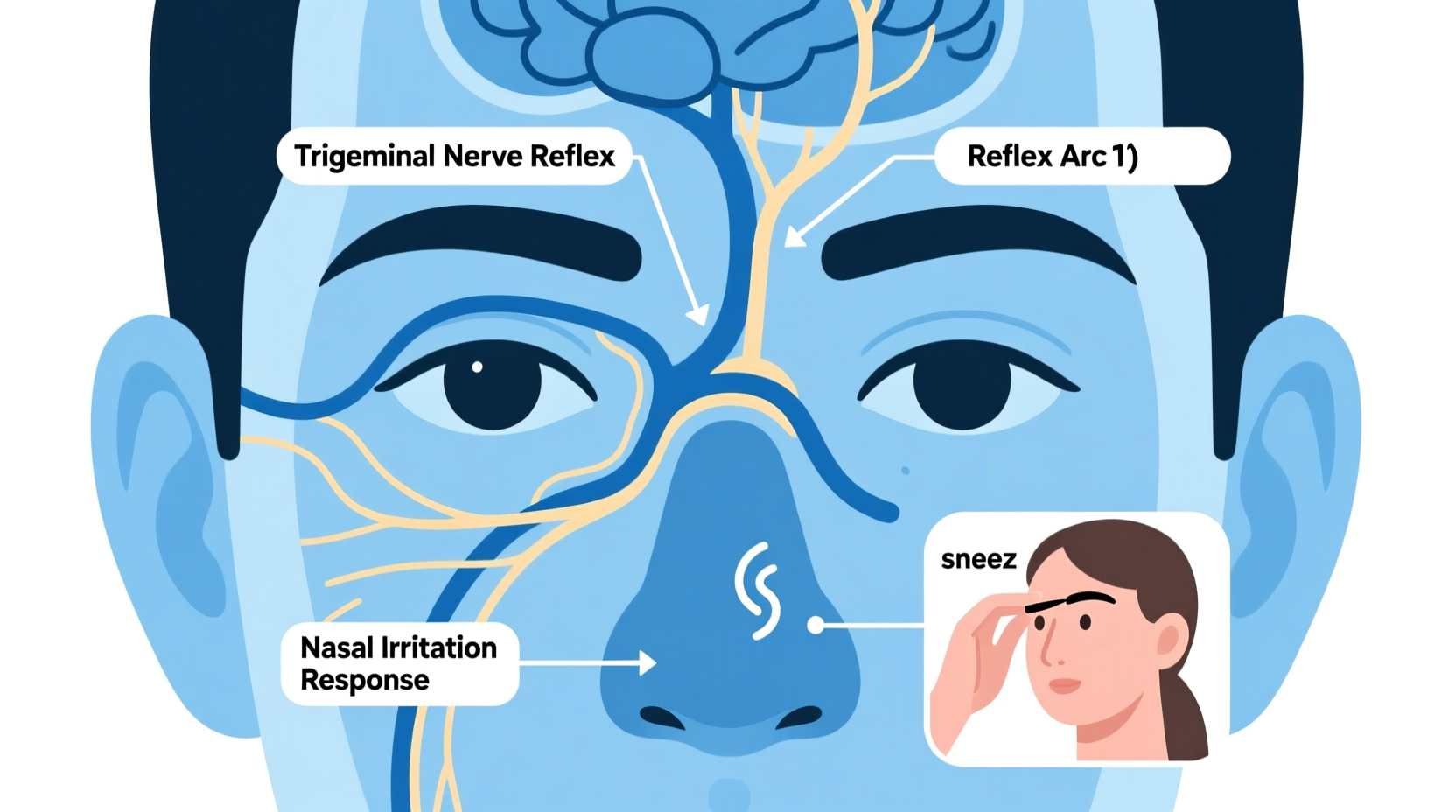
The human face is densely packed with sensory nerves, particularly branches of the trigeminal nerve (cranial nerve V), which is responsible for transmitting sensations from the face to the brain. The trigeminal nerve has three major divisions:
- Ophthalmic branch (V1): Serves the forehead, upper eyelid, and scalp.
- Maxillary branch (V2): Covers the cheek, lower eyelid, nose, and upper lip.
- Mandibular branch (V3): Controls sensation in the jaw, lower lip, and parts of the ear.
When you pluck an eyebrow hair, the follicle is surrounded by nerve endings connected primarily to the ophthalmic branch. The mechanical stimulation from tweezing sends a sharp signal through these nerves directly to the brainstem, where sensory input is processed. In certain individuals, this signal inadvertently crosses into pathways associated with the sneeze reflex.
This crossover effect is known as “cross-wiring” or neural crosstalk. Because the nerves are so close and highly interconnected, the brain can misinterpret a pain or touch stimulus from the eyebrow as an irritant in the nasal cavity—the usual trigger for sneezing. As a result, the body initiates a full sneeze response: deep inhalation, followed by a forceful expulsion of air through the nose and mouth.
The Photic Sneeze Reflex and Its Facial Cousins
The phenomenon of sneezing during eyebrow plucking shares similarities with another lesser-known reflex: the photic sneeze reflex (PSR), also known as autosomal dominant compulsive helio-ophthalmic outburst (ACHOO) syndrome. PSR affects 18–35% of the population and causes people to sneeze when exposed to bright light, such as sunlight.
Like eyebrow-induced sneezing, PSR is believed to stem from cross-activation between adjacent nerve pathways. In PSR, the optic nerve (which senses light) may stimulate the nearby trigeminal nerve, tricking the brain into thinking the nasal passages are irritated.
“Facial nerves are tightly bundled and share processing centers in the brainstem. It's not uncommon for stimuli in one area to create responses in seemingly unrelated regions.” — Dr. Lena Torres, Neurologist at Boston Neuroscience Institute
Similarly, plucking eyebrow hairs creates a localized but intense stimulus that travels along the same neural highways used by nasal irritants. The brain doesn’t always distinguish the source accurately—especially if the individual has a hypersensitive trigeminal system.
Who Is More Likely to Experience This Reaction?
Not everyone sneezes when plucking their brows. The tendency appears to be both genetic and physiological. Research suggests several factors increase the likelihood:
- Genetic predisposition: Like photic sneezing, eyebrow-triggered sneezing may run in families, indicating a hereditary component.
- Nerve sensitivity: Individuals with heightened facial nerve reactivity are more prone to misfiring signals.
- Previous nerve trauma: Past injury or inflammation in the facial region can alter nerve signaling patterns.
- Age: Younger individuals often report stronger reflex reactions, possibly due to more robust nerve conduction.
A small 2021 survey conducted by the International Head Pain Society found that approximately 12% of respondents reported sneezing during eyebrow grooming. Of those, 68% said it occurred consistently, not just occasionally, suggesting a reliable neurophysiological mechanism rather than random chance.
How to Reduce or Prevent the Sneeze Response
While harmless, the sudden urge to sneeze mid-pluck can disrupt grooming routines and even cause minor injury if tweezers slip. Fortunately, several strategies can help reduce or prevent the reflex:
- Warm up the area first: Applying a warm compress for 1–2 minutes increases blood flow and desensitizes nerve endings slightly, reducing sharp feedback signals.
- Pluck after a shower: Warm steam relaxes facial muscles and softens hair follicles, making extraction less abrupt and less stimulating to nerves.
- Use steady pressure: Lightly press your fingertip just below the brow arch before plucking. This counter-stimulation may interfere with the sneeze signal.
- Switch to threading or waxing: These methods remove multiple hairs at once with broader pressure distribution, potentially triggering fewer isolated nerve spikes.
- Breathe steadily: Controlled breathing helps regulate the autonomic nervous system, which controls reflex actions like sneezing.
Step-by-Step Guide: Minimizing the Sneeze During Eyebrow Plucking
- Prepare your skin: Cleanse the brow area and apply a warm towel for 90 seconds.
- Stabilize your hand: Rest your elbow on a flat surface to avoid jerking if you sneeze.
- Engage counter-pressure: Place your ring finger firmly on the outer edge of the eyebrow.
- Pluck swiftly: Quick, clean removal causes less prolonged stimulation than slow tugging.
- Pause between plucks: Allow 10–15 seconds between extractions to let nerve signals reset.
| Method | Likelihood of Triggering Sneeze | Tips to Reduce Risk |
|---|---|---|
| Tweezing (single hairs) | High | Use warm prep, apply counter-pressure |
| Threading | Moderate | Choose experienced technician; request slower pace |
| Waxing | Low to Moderate | Use hard wax; avoid repeated passes |
| Laser Hair Removal | Very Low | No mechanical plucking involved |
Real-Life Example: Aesthetician Observations
Sarah Kim, a licensed aesthetician in Vancouver with over a decade of experience, regularly sees clients who sneeze during eyebrow treatments. One client, Mia, a 28-year-old graphic designer, consistently sneezed during every tweeze session—sometimes up to three times per brow.
\"At first, I thought she was reacting to dust or product fumes,\" Sarah recalls. \"But I noticed it only happened when I plucked the inner third of her brows, closest to the nose. Once I slowed down and started using a cotton pad to gently press the glabella (the space between the brows) during plucking, the sneezing stopped almost completely.\"
Sarah now uses this technique with all sensitive clients. \"It’s not just about comfort—it prevents accidental nicks and improves precision. Understanding the nerve connection made me a better practitioner.\"
Frequently Asked Questions
Is sneezing when plucking eyebrows a sign of a medical problem?
No, it is not considered a medical issue. It’s a benign neurological quirk, similar to having a ticklish palate or sneezing in sunlight. However, if facial pain, numbness, or frequent unexplained sneezing occurs outside of grooming, consult a neurologist.
Can this reflex develop later in life?
Yes. While many people report experiencing it since adolescence, changes in nerve sensitivity due to aging, hormonal shifts, or sinus conditions can lead to new-onset reflexive sneezing during facial procedures.
Are there any long-term risks to repeatedly sneezing while tweezing?
There are no direct health risks, but forceful sneezing can cause tweezers to slip, leading to cuts or ingrown hairs. Using proper technique and taking preventive steps reduces these minor hazards.
Expert Insight: The Broader Picture of Facial Reflexes
Dr. Arjun Patel, a neurophysiology researcher at the University of Toronto, emphasizes that these reflexes highlight the complexity of sensory integration in the brain.
“These aren't malfunctions—they’re evidence of how efficiently our nervous system repurposes shared pathways. The trigeminal nerve handles everything from tooth pain to tear production. A little crosstalk is normal, even beneficial in evolutionary terms.” — Dr. Arjun Patel, PhD, Department of Neurosciences
He notes that understanding such reflexes can aid in diagnosing nerve compression or demyelinating diseases like trigeminal neuralgia, where even mild stimuli provoke severe reactions.
Conclusion: Embrace the Achoo
Sneezing when plucking eyebrows might seem odd, but it’s a fascinating example of how intricately wired the human body truly is. Far from being a flaw, this reflex reveals the elegant—and sometimes quirky—ways our nervous system interprets sensory input. Whether you're someone who sneezes at the sight of sunlight or one who erupts into a fit of achoos while grooming, you’re part of a unique physiological minority.
By understanding the science behind the sneeze, adopting simple preventive techniques, and recognizing when it’s just your nerves doing their job a little too well, you can maintain control over your beauty routine—without fear of flying tweezers or surprise sniffles.




 浙公网安备
33010002000092号
浙公网安备
33010002000092号 浙B2-20120091-4
Comments
No comments yet. Why don't you start the discussion?