
Perfume is more than just a pleasant smell—it's an extension of identity, mood, and memory. Yet nothing is more frustrating than applying your favorite fragrance in the morning only to realize it’s all but vanished by midday. While some scents linger for hours, others seem to disappear within minutes. The difference lies not in quality alone, but in a complex interplay of formulation, application, and personal biology. Understanding why some perfumes fade faster than others empowers you to make smarter choices and extend the life of every spritz.
Fragrance Concentration: The Foundation of Longevity
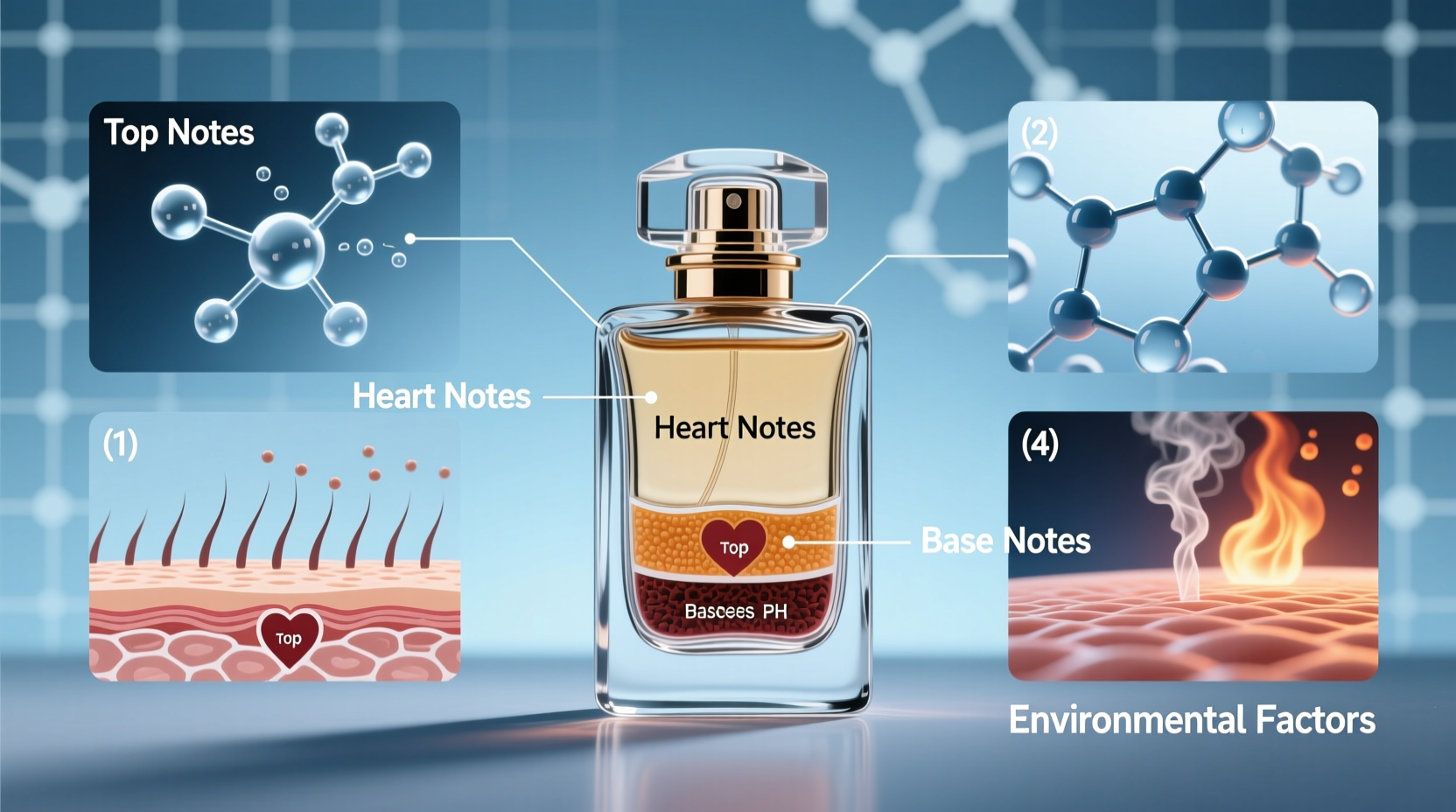
The concentration of aromatic compounds in a perfume directly determines how long it lasts on the skin. Perfumes are categorized based on their oil-to-alcohol ratio, with higher concentrations typically offering longer-lasting scents.
| Fragrance Type | Oil Concentration | Average Longevity | Best For |
|---|---|---|---|
| Eau de Cologne (EDC) | 2–5% | 1–2 hours | Casual daytime use, warm climates |
| Eau de Toilette (EDT) | 5–15% | 3–5 hours | Daily wear, office settings |
| Eau de Parfum (EDP) | 15–20% | 6–8 hours | Evening events, cooler weather |
| Parfum (Extrait) | 20–30%+ | 8+ hours | Special occasions, signature scents |
As a rule, the higher the oil concentration, the slower the evaporation rate—and the longer the scent lingers. However, even within the same concentration category, performance can vary widely due to ingredient quality and base notes.
Skin Chemistry: Why Perfume Smells Different on Everyone
No two people experience a fragrance the same way. Skin chemistry plays a crucial role in both how a scent develops and how long it lasts. Factors such as pH levels, sebum production, hydration, and body temperature influence scent interaction.
- Oily skin tends to hold onto fragrance longer because natural oils help trap aromatic molecules.
- Dry skin lacks this moisture barrier, causing alcohol-based perfumes to evaporate more quickly.
- Higher body temperature accelerates evaporation, making scents stronger but shorter-lived.
- pH imbalance can alter how certain notes emerge—sometimes muting top notes or amplifying base ones prematurely.
A fragrance that lasts eight hours on one person might fade in three on another. This isn’t a flaw in the perfume—it’s a reflection of biological individuality.
“Fragrance is a dialogue between chemistry and biology. Two people wearing the same scent aren’t experiencing the same olfactory journey.” — Dr. Lena Moretti, Olfactory Scientist at Givaudan
Fragrance Composition: Notes That Stick Around
Perfumes unfold in layers known as “notes”—top, middle (heart), and base. Each has different volatility and staying power.
- Top Notes: Light, volatile molecules like citrus, bergamot, or herbs. These create the first impression but usually vanish within 15–30 minutes.
- Middle Notes: The heart of the fragrance—floral, spicy, or fruity accords. They emerge after the top notes fade and last 2–4 hours.
- Base Notes: Deep, rich ingredients like vanilla, sandalwood, musk, or patchouli. These anchor the scent and can persist for hours, sometimes even days on fabric.
Longevity hinges heavily on the strength and balance of base notes. A perfume rich in resins, woods, or animalic accords will naturally outlast one dominated by fresh citrus or aquatic elements. For example, a chypre or oriental fragrance typically lasts longer than a cologne-style citrus fougère.
Additionally, synthetic fixatives such as ambroxan or galaxolide are often used to stabilize and prolong scent life. These molecules bind to skin proteins and release slowly, enhancing endurance without altering the original character.
Environmental and Application Factors
Even the most concentrated parfum won’t last if applied incorrectly or exposed to unfavorable conditions. Several external factors impact how long a fragrance remains detectable.
Temperature and Humidity
In warm, humid environments, scent molecules disperse more easily, making fragrances more noticeable—but also accelerating evaporation. Conversely, cold, dry air slows diffusion, making scents less projecting but potentially longer-lasting on skin.
Application Technique
Where and how you apply perfume significantly affects its staying power:
- Pulse Points: Wrists, neck, behind ears—areas with higher blood flow emit more heat, helping diffuse the scent gradually.
- Moisturized Skin: Applying fragrance over unscented lotion or body oil creates a hydrating base that traps scent molecules.
- Clothing vs. Skin: Fabric absorbs and holds fragrance longer, but may stain or alter the scent profile. Natural fibers like cotton or wool tend to preserve aroma better than synthetics.
- Over-Spraying: Too many sprays don’t increase longevity—they overwhelm the nose and lead to olfactory fatigue, where you stop smelling your own scent.
Air Quality and Pollution
Urban environments filled with ozone, nitrogen dioxide, and particulate matter can break down delicate fragrance molecules. Studies show that certain aldehydes and terpenes degrade rapidly in polluted air, shortening a perfume’s effective lifespan. This is especially true for light, fresh compositions.
Storage and Shelf Life: Preserving Your Fragrance
A perfume doesn’t just fade when worn—it can degrade over time if stored improperly. Exposure to light, heat, and oxygen alters its chemical structure, leading to weakened performance or off-notes.
Best Storage Practices
- Keep bottles in their original boxes to shield them from UV rays.
- Store in a cool, dark place—avoid bathrooms (humidity and heat) and windowsills (sunlight).
- Always close caps tightly to minimize oxidation.
- Don’t store in cars or near radiators—temperature fluctuations accelerate aging.
Most perfumes last 3–5 years unopened, and 1–3 years once opened, depending on composition. Citrus and floral fragrances degrade faster than woody or ambery ones due to the instability of their essential oils.
“A well-stored parfum can age gracefully, developing deeper nuances. But poor storage turns even luxury scents into flat, sour echoes of themselves.” — Antoine Bellanger, Master Perfumer, Grasse Institute
Mini Case Study: The Office Worker’s Scent Struggle
Sophie, a marketing executive in London, loved her go-to citrus EDT. It smelled crisp and professional in the morning, but by 11 a.m., coworkers would comment, “I thought you were wearing something nice earlier.” Frustrated, she consulted a fragrance specialist who identified three issues:
- Her dry skin lacked the moisture needed to retain the volatile top notes.
- She applied the scent right after washing her hands with alkaline soap, which raised her skin’s pH.
- The air-conditioned office environment cooled her pulse points, reducing projection.
The solution? She began applying an unscented hand cream before spraying, switched to a matching EDP version of her fragrance, and started layering with a matching body mist. Result: her scent now lasts until lunchtime, with a subtle trail through afternoon meetings.
Action Checklist: Maximizing Your Perfume’s Longevity
Follow these steps to get the most out of every bottle:
- Choose Eau de Parfum or Parfum for extended wear.
- Apply to moisturized skin or use a matching fragrance base.
- Spray on pulse points: wrists, inner elbows, neck, behind ears.
- Avoid rubbing wrists together—it crushes delicate top notes.
- Layer with matching scented products (shower gel, lotion).
- Reapply subtly using a rollerball or travel atomizer if needed.
- Store perfume upright in a dark, cool cabinet away from sunlight.
- Test new fragrances on your skin, not paper strips, to assess true longevity.
Frequently Asked Questions
Why does my perfume last longer on clothes than on my skin?
Fabric fibers absorb and trap fragrance oils more effectively than skin, which naturally sheds cells and produces sweat and oils that break down scent. However, alcohol in perfumes can stain delicate fabrics, so test first and avoid silk or acetate.
Can I make a weak perfume last longer without reapplying?
Yes. Try applying petroleum jelly or unscented balm to pulse points before spraying—this creates a barrier that slows evaporation. You can also spray your hairbrush and run it through your hair (avoid direct scalp application to prevent drying).
Do expensive perfumes last longer than cheap ones?
Not necessarily. Price reflects branding, packaging, and marketing as much as formulation. Some niche or designer fragrances use high-quality fixatives and concentrated oils, but many affordable brands also offer excellent longevity. Always test performance personally rather than relying on price as an indicator.
Conclusion: Make Every Scent Last
The fleeting nature of some perfumes isn’t random—it’s the result of measurable factors ranging from molecular weight to environmental exposure. By understanding the science behind scent longevity, you gain control over how your fragrance performs throughout the day. Whether you're drawn to bright citrus bursts or deep amber warmth, the right combination of concentration, application, and care can transform a short-lived whisper into a lasting impression.




 浙公网安备
33010002000092号
浙公网安备
33010002000092号 浙B2-20120091-4
Comments
No comments yet. Why don't you start the discussion?