
There’s nothing more disappointing than spritzing on a favorite perfume in the morning, only to realize it’s completely gone by midday. You catch a whiff of someone else’s scent across the room while yours has vanished—leaving you wondering: Why does this happen? Is it your skin? The fragrance itself? Or something you’re doing—or not doing—wrong?
The truth is, fragrance longevity isn’t just about brand reputation or price tags. It’s influenced by chemistry, formulation, application technique, and even lifestyle habits. Some perfumes are designed to evaporate quickly; others linger for hours. Understanding the science behind scent and how to work with your body’s natural tendencies can transform your experience from fleeting to lasting.
The Science Behind Fragrance Longevity
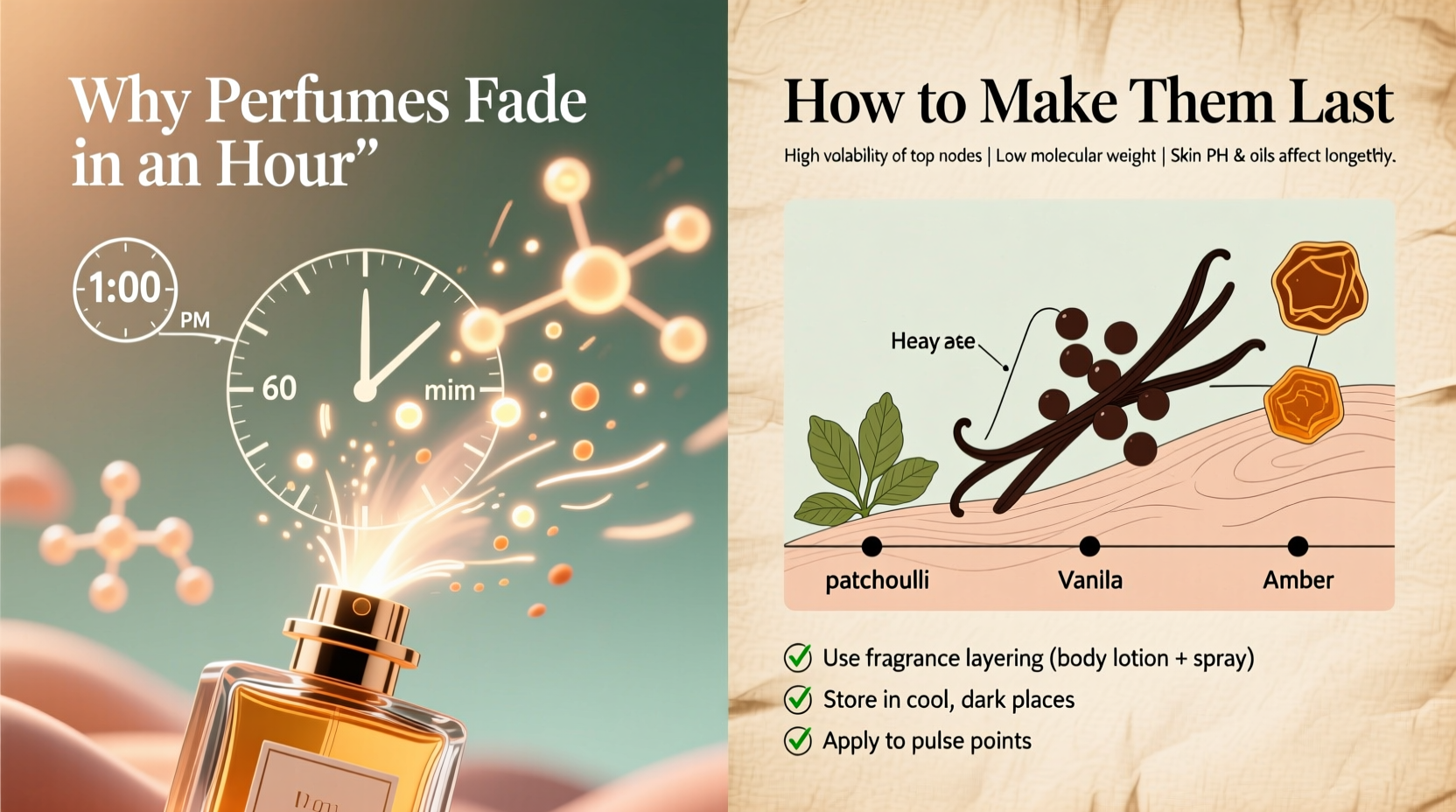
Perfumes are made up of aromatic compounds suspended in alcohol (and sometimes oil). These compounds evaporate at different rates, creating what’s known as a “scent pyramid”: top notes, middle (heart) notes, and base notes.
- Top notes: Light, volatile molecules that hit your nose first—citrus, herbs, or fruity accords. They typically last 5–15 minutes.
- Middle notes: The heart of the fragrance—floral, spicy, or green elements. These emerge after the top notes fade and can last 2–4 hours.
- Base notes: Deep, rich ingredients like vanilla, sandalwood, musk, or patchouli. These anchor the scent and can linger for 6+ hours if properly formulated and applied.
Fragrances categorized as Eau de Cologne (2–4% oil concentration) or Eau de Toilette (5–10%) tend to fade faster because they contain less aromatic oil. In contrast, Eau de Parfum (10–15%) and Parfum/Extrait (15–30%) have higher concentrations, meaning more scent molecules remain on the skin over time.
“Fragrance longevity starts with concentration, but ends with compatibility. A $300 parfum may disappear on one person while a drugstore EDT lasts all day on another.” — Dr. Lena Moretti, Cosmetic Chemist & Perfume Formulator
Why Your Skin Might Be Sabotaging Your Scent
Your skin is the canvas for perfume—but not all canvases behave the same. Several biological factors determine whether a fragrance clings or vanishes:
1. Skin pH and Chemistry
Everyone’s skin has a unique chemical profile shaped by hormones, diet, and genetics. A slightly acidic pH (around 4.5–5.5) helps stabilize fragrance molecules. Alkaline skin (due to harsh soaps or certain medications) can break down scent compounds faster, causing rapid evaporation.
2. Moisture Levels
Dry skin lacks the natural oils needed to trap fragrance. Without a lipid barrier, alcohol-based perfumes evaporate almost immediately. Oily skin, while often blamed for overpowering scents, actually holds fragrance longer due to its moisture-retaining properties.
3. Body Temperature
Higher body heat increases molecular movement, accelerating evaporation. People with naturally warm skin or those who live in hot climates may find their perfumes burn off quicker—even high-end ones.
4. Skin Microbiome
Recent studies suggest that bacteria living on your skin interact with fragrance ingredients, altering how they smell and how long they last. This means two people using the exact same perfume might experience entirely different scent profiles and durations.
How to Make Any Perfume Last Longer: Proven Techniques
You don’t need to buy a new bottle every time your scent fades too soon. With smart strategies, you can extend wear time significantly—even with lighter formulations.
Step-by-Step Guide to Long-Lasting Fragrance
- Hydrate your skin first. Use an unscented body lotion or petroleum jelly on pulse points before applying perfume. Oily bases slow evaporation.
- Layer with matching products. If available, use a fragrance-matching bath gel, body cream, or spray. Layering builds scent density.
- Aim for pulse points. Apply to wrists, neck, behind ears, and inner elbows—areas with blood flow that gently warm the scent throughout the day.
- Spray, don’t rub. Rubbing wrists together breaks down delicate top notes and generates heat that speeds up evaporation.
- Target clothing and hair. Natural fibers like cotton, wool, and silk absorb fragrance well. A light mist on a scarf or jacket lining can release scent gradually.
- Reapply strategically. Carry a travel atomizer and refresh midday. Focus on cold areas like collarbones where scent won’t be overpowered by body heat.
- Store properly. Keep perfumes in cool, dark places away from sunlight and humidity. Heat degrades essential oils and alcohol balance.
Advanced Tip: The “Scent Trap” Method
For maximum staying power, try this trick used by fragrance enthusiasts: After moisturizing, lightly dust pulse points with translucent powder (especially cornstarch-based). The powder acts like a sponge, trapping both moisture and fragrance molecules. Then apply perfume directly on top. This creates a micro-barrier that slows release and prevents immediate evaporation.
Choosing Long-Lasting Fragrances: What to Look For
Not all perfumes are created equal when it comes to endurance. Knowing what to look for on the label—and beyond—can save you money and disappointment.
| Fragrance Type | Oil Concentration | Avg. Longevity | Best For |
|---|---|---|---|
| Eau de Cologne | 2–4% | 1–2 hours | Summer, casual wear, quick refresh |
| Eau de Toilette (EDT) | 5–10% | 2–4 hours | Daytime, office settings |
| Eau de Parfum (EDP) | 10–15% | 5–8 hours | Evening events, cooler months |
| Parfum / Extrait | 15–30% | 6–12+ hours | Special occasions, signature scents |
Beyond concentration, pay attention to ingredient composition. Fragrances built around heavy base notes—like amber, oud, vetiver, tonka bean, or resins—are inherently longer-lasting. Light, airy compositions dominated by citrus or aquatic notes will always fade faster, regardless of concentration.
Real-Life Example: Sarah’s Scent Struggle
Sarah, a 32-year-old teacher from Arizona, loved a popular floral-citrus EDT but found it disappeared within 45 minutes—especially during school days. She assumed her body “ate” perfume. After consulting a beauty chemist, she learned her combination of dry skin and high body temperature was the culprit.
She began applying a thick shea butter lotion before spraying, switched to the EDP version of the same fragrance, and started misting her cardigan instead of reapplying directly. The result? Her scent now lasts until late afternoon, and students often comment on how pleasant her classroom smells.
“I didn’t need a new perfume,” she said. “I just needed to understand my skin better.”
Common Mistakes That Kill Perfume Life
Even with the best intentions, everyday habits can sabotage your fragrance. Avoid these pitfalls:
- Using heavily scented lotions or soaps before applying perfume. Competing aromas distort the intended scent and reduce clarity.
- Storing perfume in the bathroom. Humidity and temperature fluctuations degrade formulas over time.
- Over-applying. Too much perfume overwhelms the senses and causes olfactory fatigue—you stop smelling it, even if it’s still there.
- Shaking the bottle vigorously. This introduces air and accelerates oxidation, weakening the scent over time.
- Applying to denim or synthetic fabrics. These materials either repel or alter fragrance molecules, leading to uneven projection.
Frequently Asked Questions
Can drinking water really help my perfume last longer?
Yes. Hydration affects skin moisture levels. Well-hydrated skin retains fragrance better than dehydrated skin. Drinking enough water supports overall skin health, which indirectly improves scent adherence.
Is it true that some people are “anti-perfume”?
While no one is biologically incapable of holding scent, some combinations of skin chemistry, metabolism, and environment make fragrances fade extremely fast. These individuals often benefit most from layering techniques and concentrated formulas.
Does perfume last longer in winter?
Generally, yes. Cooler temperatures slow evaporation, and drier winter air means people use richer moisturizers—both of which help lock in fragrance. However, cold weather also reduces scent diffusion, so you may need to apply slightly more.
Final Checklist: How to Maximize Perfume Longevity
- ✔️ Moisturize first
- Use an unscented balm or oil on pulse points.
- ✔️ Choose the right concentration
- Opt for EDP or Parfum if longevity is a priority.
- ✔️ Apply to warm, clean skin
- Right after a shower is ideal.
- ✔️ Avoid rubbing wrists
- Spraying without friction preserves the scent structure.
- ✔️ Reapply subtly
- Use a rollerball or mini spray for touch-ups.
- ✔️ Store properly
- Keep bottles in a drawer or cabinet away from light and heat.
- ✔️ Test on skin, not blotter
- Always evaluate performance on your own body.
Conclusion: Take Control of Your Scent Experience
Perfume fading within an hour isn’t inevitable—it’s often a mismatch between product, method, and biology. By understanding the interplay of concentration, skin type, and application, you can dramatically improve how long your fragrance lasts. You don’t need to spend more money or abandon beloved scents. Small changes in routine can yield lasting results.
Start today: Reassess how you apply perfume, check your skin hydration, and experiment with layering. Track what works and refine your approach. Fragrance is personal, intimate, and powerful—when it stays with you, it becomes part of your presence.




 浙公网安备
33010002000092号
浙公网安备
33010002000092号 浙B2-20120091-4
Comments
No comments yet. Why don't you start the discussion?