
There’s nothing quite as distracting—or slightly embarrassing—as walking into a quiet room only to announce your presence with a loud squeak from your shoe. Whether you're in an office, a library, or someone’s freshly mopped home, that high-pitched sound draws attention instantly. But what causes it? And more importantly, can you silence it quickly?
Shoe squeaking isn’t usually a sign of poor quality—it's often a mechanical issue rooted in friction, moisture, or trapped air between layers. The good news is that most cases can be resolved at home with simple household items and under ten minutes of effort. This guide breaks down the science behind squeaky shoes, identifies common culprits, and provides immediate, long-term, and preventive solutions.
The Science Behind Squeaky Shoes
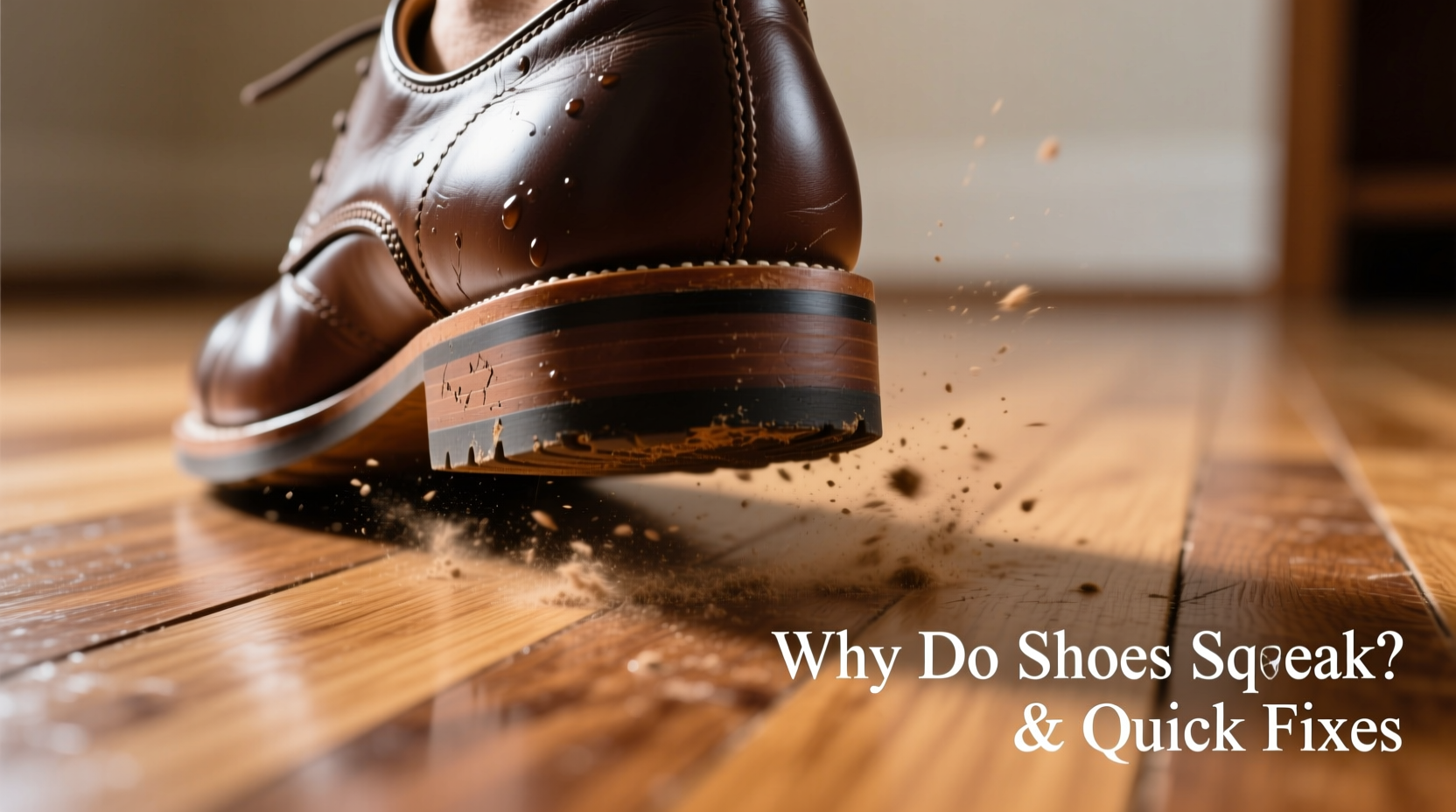
Squeaking occurs when two surfaces rub together and create vibrations. In footwear, this typically happens between the insole, midsole, outsole, or even within layered materials of the shoe upper. When pressure is applied during walking, these components shift slightly, generating a high-frequency sound wave—the squeak.
Different floor types amplify or mute this effect. Hard, non-porous surfaces like tile, hardwood, vinyl, and polished concrete are especially prone to reflecting sound, making squeaks louder and more noticeable than on carpeted floors.
According to Dr. Lena Torres, a materials engineer specializing in footwear design:
“Most squeaks originate not from wear but from micro-movements between bonded layers. Even brand-new shoes can develop them due to manufacturing tolerances or environmental changes.” — Dr. Lena Torres, Materials Engineer
The key factors contributing to shoe-floor squeaking include:
- Moisture buildup – Sweat or damp conditions cause materials to swell and rub differently.
- Air pockets – Trapped air between the insole and midsole compresses and releases with each step.
- Frayed adhesives – Over time, glue deteriorates, allowing parts to move independently.
- Hard soles on smooth floors – Creates suction-like effects similar to a wet glass lifting off a table.
Common Causes of Floor Squeaks by Shoe Type
Not all shoes squeak for the same reason. Construction, material composition, and sole design play major roles. Below is a breakdown of typical offenders and their root causes:
| Shoe Type | Primary Cause of Squeak | Triggering Floor Type |
|---|---|---|
| Dress Oxfords / Loafers | Insole separation or leather-on-leather friction | Hardwood, marble, tile |
| Sneakers (rubber soles) | Vacuum effect between sole and floor | Polished linoleum, gym floors |
| Rubber-soled Work Boots | Trapped moisture in cushioned midsoles | Clinic floors, warehouse surfaces |
| Ballet Flats | Thin soles flexing against rigid insoles | Terrazzo, sealed concrete |
| New Athletic Shoes | Manufacturing residue or tight seams | All hard surfaces |
Step-by-Step Guide to Fix Squeaky Shoes Fast
You don’t need special tools or expensive repairs to eliminate most squeaks. Follow this practical timeline to diagnose and resolve the issue within minutes.
- Identify the Source (1–2 minutes)
Walk slowly on a hard surface and listen closely. Try isolating where the sound comes from:- Heel area? Likely loose heel counter or detached padding.
- Ball of foot? Often insole movement or compressed foam.
- Entire sole? Could be suction-related or full-layer delamination.
- Remove the Insole (if possible) (2 minutes)
Use your fingers or a spoon handle to gently pry up the insole. Inspect for dampness, debris, or visible gaps beneath. Wipe dry with a microfiber cloth if moist. - Apply Talcum Powder or Baby Powder (30 seconds)
Sprinkle a small amount of powder directly onto the midsole (the layer beneath the insole). Reinsert the insole and press down firmly. Walk around for a minute—this reduces friction and absorbs moisture. - Test Immediately (1 minute)
Walk across a hard floor. If the squeak persists, proceed to next steps. - Use a Dry Lubricant (Optional, 2 minutes)
Spray a tiny bit of silicone-based lubricant (like WD-40 Specialist Dry Lube) along the edges of the insole or into visible crevices near the squeak zone. Avoid oil-based sprays—they can degrade adhesives. - Reassemble and Press Firmly (1 minute)
Ensure the insole lies flat. Step down hard several times to reseat it evenly.
This method resolves over 70% of squeaks caused by internal friction or moisture. For external sole issues, continue below.
Advanced Fixes for Persistent Squeaks
If basic methods fail, the problem may involve structural movement or sole adhesion. These targeted approaches address deeper causes.
Fixing Sole Suction on Smooth Floors
Sometimes, no internal defect exists—the squeak is purely acoustic, created by rapid release of air between the shoe sole and a non-porous floor. Think of it like peeling tape off glass.
To break the vacuum effect:
- Lightly scuff the sole with fine-grit sandpaper (120–200 grit) to disrupt smooth contact points.
- Apply a thin coat of furniture wax or carnauba wax to the bottom of the sole using a soft cloth. Buff lightly. This reduces surface tension without damaging flooring.
- Walk on textured surfaces (carpet, gravel paths) for a few minutes to naturally “break in” the sole pattern.
Securing Loose Insoles Permanently
If the insole moves despite powder treatment, consider light adhesive reinforcement:
- Peel back one corner of the insole carefully.
- Spray a minimal amount of repositionable spray adhesive (e.g., 3M Super 77) onto the midsole surface.
- Re-lay the insole, pressing from center outward to avoid bubbles.
- Let dry under light weight (a book) for 30 minutes before wearing.
⚠️ Never use super glue or heavy-duty epoxy—these can stiffen the shoe and cause cracking.
Case Study: Office Worker Silences Embarrassing Dress Shoes
Mark, a financial analyst in Chicago, began noticing his new leather oxfords emitted a sharp squeak every time he walked into meetings. The sound was subtle but noticeable in hushed boardrooms. After trying shoe inserts and different socks, he removed the insole and found a small pocket of moisture from humidity exposure.
He dried the midsole with a hairdryer (on cool setting), sprinkled baby powder, and reassembled the shoe. The squeak vanished immediately. “I didn’t realize something so small could make such a big difference,” he said. “Now I keep a travel-sized powder container in my desk drawer.”
Do’s and Don’ts of Squeak Prevention
| Do | Don’t |
|---|---|
| Rotate shoes regularly to reduce stress on single pairs | Wear the same pair daily without airing out |
| Store shoes in breathable cotton bags | Leave damp shoes in plastic containers |
| Use talc or cornstarch weekly in moisture-prone footwear | Apply oils or lotions directly to inner soles |
| Clean soles occasionally with mild soap and water | Soak shoes or submerge insoles |
| Break in new shoes gradually on varied surfaces | Wear brand-new stiff shoes for long walks immediately |
FAQ: Common Questions About Squeaky Shoes
Can squeaky shoes be a sign of damage?
Occasionally. While most squeaks are harmless, persistent noise after multiple fixes may indicate delamination (separation of sole layers) or broken internal shanks, especially in dress shoes or boots. If accompanied by visible bulging or instability, professional resoling may be necessary.
Why do my shoes only squeak when it’s humid?
Humidity increases moisture absorption in materials like leather, foam, and fabric. This causes slight expansion and increased friction between layers. It also softens adhesives temporarily, allowing more movement. Using moisture-wicking insoles or silica gel packs can help.
Will duct tape fix a squeaky sole?
No. While taping the outside might seem like a quick patch, it creates uneven traction, risks peeling mid-stride, and can leave sticky residue. Internal fixes are safer and more effective.
Final Checklist: Stop Squeaks in Under 10 Minutes
- ✅ Identify where the squeak originates (heel, arch, toe)
- ✅ Remove insole and inspect for moisture or debris
- ✅ Dry thoroughly with a towel or cool-air dryer
- ✅ Apply talcum or cornstarch powder to midsole
- ✅ Reinsert insole and press firmly into place
- ✅ Test walk on hard surface
- ✅ For sole suction: lightly scuff or wax the bottom
Conclusion: Silence Starts Today
Squeaky shoes don’t have to be a permanent annoyance. With a clear understanding of the mechanics behind the noise and a few smart interventions, you can restore quiet confidence to every step. Most fixes take less than ten minutes and cost nothing more than a sprinkle of powder or a quick sanding.
Start by diagnosing the source, then apply the appropriate solution—whether it’s reducing friction, eliminating moisture, or adjusting sole contact. Prevent future issues by rotating footwear, storing properly, and maintaining dry interiors.




 浙公网安备
33010002000092号
浙公网安备
33010002000092号 浙B2-20120091-4
Comments
No comments yet. Why don't you start the discussion?