
Skin feels rough after applying your favorite serum or moisturizer? You might notice little white balls forming as you rub in your products—this is known as pilling. It's not only frustrating but can also signal that your skincare routine isn't delivering the results it should. Pilling occurs when a product doesn’t absorb properly and instead forms tiny clumps on the skin’s surface. While harmless, it undermines product efficacy and can disrupt makeup application. Understanding the science behind pilling—and how to stop it—is essential for anyone committed to an effective skincare regimen.
What Is Skincare Pilling?
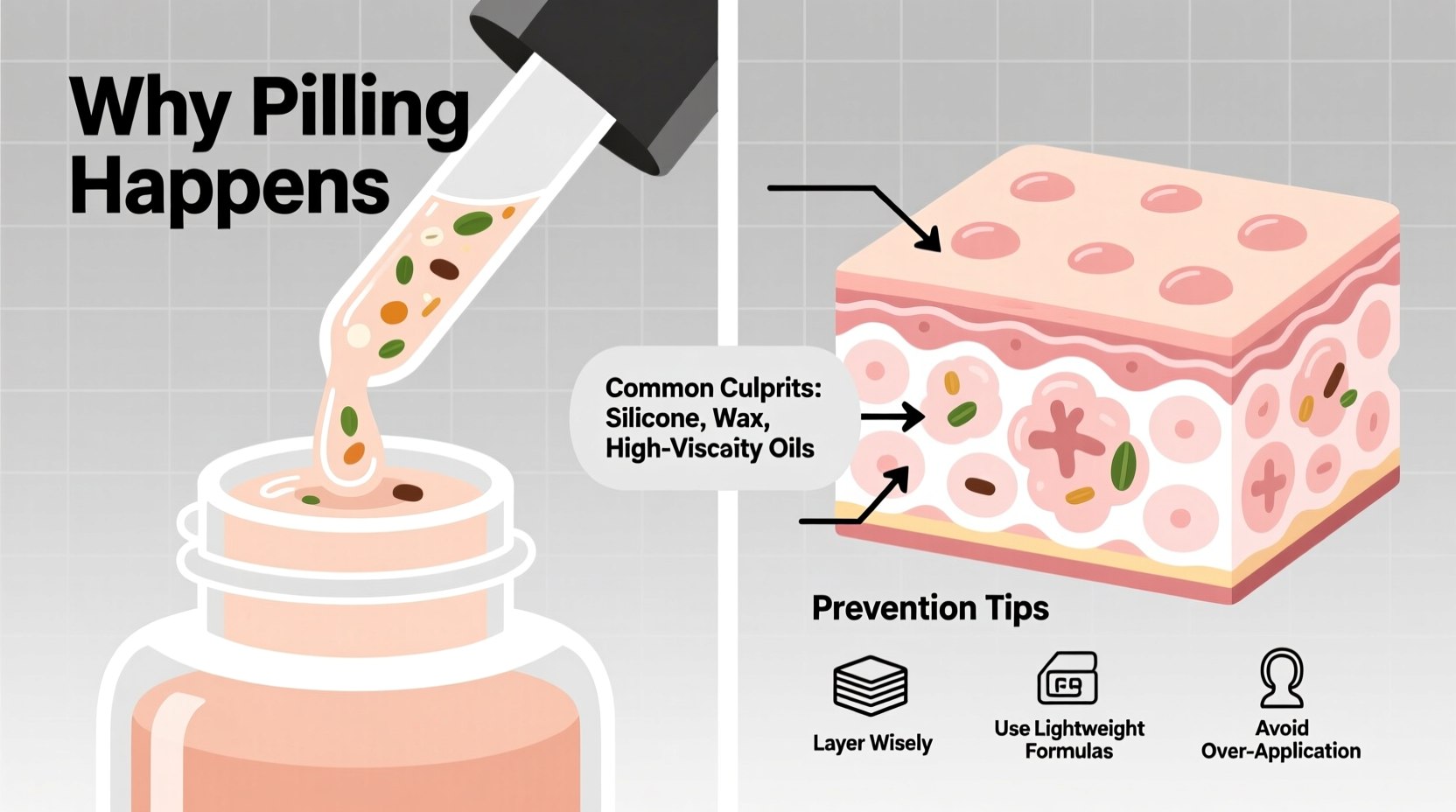
Pilling refers to the formation of small, lint-like balls or flakes when a skincare product is applied and rubbed into the skin. These particles are typically composed of leftover ingredients that haven’t absorbed and have accumulated due to friction during application. Unlike flaking caused by dry skin or exfoliation, pilling happens regardless of skin condition and is primarily linked to product formulation and layering technique.
The phenomenon is most common with leave-on treatments like serums, sunscreens, and moisturizers—especially those containing film-formers, thickeners, or high concentrations of certain polymers. While pilling doesn’t damage the skin, it indicates poor absorption, meaning active ingredients may not be penetrating effectively.
Key Causes of Product Pilling
Pilling arises from a combination of ingredient interactions, application methods, and skin conditions. Below are the primary culprits:
1. Incompatible Ingredients
Certain ingredients don’t play well together. For example, silicones (like dimethicone) create a smooth barrier on the skin but can repel water-based formulas if applied too closely together. When a water-based serum is layered over a silicone-heavy primer or moisturizer before it’s fully set, it may ball up instead of absorbing.
2. Overloading the Skin
Using too many products—or excessive amounts of a single product—can overwhelm the skin’s ability to absorb them. This leads to residue buildup, especially when layers aren’t given enough time to settle before the next is applied.
3. Incorrect Application Order
Skincare should follow a general rule: thinnest to thickest consistency. Applying a lightweight toner after a heavy cream can cause the cream to lift off and pill. Similarly, using occlusive products too early in the routine prevents lighter actives from penetrating.
4. Rapid Rubbing or Friction
Vigorous rubbing increases friction, which encourages ingredients to clump rather than absorb. This is especially true with products containing cellulose or acrylates, which are prone to mechanical disruption.
5. Poor Absorption Due to Skin Condition
Dry, dehydrated, or uneven skin texture creates a bumpy surface where products can catch and accumulate. Excess dead skin cells act like sandpaper, disrupting even application and increasing pilling risk.
“Pilling often reflects formulation clashes or improper layering. It’s not just about the product—it’s about how you use it.” — Dr. Lena Park, Board-Certified Dermatologist
How to Prevent Skincare Pilling: A Step-by-Step Guide
Preventing pilling requires both smart product choices and disciplined application habits. Follow this sequence to minimize or eliminate pilling entirely.
- Exfoliate Regularly: Remove dead skin cells 2–3 times per week using chemical exfoliants (like AHAs or BHAs). Smooth skin absorbs better and reduces friction-related pilling.
- Use Products in the Right Order: Stick to the universal order: cleanser → toner → essence → serum → moisturizer → sunscreen (AM) or oil/occlusive (PM).
- Allow Each Layer to Absorb: Wait 30–60 seconds between layers, especially after applying silicones or sunscreens. Pat gently—don’t rub.
- Apply Less Product: Start with pea-sized amounts. You can always add more if needed, but excess invites pilling.
- Adjust Your Technique: Use patting motions for liquids and gentle pressing for creams. Avoid dragging or circular rubbing.
- Check Compatibility: Introduce one new product at a time. If pilling starts after adding a new item, it’s likely the culprit.
Product Formulation: What to Look For and Avoid
The ingredients in your skincare matter. Some compounds are more likely to contribute to pilling than others. Understanding key components helps you make informed choices.
| Ingredient Type | Likely to Cause Pilling? | Notes |
|---|---|---|
| Silicones (e.g., dimethicone, cyclopentasiloxane) | Yes, if layered incorrectly | Create a smoothing barrier; avoid applying water-based products immediately after. |
| Cellulose (e.g., microcrystalline cellulose) | High | Used as a thickener; prone to balling under friction. |
| Acrylates (e.g., acrylates copolymer) | High | Film-forming agents; excellent for long wear but can pill if mixed with incompatible textures. |
| Natural Oils (e.g., squalane, jojoba oil) | Low | Generally absorb well; less likely to pill unless over-applied. |
| Hyaluronic Acid (in water-based formulas) | Low to Moderate | Can pill if applied over occlusives or in very dry environments without sealing. |
| Mineral Sunscreen (zinc oxide, titanium dioxide) | Moderate to High | Physical blockers sit on skin; newer micronized formulas reduce pilling. |
When selecting products, read labels carefully. Avoid combinations of heavy silicones followed by water-based gels if you’re prone to pilling. Instead, opt for formulations labeled “fast-absorbing” or “non-comedogenic,” which are engineered for better compatibility.
Real-Life Scenario: The Morning Routine Fix
Consider Sarah, a 32-year-old marketing executive with combination skin. Her morning routine included: double cleanse, hydrating toner, vitamin C serum, niacinamide gel, silicone-based moisturizer, and mineral sunscreen. She noticed constant pilling around her nose and chin, especially when wearing makeup.
After consulting a dermatologist, she realized the issue stemmed from applying her water-based niacinamide serum *after* the silicone moisturizer. The serum couldn’t penetrate the barrier, leading to clumping. She reversed the order—serum first, then moisturizer—and waited two minutes between steps. She also switched to a non-silicone sunscreen. Within days, pilling disappeared, and her makeup applied smoothly.
This case illustrates how minor adjustments in timing and compatibility can resolve persistent pilling issues.
Checklist: How to Keep Your Skincare Routine Pill-Free
- ✅ Exfoliate 2–3 times weekly to maintain smooth skin texture
- ✅ Layer products from thinnest to thickest
- ✅ Wait 30–60 seconds between applications
- ✅ Use gentle patting or pressing motions—not rubbing
- ✅ Start with a pea-sized amount of each product
- ✅ Avoid mixing heavy silicones with water-based gels unless compatible
- ✅ Patch-test new products before full integration
- ✅ Replace old or separated products that may have degraded
Frequently Asked Questions
Does pilling mean my skin is dry?
Not necessarily. While dry or flaky skin can worsen pilling, the issue is more commonly related to product interactions or application technique. Even oily or combination skin types experience pilling, especially with silicone-heavy or film-forming products.
Can I fix pilling without changing my products?
Often, yes. Adjusting your application method—such as waiting longer between layers, using less product, or changing your rubbing technique—can eliminate pilling without switching products. However, if a specific product consistently pills despite correct use, it may be inherently incompatible with your routine.
Is pilling harmful to my skin?
No, pilling itself is not harmful. It’s simply wasted product sitting on the surface. However, if it leads you to over-exfoliate or aggressively rub your skin in response, that could cause irritation or barrier damage. Focus on prevention rather than removal after the fact.
Final Thoughts and Action Steps
Pilling is a common but solvable issue in modern skincare. It’s rarely about poor-quality products and more about how they interact with each other and your skin. By understanding the role of ingredients, mastering layering techniques, and respecting absorption time, you can enjoy a smooth, effective routine that delivers real results.
Start today by auditing your current regimen. Are you layering correctly? Are you giving each product time to absorb? Is one particular item causing consistent pilling? Small tweaks can lead to dramatic improvements in both feel and performance.




 浙公网安备
33010002000092号
浙公网安备
33010002000092号 浙B2-20120091-4
Comments
No comments yet. Why don't you start the discussion?