
In the era of smart homes, lighting systems have evolved from simple on-off switches to app-controlled, color-shifting, voice-activated experiences. Yet, many users are frustrated when their smart lights stop working during internet outages or respond slowly due to reliance on remote servers. The root cause? A growing number of smart lighting platforms depend on continuous cloud connectivity rather than offering robust local control. This design choice affects performance, security, and user autonomy. Understanding why manufacturers make this trade-off reveals insights into cost, scalability, and long-term business strategy.
The Cloud-First Model: What It Means
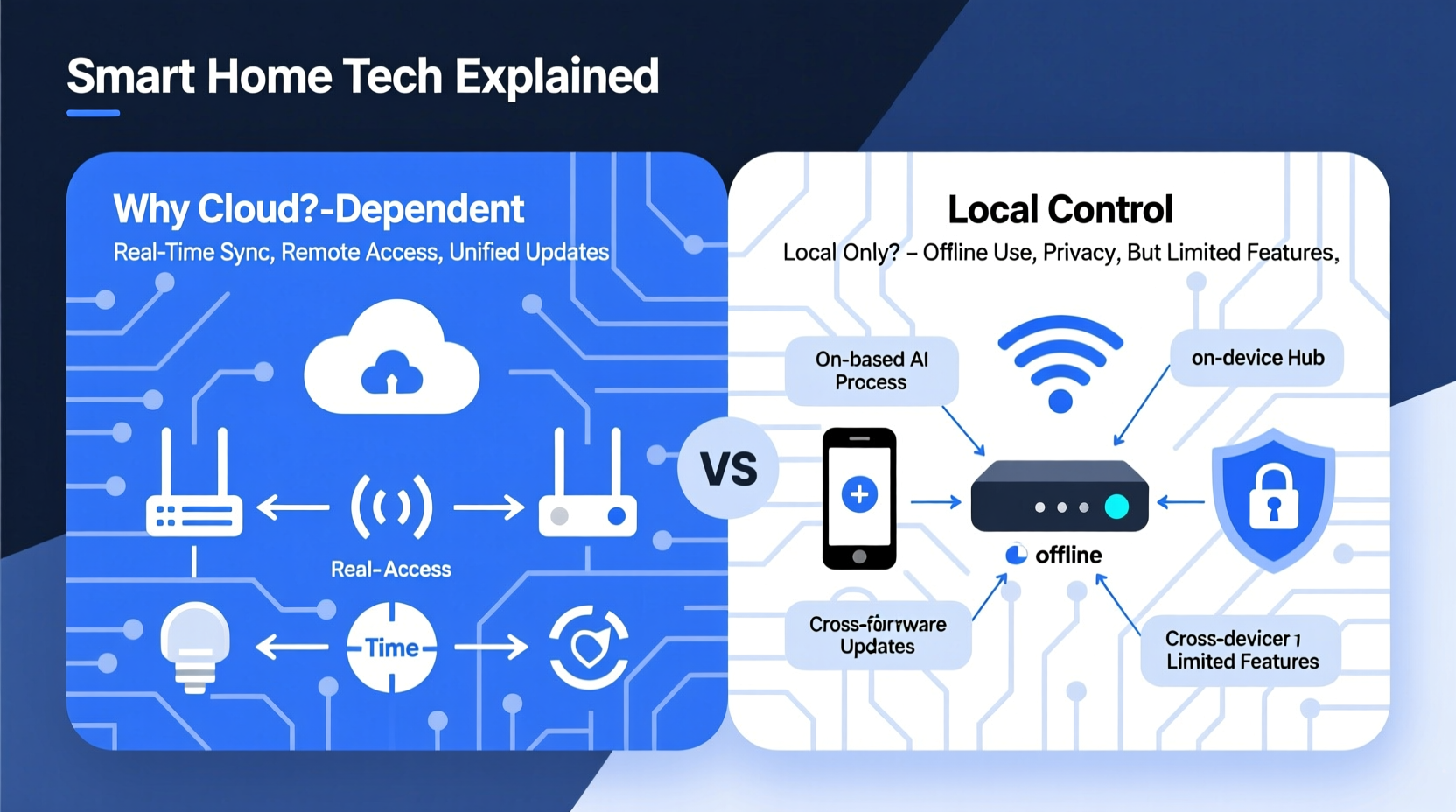
Cloud-dependent smart lighting systems route every command—turning a light on, dimming brightness, or setting a schedule—through an external server before reaching the device in your home. Even if you're standing next to the bulb, your tap in the app may travel hundreds of miles to a data center and back. This contrasts with local control systems, where communication happens directly between your phone and the light via your home Wi-Fi or a local hub, without leaving your network.
The shift toward cloud-first architecture isn't accidental. It's driven by technical, economic, and strategic factors that benefit manufacturers more than end users. While cloud-based models enable advanced features like remote access and over-the-air updates, they also introduce latency, dependency on third-party infrastructure, and potential privacy concerns.
Why Manufacturers Favor the Cloud
Several compelling reasons push companies to build cloud-reliant ecosystems:
- Scalability and Centralized Management: Managing millions of devices across global markets becomes easier when all traffic flows through centralized servers. Updates, diagnostics, and feature rollouts can be pushed uniformly.
- Data Collection and Personalization: Cloud systems allow manufacturers to collect anonymized usage patterns—when you turn lights on, preferred colors, duration of use—which helps refine future products and personalize recommendations.
- Remote Access Simplicity: Enabling users to control lights from anywhere in the world is technically simpler when commands go through the cloud rather than requiring complex home network configurations like port forwarding or dynamic DNS.
- Monetization Opportunities: Data gathered via the cloud can fuel targeted advertising, premium subscription services (e.g., advanced automations), or integration partnerships with other platforms.
- Lower Hardware Costs: Offloading processing to the cloud reduces the need for powerful onboard processors in bulbs or switches, keeping production costs low and retail prices competitive.
“Manufacturers often prioritize ease of deployment and ecosystem lock-in over resilience. The result is convenience today at the cost of fragility tomorrow.” — Dr. Lena Patel, IoT Systems Researcher at MIT Media Lab
Trade-offs of Cloud Dependency
While cloud-centric designs offer benefits, they come with significant drawbacks that impact everyday usability:
Latency and Responsiveness
Commands routed through distant servers introduce noticeable delays. A local signal might take 50 milliseconds; the same command via the cloud could take 500ms or more. For time-sensitive scenarios—like turning on a light at night or syncing with music—this lag degrades the experience.
Downtime During Internet Outages
If your internet goes down, so does your ability to control lights remotely—and sometimes even locally. Some apps refuse to function entirely without a live connection to verify credentials or sync state, rendering otherwise functional hardware unusable.
Privacy and Security Risks
Every request sent to the cloud creates a data trail. Even if encrypted, metadata such as timing and frequency of use can reveal personal habits. Breaches in cloud infrastructure—like those seen in major IoT providers—can expose sensitive behavioral profiles.
Ecosystem Lock-In
When functionality depends on proprietary cloud platforms, switching brands or integrating with alternative systems becomes difficult. Users risk losing automations, scenes, or voice integrations if the company discontinues service or changes API policies.
Long-Term Reliability Concerns
Cloud services can be discontinued. In recent years, multiple smart home brands have shut down their servers, instantly turning once-smart devices into dumb bulbs. Local control mitigates this risk by relying on open standards and decentralized logic.
Local Control vs. Cloud: A Practical Comparison
| Feature | Cloud-Based Control | Local Control |
|---|---|---|
| Response Time | Slower (200–1000ms) | Faster (20–100ms) |
| Internet Required? | Yes, for most functions | No, operates on local network |
| Remote Access | Built-in and easy | Requires additional setup (e.g., VPN, bridge) |
| Data Privacy | Lower (data stored externally) | Higher (minimal external transmission) |
| System Longevity | Dependent on company uptime | More future-proof |
| Setup Complexity | Simple initial setup | Moderate to high |
| Cost | Lower hardware cost | Higher upfront investment |
This comparison highlights the core tension: cloud solutions favor accessibility and affordability, while local control emphasizes speed, privacy, and sustainability.
Real-World Example: The Weekend Power Outage
Consider Sarah, who installed a popular brand of Wi-Fi smart bulbs throughout her home. One stormy weekend, her neighborhood lost power for several hours. When electricity returned, her router rebooted, but her phone couldn’t connect to the lights. Despite being on the same Wi-Fi network, the app displayed “Syncing…” indefinitely. Only after resetting each bulb individually did basic functionality return—and even then, voice commands failed because Alexa couldn’t reach the manufacturer’s cloud.
Sarah expected modern technology to handle brief disruptions gracefully. Instead, she discovered that her “smart” system was fragile without internet. Had she chosen a Zigbee-based system with a local hub like Home Assistant or Apple HomePod, her lights would have resumed operation automatically, using local rules and device-to-device communication.
This scenario illustrates how cloud dependence turns minor inconveniences into full system failures—something few buyers anticipate at purchase.
How to Choose Smarter Lighting Systems
Consumers aren’t powerless. With careful selection, it’s possible to enjoy smart lighting benefits without sacrificing reliability. Follow these steps to ensure better control and longevity:
- Check for Local Execution Support: Look for systems that advertise “local control,” “on-premise processing,” or compatibility with platforms like Apple HomeKit (which mandates local processing for certain actions).
- Prioritize Open Standards: Opt for devices supporting Matter, Thread, or Zigbee—protocols designed for secure, decentralized communication within your home network.
- Avoid Apps That Require Login Every Time: If the app won’t let you interact with devices unless logged into a cloud account, it’s likely fully cloud-dependent.
- Review Manufacturer’s Server Policy: Research whether the company has discontinued services in the past or provides clear timelines for firmware support.
- Use a Local Hub When Possible: Hubs like Samsung SmartThings, Hubitat, or Home Assistant act as intermediaries, enabling local automation and reducing reliance on external servers.
- Test Failover Behavior: After setup, disconnect your internet temporarily. Can you still turn lights on/off, adjust brightness, and trigger automations?
Checklist: Is Your Smart Light Truly Smart?
- ✅ Works during internet outage
- ✅ Responds quickly to app commands (<200ms)
- ✅ Supports automation without cloud (e.g., sunrise triggers)
- ✅ Integrates with local hubs or open protocols (Matter/Zigbee)
- ✅ Doesn’t require constant login to view device status
- ✅ Offers firmware updates without disabling functionality
- ✅ Allows backup/export of settings locally
FAQ
Can I convert a cloud-dependent bulb to work locally?
Not always. Some devices locked to proprietary ecosystems cannot bypass the cloud. However, advanced users may flash custom firmware (e.g., Tasmota on ESP8266-based bulbs), though this voids warranties and carries risks.
Are all Wi-Fi lights cloud-dependent?
No. While many Wi-Fi bulbs rely on the cloud, newer ones using the Matter protocol over Wi-Fi can execute commands locally when paired with compatible controllers like Apple TV or HomePod.
Does local control mean no remote access?
No. You can still access devices remotely through secure methods like a home server with a trusted tunnel (e.g., Tailscale, ZeroTier) or a supported bridge (e.g., Apple TV acting as a HomeKit hub). These keep core logic local while enabling safe external entry.
The Future: Toward Decentralized Intelligence
The tide is slowly shifting. Consumer demand for privacy, faster response times, and greater control has spurred adoption of decentralized technologies. The emergence of Matter, a unified smart home standard backed by Apple, Google, Amazon, and others, mandates local communication as a baseline. Devices compliant with Matter can perform essential functions on your home network, falling back to the cloud only when necessary—for example, when issuing a command from outside the house.
Additionally, edge computing—the practice of processing data closer to its source—is gaining traction in consumer IoT. Future smart lights may include more onboard intelligence, allowing them to interpret voice commands, detect occupancy, or adapt to routines without phoning home.
As regulations around data privacy tighten (such as GDPR and proposed U.S. IoT labeling laws), manufacturers will face increasing pressure to justify cloud usage and disclose failure modes. Transparency about data flow and offline capabilities will become key differentiators in a crowded market.
Conclusion: Take Control of Your Smart Environment
The expectation that smart lights should work instantly, reliably, and privately is not unreasonable—it’s essential. Yet too many products sacrifice these fundamentals for short-term convenience and corporate advantage. By understanding why cloud dependency persists, you can make informed choices that protect your autonomy and enhance your daily experience.
Don’t accept slow responses or total failure during outages as inevitable. Demand transparency. Choose systems built on open standards. Invest in local hubs and matter-certified devices. Advocate for right-to-repair and long-term software support. The smartest home isn’t one controlled by a distant server—it’s one that respects your network, your time, and your trust.




 浙公网安备
33010002000092号
浙公网安备
33010002000092号 浙B2-20120091-4
Comments
No comments yet. Why don't you start the discussion?