
Tattoos are more than just body art—they’re personal expressions of identity, memory, and style. Yet, over time, even the most striking designs can lose their vibrancy. While sun exposure and aging are common culprits, many people overlook a critical factor: ink quality. Not all tattoos age equally, and understanding why some fade faster than others begins with examining the materials used, the technique applied, and how the body interacts with different inks.
The lifespan of a tattoo isn’t solely determined by time. It’s influenced by a complex interplay of pigment composition, application depth, skin biology, and long-term care. Some tattoos remain bold for decades, while others blur and lighten within a few years. The difference often lies beneath the surface—literally.
Ink Composition: What’s Really Under Your Skin?
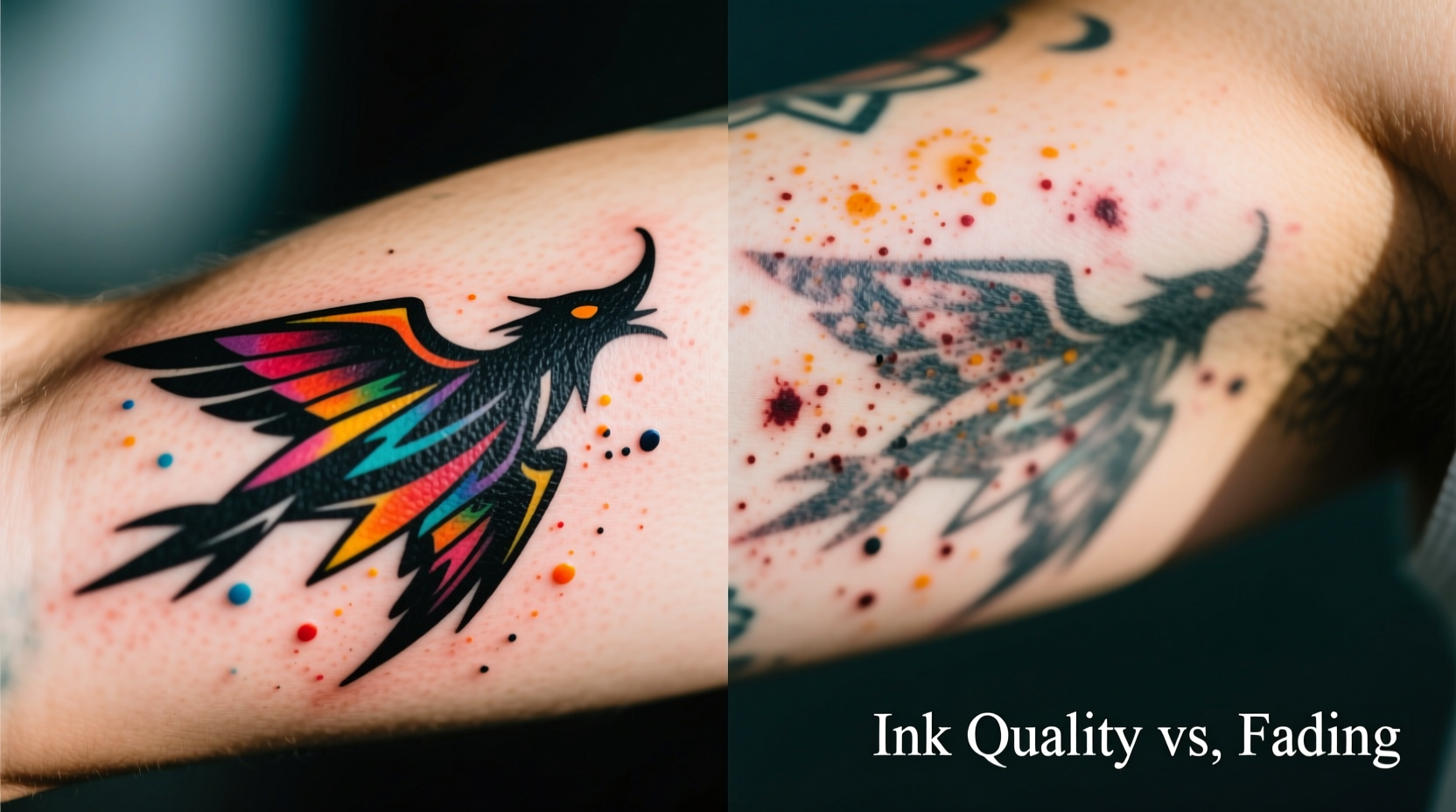
The foundation of any tattoo’s durability is the ink itself. Tattoo inks are not regulated uniformly across countries, leading to significant variation in quality and ingredients. High-quality inks use stable pigments suspended in sterile carriers like alcohol or distilled water, ensuring clean delivery and minimal irritation. Lower-grade inks may contain impurities, inconsistent particle sizes, or untested dyes that degrade quickly once injected into the dermis.
Pigment stability is key. Organic pigments, such as azo dyes (commonly used for reds, yellows, and oranges), are more prone to breakdown under UV light and immune system activity. In contrast, inorganic pigments like iron oxides (used in blacks and browns) tend to be more chemically stable and resistant to fading.
“Not all black is created equal. A carbon-based black will hold up far better than a cheaper substitute made from logwood or synthetic dyes.” — Dr. Lena Torres, Dermatologist & Tattoo Researcher
Skin Type and Placement: Biology Matters
Your skin isn’t just a canvas—it’s a living, breathing organ that actively responds to foreign substances. Individual skin types affect how well ink particles are retained. People with oily skin may experience faster fading in areas with high sebum production, such as the face or upper back, because excess oil can disrupt pigment stability.
Additionally, skin thickness and cell turnover rates vary across the body. Tattoos on hands, fingers, elbows, and feet typically fade faster due to constant friction, higher exfoliation rates, and thinner dermal layers. In contrast, areas like the upper arm or shoulder have thicker skin and less mechanical stress, allowing ink to remain intact longer.
Fitzpatrick skin types also play a role. Those with darker skin tones may find that certain colors—especially lighter shades like yellow or white—don’t show up as vividly or may blend into the natural melanin, giving the illusion of faster fading.
Common Tattoo Fade Zones (High-Risk Areas)
- Fingers and hands
- Feet and ankles
- Elbows and knees
- Spine (due to frequent pressure when lying down)
- Face and neck (high sun exposure and thin skin)
Ink Quality vs. Technique: Where Does Responsibility Lie?
A masterfully applied tattoo with low-grade ink will still fade prematurely. Conversely, premium ink poorly deposited won’t last either. Both factors must align for optimal results.
Depth of insertion is crucial. Ink placed too shallowly (in the epidermis) sloughs off as skin cells regenerate. Too deep, and it can spread or \"blow out,\" creating blurry lines. The ideal placement is in the upper dermis, where collagen fibers trap pigment particles and prevent migration.
However, even skilled artists can struggle with subpar ink. Low-viscosity inks may spread unpredictably during application, while inconsistent pigment density leads to patchy coverage. Inferior inks also lack UV resistance, accelerating photodegradation—the process by which sunlight breaks down color molecules.
Comparison of Ink Types and Fade Resistance
| Ink Type | Common Colors | Fade Resistance | Notes |
|---|---|---|---|
| Carbon-based Black | Black, Gray | ★★★★★ | Most stable; excellent longevity |
| Iron Oxide | Brown, Rust, Tan | ★★★★☆ | Natural, biocompatible, but limited color range |
| Azo Dyes (Organic) | Red, Orange, Yellow | ★★☆☆☆ | Prone to UV degradation; may turn brownish |
| Phthalocyanine Pigments | Blue, Green | ★★★★☆ | Stable synthetics; widely used in professional inks |
| Unregulated/Unknown | All | ★☆☆☆☆ | Risky; may contain heavy metals or toxic binders |
Aftercare and Long-Term Maintenance: Protecting Your Investment
Even the highest-quality tattoo requires proper aftercare to maximize its lifespan. The first four weeks post-inking are critical. During this period, the skin heals, and improper care can lead to scabbing, infection, or premature ink loss.
Over-moisturizing, picking scabs, or exposing fresh tattoos to direct sunlight significantly increases fading risk. Once healed, ongoing protection becomes essential. Daily sunscreen use (SPF 30+) on tattooed skin can reduce UV damage by up to 70%, preserving color and clarity for years.
Hydration also plays a role. Dry, flaky skin reflects light unevenly, making tattoos appear dull. Regular moisturizing with fragrance-free lotions helps maintain skin integrity and enhances visual sharpness.
Step-by-Step Guide to Preserving Tattoo Longevity
- Choose a reputable artist: Verify their portfolio, hygiene practices, and preferred ink brands.
- Follow immediate aftercare instructions: Keep clean, avoid soaking, and let scabs fall naturally.
- Moisturize daily during healing: Use a gentle, non-comedogenic ointment for the first week.
- Limit sun exposure: Cover tattoos or apply broad-spectrum SPF 30+ every two hours when outdoors.
- Maintain healthy skin: Stay hydrated, avoid smoking (which accelerates skin aging), and exfoliate gently.
- Consider touch-ups every 5–10 years: Especially for vibrant colors or fine-line work.
Real-World Example: Two Identical Tattoos, Different Outcomes
Jamal and Diego, both 28, got matching geometric sleeve tattoos from the same design at different studios. Jamal paid slightly more for a shop known for using premium Intenze inks and meticulous shading techniques. Diego opted for a budget-friendly parlor using house-brand ink and a newer artist.
Five years later, Jamal’s tattoo remains crisp, with deep blacks and clean lines. Diego’s version has noticeably faded—particularly in the red accents, which now appear pinkish and blurred. His black outlines have softened, requiring early touch-up consultations.
The difference wasn’t just price—it was ink consistency, sterilization standards, and artist experience. Jamal’s artist layered ink precisely and advised strict sun protection. Diego’s studio provided minimal aftercare guidance, and he frequently skipped sunscreen on his arms.
This case illustrates that while placement and lifestyle matter, the initial choices around ink and artist expertise set the trajectory for long-term appearance.
Frequently Asked Questions
Does black tattoo ink fade faster than colored ink?
No—typically, high-quality black ink fades the slowest due to its dense, stable pigment (usually carbon-based). Colored inks, especially reds and yellows derived from organic dyes, break down more easily under UV light and immune surveillance.
Can poor-quality ink cause health issues?
Yes. Low-grade inks may contain heavy metals (like mercury or lead), allergens, or unsterilized carriers. These can trigger reactions ranging from itching and swelling to granulomas or chronic dermatitis. Always ensure your ink is from a trusted, lab-tested source.
How can I tell if my tattoo is fading abnormally?
Some fading over 5–10 years is normal. However, rapid blurring, color shifting (e.g., red turning brown), or raised texture could indicate poor ink quality, improper placement, or an allergic reaction. Consult a dermatologist if changes occur suddenly.
Expert Insight: The Science Behind Ink Breakdown
Once injected, tattoo pigment isn’t static. Immune cells called macrophages engulf ink particles, attempting to remove them. Some macrophages die and release pigment, which is then reabsorbed by new cells—a cycle that contributes to gradual fading.
UV radiation accelerates this process by fragmenting pigment molecules and generating free radicals that damage surrounding skin cells. This is why sun-exposed tattoos degrade faster, regardless of ink quality.
“The body never stops trying to clear foreign material. High-quality ink resists breakdown longer, but no tattoo is truly permanent in the biological sense.” — Dr. Arjun Patel, Immunodermatology Specialist
Checklist: Choosing Long-Lasting Tattoo Ink
- ✅ Confirm the artist uses professional-grade, pre-sterilized inks
- ✅ Research ink brands—look for transparency in ingredient lists
- ✅ Avoid “bargain” tattoos where ink sourcing isn’t discussed
- ✅ Opt for UV-stable pigments, especially for visible areas
- ✅ Discuss aftercare plan before leaving the studio
- ✅ Schedule follow-up appointments for touch-ups if needed
Conclusion: Make Informed Choices for Lasting Art
A tattoo is a lifelong commitment—not just emotionally, but biologically. While time and sun will inevitably take their toll, the rate at which a tattoo fades doesn’t have to be left to chance. By prioritizing ink quality, choosing experienced artists, and committing to protective aftercare, you can preserve the integrity and beauty of your body art for decades.
Don’t underestimate the power of asking questions. Knowing what goes into your skin is just as important as liking how it looks. From pigment chemistry to immune response, the science behind tattoo longevity is real—and within your control.




 浙公网安备
33010002000092号
浙公网安备
33010002000092号 浙B2-20120091-4
Comments
No comments yet. Why don't you start the discussion?