
TikTok has become the epicenter of digital culture, where a 15-second video can launch global movements, redefine music charts, or spark new fashion waves. Yet for every dance challenge that racks up billions of views, dozens more vanish into obscurity within days. What separates the viral sensations from the forgotten attempts? The answer lies not in luck, but in a complex interplay of psychology, platform mechanics, timing, and execution.
Behind every exploding trend is a confluence of strategic elements—some intentional, others serendipitous—that align with how TikTok’s algorithm rewards engagement and novelty. Understanding this dynamic reveals patterns that creators, marketers, and observers can use to predict—and even influence—what gains momentum and what doesn’t.
The Algorithm: TikTok’s Invisible Trendmaker
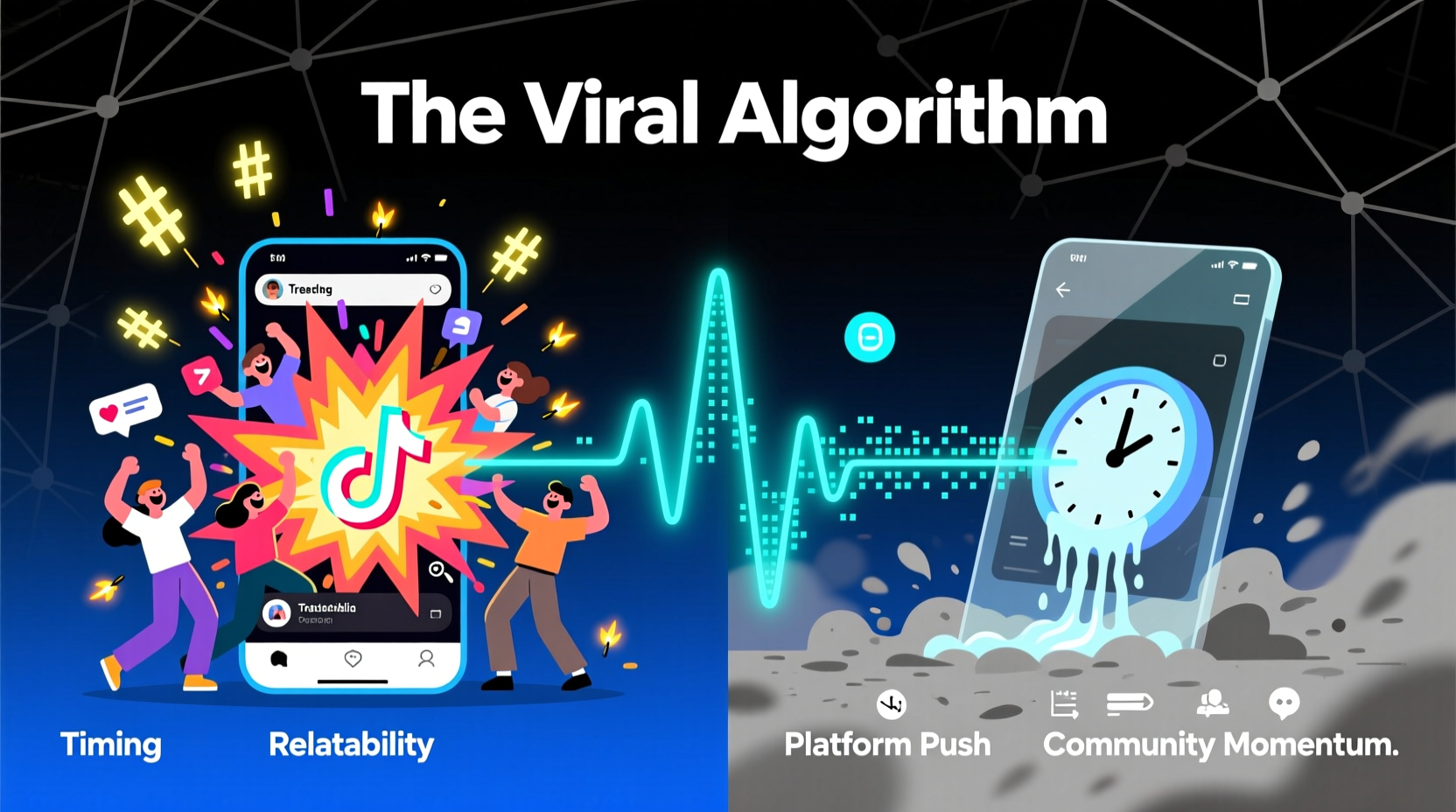
TikTok’s recommendation engine is arguably the most powerful social media algorithm ever built. Unlike platforms that prioritize followers or paid promotion, TikTok surfaces content based on user behavior, not creator popularity. This allows unknown users to reach millions overnight—if their content triggers the right signals.
The algorithm evaluates several key factors:
- Watch time: How long viewers engage with a video.
- Completion rate: Whether users watch the entire clip.
- Engagement: Likes, shares, comments, and duets/stitches.
- Initial traction: Rapid early interaction increases chances of being pushed to larger audiences.
A trend that quickly captures attention—through surprise, humor, or emotional resonance—triggers these metrics efficiently. For example, when audio clips are reused in multiple videos, the algorithm recognizes them as \"trending\" and promotes them across feeds, creating a feedback loop of visibility.
“TikTok doesn’t reward consistency—it rewards virality. One video can change everything if it hits the algorithm at the right moment.” — Lena Park, Social Media Strategist at ViralEdge Analytics
Psychological Triggers That Fuel Virality
Not all trends are created equal, but the ones that spread like wildfire tap into universal human behaviors. They don’t just entertain—they invite participation. Three core psychological drivers underpin most successful TikTok trends:
- Immediacy of imitation: Trends that are easy to copy gain traction fast. Think of the “Renegade” dance or the “Oh no” audio meme. Simple, repeatable actions lower the barrier to entry.
- Social validation: Users participate because they see others doing it. When a trend appears everywhere, FOMO (fear of missing out) kicks in, driving more involvement.
- Emotional resonance: Humor, nostalgia, shock, or relatability make content memorable. A video that makes someone laugh aloud is far more likely to be shared than one that merely looks good.
Consider the “Silent Walking” trend, where users filmed themselves walking silently through nature while dramatic music played. It wasn’t flashy, but it offered an emotional escape—a quiet rebellion against urban chaos. That subtle depth resonated widely, turning a simple concept into a global phenomenon.
Why Simplicity Wins Over Complexity
Complex choreography or elaborate setups often fail because they demand too much effort. TikTok thrives on low-friction creativity. The most viral trends require minimal setup: a single prop, a short script, or a recognizable sound bite.
In contrast, trends that require special equipment, costumes, or advanced skills rarely scale. Even if the original video is impressive, the lack of replicability kills momentum. Virality depends less on quality and more on accessibility.
The Anatomy of a Flop: Common Pitfalls
Many creators invest time crafting what they believe is a breakout trend—only to see it gather a handful of views. Often, the failure isn’t due to poor content, but misalignment with TikTok’s ecosystem. Below are common reasons why promising ideas fizzle out:
| Reason for Failure | Description | Example |
|---|---|---|
| Late adoption | Jumping on a trend after its peak reduces visibility. | Posting a “Savage” dance cover months after it peaked. |
| Overly niche appeal | Content too specific fails to attract broad participation. | A trend about rare plant care techniques for collectors only. |
| Poor audio choice | Using non-viral sounds limits discoverability. | Original music without existing momentum. |
| Weak hook | First 2 seconds fail to grab attention. | Starting with a long explanation instead of action. |
| No clear call to action | Users don’t know how to participate. | A funny skit with no invitation to duet or remix. |
One underrated factor is **timing**. Posting during low-engagement periods—like midday on a Tuesday—can bury even strong content. Additionally, launching a trend during a major news event or competing viral wave may drown it out before it gains steam.
Case Study: The Rise and Fall of the “Corn Kid”
In early 2022, a six-year-old named Myles appeared in a local news segment expressing pure joy over sweet corn. His unfiltered enthusiasm—\"I love corn. I love corn so much!\"—was clipped and uploaded to TikTok. Within 72 hours, the video had over 10 million views.
What followed was textbook viral evolution:
- Phase 1 – Organic Spark: A fan remixed the audio into a dance trend.
- Phase 2 – Community Adoption: Thousands of users posted their own versions, often mimicking Myles’ tone while holding corn.
- Phase 3 – Mainstream Crossover: Late-night hosts referenced it; brands like Cream of Corn soup capitalized on the meme.
- Phase 4 – Saturation & Decline: Parodies and overuse diluted the charm. Engagement dropped sharply by week four.
The “Corn Kid” worked because it was joyful, absurd, and deeply human. It required no skill to replicate—just a willingness to embrace silliness. Contrast this with a failed attempt later that year: a “Math Challenge” trend asking users to solve equations on camera. Despite educational value, it lacked emotional pull and was too effort-intensive. It disappeared within days.
How to Increase Your Trend’s Odds of Success
While no formula guarantees virality, certain strategies dramatically improve the probability of breaking through. These aren’t shortcuts—they’re principles grounded in behavioral science and platform mechanics.
Step-by-Step Guide to Launching a TikTok Trend
- Create a 3-Second Hook: Start with movement, emotion, or surprise. Avoid introductions.
- Use or Create a Catchy Audio Clip: Either leverage rising sounds or produce a short, repeatable phrase with rhythm.
- Make It Participatory: Design content that invites others to imitate, react, or build upon it.
- Seed Strategically: Share your video in relevant communities, collaborate with micro-influencers, and encourage duets.
- Post at Peak Times: Aim for evenings (6–9 PM) in your target region to maximize early engagement.
- Monitor & Adapt: If the trend gains traction, post follow-ups that expand the narrative or add variations.
Checklist: Before You Launch a TikTok Trend
- ✅ Is the idea easy to understand in under 5 seconds?
- ✅ Can someone recreate it with minimal tools or skills?
- ✅ Does it evoke emotion (humor, awe, nostalgia)?
- ✅ Is the audio short, catchy, and reusable?
- ✅ Have I included a clear visual or verbal cue for others to copy?
- ✅ Am I posting when my audience is most active?
- ✅ Have I engaged with similar content to warm up the algorithm?
FAQ: Understanding TikTok Trend Dynamics
Can small accounts start viral trends?
Absolutely. TikTok’s algorithm is designed to surface content based on performance, not follower count. Many viral trends originated from accounts with fewer than 1,000 followers. What matters is how quickly the video generates engagement—not who posted it.
How long does a typical TikTok trend last?
Most trends have a lifespan of 7 to 14 days. Hyper-viral ones may peak in 3–5 days. Niche or emotionally resonant trends can linger for weeks, especially if they evolve into sub-trends or inspire spin-offs.
Should I reuse old trends or always create new ones?
Both approaches work. Revisiting older trends with a fresh twist (e.g., a new dance move to a classic sound) can reignite interest. However, original concepts have higher breakout potential—if they meet the criteria for shareability and simplicity.
Conclusion: Mastering the Moment
TikTok trends don’t explode by accident. They succeed because they align with the platform’s rhythm—its algorithm, its culture, and its users’ subconscious desires. The difference between a flop and a phenomenon often comes down to split-second decisions: the first frame of a video, the choice of audio, the clarity of the prompt.
Success isn’t reserved for celebrities or production teams. It belongs to those who understand that virality is less about perfection and more about connection. A genuine moment, packaged simply and shared at the right time, can ripple across millions of screens.




 浙公网安备
33010002000092号
浙公网安备
33010002000092号 浙B2-20120091-4
Comments
No comments yet. Why don't you start the discussion?