
Nostalgia is often thought of as a personal emotion—a warm recollection of your own past experiences. But in recent years, something curious has emerged in digital culture: people report feeling deep waves of nostalgia for video games they’ve never actually played. They describe longing for pixelated forests, 8-bit soundtracks, or fictional childhoods spent with characters who never existed. This phenomenon isn’t rare. It’s widespread, emotionally potent, and increasingly shaping how games are designed, marketed, and remembered.
The answer lies not in faulty memory, but in the intricate interplay between cultural storytelling, psychological conditioning, and aesthetic design. Some games don’t just simulate play—they simulate memory itself.
The Psychology of Inherited Nostalgia
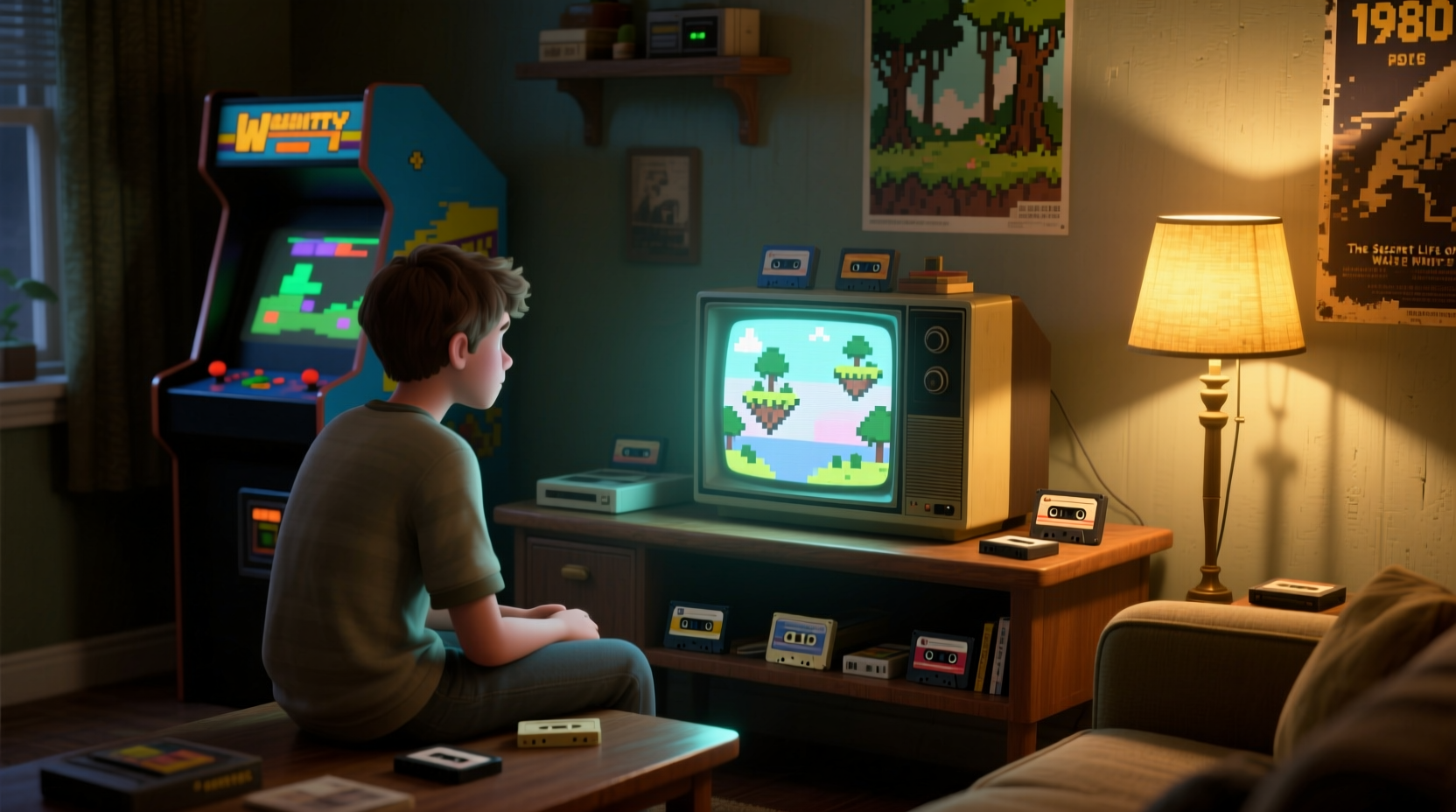
Nostalgia isn't strictly autobiographical. Psychologists refer to “historical” or “vicarious” nostalgia—feelings of sentimental longing for times we didn’t live through. This kind of nostalgia is common in literature, film, and music. Think of someone born in the 1990s feeling wistful for the jazz era after watching La La Land, or a millennial romanticizing the analog simplicity of the 1970s through curated Instagram filters.
Video games have become a new frontier for this phenomenon. When a game uses visual language, audio cues, and narrative motifs from a specific era—say, the late 1980s or early 1990s—it doesn’t just reference that time; it evokes its emotional texture. The flicker of a CRT monitor, the hum of a cartridge being inserted, the chiptune soundtrack—these aren’t just technical details. They’re sensory triggers.
“Nostalgia can be culturally transmitted. We don’t need to have lived through an era to feel attached to it—we absorb its emotional resonance through stories, aesthetics, and shared symbols.” — Dr. Lena Peterson, Cognitive Psychologist, University of Edinburgh
This explains why younger players can feel nostalgic for gaming eras they missed entirely. They weren’t playing *The Legend of Zelda* on a NES in their basement, but they’ve seen YouTube retrospectives, heard the music, and absorbed the mythology. Over time, these secondhand experiences coalesce into a kind of emotional memory.
Design Elements That Trigger Emotional Recall
Game developers are increasingly aware of this effect—and many deliberately craft experiences to tap into collective nostalgia, even when targeting new audiences. Several key design choices contribute to this sensation:
- Pixel art and retro aesthetics: Low-resolution sprites, limited color palettes, and dithering mimic the look of 8- and 16-bit consoles. These visuals don’t just signal “old school”—they trigger associations with childhood, discovery, and simpler times.
- Chiptune and synthesized soundtracks: Music composed with FM synthesis or Game Boy sound chips carries an immediate emotional signature. Even abstract melodies can feel familiar because they match the sonic grammar of classic games.
- Narrative framing: Games like Stardew Valley or Eastshade present idealized rural life, small communities, and unhurried routines—echoing not real memories, but idealized ones we wish we had.
- Diegetic UI: Interfaces that appear within the game world (like a character’s handheld device or a journal) mimic physical artifacts, enhancing the sense of authenticity and lived experience.
Cultural Mythmaking and the \"Golden Age\" Narrative
Part of what fuels this borrowed nostalgia is the mythologizing of certain gaming eras. The late 1980s to mid-1990s is frequently portrayed as a “golden age” of creativity, innovation, and pure fun—before monetization, microtransactions, and cinematic storytelling took over. Documentaries, podcasts, and online forums reinforce this narrative, painting a picture of a lost paradise where games were about wonder, not revenue.
This myth isn’t entirely accurate—many games from that era were technically limited, frustrating, or commercially driven—but it serves an emotional purpose. It offers a contrast to the complexity and saturation of modern gaming. For younger players, this imagined past becomes a refuge. They may never have blown into a cartridge to make it work, but they long for the perceived innocence of that moment.
In this way, nostalgia becomes aspirational. It’s not about remembering the past, but about yearning for a version of life that feels more authentic, slower, and more meaningful—even if it never truly existed.
A Real Example: The Case of Untitled Goose Game
Released in 2019, Untitled Goose Game became a viral hit. On the surface, it’s a simple puzzle game about a mischievous goose causing havoc in a quiet English village. But its aesthetic—hand-drawn textures, muted colors, minimal UI, and a playful Debussy soundtrack—evokes a distinctly analog charm.
Many players described feeling nostalgic while playing it, despite the fact that no such game existed in their childhood. There was no 1990s equivalent. Yet, the game tapped into a broader cultural memory of European children’s books, stop-motion animations like Wallace & Gromit, and the whimsy of pre-internet play.
In interviews, the developers admitted they were aiming not for realism, but for emotional familiarity. “We wanted it to feel like a memory,” said one designer. “Like you might have played it on a rainy afternoon as a kid, even if you hadn’t.”
How Modern Games Simulate Memory
Some games go beyond referencing the past—they actively simulate the experience of remembering it. This is achieved through several techniques:
- Framing devices: Games presented as found cartridges, old journals, or recovered data files imply a history. Localhost and P.T. use this to unsettling effect, making players feel like they’re uncovering forgotten secrets.
- Glitch aesthetics: Visual distortions, corrupted textures, and audio stutters mimic aging media. These aren’t bugs—they’re intentional design choices that suggest decay, loss, and the passage of time.
- Environmental storytelling: Abandoned buildings, dusty furniture, and overgrown playgrounds tell silent stories of lives once lived. Games like Firewatch and The Last of Us use this to evoke melancholy and remembrance.
- Generational handoffs: Titles like Super Mario Odyssey include cameos from older games, creating a sense of continuity. Players feel connected to a lineage, even if they’re joining it late.
These techniques don’t just reference nostalgia—they construct it. They build a bridge between the player and a fictional past, allowing emotional investment without requiring personal history.
Checklist: How to Recognize Artificial Nostalgia in Games
Next time you feel unexpectedly sentimental during a game, ask yourself:
- Does the game use pixel art, CRT filter effects, or retro fonts?
- Is the music composed in a chiptune or lo-fi style?
- Are there references to outdated technology (floppy disks, VHS tapes, dial-up sounds)?
- Does the setting resemble a stylized version of the 80s or 90s?
- Is the narrative framed as a memory, a dream, or a recovered artifact?
- Do community discussions or marketing materials emphasize “classic vibes” or “throwback energy”?
If most of these apply, the game is likely engineered to evoke nostalgia—even if it’s your first time playing.
Comparing Authentic vs. Constructed Nostalgia
| Aspect | Authentic Nostalgia | Constructed Nostalgia |
|---|---|---|
| Origin | Personal childhood experiences | Cultural exposure and media consumption |
| Trigger | Replaying an old game, seeing a childhood console | Seeing retro aesthetics, hearing chiptunes, reading lore |
| Emotional Quality | Warm, bittersweet, sometimes painful | Idealized, wistful, escapist |
| Accuracy | Biased by memory, but rooted in reality | Often romanticizes or distorts the past |
| Example | Feeling emotional when booting up your old SNES | Longing for a childhood you never had after playing Stardew Valley |
FAQ: Understanding Nostalgia Without Memory
Can you feel nostalgic for something you’ve never experienced?
Yes. Psychological research confirms that people can experience “historical nostalgia”—a sentimental attachment to past eras they didn’t live through. This is often fueled by media, family stories, and cultural narratives that idealize certain periods.
Why do retro-style games dominate indie development?
Retro aesthetics are accessible, cost-effective, and emotionally resonant. Pixel art requires fewer resources than 3D modeling, and the nostalgic appeal helps games stand out in a crowded market. More importantly, these styles carry built-in emotional weight, giving developers a shortcut to player connection.
Is this kind of nostalgia harmful or misleading?
Not inherently. While it can promote unrealistic views of the past—such as the myth that older games were universally better or more creative—it also fosters appreciation for game history and inspires innovation. The danger lies in dismissing modern games simply because they lack “retro charm.” Balance is key.
Conclusion: Nostalgia as a Design Language
The ability of video games to generate nostalgia in players who’ve never touched them is not a glitch—it’s a feature. It reveals how deeply culture, emotion, and design are intertwined. Games are no longer just interactive systems; they’re vessels for collective memory, emotional simulation, and identity formation.
As developers continue to explore this space, we’ll likely see more titles that don’t aim to entertain in the traditional sense, but instead aim to make us feel like we’ve always known them. They’ll smell like old basements, sound like forgotten mixtapes, and feel like half-remembered dreams.
And perhaps that’s the power of great design: not just to create new experiences, but to make us believe we’ve lived them before.




 浙公网安备
33010002000092号
浙公网安备
33010002000092号 浙B2-20120091-4
Comments
No comments yet. Why don't you start the discussion?