
It starts subtly—a few notes from a pop song you heard on the radio this morning. By midday, it’s looping in your mind like a scratched CD. You didn’t choose it. You don’t particularly like it. Yet there it is: an earworm, burrowing into your thoughts with relentless repetition. This phenomenon—officially known as involuntary musical imagery (INMI)—affects nearly everyone. Studies suggest 90% of people experience at least one earworm per week. But why does this happen? What makes certain tunes stick while others fade? And how does our brain's memory system play into this auditory loop?
The answer lies at the intersection of psychology, neuroscience, and music cognition. Earworms aren’t just quirks of modern life; they’re windows into how memory functions, how attention works, and how our brains process sound even when we’re not actively listening.
The Science Behind Earworms
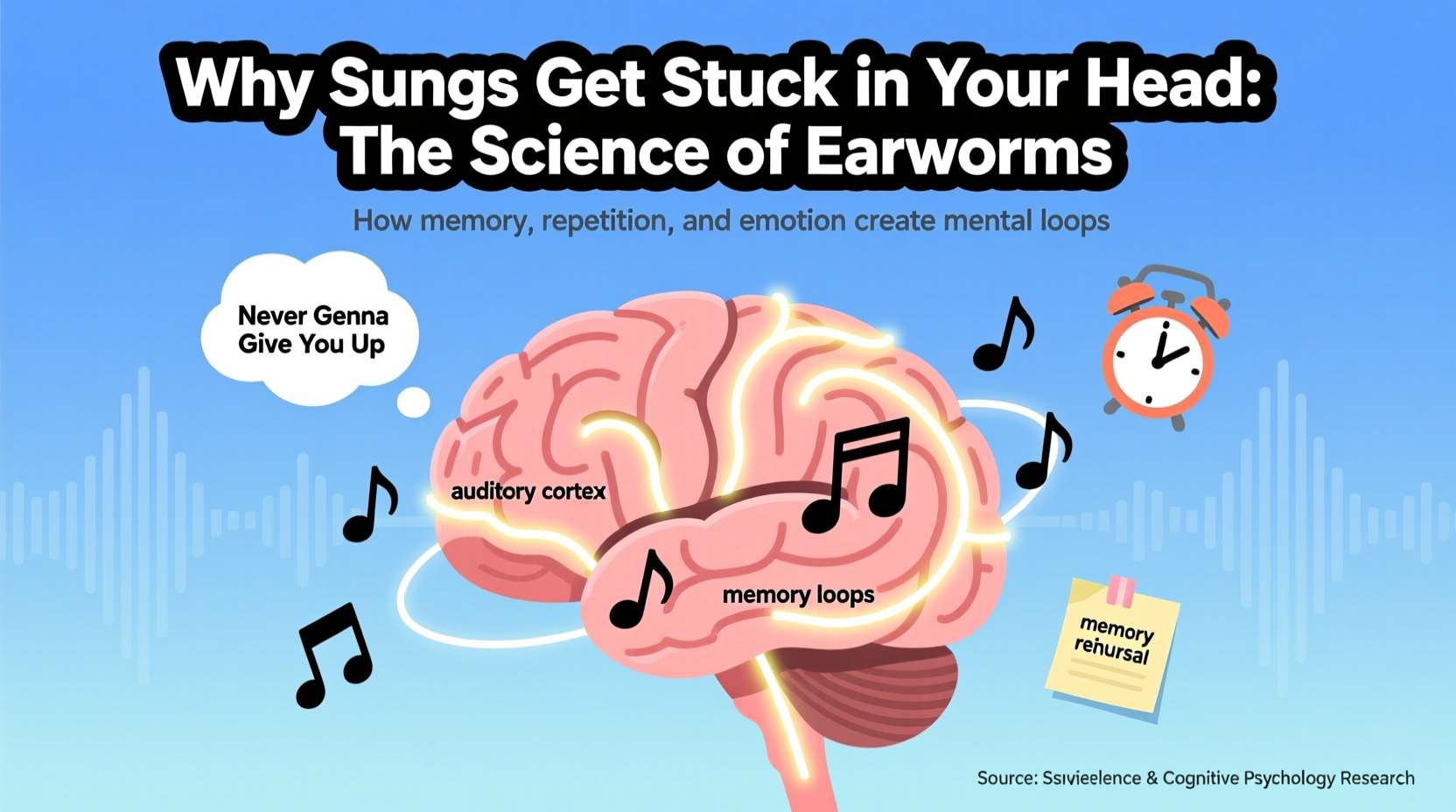
An earworm isn't a literal worm, of course, but a cognitive itch—an unfinished loop of music that plays involuntarily in your mind. The term “earworm” comes from the German word Ohrwurm, coined in the early 20th century to describe catchy melodies that seem to crawl into the ear and refuse to leave.
Neuroscientists have identified several brain regions involved in earworm activity. Functional MRI scans show that when a song replays mentally, the auditory cortex—the part responsible for processing sound—activates even in silence. So does the prefrontal cortex, which manages attention and working memory. This means your brain is simulating music without external input, much like daydreaming in sound.
One key theory behind earworms is the \"cognitive itch\" model. According to this idea, incomplete or unresolved musical patterns create a sense of tension in the brain. When a melody stops abruptly—or loops in a way that feels unfinished—your mind tries to \"complete\" it, leading to repetitive replay. Think of it like reading a sentence that cuts off mid-thought: your brain wants closure.
“Earworms reveal how our brains are constantly predicting and completing patterns—even in music.” — Dr. Victoria Williamson, Cognitive Psychologist and Author of *Catchy: How Songs Stick*
Why Some Songs Stick More Than Others
Not all music becomes an earworm. Research shows that certain structural features make songs more likely to lodge in your mind:
- Simplicity: Repetitive melodies with limited pitch variation are easier for the brain to recall.
- Unexpected intervals: A sudden jump in notes (like in the opening of “Another One Bites the Dust”) can make a tune more memorable.
- Familiarity with novelty: Songs that blend familiar rhythms with a surprising twist—such as unusual timing or unexpected lyrics—are more prone to becoming stuck.
- Tempo close to resting heart rate: Many earworms hover around 70–80 beats per minute, matching the average human pulse, which may enhance their internal resonance.
A 2016 study by the University of London analyzed over 3,000 reports of earworms and found that the most common culprits were upbeat pop songs with repetitive choruses. Tracks like Pharrell Williams’ “Happy,” Lady Gaga’s “Bad Romance,” and Queen’s “Don’t Stop Me Now” topped the list—not because they’re universally loved, but because they’re cognitively sticky.
Memory Systems and the Role of Involuntary Recall
To understand why songs get stuck, you need to understand how memory works. Human memory isn’t a single system—it’s made up of multiple interacting components:
| Memory Type | Function | Role in Earworms |
|---|---|---|
| Short-term Memory | Holds information temporarily (seconds to minutes) | Keeps the melody active during initial playback |
| Working Memory | Processes and manipulates current information | Allows mental rehearsal of the tune |
| Long-term Memory | Stores knowledge and experiences indefinitely | Retrieves songs associated with emotions or past events |
| Procedural Memory | Handles automatic skills (e.g., riding a bike) | May explain why rhythm sticks even without lyrical recall |
When you hear a song, it first enters short-term memory. If it’s engaging or repeated, it moves into working memory, where your brain rehearses it—sometimes without your permission. Emotional associations, personal memories, or contextual cues (like hearing a snippet in a store) can trigger retrieval from long-term memory, reactivating the full sequence.
This explains why a song from your teenage years might suddenly resurface during a quiet moment. Your brain didn’t randomly select it; something—smell, mood, visual cue—tipped the scale and unlocked that memory trace.
Triggers and Vulnerability Factors
While anyone can get an earworm, some people are more susceptible than others. Research identifies several risk factors:
- High musical engagement: Musicians and frequent listeners report more earworms.
- Personality traits: People high in neuroticism or obsessive-compulsive tendencies are more prone to persistent loops.
- Mood states: Anxiety, boredom, and fatigue increase vulnerability.
- Daily routines**: Repetitive tasks (showering, walking, folding laundry) create mental space for involuntary music to surface.
A mini case study illustrates this well: Sarah, a 32-year-old graphic designer, began experiencing daily earworms after switching to remote work. With fewer social interactions and more solitary screen time, her brain filled the silence with music. “I’d be designing a logo and suddenly ‘Can’t Stop the Feeling’ would start playing in my head,” she said. “It wasn’t always bad, but sometimes it disrupted focus.” After tracking triggers, she noticed earworms spiked during low-stimulation periods and after watching YouTube videos with catchy jingles.
Her experience aligns with research showing that under-engaged minds are more likely to default to spontaneous thoughts—including music. It’s not distraction; it’s the brain seeking stimulation.
How to Stop an Earworm (Step-by-Step Guide)
If you're caught in a loop, here’s a science-backed approach to break free:
- Listen to the full song intentionally: Often, earworms stem from incomplete fragments. Playing the entire track gives your brain the closure it craves.
- Engage your auditory cortex differently: Chew gum, talk aloud, or hum a different tune. These actions occupy the brain’s sound-processing resources.
- Shift attention to a non-musical task: Solve a puzzle, read a complex article, or engage in conversation. Cognitive load reduces the brain’s capacity for involuntary replay.
- Use a “cure” song: Replace the earworm with a less annoying but equally engaging track. “God Save the Queen” and “Karma Chameleon” have been shown to displace other tunes effectively.
- Practice mindfulness: Instead of resisting the earworm, acknowledge it without judgment. Paradoxically, acceptance often reduces its persistence.
“Trying to suppress an earworm is like trying not to think of a pink elephant—you end up thinking about it more.” — Dr. Ira Hyman, Psychology Professor at Western Washington University
Prevention Checklist: Reduce Earworm Frequency
While you can’t eliminate earworms entirely, you can minimize them. Use this checklist to build resilience:
- ✅ Limit passive music consumption (e.g., background playlists during chores)
- ✅ Avoid looping the same songs repeatedly
- ✅ Increase verbal or physical activity during routine tasks
- ✅ Practice focused attention exercises (e.g., meditation, deep reading)
- ✅ Replace habitual music with audiobooks or podcasts occasionally
- ✅ Identify and avoid personal trigger songs
FAQ: Common Questions About Earworms
Are earworms a sign of a mental health issue?
No, earworms are normal and experienced by most people. However, if they cause distress, interfere with concentration, or occur alongside obsessive thoughts, they may be linked to anxiety or OCD. In such cases, consulting a mental health professional is advisable.
Can earworms happen in your sleep?
Yes. Some people report waking up with a song already playing in their mind. This is likely due to residual activation in the auditory cortex during light sleep stages. Using white noise or calming sounds at bedtime may help prevent this.
Do instrumental tracks become earworms too?
Absolutely. While lyrics often anchor a tune, melodies alone—especially those with strong rhythm or distinctive phrasing—can become just as sticky. Think of the theme from *Jaws* or the opening riff of Beethoven’s Fifth Symphony.
Conclusion: Embracing the Loop
Earworms are more than a nuisance—they’re evidence of a dynamic, pattern-seeking brain. They highlight how deeply music is woven into human cognition, emotion, and memory. Rather than viewing them as intrusions, consider them reflections of your brain’s remarkable ability to store, recall, and re-experience sound.
Understanding why songs get stuck empowers you to manage them. Whether through distraction, replacement, or mindful acceptance, you can regain control. And next time “Baby Shark” creeps back in, you’ll know exactly what’s happening—and how to gently show it the exit.




 浙公网安备
33010002000092号
浙公网安备
33010002000092号 浙B2-20120091-4
Comments
No comments yet. Why don't you start the discussion?