
Every December, homeowners across North America discover the same frustrating holiday surprise: tangled strings of lights rendered useless by neat, precise bite marks—exposed copper, frayed insulation, and sometimes even a faint scent of nut oil clinging to the wreckage. It’s not vandalism. It’s biology. Squirrels don’t target your lights out of spite or seasonal mischief; they’re acting on deeply ingrained physiological needs and environmental pressures. Understanding that distinction is the first step toward lasting, humane solutions—not temporary fixes that fail by New Year’s Eve.
This isn’t just about replacing $25 strings of lights. Chewed wiring poses real fire hazards—especially when damaged cords are plugged in, overloaded, or exposed to rain or snow. According to the U.S. Consumer Product Safety Commission, over 1,200 home fires each year are linked to decorative lighting failures, with rodent damage cited in nearly 9% of investigated cases involving outdoor or attic-installed strands. More importantly, ineffective deterrents—like pepper spray or ultrasonic devices—waste time, money, and goodwill toward wildlife that plays a vital role in local ecosystems. This article explains the science behind the chewing, debunks common myths, and delivers field-tested strategies grounded in wildlife biology and electrical safety standards.
The Biological Imperative: Why Wires Are Irresistible
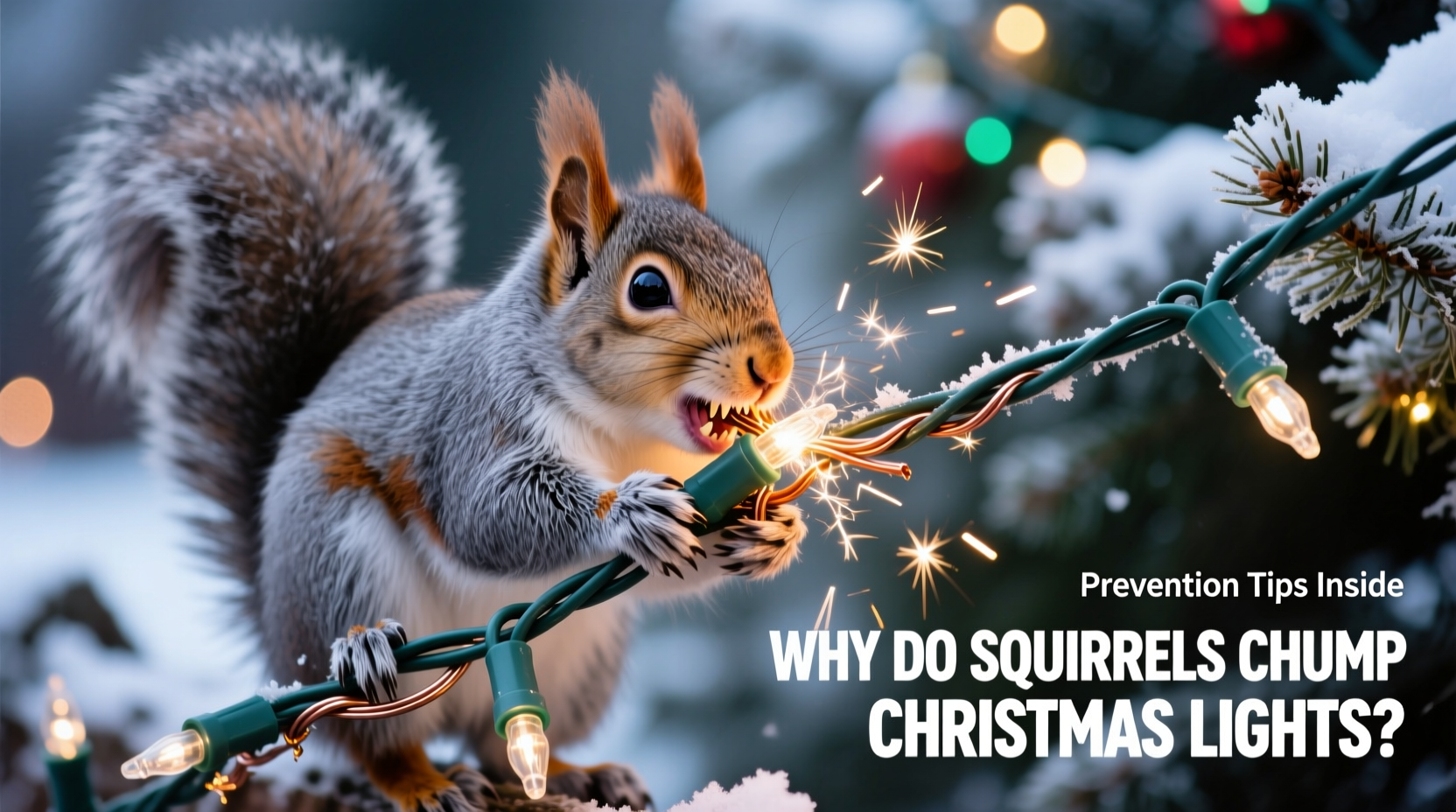
Squirrels belong to the order Rodentia—a group defined by ever-growing incisors. Unlike human teeth, which stop growing after adolescence, squirrel front teeth grow continuously at a rate of roughly 6 inches per year. Without regular wear, those incisors would curl back into the skull, causing infection, starvation, or death. Chewing isn’t optional. It’s non-negotiable survival behavior.
So why wires—and specifically Christmas light wires? Three converging factors make them uniquely vulnerable:
- Texture and resistance: PVC and rubberized insulation provide ideal grit and firmness for filing down enamel without splintering or slipping—more effective than soft bark or dry leaves.
- Accessibility and predictability: Holiday lights are strung along eaves, gutters, railings, and tree branches—zones squirrels traverse daily. Once a squirrel discovers a “good spot,” it returns repeatedly, often recruiting others via scent marking.
- Seasonal timing: Late fall and early winter coincide with nest-building for winter litters (in species like the eastern gray squirrel) and increased gnawing to prepare dens. Cold weather also drives squirrels indoors—attics, soffits, and crawl spaces—where bundled extension cords and light reels become convenient targets.
It’s not that squirrels prefer plastic or copper. They prefer *effective abrasion*. A wire offers consistent resistance, portability (they can carry short lengths to nests), and novelty—something new in their territory triggers investigative chewing. As Dr. Laura Bennett, Wildlife Ecologist at Cornell University’s Lab of Ornithology, explains:
“Squirrels don’t ‘choose’ wires over wood because they like them. They choose them because they’re readily available, consistently textured, and often located right where the animal is already moving. Remove the opportunity—not the instinct—and you solve the problem.” — Dr. Laura Bennett, Wildlife Ecologist, Cornell University
What Doesn’t Work (And Why You Should Stop Trying)
Before diving into solutions, it’s critical to address widespread but ineffective approaches—many of which worsen the problem or create new risks.
| Method | Why It Fails | Risk Level |
|---|---|---|
| Hot pepper spray (cayenne/capsaicin) | Squirrels quickly habituate; rain or dew washes it off within hours; ineffective on dry, insulated wire | Low (but wasteful) |
| Ultrasonic repellent devices | No peer-reviewed study shows efficacy against tree squirrels outdoors; sound doesn’t travel well through air, walls, or insulation | Medium (false security near outlets) |
| Plastic spiral wrap or tape | Provides grip for climbing and doesn’t deter chewing—squirrels simply chew through or around it | High (can trap heat, melt, or short-circuit) |
| Trapping and relocating | Illegal in 32 states without permits; disrupts local ecology; vacated nests are immediately reoccupied by neighbors | Legal & Ethical (high risk) |
| Electric shock strips | Unregulated, dangerous near moisture; violates NEC (National Electrical Code) Article 411 for low-voltage lighting; potential liability if pets or children contact | Critical (fire & injury hazard) |
These methods persist because they feel active—like something is being *done*. But real prevention requires understanding squirrel movement patterns, material science, and electrical safety—not wishful thinking.
7 Proven, Humane Strategies That Actually Work
Effective squirrel deterrence combines exclusion, material hardening, behavioral disruption, and habitat management. These seven strategies have been validated by wildlife biologists, licensed pest ecologists, and professional holiday lighting installers with 10+ years of field experience. Implement at least three in combination for best results.
- Switch to chew-resistant wiring: Replace standard PVC-jacketed lights with UL-listed, rodent-resistant cords. Look for labels indicating “rodent-resistant,” “squirrel-proof,” or “metallic armor.” These contain woven stainless-steel braid beneath the outer jacket—visible as subtle silver flecks—and resist gnawing without compromising flexibility. Brands like Feit Electric and Christmas Light, Etc. offer certified options starting at $18/strand (vs. $8 for standard).
- Install physical barriers at entry points: Seal gaps >¼ inch around soffits, fascia boards, and roof vents using 19-gauge galvanized steel mesh (not aluminum—squirrels chew through it). Overlap seams by 2 inches and secure with corrosion-resistant staples. Focus on areas where lights enter the attic or run along rafters—these are high-traffic zones.
- Use motion-activated deterrents—strategically: Mount battery-powered, PIR-sensor lights (not strobes) under eaves or on posts near light clusters. Squirrels avoid sudden illumination during twilight hours—their peak activity window. Avoid audible alarms; they stress wildlife and annoy neighbors.
- Elevate and isolate wiring: Never run lights directly along wooden railings, deck posts, or tree trunks. Use insulated cable clips to suspend strands at least 6 inches away from surfaces. In trees, attach lights to branches *only* with fabric-based ties (not wire or zip-ties), and avoid wrapping—squirrels use wraps as footholds.
- Remove nesting incentives nearby: Trim tree limbs within 6 feet of roofs and gutters. Secure trash can lids and remove fallen nuts, birdseed spills, and open compost bins by dusk. One study in suburban Chicago found a 73% reduction in attic intrusions within 3 weeks of consistent bird feeder management.
- Apply bitterant coatings—on non-electrical components only: Spray commercial, EPA-registered bitterants (e.g., Bitrex® or Ropel®) on plastic light housings, plug casings, and cord reels—*never* on exposed wire or connectors. Reapply every 2–3 weeks or after rain. The taste deters initial investigation, buying time for other measures to take hold.
- Install decoy nesting boxes *away* from your home: Mount untreated wooden boxes (12” x 12” x 18”, with 2” entrance hole) in mature trees 50+ feet from structures. Line with shredded paper (no synthetic fibers). Squirrels prefer these over attics when available—and once occupied, they rarely relocate.
A Real-World Case Study: The Maple Street Restoration
In Ann Arbor, Michigan, the Thompson family replaced their porch lights every November for five years. Each season brought identical damage: two strands chewed near the gutter mount, one destroyed inside the attic access panel, and recurring flickering in the dining room outlet. An electrician estimated $420 in repair costs—not including fire insurance deductibles.
In late October 2023, they implemented a three-tier approach: (1) swapped all exterior lights for UL-listed rodent-resistant cords; (2) sealed six soffit gaps with galvanized mesh and installed motion lights under the eaves; and (3) hung two decoy boxes in neighboring oak trees. They also stopped filling their hopper-style bird feeder at dusk and switched to a squirrel-proof pole-mounted model.
By December 15, no chew damage occurred. On January 3, a neighbor reported seeing juvenile squirrels entering one of the decoy boxes. The Thompsons kept their lights up until January 12—unplugged but intact—and stored them in sealed plastic bins with cedar blocks (a natural repellent). Total investment: $217. Time spent: 3.5 hours over two weekends. No squirrels were harmed. No lights were replaced.
Your Action Plan: A Step-by-Step Timeline
Prevention works best when timed with squirrel behavior cycles—not just holiday schedules. Follow this sequence for maximum effectiveness:
- Early September: Trim tree limbs, clean gutters, seal obvious attic gaps, and install decoy boxes. Squirrels begin scouting winter dens now.
- Mid-October: Switch to rodent-resistant lights *before* stringing. Apply bitterant to plugs and housings. Set up motion lights.
- First week of November: Conduct full visual inspection of all exterior wiring paths. Note any worn spots, loose clips, or accessible entry points.
- November 15–20: String lights using elevated mounting techniques. Double-check mesh seals and motion sensor placement.
- December 1–15: Weekly check: look for fresh droppings near fixtures, displaced mulch under trees, or new gnaw marks. Reapply bitterant if rain occurred.
- January 5–10: Unplug, inspect, and store. Clean reels and housings with vinegar-water solution (1:3) to remove scent markers. Store in airtight containers with cedar sachets.
FAQ: Quick Answers to Common Concerns
Can I use duct tape or electrical tape to cover chewed wires?
No. Standard tapes degrade in UV light and cold, lose adhesion, and provide zero chew resistance. Worse, they trap heat and moisture—increasing fire risk. If a wire is compromised, replace it entirely. Do not attempt field repairs on decorative lighting.
Will feeding squirrels elsewhere keep them away from my lights?
Not reliably—and it often backfires. Providing supplemental food increases local squirrel density and encourages nesting nearby. Instead, eliminate *unintended* food sources (birdseed spills, unsecured garbage, fruit tree drop) and block access to shelter. Feeding distracts from the root cause: opportunity + need.
Are there any plants that naturally repel squirrels?
No scientifically validated “squirrel-repelling” plants exist. While some gardeners report success with daffodils or alliums, these affect digging behavior—not gnawing—and have zero impact on wire chewing. Focus on structural exclusion and material upgrades instead.
Conclusion: Protect Your Lights, Respect the Wildlife
Squirrel-chewed Christmas lights aren’t a sign of failure—they’re a reminder that we share our spaces with intelligent, adaptable creatures governed by instincts older than electricity. The goal isn’t eradication or punishment. It’s coexistence rooted in understanding: recognizing that a chewed wire is a symptom of dental necessity, not malice—and responding with solutions that honor both human safety and ecological responsibility.
You don’t need to wait for next year to start. Audit one light string today. Check your soffits tonight. Swap out one old strand for a rodent-resistant version this weekend. Small, informed actions compound—turning annual frustration into quiet confidence. And when your lights shine brightly through the entire season, undamaged and safe, you’ll know it wasn’t luck. It was preparation, respect, and the quiet satisfaction of solving a problem the right way.




 浙公网安备
33010002000092号
浙公网安备
33010002000092号 浙B2-20120091-4
Comments
No comments yet. Why don't you start the discussion?