
Squirrels are among the most observant and reactive small mammals in urban and forested environments. Their sudden movements, chattering calls, and distinctive tail flicks are not random behaviors—they are sophisticated forms of communication shaped by evolution. One of the most intriguing actions is the rapid flicking or lashing of their bushy tails when a predator is nearby. This behavior, often dismissed as mere nervousness, is actually a complex signal with multiple functions: warning others, confusing threats, and even asserting dominance. Understanding why squirrels flick their tails offers insight into animal cognition, survival strategies, and the subtle language of wildlife.
The Science Behind Tail Flicking: A Survival Mechanism
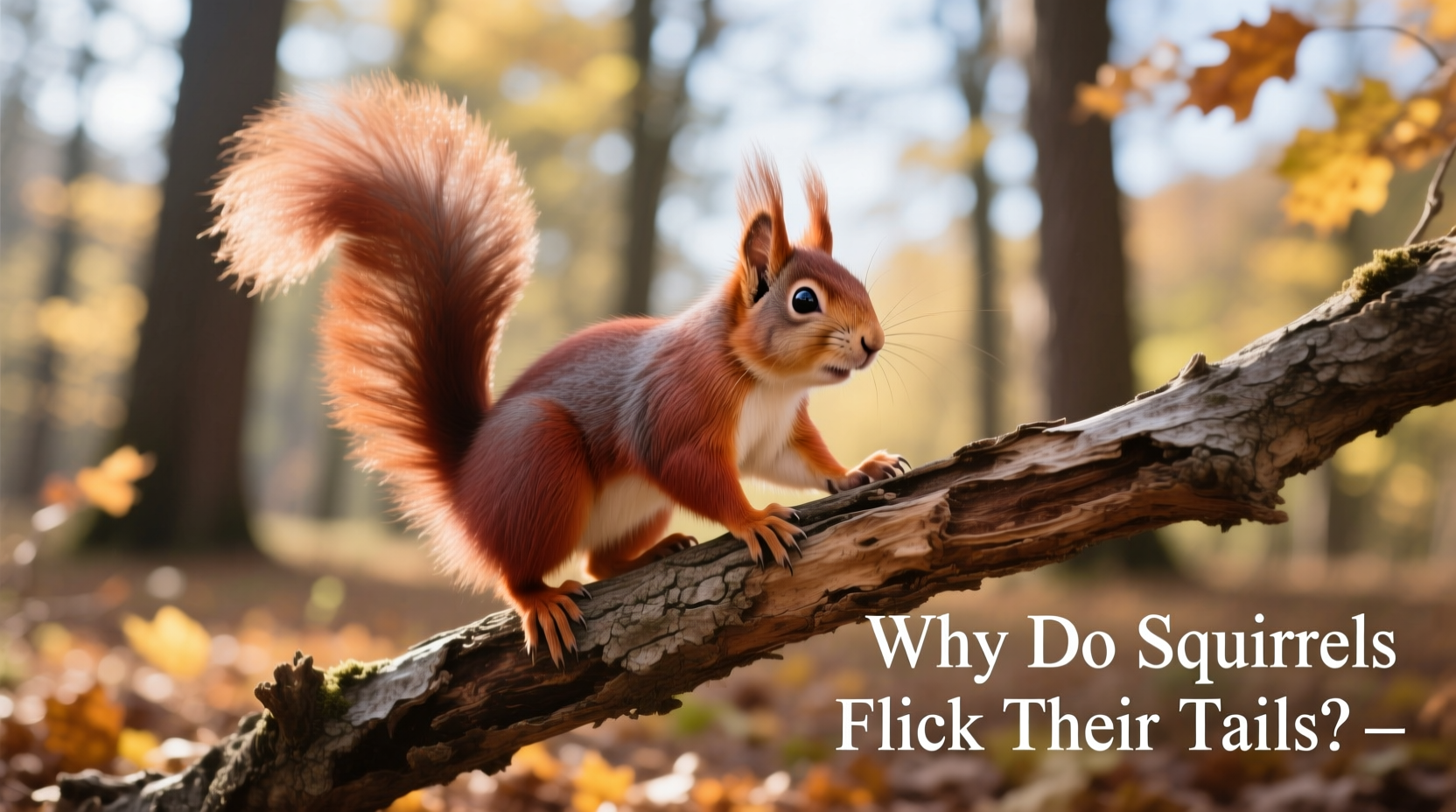
Tail flicking in squirrels is primarily a response to perceived danger. When a squirrel detects a predator—such as a hawk, snake, cat, or human—it instinctively engages in a series of defensive behaviors. Among these, tail movement stands out due to its visibility and repetition. Researchers have studied this phenomenon extensively, particularly in gray squirrels (Sciurus carolinensis) and fox squirrels (Sciurus niger), revealing that tail flicking serves several interrelated purposes.
One key function is **predator deterrence**. By flicking its tail, a squirrel signals to the predator that it has been spotted. This announcement removes the element of surprise, which many predators rely on for a successful hunt. Once a prey animal signals awareness, the predator may abandon the pursuit, conserving energy for a more promising target. In essence, the tail flick says: “I see you, and you’ve lost your advantage.”
Additionally, the motion itself can be disorienting. The rapid side-to-side movement of a large, fluffy tail creates a visual distraction. For predators relying on stealth or quick strikes, this erratic motion makes it harder to judge distance, speed, or trajectory. Snakes, in particular, rely on precise timing when striking, and a flicking tail can disrupt their aim.
Communication Within the Squirrel Community
Beyond deterring predators, tail flicking plays a crucial role in intraspecies communication. Squirrels are not solitary creatures; they live in overlapping home ranges and frequently interact with neighbors. When one squirrel detects danger, its tail flicks act as an alarm signal to others nearby.
This form of **eavesdropping communication** allows other squirrels to benefit from one individual’s vigilance without having to spot the threat themselves. Studies conducted at the University of California, Davis, found that squirrels respond more quickly to threats when they observe a conspecific (another member of the same species) displaying alarm behaviors—even if they haven’t seen the predator yet.
In some cases, tail flicking is accompanied by **auditory signals**, such as chirps, squeals, or growls. These vocalizations, combined with visual cues like tail movement, create a multimodal warning system. The combination increases the likelihood that the message will be received, especially in dense foliage where sightlines are limited.
Interestingly, the frequency and intensity of tail flicks can convey different levels of threat. A slow, deliberate flick might indicate mild suspicion, while rapid, repeated jerks suggest imminent danger. This gradation allows squirrels to communicate urgency effectively.
“Tail flicking is not just reflexive—it’s a calculated display that balances personal safety with community alertness.” — Dr. Jessica Watson, Behavioral Ecologist, University of Alberta
Tail Flicking as a Thermoregulatory and Physiological Response
While predator response is the most recognized cause of tail flicking, scientists have also identified secondary physiological factors. Squirrels regulate body temperature in part through blood flow to their tails. The tail acts as a thermal radiator: when overheated, increased blood flow helps dissipate heat.
In high-stress situations—like encountering a predator—adrenaline surges can cause rapid changes in circulation. This may contribute to involuntary tail movements. However, research suggests that even in controlled lab settings, squirrels exhibit intentional tail flicking in response to visual cues of predators, indicating that the behavior is largely cognitive rather than purely autonomic.
A 2018 study published in *Animal Behaviour* demonstrated that squirrels exposed to recorded predator calls increased tail flicking even in the absence of physical threat. This supports the idea that the behavior is learned and context-dependent, not merely a stress twitch.
Real-World Example: Urban Squirrel Behavior
Consider a common scenario in a suburban backyard. A gray squirrel is foraging near a bird feeder when it suddenly freezes. Its ears perk up, eyes scan the fence line, and within seconds, its tail begins to flick rapidly. A domestic cat is crouched behind a shrub, unaware it has been detected.
The squirrel continues flicking its tail while emitting short, sharp barks. Other squirrels in nearby trees pause their activity and retreat to safer perches. The cat, realizing its cover is blown, eventually slinks away. No chase occurs. The entire interaction lasts less than a minute, but it illustrates the effectiveness of non-confrontational defense.
In this case, the tail flick served three purposes: it warned the predator it had been seen, alerted neighboring squirrels, and allowed the original squirrel to assess escape routes without immediate flight—which would have triggered a chase instinct in the cat.
This example highlights how squirrels use economy of motion and communication to survive in environments filled with both natural and human-made dangers.
Comparative Analysis: Tail Signals Across Species
While squirrels are notable for their expressive tails, they are not alone in using tail movements for communication. A comparison with other animals reveals both similarities and unique adaptations.
| Species | Tail Behavior | Purpose |
|---|---|---|
| Gray Squirrel | Rapid side-to-side flicks | Alarm signaling, predator deterrence |
| Deer | Flagging (raising white tail) | Warning herd members of danger |
| Meerkat | Upright tail during sentry duty | Maintains group visibility in open terrain |
| Cat | Swishing or twitching tail | Indicates agitation or focus |
| Lizard (Anole) | Nodding or bobbing tail | Defensive display or territorial claim |
This table shows that tail-based signaling is widespread across species, but the specific mechanics and meanings vary based on anatomy, environment, and social structure. Squirrels stand out for combining visual, auditory, and behavioral elements into a cohesive anti-predator strategy.
Actionable Insights for Observers and Nature Enthusiasts
Understanding squirrel behavior enhances outdoor experiences and fosters deeper appreciation for wildlife intelligence. Whether you're a casual observer, a birdwatcher, or a student of animal behavior, recognizing the meaning behind tail flicks can transform how you interpret nature.
Here’s a checklist to help you decode squirrel tail language in the wild:
- Observe the context: Is the squirrel near food, nesting, or moving quickly?
- Note accompanying sounds: Are there chirps, barks, or silence?
- Look for predators: Scan trees, fences, and ground level for cats, hawks, or snakes.
- Watch other squirrels: Do they react to the tail flicking? Do they freeze or flee?
- Count the flicks: Slow flicks may mean caution; rapid flicks suggest high threat.
- Check body posture: Flattened ears and crouching enhance the alarm signal.
Common Misconceptions About Squirrel Behavior
Despite growing scientific understanding, several myths persist about why squirrels flick their tails:
- Myth: Tail flicking means the squirrel is angry.
Reality: Squirrels don’t express anger the way humans do. Flicking is a survival response, not emotional retaliation. - Myth: It’s just a nervous tick.
Reality: The behavior is intentional and varies in pattern depending on threat level. - Myth: Only certain species do it.
Reality: Most tree squirrels exhibit tail flicking, though ground squirrels may use different signals like foot-drumming.
Dispelling these misconceptions allows for more accurate interpretation of animal behavior and promotes respectful coexistence with urban wildlife.
Frequently Asked Questions
Do all squirrels flick their tails when they see danger?
Most tree squirrels do, but the frequency and style can vary by species and individual experience. Younger squirrels may be slower to respond, while older, more experienced ones react faster and more consistently. Ground squirrels, such as prairie dogs, often use vocalizations and foot-drumming instead of tail flicks.
Can tail flicking attract predators instead of deterring them?
In rare cases, excessive movement could draw attention. However, evolutionary evidence suggests the benefits outweigh the risks. Predators are more likely to pursue silent, unaware prey. A flicking tail essentially removes the squirrel from the “easy target” category.
Do squirrels flick their tails at humans?
Yes. If a squirrel perceives a person as a threat—especially when approaching a nest or food cache—it may flick its tail and vocalize. This is not aggression but a clear signal: “I see you, stay back.” In urban areas, squirrels that are frequently fed may show reduced fear responses over time.
Conclusion: The Intelligence Behind the Flick
The seemingly simple act of tail flicking is a window into the complex world of animal communication and survival strategy. Far from being a random spasm, it is a deliberate, adaptive behavior refined over millions of years of evolution. Squirrels use their tails not just for balance and warmth, but as dynamic tools for signaling, deception, and community protection.
By paying attention to these small but meaningful gestures, we gain a deeper respect for the intelligence and resilience of even the most common backyard creatures. The next time you see a squirrel flick its tail, take a moment to look around. You might just spot the hidden predator—or realize how much information one little mammal is sharing with the world.




 浙公网安备
33010002000092号
浙公网安备
33010002000092号 浙B2-20120091-4
Comments
No comments yet. Why don't you start the discussion?