
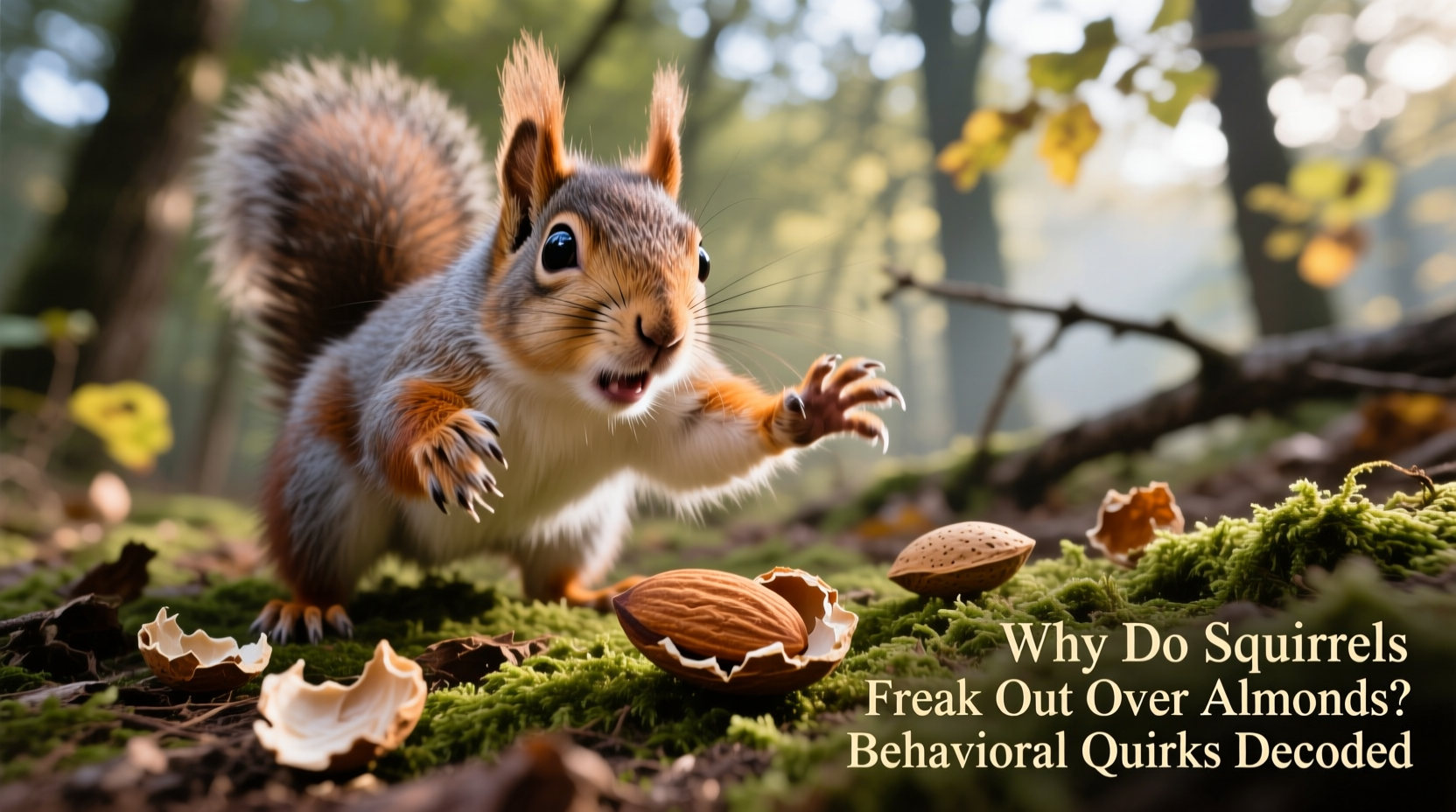
Squirrels are among the most recognizable urban wildlife, often seen darting across lawns, scaling trees, or rummaging through backyard bird feeders. But few behaviors puzzle observers more than a squirrel’s intense reaction to almonds. Whether it's an explosive burst of energy, frantic digging, or aggressive guarding, these rodents seem to go into overdrive at the mere sight—or smell—of this particular nut. What drives such dramatic behavior? Is it taste, instinct, or something deeper rooted in their evolutionary past?
The answer lies at the intersection of biology, ecology, and learned behavior. Almonds, while not native to most squirrels’ natural diets, trigger powerful responses due to their nutritional profile, scent, and texture—all of which align closely with what squirrels have evolved to seek out. This article decodes the science behind why squirrels appear to “freak out” over almonds, exploring everything from foraging psychology to territorial habits.
The Nutritional Magnet: Why Almonds Are Squirrel Superfood
From a dietary standpoint, almonds are exceptionally rich in fats, proteins, and essential nutrients—exactly the kind of food squirrels prioritize during periods of high energy demand. A single ounce (about 23 almonds) contains roughly 6 grams of protein and 14 grams of fat, making them one of the most calorie-dense nuts available in temperate climates.
This nutritional density is critical for squirrels preparing for winter. Unlike bears, squirrels don’t hibernate deeply but remain active throughout cold months, relying on cached food stores. High-fat foods like almonds provide sustained energy, helping them maintain body temperature and survive lean periods. Their brains are wired to recognize such foods as high-value rewards, triggering dopamine release when discovered—a neurological mechanism similar to how humans respond to sugary treats.
In controlled studies, gray squirrels (*Sciurus carolinensis*) consistently selected almonds over other nuts when given a choice, even preferring them to walnuts and pecans. Researchers believe this preference stems from both caloric efficiency and ease of shell penetration—almond shells, while hard, are thinner than those of hazelnuts or acorns, reducing the energy cost of access.
Scent Sensitivity and Foraging Instincts
Squirrels possess an acute sense of smell, capable of detecting buried nuts under snow or soil up to several inches deep. Almonds emit a distinct oily, slightly sweet aroma caused by benzaldehyde, a compound also found in cherry pits and bitter almonds. This scent acts as a long-range attractant, signaling potential food sources from afar.
When a squirrel detects this scent, its foraging behavior shifts into high gear. It begins rapid zigzag movements, sniffing the ground, and using its paws to scratch and dig. This “freak out” phase isn’t random—it’s a targeted search protocol honed by evolution. The urgency reflects the risk of competition; in urban environments especially, multiple squirrels may converge on a single food source within minutes.
“Squirrels don’t just eat—they assess, cache, and defend. The moment they detect a high-value nut like an almond, every instinct kicks in to secure it before others arrive.” — Dr. Lila Torres, Behavioral Ecologist, University of Vermont
This hyper-vigilance explains why squirrels often appear agitated or erratic around almonds. They’re not merely excited—they’re operating under time pressure, balancing the need to consume, store, and protect against rivals.
Caching Behavior: The Hidden Life of Buried Almonds
One of the most fascinating aspects of squirrel behavior is scatter hoarding—the practice of burying individual nuts in dozens or even hundreds of locations across a territory. Almonds, due to their durability and resistance to mold, are ideal candidates for long-term storage.
Squirrels use spatial memory and landmarks to relocate caches, but they also rely on smell—especially in the short term. However, this creates a paradox: if they can smell their own caches, so can other animals. To counter this, squirrels engage in deceptive caching, where they pretend to bury a nut while actually concealing it in their mouth or fur. This tactic is used more frequently with high-value items like almonds.
| Nut Type | Cache Recovery Rate | Preferred Burying Depth | Shelf Life in Soil |
|---|---|---|---|
| Almond | 78% | 2–3 inches | 4–6 months |
| Acorn | 65% | 1–2 inches | 2–3 months |
| Walnut | 70% | 3–4 inches | 5–7 months |
| Peanut | 50% | 1–2 inches | 1–2 months |
The table above shows that almonds rank among the top choices for both recovery success and longevity in storage. This reinforces their status as a premium commodity in the squirrel economy.
Step-by-Step: How a Squirrel Processes an Almond Discovery
- Detection: The squirrel catches the scent of almonds carried by wind or residual oil on the ground.
- Approach: It moves cautiously, scanning for predators or competitors while closing in.
- Inspection: Using front paws and teeth, it examines the nut for damage, moisture, or spoilage.
- Decision Point: It decides whether to eat immediately or cache for later based on hunger, location safety, and presence of rivals.
- Caching: If stored, the squirrel digs a small hole, deposits the almond, covers it, and may perform a false burial nearby to mislead observers.
- Memory Tagging: Landmarks like rocks, roots, or fence posts are mentally noted to aid future retrieval.
Territoriality and Social Dynamics Around Almonds
Squirrels are generally solitary and highly territorial, particularly during fall when food scarcity looms. An almond-rich area quickly becomes a contested zone. Observations in suburban parks show that dominant squirrels will patrol feeding sites, chase intruders, and even emit warning chirps or tail flicks to assert ownership.
This aggression isn’t just about immediate consumption—it’s about controlling access to resources that support winter survival. In one documented case in Toronto’s High Park, researchers observed a male gray squirrel defending a patch of spilled almonds for over three hours, driving off six challengers and successfully caching 34 nuts before retreating.
💬 Mini Case Study: During a community garden project in Portland, volunteers reported that placing almonds near sunflower seeds led to increased squirrel activity and disrupted bird feeding patterns. After switching to safflower seeds (which squirrels dislike), almond-related disruptions ceased, confirming their disproportionate appeal.
The social implications extend beyond physical conflict. Subordinate squirrels often adopt stealth strategies—feeding at dawn or dusk, avoiding open areas, or retrieving caches when dominants are inactive. This temporal partitioning reduces direct confrontation but highlights the stress almonds can introduce into local squirrel hierarchies.
Do All Squirrels React the Same Way?
No—not all squirrels respond identically to almonds. Species, age, environment, and prior experience shape individual reactions.
- Gray Squirrels: Most aggressive and efficient almond foragers; common in cities and suburbs.
- Red Squirrels: Prefer conifer seeds but will take almonds if available; more likely to store them in middens (central piles) rather than scatter-hoarding.
- Flying Squirrels: Nocturnal and less commonly seen; they favor fungi and insects but consume almonds opportunistically.
- Young Squirrels: Less skilled at caching and more prone to eating on the spot, increasing vulnerability to theft.
Urban squirrels, having adapted to human-provided food, often display bolder behavior and quicker response times to novel items like almonds compared to their rural counterparts. This behavioral plasticity allows them to thrive in changing environments—but also increases human-wildlife conflict.
Common Misconceptions About Squirrel-Almond Interactions
Several myths persist about why squirrels react so strongly to almonds:
- Myth: Squirrels love all nuts equally.
Reality: They exhibit strong preferences based on fat content, shell hardness, and taste. Almonds rank near the top. - Myth: Roasted almonds are better for squirrels.
Reality: Roasting often involves oils and salt, which can dehydrate or harm squirrels. Stick to raw. - Myth: Squirrels remember every nut they bury.
Reality: They recover only about 70–80% of caches. Forgotten almonds sometimes sprout, making squirrels accidental tree planters.
Checklist: Managing Squirrel-Almond Interactions Responsibly
- ✅ Offer raw, unsalted almonds if intentionally feeding squirrels.
- ✅ Limit quantity to avoid dependency or overpopulation.
- ✅ Place food in designated zones away from gardens or patios.
- ✅ Avoid feeding during breeding seasons to reduce territorial fights.
- ✅ Provide water nearby, especially in dry climates.
- ❌ Never hand-feed wild squirrels—this encourages aggression and disease transmission.
FAQ: Frequently Asked Questions
Can almonds hurt squirrels?
No, raw almonds are safe and nutritious. However, salted, flavored, or roasted almonds containing additives like garlic or chocolate can be toxic. Always provide plain, unprocessed nuts.
Why do squirrels sometimes leave almonds uneaten?
A squirrel may reject an almond if it senses mold, insect infestation, or rancidity. Alternatively, it might be saving it for later and simply hasn’t returned yet. Some forgotten caches eventually germinate into almond saplings.
Are there ethical concerns with feeding squirrels almonds?
Occasional feeding is generally harmless, but regular provisioning can disrupt natural foraging behaviors, increase aggression, and lead to overpopulation. Experts recommend moderation and using feeding as an observational opportunity rather than a routine.
Conclusion: Understanding the Squirrel Mindset
The seemingly irrational “freak out” squirrels exhibit over almonds is anything but random. It’s a finely tuned survival strategy shaped by millions of years of evolution. Every twitch, dash, and defensive chirp serves a purpose: to acquire, secure, and preserve a resource critical to winter survival. By understanding these behaviors, we gain insight not only into squirrel psychology but also into the delicate balance of urban ecosystems.
Whether you’re a curious observer, a nature enthusiast, or someone trying to coexist peacefully with backyard wildlife, recognizing the motivations behind squirrel actions fosters empathy and smarter interactions. Instead of shooing them away, consider creating a balanced environment where both humans and squirrels can thrive—without turning your patio into a nut-fueled battleground.




 浙公网安备
33010002000092号
浙公网安备
33010002000092号 浙B2-20120091-4
Comments
No comments yet. Why don't you start the discussion?