
In the digital age, holiday traditions have evolved beyond physical decorations and gatherings. One subtle yet widespread shift is the integration of seasonal visual effects into video conferencing and live streaming platforms. If you’ve logged into a Zoom call, a Twitch stream, or a social media live session in December, you’ve likely encountered twinkling Christmas lights dancing around your head—or floating behind a streamer’s avatar. These animated overlays aren’t just whimsical additions; they’re part of a deliberate strategy by streaming services to boost engagement, foster emotional connection, and reflect cultural moments in real time.
The use of Christmas light filters on virtual backgrounds has become so common that it’s almost expected. But what drives this trend? Why invest engineering resources into festive animations instead of focusing solely on core functionality? The answer lies at the intersection of psychology, branding, user experience design, and seasonal marketing.
The Psychology of Festive Visuals
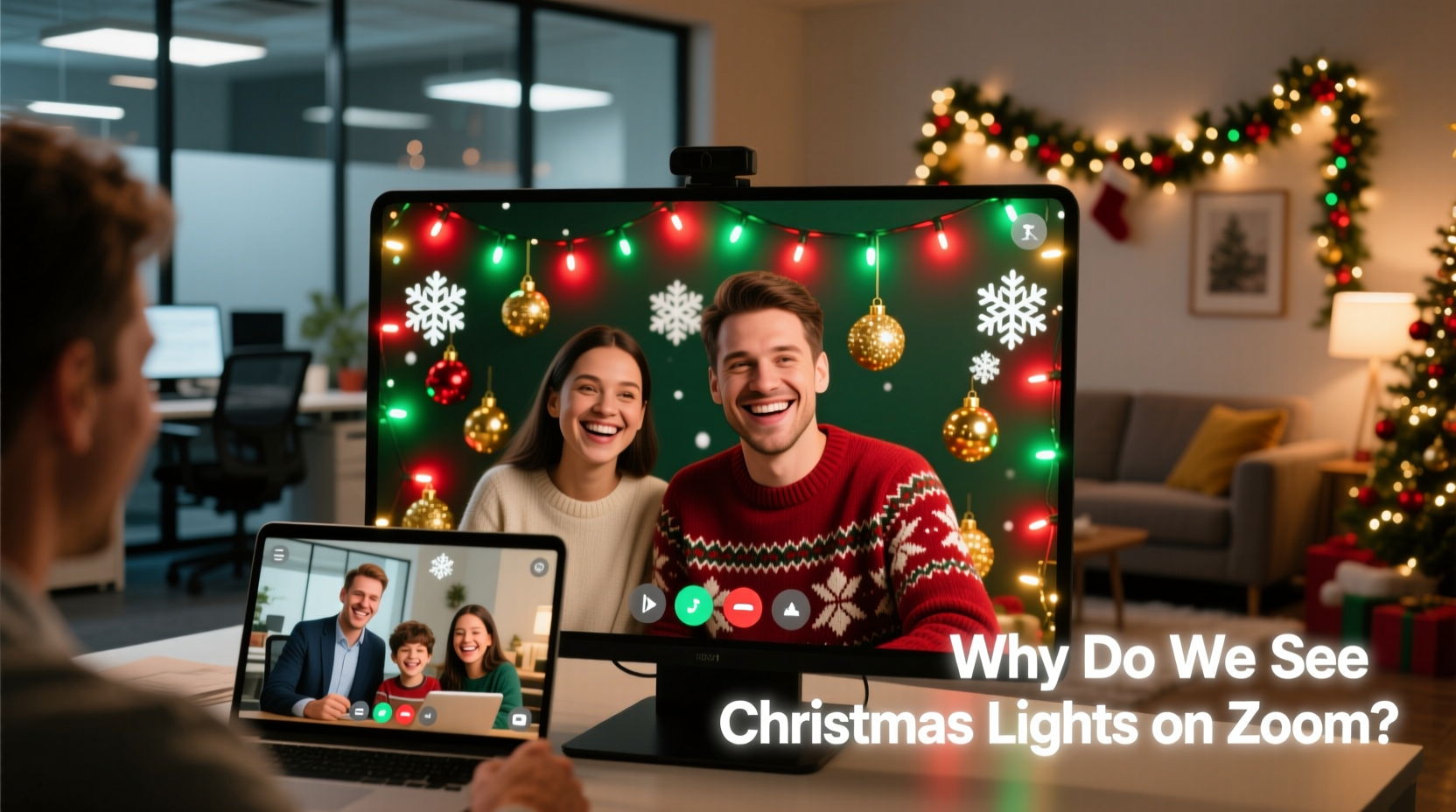
Humans are emotionally responsive to environmental cues. Warm lighting, familiar symbols like snowflakes or reindeer, and rhythmic twinkling patterns trigger positive associations tied to nostalgia, safety, and celebration. When applied digitally, these cues serve as micro-moments of delight—small pleasures that elevate an otherwise routine interaction.
Research in environmental psychology shows that warm-colored lighting (such as amber or soft white) increases feelings of comfort and intimacy. Christmas lights, with their flickering warmth, mimic candlelight—a primal symbol of gathering and safety. Streaming platforms leverage this instinctual response by embedding similar lighting effects into virtual spaces, making remote interactions feel more personal and joyful.
“Even digital environments benefit from emotional anchoring. Festive filters act as psychological signposts that say: ‘This is a special time.’” — Dr. Lena Torres, Cognitive Psychologist specializing in digital behavior
Moreover, during the winter months—particularly in regions with long nights and limited sunlight—seasonal affective disorder (SAD) affects millions. Exposure to bright, dynamic lighting can help regulate mood. While not a substitute for clinical treatment, cheerful visual stimuli like animated Christmas lights may offer mild mood elevation, especially in isolated or remote settings.
Brand Engagement Through Seasonal Features
Streaming platforms operate in a competitive attention economy. Standing out requires more than functionality—it demands personality. By rolling out time-limited features such as holiday-themed filters, platforms create a sense of novelty and urgency. Users are more likely to engage when they know the feature will disappear after January 1st.
Consider the example of Twitch, which introduced “Holiday Mode” in 2020. Streamers could activate animated overlays including falling snow, glowing wreaths, and interactive light strings that responded to audio levels. According to internal data shared at TwitchCon 2021, streams using Holiday Mode saw an average 23% increase in viewer retention during peak December hours compared to non-decorated broadcasts.
Similarly, Google Meet launched animated holiday backgrounds in 2021, allowing users to place themselves in snowy village scenes complete with blinking lights and chiming bells. Microsoft Teams followed suit with “Festive Frames,” adding subtle border effects to participant tiles. These updates weren’t just cosmetic—they were strategic moves to make professional tools feel less sterile and more human during a traditionally social season.
Technical Implementation Behind the Magic
Behind every floating pixelated ornament is a combination of augmented reality (AR), real-time rendering, and efficient compression algorithms. Most modern video platforms use WebGL or WebRTC-based AR frameworks to overlay graphics onto video feeds without taxing system resources excessively.
The process typically works like this:
- User enables a virtual background or filter.
- The platform’s AI detects body contours and separates the foreground (the person) from the background.
- A pre-rendered animation—such as looping Christmas lights—is composited behind the user.
- Lighting effects are adjusted dynamically based on ambient brightness detected through the webcam.
- All layers are compressed and streamed in real time with minimal latency.
To ensure smooth performance, developers optimize these assets heavily. Animations are often built using lightweight sprites or shader effects rather than high-resolution video files. For instance, a string of lights might be generated algorithmically—each bulb programmed to twinkle randomly within set parameters—reducing file size while preserving realism.
Platforms also consider accessibility. Some filters include toggle options for reduced motion, catering to users prone to motion sickness or sensory overload. This balance between spectacle and usability reflects a maturing approach to inclusive design in digital experiences.
Case Study: How One Educator Used Holiday Filters to Boost Student Engagement
In late 2022, Ms. Rachel Nguyen, a middle school teacher in Minneapolis, faced declining participation in her online classes during the final weeks before winter break. Students were distracted, attendance dropped, and energy levels lagged. Determined to re-engage them, she introduced a weekly “Festive Friday” where both she and her students used holiday-themed virtual backgrounds with animated Christmas lights.
She didn’t stop at aesthetics. She gamified the experience: students earned points toward a class reward by identifying historical facts about holiday traditions hidden within the background designs. The lights weren’t just decoration—they became part of the lesson.
Within two weeks, attendance rose from 78% to 96%. More importantly, classroom chat activity increased by over 40%, and students began arriving early to show off their custom backgrounds. “It gave them something fun to look forward to,” Nguyen said in a follow-up interview. “The lights made the screen feel less like a chore and more like a shared space.”
This example illustrates how seasonal filters, when integrated thoughtfully, transcend mere decoration. They become tools for connection, motivation, and pedagogy.
Do’s and Don’ts of Using Holiday Filters
| Do | Don't |
|---|---|
| Use subtle lighting effects in professional meetings | Overload your background with flashing animations |
| Test filters beforehand to avoid technical glitches | Assume all participants can run AR features smoothly |
| Leverage themes for team-building or educational activities | Use religious-specific imagery in diverse or secular groups |
| Respect cultural inclusivity—offer non-denominational options | Ignore accessibility needs like motion sensitivity |
| Turn off filters if they distract from conversation | Leave filters on indefinitely after the season ends |
Why Now? The Rise of Digital Atmosphere Design
The inclusion of Christmas light filters reflects a broader trend: the rise of \"digital atmosphere design.\" Just as architects consider lighting, acoustics, and layout when designing physical spaces, tech companies now treat virtual interfaces as experiential environments.
In the past, video conferencing was judged purely on reliability and clarity. Today, success metrics include emotional resonance, perceived warmth, and even \"fun factor.\" Platforms recognize that people don’t just want efficient communication—they want meaningful connection.
Seasonal filters allow companies to temporarily transform utilitarian tools into celebratory ones. It's akin to decorating an office lobby for the holidays—only here, the decoration is personalized, scalable, and instantly deployable across millions of endpoints.
Furthermore, these features generate organic social sharing. A user who enjoys a festive filter is more likely to post about it on Twitter or TikTok, creating free publicity. In essence, each activated filter becomes a tiny ambassador for the platform.
Frequently Asked Questions
Are Christmas light filters available on all streaming platforms?
Most major platforms—including Zoom, Google Meet, Microsoft Teams, Twitch, and Facebook Live—have introduced some form of holiday-themed filters or backgrounds during December. However, availability varies by region, device type, and app version. Mobile apps often receive these updates faster than desktop clients due to easier deployment cycles.
Can I create my own custom Christmas light filter?
Yes—platforms like Snapchat, Instagram, and TikTok allow users to build AR filters using tools like Lens Studio or Spark AR. Some advanced users have even created downloadable filters for Zoom via third-party plugins. Keep in mind that custom filters should comply with platform guidelines regarding performance and content appropriateness.
Do holiday filters slow down video calls?
Potentially. Complex animations require additional processing power, especially on older devices or low-end webcams. To minimize lag, choose simpler effects, close other applications, and ensure a stable internet connection. Many platforms automatically reduce filter complexity if system strain is detected.
How to Make the Most of Seasonal Features: A Practical Checklist
- ✅ Check for holiday updates in your preferred streaming app each November
- ✅ Test filters in advance of important calls or streams
- ✅ Consider audience context—festive may not suit formal presentations
- ✅ Offer alternatives for users with sensory sensitivities
- ✅ Combine visuals with themed audio or music for immersive effect
- ✅ Turn off seasonal features promptly after the holiday period
- ✅ Gather feedback from participants on whether filters enhanced the experience
Conclusion: More Than Just Pixels and Lights
Christmas light filters on virtual backgrounds may seem trivial at first glance—a bit of seasonal flair in an otherwise functional tool. But their presence speaks to a deeper shift in how we interact online. We no longer accept cold, impersonal interfaces. We crave warmth, recognition, and shared moments—even when separated by screens and distance.
Streaming services understand this. By adding twinkling lights and gentle snowfalls to our digital surroundings, they acknowledge the human need for ritual, beauty, and belonging. These small touches don’t replace real-world celebrations, but they do make remote connections feel a little more like home.
As technology continues to mediate our relationships, the line between utility and emotion will blur further. The next time you see those animated bulbs shimmering behind a friend’s face on screen, remember: it’s not just code. It’s care, coded into light.




 浙公网安备
33010002000092号
浙公网安备
33010002000092号 浙B2-20120091-4
Comments
No comments yet. Why don't you start the discussion?