
Succulents are often marketed as the ultimate low-maintenance houseplants—drought-tolerant, resilient, and easy to care for. But many plant owners find themselves puzzled when their succulents begin to yellow, shrivel, or collapse despite careful watering routines. The assumption that “I don’t water much, so it must be healthy” can be dangerously misleading. In reality, underwatering is rarely the issue; instead, a combination of subtle but critical missteps in care leads to decline. Understanding these hidden pitfalls is essential to keeping your succulents thriving beyond the first few months.
Lack of Proper Drainage: The Silent Killer
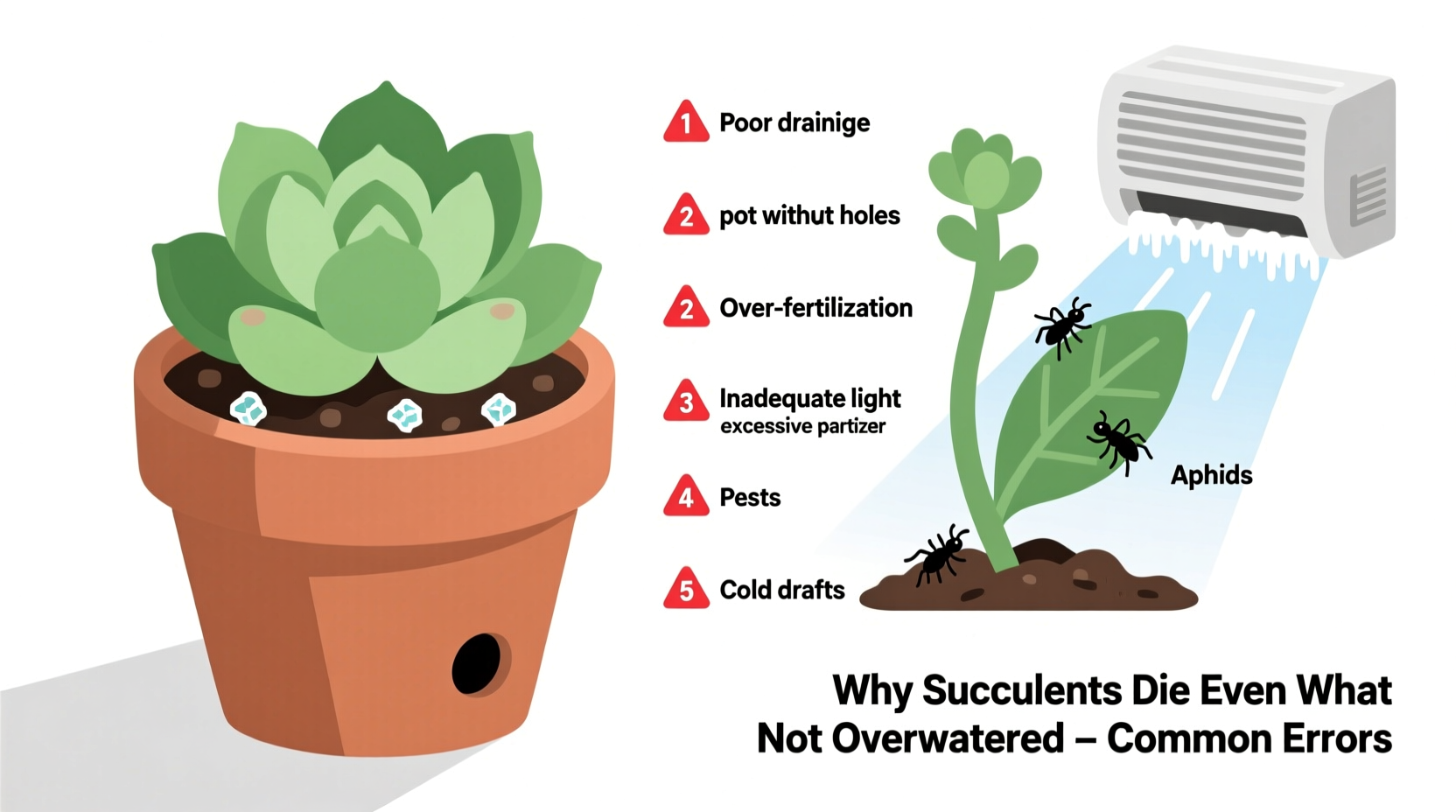
One of the most overlooked factors in succulent health is drainage. Even if you water sparingly, using a pot without drainage holes traps moisture at the root zone. Over time, this creates a damp environment where roots suffocate and rot sets in—often before any visible signs appear above the soil.
Succulents evolved in arid regions with fast-draining soils. Their roots are adapted to absorb water quickly and then dry out completely. When planted in containers that retain water, such as decorative pots without holes or standard flowerpots filled to the brim, the roots remain wet far longer than they should.
Additionally, saucers left full of excess water after watering contribute to root rot. Empty them within 15–30 minutes after watering to prevent reabsorption.
Incorrect Soil Composition: Not All Dirt Is Equal
Using regular potting soil for succulents is a common error—even among experienced gardeners. Standard mixes retain too much moisture and compact easily, which restricts airflow to the roots. Succulents need a gritty, porous medium that mimics desert conditions.
A proper succulent mix typically includes:
- Coarse sand or perlite (30–50%)
- Cactus or potting soil base (50%)
- Optional: pumice, lava rock, or orchid bark for extra aeration
Pre-made cactus and succulent soils are available, but many still contain too much peat, which holds water. Enhance them by adding more perlite or pumice for better drainage.
“Succulents don’t grow in forest loam—they grow in rocky crevices. Replicate that environment, not a tropical jungle.” — Dr. Linda Chen, Botanist and Horticultural Consultant
Inadequate Light: The Hidden Stressor
While overwatering gets most of the blame, insufficient light is equally destructive. Many indoor growers place succulents near north-facing windows or deep inside rooms, assuming that because they’re desert plants, some indirect light is enough. This leads to etiolation—a condition where the plant stretches abnormally toward the light source, becoming weak, pale, and unstable.
Etiolated succulents develop elongated stems, wide gaps between leaves, and lose their compact, vibrant form. Once stretched, they rarely recover their original shape without intervention like pruning or propagation.
Most succulents require at least 4–6 hours of bright, direct sunlight daily. South or west-facing windows are ideal. In low-light climates or during winter months, supplement with full-spectrum grow lights placed 6–12 inches above the plants for 10–14 hours per day.
| Light Condition | Signs in Succulents | Solution |
|---|---|---|
| Too little light | Stretching, pale color, leaf drop | Move closer to window or add grow lights |
| Too much direct sun | Brown, scorched patches on leaves | Provide filtered light or gradual acclimation |
| Ideal light | Compact growth, vivid color, firm leaves | Maintain current position |
Poor Air Circulation and Humidity Traps
Indoor environments, especially bathrooms or kitchens, often have high humidity and little airflow—conditions that contradict the natural habitat of most succulents. Poor air circulation increases the risk of fungal infections and pest infestations like mealybugs and spider mites.
Tightly packed arrangements, terrariums, or cloches may look attractive but create microclimates that trap moisture around the foliage. This is particularly dangerous when combined with nighttime temperature drops, which cause condensation on leaves and stems.
To improve airflow:
- Space plants apart to allow breathing room
- Avoid placing succulents in sealed glass containers unless specifically designed for arid plants
- Use a small fan on low setting in humid areas to promote gentle air movement
Seasonal Neglect: Treating Succulents as Static Plants
Many caregivers assume succulents need the same routine year-round. However, these plants have active growing seasons (spring and summer) and dormancy periods (fall and winter). Watering frequency, light exposure, and fertilization needs shift accordingly.
During dormancy, succulents slow their metabolism. Watering once every 3–6 weeks may be sufficient, depending on climate and pot size. Over-fertilizing during this phase can burn roots and lead to weak, leggy growth when the plant resumes activity.
Conversely, in spring and early summer, succulents benefit from:
- Slightly increased watering (only when soil is fully dry)
- Monthly feeding with diluted, balanced fertilizer (10-10-10 or lower)
- Gradual exposure to outdoor conditions if transitioning from indoors
Step-by-Step Guide to Seasonal Care Adjustments
- Spring: Begin increasing watering frequency. Fertilize monthly. Rotate pots for even light exposure.
- Summer: Monitor for sunburn if moving outdoors. Ensure ventilation. Watch for pests.
- Fall: Reduce watering gradually. Stop fertilizing. Bring sensitive species indoors before frost.
- Winter: Water very sparingly. Keep in brightest available light. Avoid cold drafts.
Common Pests and Diseases Often Missed
Even with perfect watering, pests can silently compromise a succulent’s health. Mealybugs, scale insects, and fungus gnats are frequent invaders, especially in indoor settings.
Mealybugs appear as white, cottony masses in leaf axils or along stems. They feed on sap, weakening the plant and excreting honeydew that promotes sooty mold. Early detection is key.
To manage infestations:
- Isolate affected plants immediately
- Dab visible pests with a cotton swab dipped in 70% isopropyl alcohol
- Treat with insecticidal soap or neem oil every 7–10 days until clear
- Inspect nearby plants to prevent spread
Fungal diseases, often caused by prolonged leaf wetness or poor air flow, manifest as black or brown spots that spread rapidly. Remove infected parts promptly and improve environmental conditions.
Mini Case Study: The Healthy-Looking Plant That Wasn’t
Sarah, an urban gardener in Seattle, prided herself on her minimalist succulent collection. She watered each plant every three weeks, used cute ceramic pots without holes, and kept them on a shaded bookshelf. After six months, several plants began dropping leaves and developing soft, mushy bases—despite her disciplined watering.
Upon inspection, a local nursery specialist found that the combination of no drainage, dense potting soil, and low light had created chronic root stress. The plants weren’t overwatered on schedule, but the environment prevented drying. Sarah switched to terracotta pots with drainage, repotted in gritty mix, and moved the collection to a south-facing windowsill. Within two months, new growth appeared, and the remaining plants stabilized.
This case illustrates how multiple minor errors compound into fatal conditions—even when the most obvious mistake (overwatering) is avoided.
Checklist: Prevent Succulent Death Without Overwatering
Use this checklist to audit your care routine and catch hidden issues before they escalate:
- ✅ Pots have drainage holes
- ✅ Soil is gritty and fast-draining (not standard potting mix)
- ✅ Plants receive 4–6 hours of direct sunlight daily
- ✅ Water only when soil is completely dry (test with finger or moisture meter)
- ✅ No standing water in saucers after watering
- ✅ Air circulates freely around plants
- ✅ Care routine adjusts with seasons
- ✅ Regular inspection for pests and disease
- ✅ Fertilizer used only in growing season, and diluted
- ✅ New plants quarantined before joining collection
Frequently Asked Questions
Why are my succulent’s leaves turning yellow and mushy?
Yellow, mushy leaves usually indicate root rot, often due to poor drainage or trapped moisture—even without frequent watering. Check the roots for dark, soft tissue and repot in dry, gritty soil if needed.
Can succulents survive in low light?
Some species tolerate lower light better than others (e.g., Zebra Haworthia), but no succulent thrives long-term in dim conditions. Most will stretch, weaken, and become prone to disease. Supplement with grow lights if natural light is limited.
How do I know if my succulent is dormant?
Dormant succulents stop growing, may shed older leaves, and require less water. Growth slows or halts, especially in winter. Research your specific species, as dormancy timing varies (e.g., aloes rest in summer, some crassulas in winter).
Conclusion: Rethinking “Easy” Plant Care
The belief that succulents thrive on neglect is a myth that leads to preventable failure. These plants aren’t indestructible—they’re specialists adapted to precise conditions. Success comes not from ignoring them, but from understanding their ecological needs and adjusting care accordingly.
By focusing on drainage, light, soil, and seasonal rhythms, you create an environment where succulents don’t just survive, but flourish. It’s not about watering less—it’s about creating the right balance of elements that mimic their natural habitat.




 浙公网安备
33010002000092号
浙公网安备
33010002000092号 浙B2-20120091-4
Comments
No comments yet. Why don't you start the discussion?