
Tattoos are more than just body art—they’re personal statements, emotional anchors, and permanent records of identity. Yet, despite being \"permanent,\" many people notice their ink softening, blurring, or losing intensity over the years. This natural process can be frustrating, especially when a once-vibrant design begins to look washed out. The truth is, tattoo fading isn’t inevitable in the sense that nothing can be done about it. With proper care and informed habits, you can significantly slow down the aging of your ink. Understanding the science behind fading and taking proactive steps makes all the difference.
The Science Behind Tattoo Fading
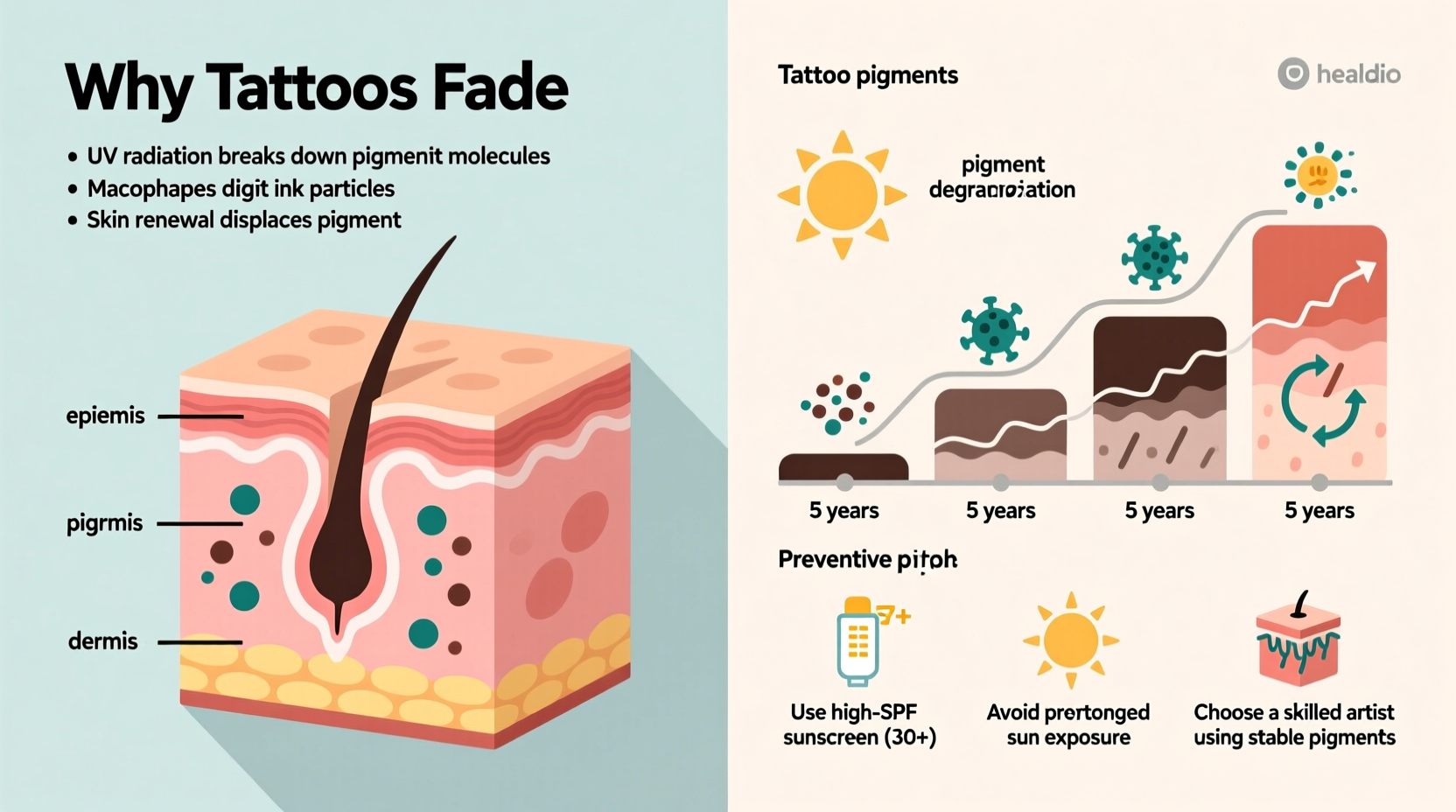
Tattoo ink is deposited into the dermis—the second layer of skin—using needles that puncture the surface thousands of times per minute. Once embedded, immune cells called macrophages attempt to break down the foreign pigment particles. Some are removed, but many remain trapped in fibroblasts (skin cells), which stabilize the ink. Over time, however, several biological and environmental factors cause this pigment to disperse or degrade.
One primary reason tattoos fade is the body’s natural cell turnover. Skin regenerates approximately every 27 days, and while dermal ink is deeper than the epidermis, subtle shifts in tissue structure still affect pigment stability. Additionally, UV radiation from sunlight breaks down ink molecules, particularly lighter colors like yellow and pastels. The result? A gradual softening of lines and a loss of contrast.
“Tattoos aren’t truly static. They live in dynamic tissue that changes with age, sun exposure, and lifestyle. What looks sharp at 25 may soften by 40—even with excellent care.” — Dr. Lena Torres, Dermatologist & Pigment Specialist
Key Factors That Accelerate Tattoo Fading
Not all tattoos fade at the same rate. Several external and internal variables influence longevity. Recognizing these allows you to adjust your habits accordingly.
- Sun Exposure: Ultraviolet (UV) rays are the number one enemy of tattoo integrity. UV light degrades ink pigments and damages collagen, leading to blurred outlines and color shifts.
- Poor Aftercare: In the first few weeks after getting inked, improper cleaning, over-moisturizing, or picking scabs can damage healing skin and cause premature fading.
- Location on the Body: Areas that experience frequent friction—like hands, feet, elbows, and fingers—tend to fade faster due to constant contact and skin exfoliation.
- Weight Fluctuations and Skin Stretching: Gaining or losing significant weight stretches or compresses skin, distorting the tattoo's original shape and spreading pigment apart.
- Low-Quality Ink or Technique: Amateur work, incorrect needle depth, or unstable pigments contribute to early blurring and patchiness.
- Aging and Skin Health: As skin loses elasticity and thins with age, tattoos naturally lose definition. Hydration levels and overall health also play a role.
How to Prevent Tattoo Fading: A Step-by-Step Guide
Maintaining vibrant ink requires consistent effort across multiple phases—from initial healing to long-term upkeep. Follow this timeline-based approach to maximize your tattoo’s lifespan.
Weeks 1–4: Critical Healing Phase
- Wash gently: Use lukewarm water and fragrance-free antibacterial soap twice daily. Pat dry—never rub.
- Moisturize appropriately: Apply a thin layer of unscented ointment (like Aquaphor) or tattoo-specific lotion 2–3 times a day. Over-moisturizing can suffocate healing skin.
- No soaking: Avoid baths, swimming pools, saunas, and hot tubs until fully healed (typically 2–3 weeks).
- Don’t pick: Let scabs fall off naturally. Picking can pull out ink and create patchy areas.
Months 1–12: Establish Maintenance Habits
- Switch to a lightweight, non-comedogenic moisturizer to keep skin supple without clogging pores.
- Begin applying sunscreen daily to tattooed areas exposed to sunlight—even on cloudy days.
- Monitor for signs of irritation, allergic reactions, or ink migration (blowout), and consult your artist or dermatologist if concerned.
Yearly and Beyond: Long-Term Preservation
- Perform seasonal skin checks. Look for fading, distortion, or texture changes.
- Consider touch-ups every 5–10 years, depending on placement and exposure.
- Stay hydrated and maintain a balanced diet rich in vitamins A, C, and E to support skin regeneration.
Do’s and Don’ts of Tattoo Care
| Do | Don’t |
|---|---|
| Use fragrance-free, hypoallergenic lotions | Use petroleum-based products long-term (they clog pores) |
| Apply broad-spectrum SPF 30+ daily | Assume clothing fully blocks UV rays (some fabrics offer low UPF) |
| Keep skin hydrated from within (drink water) | Ignore signs of infection—redness, pus, prolonged swelling |
| Get touch-ups from reputable artists | Let unlicensed individuals rework old tattoos |
| Wear protective clothing in high-sun environments | Soak tattoos in chlorinated or salt water during healing |
Real Example: The Case of James’ Sleeve Tattoo
James, a 34-year construction worker, got a full left-arm sleeve at age 26. The piece featured intricate black-and-gray shading with red accents. Within five years, he noticed the reds had dulled significantly, and the fine details near his elbow looked blurry.
Upon consultation with his original artist, Maria Chen, she identified two main culprits: daily sun exposure without sunscreen and repeated friction from leaning on rough surfaces at job sites. “His skin was constantly irritated, and the UV damage accelerated pigment breakdown,” Chen explained.
She advised him to start wearing long-sleeved UV-protective shirts on the job, apply SPF 50+ every morning, and schedule a professional touch-up for the faded sections. Two years later, James reports his tattoo has regained much of its original clarity, and he now treats it as part of his daily self-care routine.
“Tattoos on high-use limbs need extra protection. Think of them like outdoor paint—they’ll last longer with a clear coat (sunscreen) and less abrasion.” — Maria Chen, Award-Winning Tattoo Artist
Essential Checklist for Lasting Ink
To ensure your tattoo stays sharp for decades, follow this actionable checklist:
- ✅ Clean gently during the first month
- ✅ Moisturize daily with non-comedogenic lotion
- ✅ Apply SPF 30+ to exposed tattoos every day
- ✅ Avoid tanning beds and excessive sunbathing
- ✅ Wear protective clothing in high-friction or high-UV environments
- ✅ Stay hydrated and eat nutrient-rich foods
- ✅ Schedule touch-ups every 5–10 years if needed
- ✅ Visit a dermatologist if you notice abnormal changes in skin texture or color
Frequently Asked Questions
Can I go in the sun after my tattoo heals?
Yes, but only with proper protection. Once fully healed (after about 4 weeks), you can expose your tattoo to sunlight—but always apply broad-spectrum sunscreen. Unprotected UV exposure will accelerate fading, especially in colorful tattoos.
Do black tattoos fade more than colored ones?
Black and dark blue inks are the most stable and fade the least over time. Lighter colors—especially yellow, pink, and white—are more prone to degradation because their pigment particles are smaller and more easily broken down by the body and UV light.
How often should I moisturize my tattoo?
During healing: 2–3 times daily. After healing: at least once a day as part of your skincare routine. Consistent hydration helps maintain skin elasticity and prevents dryness that can make tattoos appear dull.
Final Thoughts: Treat Your Tattoo Like Living Art
Your tattoo is not set in stone—it’s embedded in living, breathing skin that evolves throughout your life. While some degree of fading is natural, neglecting protection and care speeds up the process unnecessarily. By understanding the biological mechanisms at play and committing to simple, daily habits, you preserve not just the appearance of your ink, but the meaning behind it.
Think of your tattoo as a lifelong companion. It deserves respect, attention, and maintenance. Whether it’s a small symbol on your wrist or a sprawling back piece, its longevity reflects your commitment to honoring your story.




 浙公网安备
33010002000092号
浙公网安备
33010002000092号 浙B2-20120091-4
Comments
No comments yet. Why don't you start the discussion?