
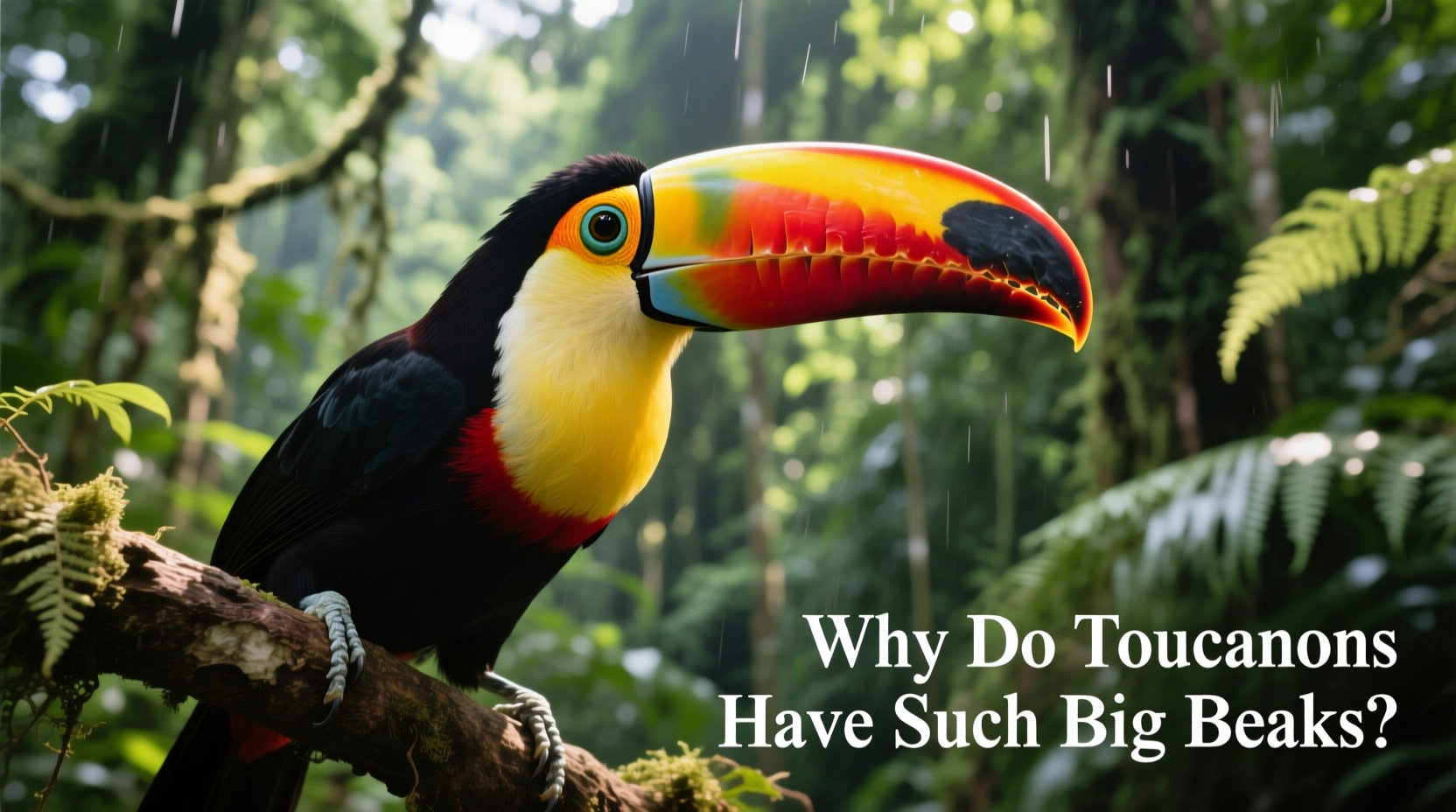
Toucans are among the most instantly recognizable birds in the world, thanks to their enormous, brightly colored beaks. Found primarily in the rainforests of Central and South America, these striking birds boast beaks that can reach up to one-third of their total body length. At first glance, such a large beak might seem impractical or purely decorative. However, decades of scientific observation reveal that the toucan’s beak is a marvel of evolutionary engineering—serving critical roles in thermoregulation, feeding, social behavior, and even survival.
This article explores the multifaceted reasons behind the toucan’s oversized beak, combining insights from biology, ecology, and animal behavior to uncover how this unique adaptation supports life in the humid tropics.
Thermoregulation: A Natural Air Conditioner
One of the most significant discoveries about toucan beaks came in 2009, when researchers at Brock University revealed that the beak plays a crucial role in temperature regulation. Despite being lightweight and hollow, the toucan’s beak is densely packed with blood vessels just beneath the surface. By adjusting blood flow to the beak, toucans can dissipate excess body heat efficiently—a vital function in hot, humid rainforest environments.
The process works similarly to how elephants use their ears to cool down. When a toucan is overheated, it increases blood circulation to its beak, allowing heat to radiate into the surrounding air. Conversely, in cooler conditions, the bird constricts blood flow to conserve warmth. This ability makes the beak a dynamic thermal window, fine-tuning the bird’s internal temperature without expending excessive energy.
“Toucans can regulate up to four times more heat through their beaks than previously thought. It's not just for show—it’s a precision instrument for climate control.” — Dr. Glenn Tattersall, Comparative Physiologist, Brock University
Feeding Adaptations: Precision Over Power
Despite their size, toucan beaks are surprisingly lightweight due to a structure known as a \"keratin foam sandwich\"—a network of bony struts encased in layers of keratin, the same protein found in human nails. This design provides strength without added weight, enabling agile movement through dense forest canopies.
The elongated shape allows toucans to reach fruit on slender branches that cannot support their full body weight. By extending their beaks, they can pluck fruit while perched securely on sturdier limbs, minimizing the risk of falling. Their beaks also feature serrated edges, which help grip slippery fruits like figs and guavas.
Additionally, toucans use their beaks to toss food into the air and catch it head-first—ensuring smooth swallowing. This dexterous feeding method reduces the need to reposition food in the mouth, saving time and energy.
Dietary Preferences of Common Toucan Species
| Species | Primary Diet | Beak Function in Feeding |
|---|---|---|
| Keel-billed Toucan | Fruit (70%), insects, eggs | Reaches outer canopy fruit; probes tree cavities |
| Toco Toucan | Figs, palm fruit, small reptiles | Leverages long reach for ground-level fallen fruit |
| Channel-billed Toucan | Berries, insects, nestlings | Serrations aid in tearing soft prey |
Social Signaling and Mate Selection
The vibrant colors of a toucan’s beak—often combining bright orange, yellow, red, and green—are not merely ornamental. These hues serve as signals in social interactions, particularly during courtship displays and territorial disputes.
Studies suggest that beak coloration correlates with health and nutritional status. Brighter, more saturated beaks typically indicate a well-nourished individual with strong immune function—key traits for reproductive success. Males often engage in \"fruit tossing\" displays, using their beaks to flip berries toward potential mates, showcasing both dexterity and fitness.
In group settings, toucans use their beaks in ritualized sparring, gently clacking them together in what appears to be playful combat. These interactions reinforce social bonds and establish hierarchy without causing injury—thanks to the beak’s resilient yet flexible structure.
Predator Deterrence and Defense
While toucans are not aggressive birds, their large beaks can serve as a deterrent to predators. From a distance, the exaggerated size of the beak makes the bird appear larger and potentially more dangerous than it actually is. This visual intimidation may discourage smaller predators like snakes, raptors, or arboreal mammals from attacking.
When threatened, toucans will open their beaks wide and emit loud calls, creating an imposing display. Though they rarely use their beaks offensively, they can deliver a painful pinch if cornered—particularly effective against snakes attempting to raid nests.
Evolutionary Origins: How the Beak Developed Over Time
Fossil evidence suggests that early ancestors of modern toucans had much smaller beaks. The dramatic enlargement evolved gradually over millions of years, driven by a combination of ecological opportunity and sexual selection.
As toucans adapted to life in dense rainforest canopies, access to fruit became a competitive advantage. Individuals with longer beaks could exploit food sources unavailable to others, increasing their chances of survival and reproduction. Simultaneously, mate preferences for brighter, larger beaks amplified these traits across generations.
This dual pressure—natural selection for feeding efficiency and sexual selection for attractiveness—created a feedback loop that accelerated beak evolution. The result is one of the most disproportionate beak-to-body ratios in the avian world.
Mini Case Study: The Keel-billed Toucan in Costa Rica
In Monteverde Cloud Forest, researchers observed a group of Keel-billed toucans during the dry season when fruit availability declined. One male, distinguished by an unusually large and vividly colored beak, consistently accessed food first. He used his beak to reach ripe figs on fragile branches while others waited below. Over several weeks, this individual sired two broods with different females—suggesting a direct link between beak prominence and mating success.
Interestingly, younger males attempted to mimic his feeding techniques but struggled to maintain balance, highlighting the skill required to wield such a specialized tool effectively.
Frequently Asked Questions
Can toucans fly with such large beaks?
Yes, toucans fly effectively despite their large beaks. The beak’s internal structure is made of lightweight keratin and bone struts, keeping overall weight minimal. Their flight is characterized by rapid wingbeats and short glides between trees, perfectly suited to forest navigation.
Do toucans use their beaks to drink water?
Toucans do not scoop water with their beaks. Instead, they dip their beaks into water sources and tilt their heads back to let water flow down their throats. The beak acts more as a precision tool than a container.
Are toucan beaks sensitive?
Yes, toucan beaks are highly sensitive due to a rich network of nerve endings. This sensitivity aids in handling delicate fruit, detecting temperature changes, and engaging in social behaviors like preening and beak-touching with mates.
Actionable Checklist: Understanding Avian Adaptations
- Observe how form follows function in animal anatomy—size and shape often reflect ecological needs.
- Consider multiple evolutionary pressures (e.g., feeding, mating, thermoregulation) when analyzing physical traits.
- Look beyond aesthetics: colorful features in nature often serve communication or survival purposes.
- Study behavioral context—how animals use their traits in daily life reveals their true purpose.
- Support rainforest conservation efforts to protect species like toucans and their complex ecosystems.
Conclusion: More Than Just a Showpiece
The toucan’s big beak is far more than a quirky trait—it’s a sophisticated, multi-functional organ shaped by millions of years of evolution. From regulating body temperature to attracting mates and accessing hard-to-reach food, the beak exemplifies nature’s ingenuity. Its size, color, and structure all contribute to the bird’s survival in one of Earth’s most competitive environments.
Understanding the toucan’s beak deepens our appreciation for biodiversity and reminds us that even the most flamboyant features in nature usually have practical roots. Next time you see a toucan, look past the spectacle and recognize the intricate balance of biology, behavior, and environment that made that beak possible.




 浙公网安备
33010002000092号
浙公网安备
33010002000092号 浙B2-20120091-4
Comments
No comments yet. Why don't you start the discussion?