
It’s not uncommon to notice your veins becoming more prominent—especially on your hands, arms, or feet. For some, bulging veins appear during exercise; for others, they’re visible at rest. While often harmless, sudden or unusual changes in vein appearance can sometimes signal an underlying health issue. Understanding the reasons behind protruding veins helps distinguish between normal physiological responses and potential red flags.
What Causes Veins to Become More Visible?
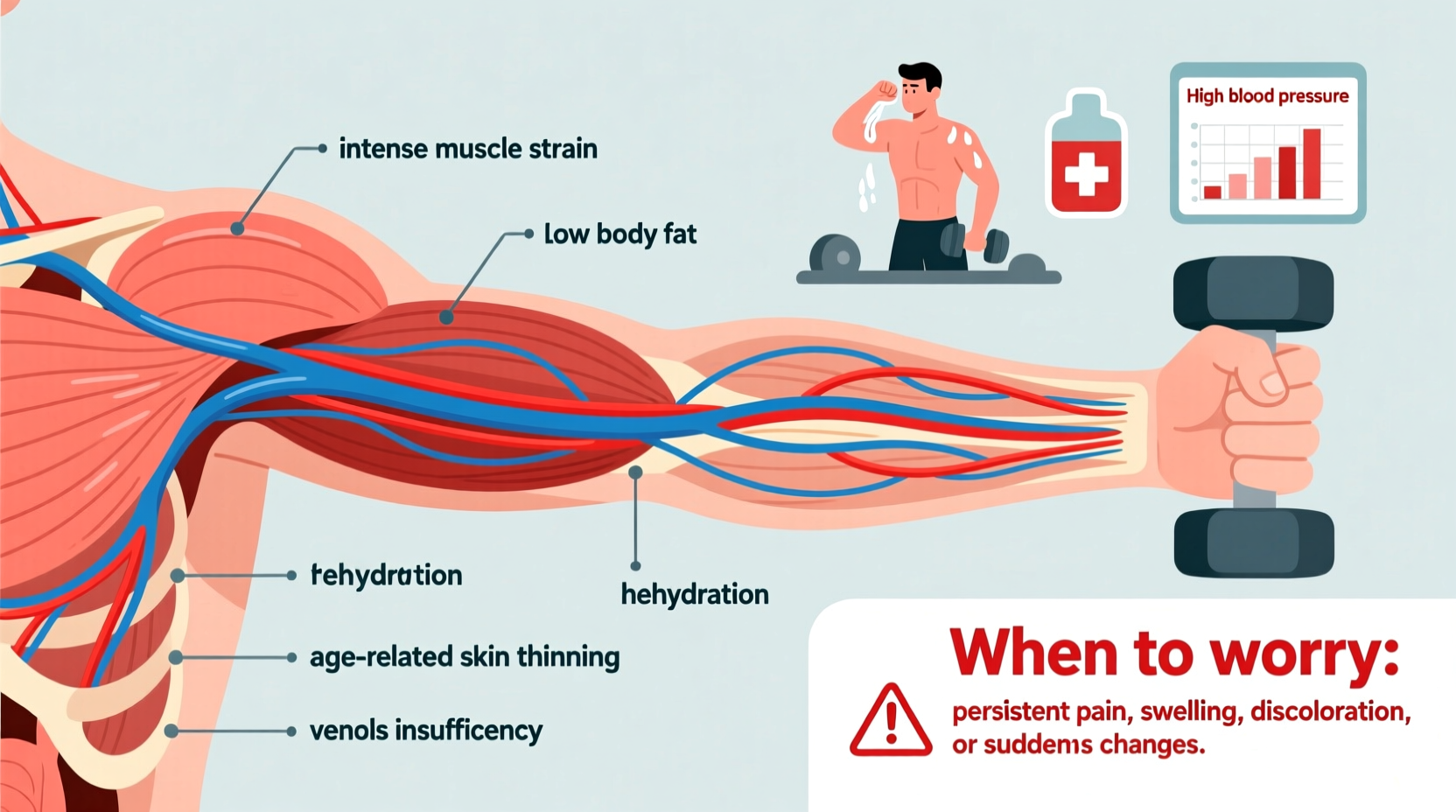
Veins become noticeable when blood pressure within them increases, the surrounding tissue thins, or skin loses elasticity. These changes are influenced by a combination of biological, environmental, and lifestyle factors.
- Low body fat: Individuals with lower body fat percentages tend to have more visible veins because there’s less subcutaneous fat masking the vascular network beneath the skin.
- Exercise and muscle exertion: During physical activity, muscles demand more oxygen. The heart pumps harder, increasing venous pressure and causing veins to expand and protrude temporarily.
- Heat exposure: High temperatures cause blood vessels to dilate. This vasodilation makes veins more apparent, especially in the arms and legs.
- Aging: As skin thins and loses collagen with age, veins that were once hidden become increasingly visible—even without increased pressure.
- Genetics: Some people naturally have more superficial veins due to inherited anatomical traits.
When Is It Normal vs. Concerning?
Not all bulging veins require medical attention. In fact, many cases fall well within the range of normal bodily function. However, certain patterns suggest the need for evaluation.
“Visible veins aren’t inherently dangerous—but sudden onset, pain, swelling, or asymmetry should prompt a clinical assessment.” — Dr. Lena Reyes, Vascular Medicine Specialist
Here’s a breakdown of typical versus worrisome presentations:
| Scenario | Normal? | Notes |
|---|---|---|
| Veins bulge during weightlifting but flatten at rest | Yes | Expected hemodynamic response |
| Hand veins become prominent with aging | Yes | Due to skin thinning and reduced fat padding |
| One leg has significantly larger, twisted veins than the other | No | Possible sign of deep vein thrombosis or varicose disease |
| Vein is hard, warm, red, and painful to touch | No | May indicate superficial thrombophlebitis |
| Sudden appearance after prolonged sitting or travel | Potentially concerning | Evaluate for clot formation, especially if accompanied by swelling |
Medical Conditions Linked to Prominent Veins
Beyond cosmetic visibility, several conditions contribute to persistent or abnormal vein protrusion:
Varicose Veins
These occur when valves inside leg veins fail, allowing blood to pool. The affected veins enlarge, twist, and often appear blue or purple under the skin. They may cause aching, heaviness, or cramping, particularly after standing for long periods.
Deep Vein Thrombosis (DVT)
A serious condition where a blood clot forms in a deep vein—usually in the leg. Symptoms include swelling, warmth, redness, and pain. DVT requires immediate medical treatment due to the risk of pulmonary embolism.
Superficial Thrombophlebitis
Inflammation of a surface vein caused by a small clot. It presents as a red, tender cord-like structure just beneath the skin. While less dangerous than DVT, it still warrants evaluation.
Chronic Venous Insufficiency
This develops when leg veins struggle to return blood to the heart efficiently. Over time, it leads to chronic swelling, skin discoloration, and visible, distended veins.
Rare Causes: Vascular Tumors or Malformations
In rare instances, abnormally growing veins or vascular anomalies can create localized bulges. These often appear early in life but may go unnoticed until adulthood.
Mini Case Study: When Exercise Revealed a Hidden Risk
Mark, a 45-year-old fitness instructor, noticed that while his left arm veins became more defined during workouts—as expected—his right calf developed a firm, rope-like vein that didn’t go away. He initially dismissed it as muscle strain. But after two weeks of increasing discomfort and mild swelling, he consulted a vascular specialist. An ultrasound revealed superficial thrombophlebitis triggered by minor trauma from tight socks during training. With anti-inflammatory medication and compression therapy, symptoms resolved within ten days.
Had Mark ignored the signs, there was a small chance the inflammation could have extended into deeper veins, raising the risk of DVT. His case underscores the importance of monitoring new or persistent vascular changes—even among healthy, active individuals.
Action Checklist: What to Do If Your Veins Pop Out
If you're concerned about visible veins, follow these practical steps:
- Assess symmetry: Are the veins equally prominent on both sides of the body?
- Check for symptoms: Look for pain, heat, redness, or swelling along the vein path.
- Note timing: Did the change happen suddenly or gradually over years?
- Evaluate triggers: Does it occur only during exertion, in heat, or persist at rest?
- Monitor progression: Take photos weekly to track any worsening.
- Seek evaluation: Schedule a visit with your doctor if you observe asymmetry, discomfort, or rapid development.
- Request imaging: Ask for a Doppler ultrasound if DVT or venous insufficiency is suspected.
Prevention and Management Tips
While not all causes of visible veins can be prevented, certain habits reduce risks associated with pathological conditions:
- Maintain healthy circulation through regular movement—avoid sitting or standing for extended periods.
- Stay hydrated; dehydration can increase blood viscosity and strain venous return.
- Wear compression stockings if you're prone to leg swelling or have a family history of vein disorders.
- Elevate your legs above heart level for 15–20 minutes daily to assist blood flow.
- Avoid crossing your legs while seated, which can compress veins and impede circulation.
Frequently Asked Questions
Are popping veins during workouts dangerous?
Generally no. Increased intravenous pressure during resistance training causes temporary vein prominence. As long as the veins recede after exercise and there’s no pain or swelling, this is considered normal.
Can dehydration make veins more visible?
Yes. Dehydration reduces blood volume and causes veins to constrict, making them stand out more against tighter skin. However, chronic dehydration may also impair circulation and increase clotting risk.
Should I worry if my hand veins are very visible?
Usually not. Hand veins commonly become more prominent with age, low body fat, or frequent use (e.g., manual labor). Unless accompanied by pain, discoloration, or ulceration, isolated hand vein visibility is rarely a concern.
Conclusion: Know Your Body, Trust Your Instincts
Visible veins are often a natural part of aging, fitness, or individual anatomy. But the human body communicates through subtle shifts—and vascular changes are no exception. Recognizing what’s routine versus what demands attention empowers you to act early when necessary. Don’t dismiss persistent, painful, or asymmetric vein bulging simply because “veins show when you’re fit.” Health isn’t just about appearance—it’s about function.




 浙公网安备
33010002000092号
浙公网安备
33010002000092号 浙B2-20120091-4
Comments
No comments yet. Why don't you start the discussion?