
From the thunderous orchestral swells of *Shadow of the Colossus* to the haunting choral chants in *Dark Souls*, one element remains consistent across decades of gaming: when a boss appears, the music changes. It intensifies. It becomes personal. It tells a story. But why? Why is it that nearly every major video game confrontation—whether against a mechanical titan or a fallen ally—is underscored by music that feels larger than life? The answer lies at the intersection of psychology, narrative design, and audio engineering. This isn’t just about making fights exciting; it’s about shaping emotional arcs, reinforcing themes, and transforming gameplay into unforgettable cinematic experiences.
The Role of Music in Elevating Tension and Stakes
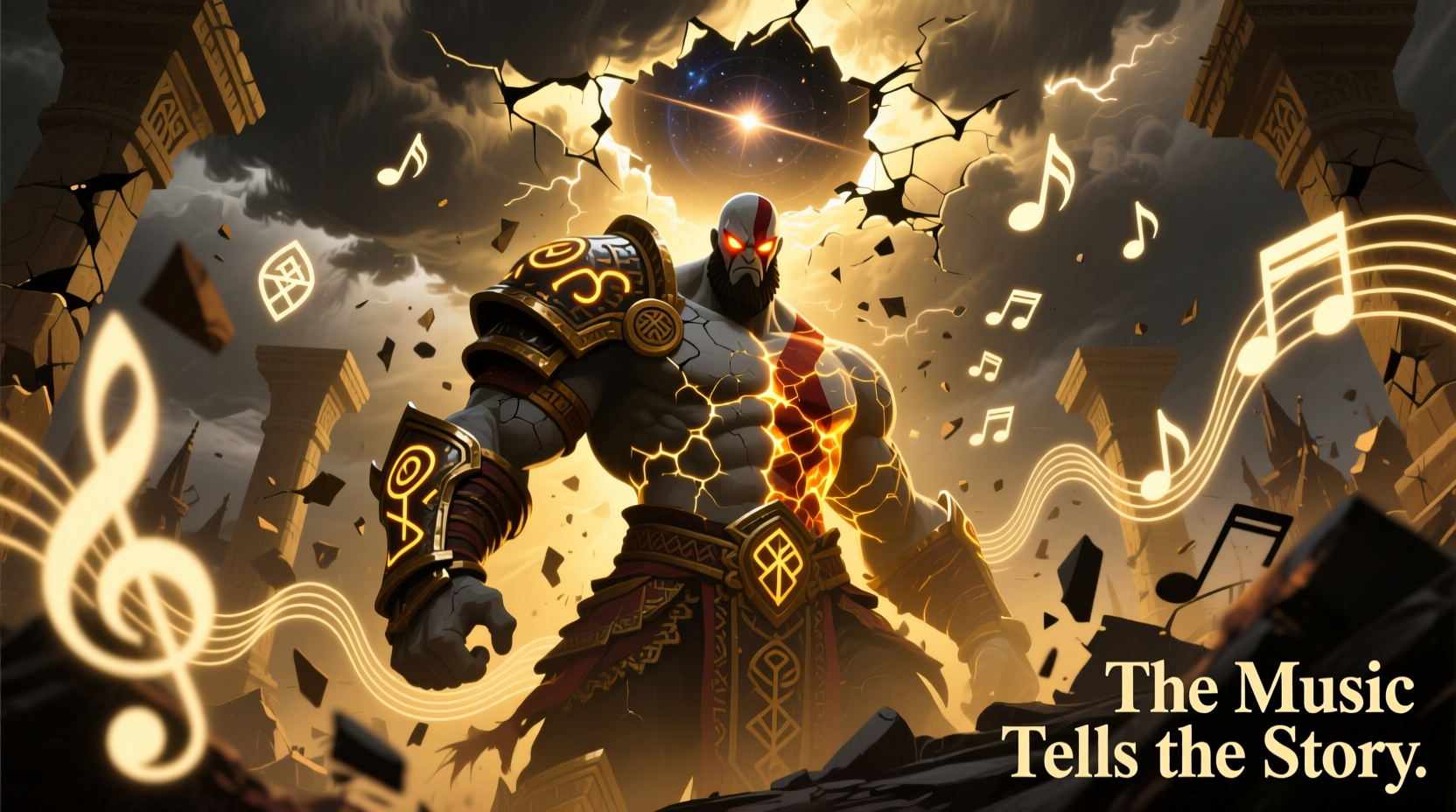
In any form of storytelling, tension is what keeps audiences engaged. In film, directors use lighting, pacing, and score to build suspense. Video games do the same—but with an added layer: interactivity. When players face a boss, they are not passive observers. They are participants in a high-stakes moment where failure means restarting, losing progress, or confronting a psychological barrier. Dramatic music acts as an emotional amplifier, signaling that this moment matters.
Composers deliberately shift musical tone upon entering a boss arena. A quiet overworld theme may dissolve into dissonant strings, pounding percussion, or sudden silence followed by a single ominous note. These auditory cues prime the player’s nervous system. Heart rates rise. Focus sharpens. The brain registers: This is different. This is dangerous.
Take *The Legend of Zelda: Breath of the Wild*. Most of the game features sparse, ambient melodies. But during the final battle with Calamity Ganon, the score erupts into a full orchestral storm, complete with electric cello and warlike drums. The contrast alone communicates urgency and finality. Without a single line of dialogue, the music tells players they are facing the culmination of their journey.
Storytelling Through Sound: How Boss Themes Reveal Character
Dramatic boss music doesn’t just signal danger—it reveals character. Just as leitmotifs in opera or film (like Darth Vader’s Imperial March) represent specific figures, video game composers assign unique musical identities to bosses. These themes often reflect backstory, personality, or thematic significance.
Consider Sephiroth from *Final Fantasy VII*. His theme, “Those Who Fight Further,” begins with a soft piano melody tinged with melancholy—haunting, almost beautiful. As the battle progresses, layers of choir and brass build into something grandiose and terrifying. The music mirrors his tragic origin and god complex: once a hero, now a force of divine destruction. The score doesn’t just accompany the fight—it narrates it.
“Music in boss battles isn’t decoration. It’s exposition. It tells you who this enemy is, what they represent, and why defeating them matters.” — Lena Torres, Audio Director at Obsidian Entertainment
This technique extends beyond individual characters. Entire boss themes can encapsulate philosophical ideas. In *NieR: Automata*, the song “Amusement Park” plays during a battle with a machine intelligence that has developed childlike emotions. The melody is playful yet distorted, evoking innocence twisted by existential despair. The music forces players to question whether they’re fighting a villain—or a victim.
The Psychology Behind Musical Escalation
Why does loud, fast music make us feel more intense during gameplay? The answer involves both cognitive science and learned cultural associations.
- Pattern Recognition: Humans are wired to interpret changes in rhythm and volume as signals of importance. Sudden increases in tempo trigger alertness.
- Emotional Conditioning: Decades of media have taught us that dramatic music = climactic moment. Think of movie trailers, sports highlights, or even political speeches—all use similar sonic cues.
- Flow State Optimization: Research shows that moderate arousal states enhance performance. Boss music is engineered to push players into peak focus without overwhelming them.
Game developers exploit these responses intentionally. A well-composed boss track balances intensity with clarity—driving adrenaline while leaving room for strategic thinking. Too chaotic, and the player loses control. Too subdued, and the encounter lacks weight.
Do’s and Don’ts of Effective Boss Music Design
| Do | Don’t |
|---|---|
| Use dynamic layers that respond to player actions (e.g., phase changes) | Overload the mix with competing instruments |
| Incorporate motifs from earlier in the game for emotional resonance | Introduce entirely new themes with no narrative connection |
| Match tempo to attack patterns (fast beats for aggressive phases) | Maintain the same intensity throughout all stages |
| Leave space in the mix so sound effects remain audible | Let music drown out critical audio cues like footsteps or warnings |
A Mini Case Study: The Impact of “Megalovania” in *Undertale*
No modern example illustrates the power of boss music better than “Megalovania” in *Undertale*. Originally composed by Toby Fox for earlier projects, the track gained legendary status through its use in the battle against Sans—the deceptively calm skeleton who breaks the game’s rules.
What makes “Megalovania” so effective?
- Subversion of Expectations: Up until this point, Sans appears lazy and humorous. The sudden shift to an aggressive rock anthem shocks players, signaling that this fight will be unlike any other.
- Rhythmic Precision: Every beat aligns with Sans’ attacks. Dodging becomes a rhythmic dance, syncing player movement to the music.
- Narrative Weight: The song has appeared in previous runs, creating a sense of history. For veteran players, hearing it again evokes memories of past choices and timelines.
Players report physical reactions: sweating, rapid breathing, even pausing to collect themselves. One Reddit user wrote: “I spent three hours on that fight. Not because I couldn’t win—but because I didn’t want it to end. The music made me feel like I was part of something epic.”
This demonstrates a key truth: great boss music doesn’t just support gameplay—it becomes inseparable from it.
How Storytelling Insights Are Embedded in the Score
Beyond rhythm and emotion, boss music often contains subtle storytelling elements that deepen worldbuilding. Composers embed lyrical fragments, instrumentation choices, or harmonic structures that reflect lore.
In *Elden Ring*, the boss theme “Radahn Festival” combines triumphant horns with distant drumbeats echoing across a desert battlefield. The music doesn’t just hype the fight—it paints a picture of a warrior celebrated by thousands, a general whose legend persists even in defeat. Meanwhile, “Godskin Apostle” uses liturgical chants and minor-key harmonies to suggest religious fanaticism, reinforcing the enemy’s role as a corrupted holy figure.
These details aren’t accidental. They result from close collaboration between writers, designers, and composers. As Merle Jantz, composer for *Hollow Knight*, explains:
“In *Hollow Knight*, the boss themes were written after reading the creature’s backstory. Mantis Lords got swift, precise string work because they’re elite warriors. Hornet’s theme has a lullaby quality—she’s guarding her home, not seeking war. The music had to respect their dignity, not just treat them as obstacles.” — Merle Jantz, Composer
This integration ensures that even silent enemies feel fully realized. Players may never read the codex entry, but they’ll *feel* the tragedy in the melody.
Step-by-Step: How Developers Build a Memorable Boss Encounter
Creating a powerful boss moment is a multi-stage process. Here’s how studios typically approach it:
- Define Narrative Purpose: Is this boss a personal rival? A manifestation of the protagonist’s guilt? A symbol of systemic corruption?
- Design Combat Mechanics: Determine attack patterns, phases, and difficulty curve.
- Compose Leitmotif: Create a base theme that reflects the boss’s identity, possibly weaving in earlier motifs.
- Implement Dynamic Audio: Program music to shift based on health thresholds or phase changes.
- Test Player Response: Observe emotional reactions and adjust timing, volume, or instrumentation accordingly.
- Polish Integration: Ensure seamless transitions between exploration and battle music.
This pipeline ensures that music isn’t an afterthought—it’s foundational to the experience.
Frequently Asked Questions
Do all games need dramatic boss music?
Not necessarily. Some indie titles deliberately subvert the trope. Games like *Journey* or *GRIS* use minimal or ambient music during confrontations to maintain a meditative tone. The decision depends on the game’s overall aesthetic and emotional goals.
Can bad boss music ruin a fight?
Yes. Poorly mixed tracks, repetitive loops, or mismatched tones can break immersion. A common complaint in early reviews of *Cyberpunk 2077*’s boss fights was that the music felt generic and disconnected from the characters, reducing emotional impact.
Are there cultural differences in boss music design?
Absolutely. Japanese RPGs often favor melodic, vocal-driven themes (e.g., *Kingdom Hearts*), while Western titles lean toward orchestral or electronic scores (*Doom*, *BioShock*). These reflect broader stylistic traditions in regional storytelling.
Checklist: Elements of a Successful Boss Music Experience
- ✅ Music clearly signals the start of a boss encounter
- ✅ Theme reflects the boss’s personality or backstory
- ✅ Dynamic changes occur as the battle progresses
- ✅ Audio mix prioritizes clarity during fast-paced action
- ✅ Motifs connect to larger narrative or world themes
- ✅ Emotional arc complements the player’s journey
- ✅ Silence or contrast is used strategically before or after the fight
Conclusion: Music as the Invisible Narrator
The next time you square off against a towering mech, a possessed mentor, or a cosmic horror, listen closely. The music isn’t just setting the mood—it’s guiding your emotions, revealing secrets, and shaping your memory of the moment. That soaring chorus, that creeping bassline, that sudden pause before the final blow—they’re all part of a carefully crafted story told in frequencies and rhythms.
Dramatic boss music persists because it works. It transforms gameplay into myth. It turns adversaries into legends. And long after the credits roll, it’s the soundtrack we remember—the echo of a battle that meant something.




 浙公网安备
33010002000092号
浙公网安备
33010002000092号 浙B2-20120091-4
Comments
No comments yet. Why don't you start the discussion?