
From impossibly broad-shouldered warriors to heroines with gravity-defying silhouettes, exaggerated character designs are a staple of video games. At first glance, these figures may seem like the result of poor anatomy or unchecked fantasy. But behind every stylized muscle or elongated limb lies a deliberate blend of artistic intent, technological constraints, and cultural trends. Understanding why video game characters often defy real-world proportions reveals how form follows function in digital storytelling and design.
The Role of Artistic Stylization
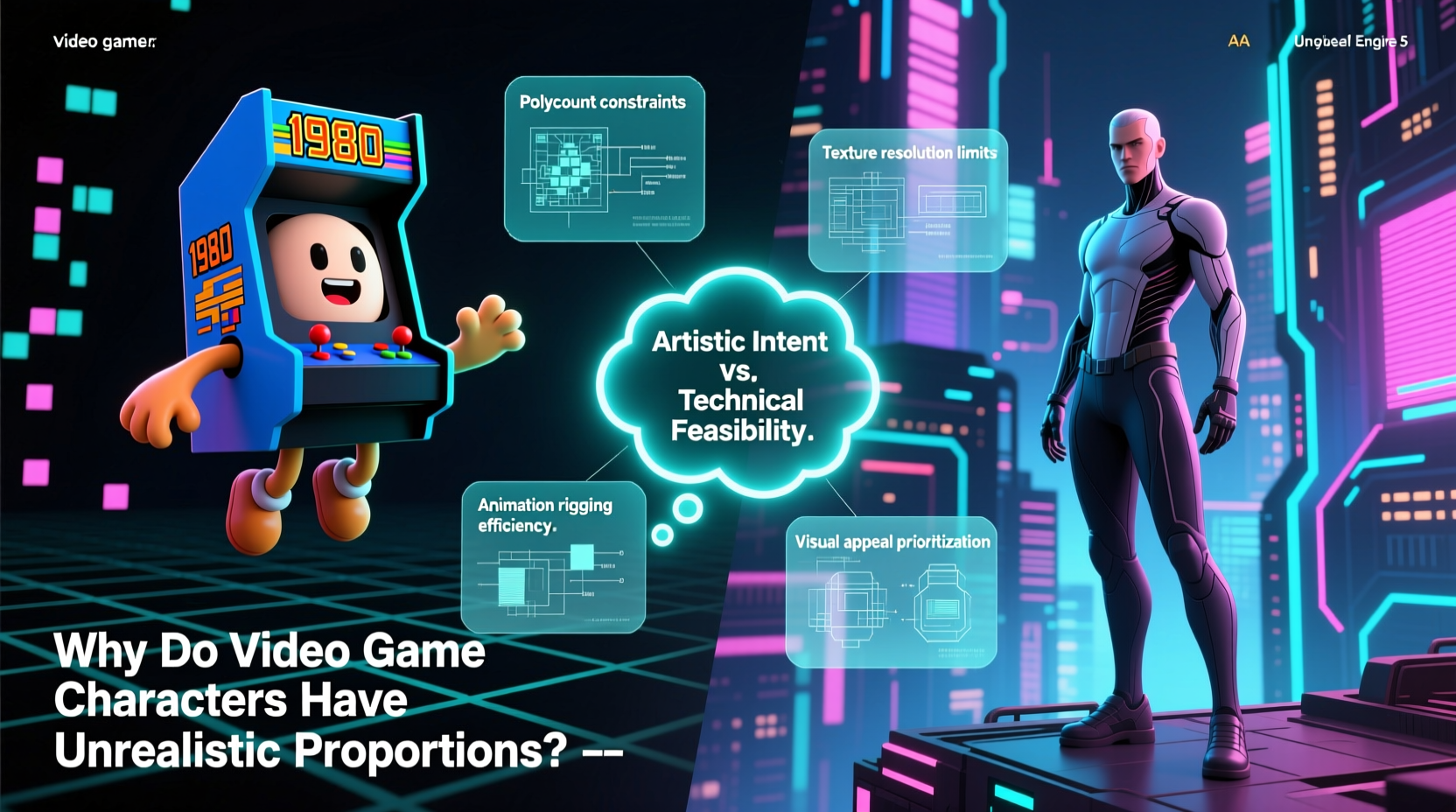
Artistic exaggeration is not unique to video games. Across visual media—from comic books to fashion illustrations—artists amplify certain physical traits to communicate personality, power, or emotion. In games, this principle is amplified by the need for instant readability. A character must convey their role at a glance: a hulking brute suggests strength, while a slender rogue implies agility.
Stylization also helps define a game’s identity. Consider titles like Soul Calibur or Mortal Kombat, where fighters boast exaggerated musculature and dramatic poses. These aren’t attempts at realism—they’re theatrical performances frozen in polygonal form. The same applies to cel-shaded games like The Legend of Zelda: The Wind Waker, where simplified, cartoonish proportions enhance whimsy and clarity.
“Exaggeration isn’t a flaw—it’s a tool. When you can’t rely on nuanced facial animation, you use body shape to tell the story.” — Lena Park, Lead Character Artist at Obsidian Nexus Studios
Technical Limitations and Optimization
In the early days of gaming, hardware dictated nearly every creative decision. Limited polygons meant developers had to prioritize visibility over anatomical accuracy. A character with narrow limbs might vanish into the background or become indistinct during fast-paced action. By inflating shoulders, thighs, or heads, artists ensured characters remained legible even on low-resolution CRT screens.
Even today, performance considerations influence design. High-polygon models consume more memory and processing power. To maintain smooth frame rates across thousands of animations and environments, studios often simplify geometry. One workaround? Exaggerate key features so that fewer polygons are needed to make a visual impact. A sharply defined jawline or massive boots can create a memorable silhouette without complex modeling.
This was especially evident in the transition from 2D to 3D gaming. Titles like Final Fantasy VII used blocky textures and angular forms not because the artists lacked skill, but because the PlayStation’s hardware could only render so much detail. Over time, as technology improved, some franchises retained their exaggerated styles—not out of necessity, but because they had become iconic.
Cultural and Genre Expectations
Character design is shaped as much by culture as by code. In Japanese anime and manga, for instance, large eyes, slim waists, and dynamic proportions are standard aesthetic conventions. Games developed in Japan—such as Bayonetta or Persona series—often reflect these stylistic roots, blending local tastes with global appeal.
Western audiences, meanwhile, have historically favored hyper-masculine archetypes in action games. Think of Master Chief’s armored bulk or Kratos’ godlike physique. These designs tap into ideals of dominance and invulnerability, reinforcing the player’s sense of power. Conversely, female characters in many mainstream games have been criticized for impractical armor and exaggerated curves—a reflection of market-driven decisions rather than artistic merit.
However, shifting cultural norms are pushing back against outdated tropes. Modern titles like Horizon Zero Dawn and Ghost of Tsushima feature protagonists whose proportions align more closely with realism, emphasizing functionality over fantasy. This evolution shows that while cultural expectations shape design, they are not fixed.
Design Psychology: Silhouettes, Readability, and Identity
One of the most important principles in character design is silhouette recognition. A well-designed character should be identifiable by outline alone, even in shadow or motion blur. Exaggerated proportions help achieve this goal. For example, Solid Snake’s bandana and lean frame, or Doom Slayer’s towering helmet and shoulder pads—each creates a distinct profile that players instantly recognize.
This concept extends beyond individual characters to entire genres. Superhero games lean into impossible physiques to mirror comic book aesthetics. Stealth games favor leaner builds to suggest agility. Fighting games amplify differences between characters to reinforce gameplay variety—after all, if every fighter looked the same, distinguishing them mid-combo would be difficult.
| Game Genre | Typical Proportions | Purpose |
|---|---|---|
| Fighting Games | Hyper-muscular, elongated limbs | Enhance move visibility and character distinction |
| RPGs (Fantasy) | Elongated features, dramatic armor | Convey magical or noble status |
| Stealth/Assassin | Lean, agile builds | Signal speed and subtlety |
| Realistic Military | Near-human proportions, functional gear | Support immersion and believability |
Readability also plays a crucial role in multiplayer environments. In chaotic battles with multiple avatars on screen, unique proportions help players quickly identify allies, enemies, or classes. This is why many online shooters assign distinct body types to roles—tanks are bulky, supports are average, scouts are small.
Mini Case Study: The Evolution of Lara Croft
Lara Croft, one of gaming’s most iconic figures, exemplifies how character proportions evolve with technology and cultural attitudes. Introduced in 1996, her original design featured blocky geometry and an exaggerated hourglass figure—partly due to limited modeling tools, partly due to marketing strategies targeting young male audiences.
By the 2013 reboot of Tomb Raider, Lara was redesigned with realistic proportions, practical clothing, and a focus on survivalist authenticity. The shift wasn’t just cosmetic; it reflected a broader narrative change. Instead of an invincible action figure, players now controlled a vulnerable, evolving protagonist. Technically, advancements in motion capture and rendering allowed for more natural movement and expression. Culturally, the industry was responding to criticism about the sexualization of female characters.
Yet even in her modern form, Lara retains subtle exaggerations—her posture remains confident, her movements fluid and acrobatic. Total realism would dull the fantasy. The balance struck in her redesign demonstrates how proportion serves both story and system.
Step-by-Step: How Developers Decide on Character Proportions
Creating a video game character involves a structured process where artistic vision meets technical reality. Here’s how studios typically approach proportion decisions:
- Define the Character’s Role: Is this a tank, scout, mage, or leader? Function informs form.
- Analyze Genre Conventions: Research similar games to understand audience expectations.
- Create Concept Art: Artists explore multiple versions, testing exaggerated vs. realistic proportions.
- Test Silhouette Readability: Evaluate outlines in grayscale to ensure clarity at various distances.
- Build Low-Poly Model: Translate art into a basic 3D mesh optimized for engine performance.
- Iterate Based on Animation: Check how proportions behave during movement—do limbs clip? Does weight feel off?
- Review with Cultural Sensitivity Team: Assess whether design choices risk stereotyping or objectification.
- Finalize and Integrate: Lock proportions and proceed to texturing, rigging, and gameplay integration.
This workflow ensures that every design choice—no matter how extreme—is intentional and functional.
Checklist: Evaluating Character Design Choices
- ✅ Does the character’s silhouette clearly communicate their role?
- ✅ Are proportions consistent with the game’s art style and genre?
- ✅ Can the character be recognized at a distance or in motion?
- ✅ Do exaggerated features serve a gameplay or narrative purpose?
- ✅ Have cultural sensitivities been considered in body representation?
- ✅ Is the model optimized for performance without sacrificing identity?
- ✅ Does the design age well, avoiding fleeting trends?
FAQ
Are unrealistic proportions a sign of lazy design?
No. While some older games used exaggerated forms due to technical limits, most modern examples are deliberate artistic choices. Exaggeration enhances readability, emotional impact, and brand identity. Calling it “lazy” overlooks the planning and psychology behind effective character design.
Can realistic proportions work in stylized games?
Absolutely. Games like Red Dead Redemption 2 and The Last of Us prove that realistic proportions can coexist with strong art direction. The key is consistency—characters should match the world’s visual language, whether grounded or fantastical.
Why do some female characters still have exaggerated bodies?
Historically, this trend stemmed from marketing and male-centric development teams. However, increasing diversity in game studios and player feedback has led to more balanced representations. Titles like Overwatch and Death Stranding showcase varied body types without relying on sexualization. Change is ongoing, driven by both ethics and market demand.
Conclusion
Unrealistic proportions in video game characters are neither accidents nor indulgences—they are calculated decisions rooted in art, technology, and culture. From the pixelated heroes of the '90s to today’s cinematic avatars, exaggeration has served a vital purpose: making characters memorable, readable, and expressive within technical boundaries.
As gaming continues to mature as a medium, the conversation around character design grows richer. We’re moving toward a future where diversity, realism, and creativity coexist—not in opposition, but in balance. The next time you see a character with absurd biceps or gravity-defying hair, consider not just how they look, but why they look that way. Behind every exaggerated limb is a story of intention, constraint, and craft.




 浙公网安备
33010002000092号
浙公网安备
33010002000092号 浙B2-20120091-4
Comments
No comments yet. Why don't you start the discussion?