
In the early 2000s, video game characters often moved with stiff expressions and robotic mannerisms. Their faces were flat, their eyes lifeless. Fast forward to today, and protagonists in games like The Last of Us Part II, Red Dead Redemption 2, or Star Wars Jedi: Survivor convey grief, rage, and tenderness with startling authenticity. The shift isn’t accidental—it’s the result of a quiet revolution in facial animation technology. Behind every furrowed brow and fleeting smirk lies a complex fusion of hardware, software, and artistic insight.
The Evolution of Facial Animation in Games
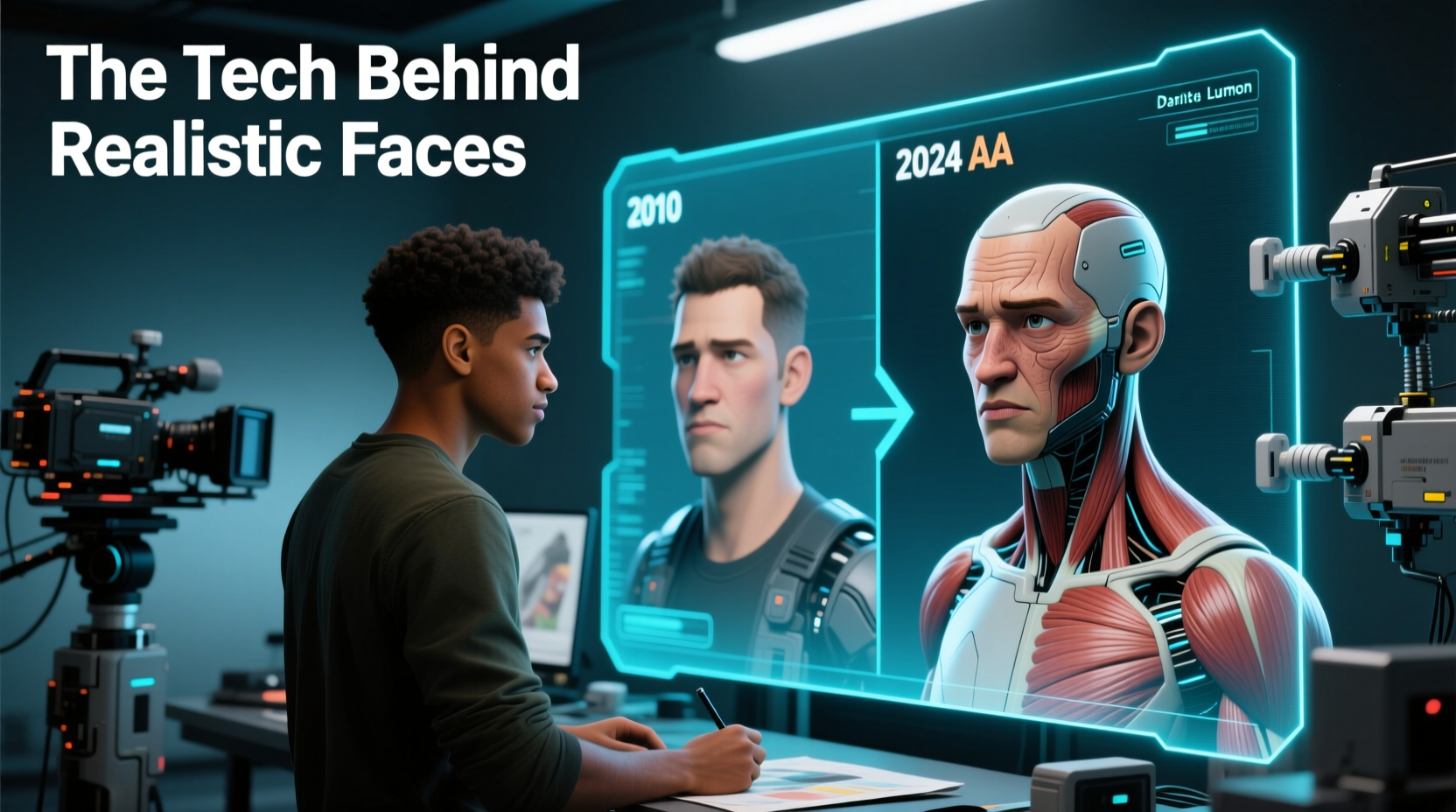
Fifteen years ago, most facial animation relied on skeletal rigs—systems of bones and joints beneath the character’s skin—that animators manipulated by hand. These rigs were limited in scope, often offering only broad controls for jaw movement, eye direction, and basic lip syncing. Subtle emotions like skepticism or hesitation were nearly impossible to render without excessive manual work.
As processing power increased and storage became cheaper, developers began experimenting with motion capture. Early attempts, such as those in Heavy Rain (2010), used optical systems to record actors’ performances. While groundbreaking at the time, the results were inconsistent—faces sometimes twitched unnaturally, and emotional nuance was lost in translation.
Today, the leap in realism comes not from one single breakthrough but from the convergence of several technologies: high-fidelity performance capture, advanced rigging systems, machine learning, and real-time rendering engines capable of displaying millions of polygons and dynamic textures.
Performance Capture: Acting Beyond Keyframes
Modern facial animation starts with performance capture—recording an actor’s entire performance, including facial expressions, voice, and body language. Unlike traditional keyframe animation, where artists manually set each expression at specific points in time, performance capture preserves the subtlety and spontaneity of human emotion.
Companies like Digital Domain and House of Moves use helmet-mounted cameras equipped with infrared sensors to track micro-expressions. These cameras film the actor’s face at close range while they perform, capturing data on muscle movements down to fractions of a millimeter. This data is then mapped onto a digital character using sophisticated algorithms that translate real-world motion into virtual geometry.
“Facial animation isn’t about mimicking movement—it’s about preserving intention. A blink can mean fatigue, suspicion, or affection depending on context.” — Neil Blevins, Character Technical Director, Pixar (formerly worked on AAA game cinematics)
This level of detail allows characters to react organically. In Red Dead Redemption 2, Arthur Morgan doesn’t just say he’s tired—he shows it. His eyelids sag slightly during long rides. His breathing changes when stressed. These aren’t scripted animations; they’re layered behaviors driven by captured performance data.
Advanced Rigging and Blend Shapes
Capturing performance is only half the battle. The data must be applied to a digital face through a process called rigging—the creation of a control system that dictates how the model deforms. Modern rigs go far beyond simple bone structures.
One widely used technique involves blend shapes. Each blend shape represents a specific facial pose—a raised eyebrow, a pout, a squint. Animators create dozens, even hundreds, of these poses, which can be mixed together in varying degrees to form complex expressions. For example, a “sarcastic smirk” might combine 30% sneer, 50% half-smile, and 20% narrowed eye.
Newer tools like Faceware and ARKit automate much of this process. By analyzing video footage of an actor, these systems can generate blend shape weights automatically, reducing weeks of manual labor to hours. Some studios now use AI-driven solutions that predict how muscles should deform based on anatomical models, ensuring greater biological accuracy.
| Era | Technology | Limits |
|---|---|---|
| Early 2000s | Skeletal rigs + manual keyframing | Stiff expressions, limited emotional range |
| 2010–2015 | Basic motion capture + blend trees | Inconsistent tracking, \"uncanny valley\" artifacts |
| 2016–Present | High-res performance capture + AI-assisted rigging | Near-photorealistic expression, real-time integration |
Machine Learning and Real-Time Rendering
Perhaps the most transformative development has been the integration of machine learning into facial pipelines. NVIDIA’s FaceWorks and Adobe’s Project Cloak demonstrate how neural networks can enhance low-resolution captures, fill in missing frames, and even generate plausible expressions from partial data.
For instance, if a camera fails to catch a subtle lip tremor during recording, AI can infer its presence based on vocal tone and surrounding context. This predictive capability reduces the need for perfect capture conditions and allows smaller studios to achieve results once reserved for blockbuster budgets.
Equally important is the role of real-time rendering engines like Unreal Engine 5. With features like Nanite for high-detail geometry and Lumen for dynamic lighting, these engines can display pores, stubble, and sweat in real time. Subsurface scattering simulates how light penetrates skin, giving cheeks a natural flush rather than a plastic sheen.
Unreal Engine’s MetaHuman Creator takes this further by offering pre-built, photorealistic avatars with fully rigged faces. Developers can customize ethnicity, age, and expression presets, then export them directly into their projects. What once took months now takes minutes.
Case Study: The Making of ‘The Last of Us Part II’
Naughty Dog’s The Last of Us Part II is frequently cited as a benchmark in facial realism. The studio used a multi-camera dome setup to record actors’ performances from every angle. Each session generated terabytes of facial data, which was cleaned and retargeted using proprietary software.
Ellie’s face alone contains over 500 facial controls. During emotional scenes, animators layered captured data with hand-tuned adjustments to ensure timing matched narrative intent. One scene where Ellie suppresses tears required frame-by-frame refinement to balance vulnerability and restraint.
The result? A performance so intimate that players reported feeling physical discomfort watching it. Critics noted that the game’s story landed with unprecedented emotional weight—not because of dialogue alone, but because viewers could see truth in the characters’ eyes.
Challenges and the Uncanny Valley
Despite progress, the uncanny valley remains a challenge. When a character looks almost human but moves unnaturally, it triggers discomfort. Small errors—like delayed blinking, mismatched lip sync, or overly smooth skin—can break immersion instantly.
To avoid this, studios focus on behavioral authenticity. It’s not enough for a character to smile; they must smile at the right time, with the right intensity, and with secondary reactions—like a slight head tilt or shoulder shrug. These micro-behaviors are often added through procedural animation systems that simulate fatigue, attention, and social cues.
- Eye contact duration varies by culture and personality.
- Breathing patterns change with emotional state.
- Subtle head movements accompany speech rhythms.
Ignoring these details risks falling into the uncanny valley. Mastering them requires collaboration between animators, psychologists, and AI engineers.
What’s Next? The Future of Facial Animation
The next frontier includes real-time emotion synthesis and personalized avatars. Companies like Metaphysic and Synthesia already create hyper-realistic digital humans for media using generative AI. In gaming, this could mean NPCs that adapt their expressions based on player behavior—reacting with surprise, fear, or warmth depending on your choices.
Some prototypes use webcams to capture a player’s own expressions and project them onto in-game characters, enabling true digital embodiment. While privacy concerns remain, the potential for immersive storytelling is enormous.
Additionally, cloud-based rendering may allow mobile devices to stream high-fidelity facial animations without local processing strain. Imagine playing a cinematic RPG on a tablet with the same visual fidelity as a console title—all powered remotely.
Checklist: Elements of High-Quality Facial Animation
- High-resolution capture: Use multi-camera setups or helmet rigs for detailed data.
- Accurate rigging: Implement blend shapes and muscle simulation for natural deformation.
- Behavioral layering: Add micro-movements like blinking, breathing, and idle shifts.
- Contextual timing: Sync expressions with dialogue and emotional beats.
- Real-time validation: Test animations in-engine under different lighting and angles.
- Audience testing: Monitor viewer reactions to detect uncanny or distracting moments.
Frequently Asked Questions
Can indie developers create realistic facial animation?
Yes. Tools like Unreal Engine’s MetaHuman Creator, Faceware Auto, and affordable iPhone-based ARKit capture make high-quality facial animation accessible. While budget constraints still exist, many techniques once exclusive to AAA studios are now democratized.
Why do some realistic characters still look “off”?
This usually stems from the uncanny valley effect. Even minor inconsistencies—such as unnatural eye wetness, rigid neck movement, or poor lip sync—can trigger subconscious discomfort. Realism requires holistic attention to detail, not just high polygon counts.
Will AI replace facial animators?
Not entirely. AI accelerates production and handles repetitive tasks, but creative direction remains human. Animators will evolve into curators and directors of AI-generated performances, focusing on emotional authenticity rather than manual tweaking.
Conclusion: The Human Touch Behind Digital Faces
The realism in today’s video game characters isn’t magic—it’s meticulous craftsmanship powered by cutting-edge technology. From performance capture suits to neural networks, each innovation brings us closer to digital beings that feel truly alive. But the core of great facial animation remains unchanged: understanding what it means to be human.
As tools become more powerful, the responsibility falls on creators to use them wisely. A perfectly rendered tear only matters if it’s shed for a reason. The future of gaming isn’t just about looking real—it’s about feeling real.




 浙公网安备
33010002000092号
浙公网安备
33010002000092号 浙B2-20120091-4
Comments
No comments yet. Why don't you start the discussion?