
In countless fantasy and sci-fi video games, players encounter warriors clad in armor that defies logic: breastplates shaped like dragon wings, helmets with no eye slits, or shoulder pads taller than the character’s head. These designs are far from practical by real-world standards. Yet, they persist across genres and generations of games. The disconnect between functionality and appearance isn’t accidental—it stems from a deliberate blend of artistic expression, branding, gameplay needs, and historical influences. Understanding this phenomenon reveals how visual storytelling shapes player experience beyond mere aesthetics.
The Role of Visual Identity in Character Design
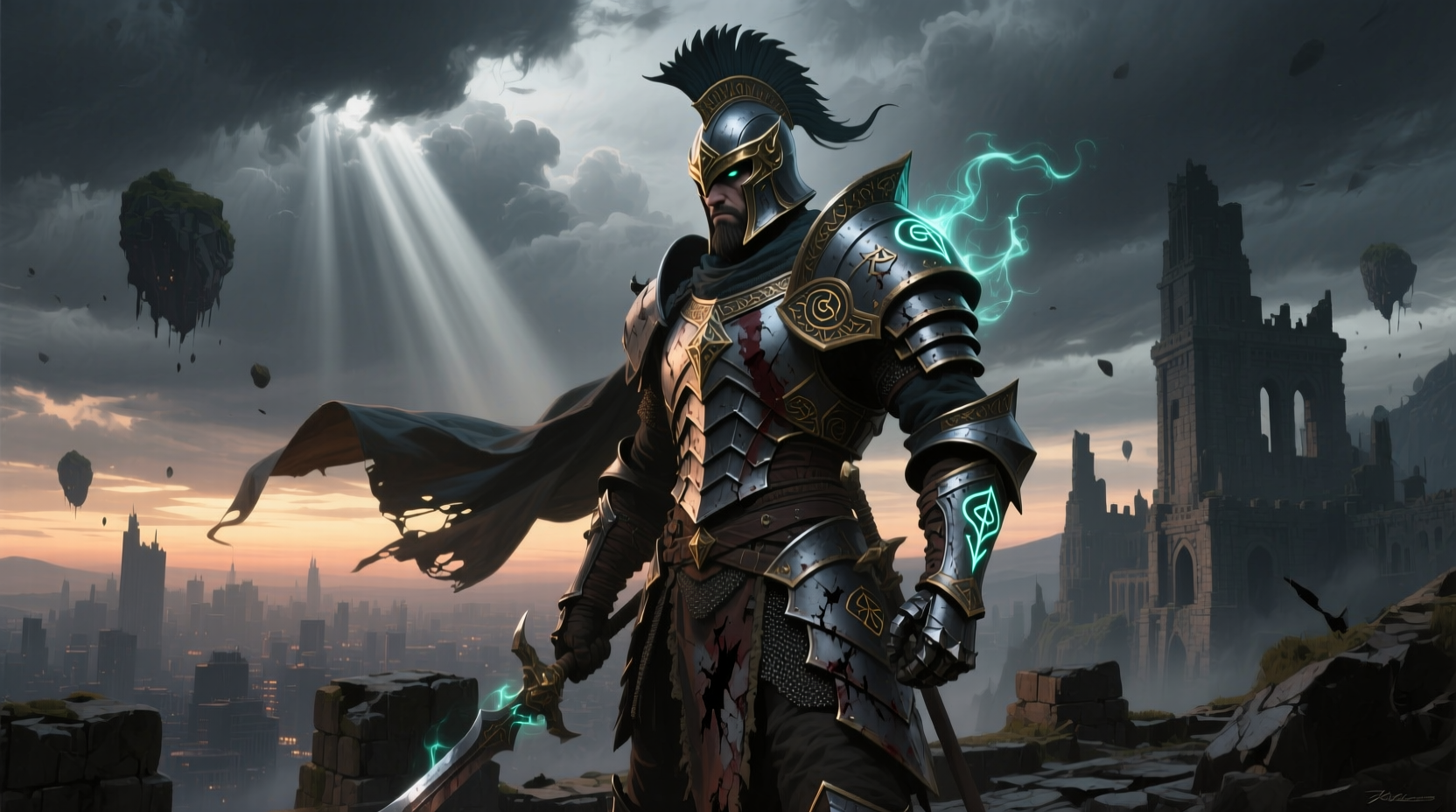
One of the primary reasons for exaggerated or impractical armor lies in the need for strong visual identity. In a crowded game world with dozens of characters, each must be instantly recognizable. Realistic medieval plate armor, while historically accurate, tends to look uniform. Fantasy games solve this by amplifying design elements—spikes, glowing runes, asymmetrical components—to make characters stand out.
Consider iconic figures like Kratos from God of War or Master Chief from Halo. Their armor is not just protective gear; it’s a core part of their persona. Kratos’ red tribal markings and exposed torso convey rage and tragedy, while Master Chief’s green MJOLNIR suit signals technological superiority and stoic resolve. Even when these designs sacrifice realism, they serve narrative clarity.
Branding and Marketability
Game developers also consider merchandise, cosplay, and promotional art. Armor that looks unique and dramatic sells figurines, inspires fan art, and trends on social media. A knight in historically correct 15th-century Milanese armor might impress historians, but it won’t stand out in a trailer next to a demon-summoning warlock with molten lava veins running through his chest plate.
This commercial reality pushes studios toward bolder, more stylized designs. Blizzard Entertainment, for example, has mastered this balance in franchises like Diablo and Overwatch, where every hero’s look is tailored for instant memorability and emotional resonance.
Technical Constraints and Gameplay Priorities
Believe it or not, some “unrealistic” armor choices stem from technical necessity. Game engines render characters using polygon meshes, animations, and physics systems. Overly complex or realistic armor can interfere with movement, clipping issues, or animation rigging. For instance, fully articulated plate armor would require hundreds of moving parts, increasing development time and computational load.
To maintain fluid combat and responsive controls, designers simplify. Shoulder pads may float slightly above the arm, or helmets may lack internal detail because the camera rarely sees inside. The priority shifts from realism to functionality within the virtual space.
| Design Element | Real-World Purpose | Game Design Compromise |
|---|---|---|
| Exposed midriff | No protection; tactically unsound | Better visibility of character movement and hit feedback |
| Glowing accessories | Non-functional; energy inefficiency | Visual cues for abilities or rarity tiers |
| Asymmetrical armor | Unbalanced weight distribution | Enhances uniqueness and faction identification |
| Open-faced helmets | Vulnerable to facial strikes | Facilitates facial animation and emotion expression |
Animation and Expressiveness
Characters in modern games aren't just combatants—they’re actors. Emotional storytelling demands expressive faces and body language. Fully enclosed helmets or rigid suits limit facial animation and gesture clarity. Thus, many armored characters retain human-like features: visible eyes, open jaws (even on alien species), or retractable faceplates.
Take Aloy from Horizon Zero Dawn. Her armor is a mix of tribal leather and scavenged mechanical plating—more symbolic than functional. But her unobstructed face allows players to connect with her fear, determination, and curiosity during key story moments. The armor supports the performance, not the other way around.
“Players don’t remember stats—they remember how a character made them feel. Design serves emotion first, physics second.” — Lena Park, Senior Character Artist at Obsidian Entertainment
Influence of Historical and Mythological Archetypes
Many game designs draw loosely from history, mythology, and pop culture—but with creative liberties. Samurai armor, for example, included ornate crests (maedate) and silk cords (odoshi), which were as much about status and intimidation as protection. Similarly, Greek hoplites wore plumed helmets not just for identification, but psychological impact on the battlefield.
Video games amplify these traditions. In God of War, Kratos’ initial Spartan design borrows from ancient Greek aesthetics but exaggerates musculature and minimal coverage to reflect his godlike strength and rage-fueled invulnerability. The armor becomes a metaphor: he doesn’t need full protection because he *is* the weapon.
Fantasy settings further liberate designers from realism. In The Elder Scrolls V: Skyrim, Daedric armor appears forged from jagged obsidian and demonic bone. It wouldn’t survive a sword swing in reality, but within the game’s lore, it’s enchanted with supernatural durability. The design communicates power through visual extremity.
Cultural Symbolism Over Practicality
Armor in games often functions like heraldry. Colors, shapes, and materials denote allegiance, class, or magical affinity. A red cloak signals aggression; silver trim suggests nobility; rusted iron implies decay or corruption. These cues help players navigate complex worlds without relying solely on text or dialogue.
For example, in Dark Souls, the Black Knight’s pitch-black plate armor and massive straight sword immediately signal danger and elite status. They’re rarely seen outside fortified areas, making their appearance a psychological trigger. Their armor isn’t meant to be believable—it’s meant to be feared.
Player Customization and Fantasy Fulfillment
Another driving force behind unrealistic armor is player agency. Many RPGs allow users to mix and match gear, leading to visually chaotic but personally meaningful combinations. A mage might wear spiked shoulder guards over a wizard’s robe, or a rogue could sport golden greaves beneath tattered pants.
This freedom caters to self-expression. Players aren’t building battlefield-ready soldiers—they’re crafting avatars that reflect personal style, humor, or roleplay personas. Games like World of Warcraft and Final Fantasy XIV embrace this by offering transmogrification systems, letting players change appearance without affecting stats.
The Escapism Factor
At its core, gaming is an escape. Players don’t want to wear dented iron with chafing straps—they want to feel powerful, heroic, or fearsome. Unrealistic armor fulfills that fantasy. Wearing a helmet shaped like a wolf’s maw or wielding gauntlets that crackle with lightning energy enhances immersion through spectacle.
Developer CD Projekt Red acknowledged this in interviews about The Witcher 3. While Geralt’s armor improves with upgrades, it never becomes bulky or cumbersome. Instead, higher-tier gear looks sleeker and more arcane, reinforcing progression as both mechanical and aesthetic advancement.
“We wanted players to feel like legendary monster hunters, not medieval janitors in metal suits.” — Marcin Blacha, Lead Designer, The Witcher 3
Mini Case Study: The Evolution of Lara Croft’s Outfits
Lara Croft, one of gaming’s most iconic figures, illustrates how armor evolves alongside technology and cultural expectations. In the original 1996 Tomb Raider, her polygonal frame wore tight shorts and a tank top—hardly protective, but highly distinctive for the era’s technical limits and marketing goals.
Over time, her wardrobe shifted. By the 2013 reboot, she wore layered outdoor gear suited for survival: cargo pants, durable jackets, and tactical vests. This reflected a move toward realism and grounded storytelling. Yet even in this version, her outfit remains streamlined and camera-friendly—never obscured by excessive padding or bulk.
The contrast shows a balancing act: authenticity versus identity. Modern Lara is more believable, but her look still prioritizes recognizability and cinematic appeal over true expedition readiness. No real archaeologist would scale cliffs in those boots—but she’s not just an archaeologist. She’s a legend in motion.
Frequently Asked Questions
Isn’t unrealistic armor misleading for younger players?
While some may confuse fantasy with fact, most players understand context. Educational games or historical simulations tend to favor accuracy, whereas fantasy titles operate under different rules. Like superhero comics, video games use exaggeration to tell compelling stories—not to instruct on battlefield tactics.
Can realistic and stylish armor coexist?
Absolutely. Games like Kingdom Come: Deliverance and Mount & Blade prove that historically inspired armor can still be visually engaging. The key is thoughtful detailing—worn textures, personalized engravings, and contextual wear-and-tear—that conveys individuality without breaking believability.
Do game developers consult historians or armor experts?
Some do. AAA studios sometimes hire historical consultants for period-specific titles. However, even then, creative direction usually overrides strict accuracy. The goal is authenticity of *feel*, not replication.
Actionable Checklist: Designing Effective Game Armor
- Define the character’s role and personality before choosing materials or shape
- Ensure the silhouette is distinct, even in low-light or distant views
- Use color, lighting, and symmetry to communicate faction or power level
- Test animations to confirm armor doesn’t clip or restrict movement
- Balance fantasy elements with enough grounding so players suspend disbelief
- Consider how the design translates to promotional art, merchandise, and UI icons
- Allow for modular upgrades that reflect progression meaningfully
Conclusion: Function Follows Feeling
The unrealistic armor seen in video games isn’t a failure of design—it’s a success of communication. Every exaggerated curve, glowing rune, or impossibly sharp spike serves a purpose: to tell a story at a glance, evoke emotion, and deepen player connection. While real knights prioritized mobility and defense, game characters prioritize presence and myth-making.
As technology advances, we may see more hybrid approaches—armor that blends realism with stylization, powered by procedural rendering and AI-assisted design. But the core principle will remain: in gaming, how something *feels* matters more than how it *works*.




 浙公网安备
33010002000092号
浙公网安备
33010002000092号 浙B2-20120091-4
Comments
No comments yet. Why don't you start the discussion?