
In the world of video games, players regularly encounter warriors clad in breastplates that leave vital organs exposed, helmets with no face protection, or chainmail bikinis that defy both logic and battlefield practicality. At first glance, this might seem like a glaring oversight—a failure to represent authentic historical or tactical gear. But the truth is far more deliberate. The armor worn by video game characters, no matter how impractical it appears, serves multiple layered purposes beyond mere protection. It’s shaped by artistic vision, gameplay mechanics, narrative symbolism, and audience expectations. Understanding why these designs persist reveals a fascinating intersection of art, function, and psychology in interactive entertainment.
The Role of Visual Identity in Character Design
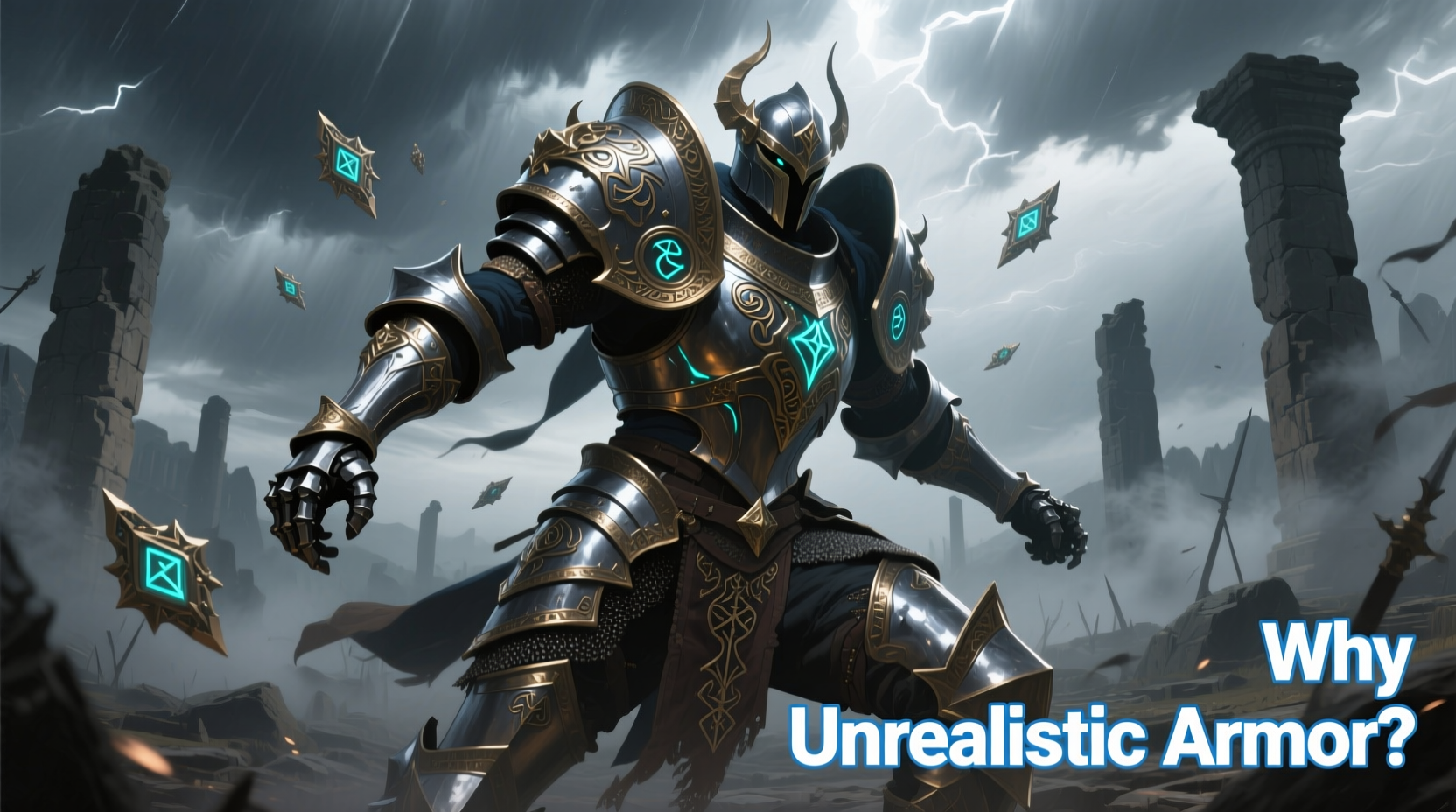
One of the primary reasons for unrealistic armor in video games lies in the need for strong visual identity. Unlike films or novels, where characters can be introduced through dialogue or narration, games rely heavily on immediate visual recognition. Players must identify friend from foe, class from class, and status from status at a glance—often during fast-paced combat.
Consider a fantasy RPG where dozens of armored figures fill the screen. If every character wore historically accurate plate mail, distinguishing between a paladin, a rogue, and a warlock would become nearly impossible without UI labels. Game designers counter this by exaggerating silhouettes, using bold color contrasts, and incorporating fantastical elements—like glowing runes, asymmetrical pauldrons, or winged helms—that make characters instantly recognizable.
This principle is backed by industry standards. As veteran concept artist Vitaly Bulgarov explains:
“Clarity trumps realism in character design. A player should know who they’re looking at within half a second. That means sacrificing historical accuracy for readability.” — Vitaly Bulgarov, Concept Designer (Cyberpunk 2077, RoboCop)
Visual distinction isn’t just about gameplay—it’s also central to branding. Iconic characters like Master Chief, Lara Croft, or Sephiroth are defined as much by their armor as by their actions. Their designs are memorable because they break realism to create a lasting impression.
Gameplay Mechanics vs. Real-World Logic
Beyond appearance, unrealistic armor often aligns with gameplay systems rather than real-world physics. In many games, armor doesn’t function like its historical counterpart. Instead, it acts as a numerical abstraction—a stat boost rather than physical protection.
For example, in games like Dark Souls or Diablo IV, wearing heavy armor may increase defense but slow movement. However, the visual representation rarely matches the actual mechanical effect. A character in “light leather” might look barely covered but still survive multiple sword strikes due to high “armor rating”—a number invisible to the player but critical to survival.
This disconnect allows developers to prioritize fun and balance over realism. If all armor had to follow real-world material limitations, game progression would feel restrictive. Imagine needing to carry 60 pounds of steel just to survive a single enemy attack. Movement would be sluggish, inventory management overwhelming, and immersion broken by constant fatigue mechanics.
Cultural and Narrative Symbolism
Armor in video games often functions as a storytelling device. Its design communicates character traits, faction affiliations, moral alignment, and even personal history. A knight in black, spiked armor isn’t just intimidating—he signals villainy. A warrior with mismatched, rusted plates suggests hardship or exile. These visual cues replace pages of exposition.
Take the example of The Legend of Zelda: Breath of the Wild. Link’s Champion’s Tunic offers modest physical coverage but is imbued with magical properties and deep narrative significance. It connects him to past heroes, activates special abilities, and evolves visually as the story progresses. The tunic’s design prioritizes mythological resonance over battlefield utility.
Likewise, in Mass Effect, Commander Shepard’s N7 armor is instantly recognizable across galaxies. While not designed for medieval combat, it reinforces military discipline, human resilience, and technological advancement. The armor becomes part of the character’s legacy—something fans can purchase as real-world merchandise because it transcends function.
In this context, realism is secondary to meaning. Armor becomes costume, heraldry, and identity—all compressed into a single wearable form.
Historical Inspiration vs. Creative License
It’s important to note that many games *do* draw from real-world armor traditions. Samurai lamellar, European plate harnesses, and Persian scale mail have all influenced digital designs. But creative license inevitably takes over.
Why? Because video games are not documentaries. They are interactive fantasies. Players don’t log in to experience the discomfort of chafing metal, poor visibility, or limited mobility. They seek empowerment, heroism, and spectacle. Unrealistic armor supports that fantasy.
A table comparing real-world armor principles with common game design choices illustrates this tension:
| Real-World Armor Principle | Typical Game Design Approach | Purpose of Deviation |
|---|---|---|
| Full body coverage for protection | Exposed limbs, midriffs, or torsos | Highlight agility, emphasize character physique |
| Weight distributed evenly | Oversized shoulder pads or weapons | Create imposing silhouette, enhance visual drama |
| Minimal ornamentation for stealth | Glowing elements, loud chains, bright colors | Signal power, magic affiliation, or elite status |
| Functional helmets with eye/face protection | Open-faced or stylized helmets | Show facial expressions, maintain emotional connection |
| Dull finishes to reduce glare | Highly reflective, polished surfaces | Enhance visual appeal in lighting engines |
This divergence isn’t laziness—it’s intentional design. Just as superhero costumes aren’t expected to stop bullets realistically, game armor isn’t meant to pass military inspection. It exists within a different set of rules—one where symbolism, performance, and player agency reign supreme.
Gender Representation and the \"Chainmail Bikini\" Debate
No discussion of unrealistic armor is complete without addressing gender. Female characters, in particular, have long been criticized for wearing impractical, hypersexualized armor—such as the infamous “chainmail bikini.” While such designs were more common in early RPGs and fantasy media, they reflect outdated assumptions about audience appeal.
However, the trend is shifting. Modern titles like Horizon Zero Dawn, God of War Ragnarök, and Assassin’s Creed Valhalla feature female warriors in functional, realistic gear. Aloy’s scavenged tribal attire or Eivor’s layered Norse clothing prioritize believability without sacrificing visual impact.
Yet even here, balance remains key. Developers still face pressure to make characters visually appealing—especially when marketing games to broad audiences. The solution isn’t eliminating stylization but ensuring diversity in design. Not all female warriors need to look the same, just as male characters vary from hulking brutes to lithe rangers.
“We’re moving toward authenticity, but we can’t ignore that games are also art. The goal isn’t to erase flair, but to offer choice—so every player sees themselves represented fairly.” — Rhianna Pratchett, Lead Writer (Tomb Raider, Heavenly Sword)
Mini Case Study: The Evolution of Armor in the Dark Souls Series
The Dark Souls franchise exemplifies the nuanced relationship between realism and fantasy in armor design. On one hand, the game features historically inspired pieces—full plate, gambesons, and greatswords rooted in medieval Europe. On the other, many sets are wildly impractical: the Smough’s armor includes a massive, immobile hammer fused to the back; the Havel’s set is comically oversized; and numerous enemies wear masks or robes that offer zero protection.
What makes these designs work is consistency. Every piece fits the game’s oppressive, gothic atmosphere. Armor reflects corruption, madness, and divine punishment. A knight in twisted iron isn’t just poorly equipped—he’s a victim of a broken world. The absurdity *is* the message.
Moreover, armor in Dark Souls directly affects gameplay. Some sets grant resistance to specific damage types (like lightning or poison), while others influence stats invisibly. This allows players to choose gear based on strategy, not just looks. Yet the most sought-after sets—like the Black Knight armor—are prized precisely because they look powerful, even if their stats aren’t optimal.
In this way, Dark Souls bridges the gap: it respects historical inspiration while embracing symbolic excess. The result is armor that feels both weighty and surreal—an aesthetic achievement grounded in purpose.
Checklist: Evaluating Armor Design in Video Games
Next time you play a game, consider the following questions to better understand the armor choices:
- Does the armor help distinguish the character’s role (tank, mage, assassin)?
- Is the design consistent with the game’s world and tone?
- Does it reflect the character’s background or story arc?
- Are there visible upgrades or transformations as the character progresses?
- Does the armor serve a mechanical purpose beyond aesthetics?
- Is there diversity in design across genders and cultures?
- Would this armor hinder or help in real combat? Why might the designer ignore that?
Frequently Asked Questions
Isn’t unrealistic armor just pandering or lazy design?
Not necessarily. While some older games used skimpy armor purely for titillation, modern examples are usually part of a broader artistic vision. Exposed areas may indicate magical augmentation, cultural tradition, or supernatural resilience. Dismissing all stylized armor as “lazy” overlooks the complexity of visual storytelling in games.
Do players actually prefer realistic armor?
Data suggests mixed preferences. Surveys show that while many players appreciate functional designs (especially in survival or military games), they also value iconic, dramatic looks in fantasy and sci-fi titles. Ultimately, player satisfaction depends on coherence—armor should feel believable within the game’s own rules, even if those rules aren’t realistic.
Can a game succeed with 100% realistic armor?
Possibly, but it would require significant trade-offs. Full realism would demand complex systems for weight, fatigue, maintenance, and injury—features that could alienate casual players. Games like Mordhau or Chivalry 2 lean into realism but simplify elsewhere (e.g., health regeneration). Total authenticity remains rare because it often conflicts with fun and accessibility.
Conclusion: Embracing the Fantasy
Video game characters wear unrealistic armor not because developers ignore history, but because games operate under different priorities. They are interactive experiences where visuals, mechanics, and narrative converge. Armor in this space isn’t just protective gear—it’s identity, power fantasy, and artistry rolled into one.
As gaming continues to evolve, so too will armor design. We’ll likely see more diversity, cultural authenticity, and player customization. But the core principle will remain: functionality in games is defined by what serves the experience, not by real-world standards.




 浙公网安备
33010002000092号
浙公网安备
33010002000092号 浙B2-20120091-4
Comments
No comments yet. Why don't you start the discussion?