
At first glance, it seems counterintuitive: elite sprinters like Usain Bolt can reach speeds of over 27 mph (43 km/h), yet most video game protagonists lumber forward at a pace closer to a brisk walk. Whether you're navigating the war-torn streets of *Call of Duty*, exploring the vast wilderness in *The Legend of Zelda: Breath of the Wild*, or surviving zombies in *The Last of Us*, your character rarely feels like they’re breaking any land-speed records. So why is this the case? The answer lies not in technological limitations alone, but in a complex interplay of game design philosophy, player control, environmental interaction, and narrative pacing.
While some games do feature sprint mechanics, even those often cap speed to maintain balance. The deliberate slowness isn’t an oversight—it’s a carefully calculated decision rooted in decades of game development wisdom.
The Illusion of Speed vs. Realistic Movement
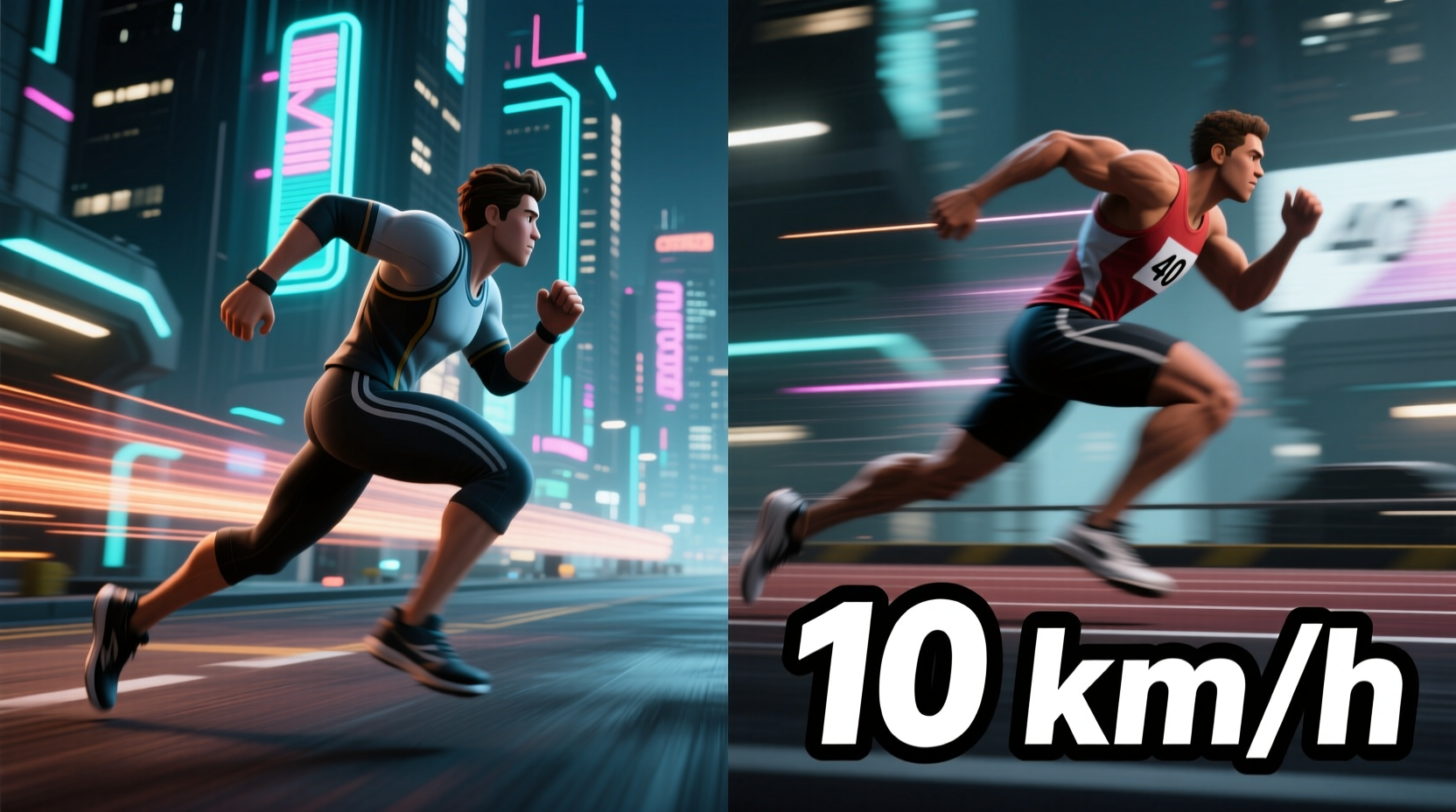
In real life, speed enhances efficiency. In video games, however, raw velocity can undermine immersion and gameplay clarity. Game designers prioritize readability and responsiveness over realism. A character moving at 25 mph would blur past environmental details, making it difficult for players to process visual cues, react to threats, or appreciate world-building elements.
Consider open-world games like *Red Dead Redemption 2*. Arthur Morgan doesn’t sprint across the frontier at full tilt because doing so would reduce player engagement with the environment. Instead, his horse gallops at a controlled pace, allowing players to absorb the scenery, spot wildlife, and anticipate encounters. Similarly, on foot, Arthur jogs deliberately—fast enough to feel urgent, slow enough to remain in control.
This principle extends beyond realism into cognitive load. According to Dr. Celia Hodent, a cognitive psychologist who worked on *Fortnite* at Epic Games:
“Players need time to perceive, decide, and act. If movement is too fast, the brain can’t keep up, leading to frustration and disorientation.” — Dr. Celia Hodent, Cognitive Game Design Expert
Speed must be balanced with perception. Too fast, and the game feels chaotic; too slow, and it feels sluggish. The sweet spot is often far below human sprinting capability.
Gameplay Balance and Combat Mechanics
In action-oriented titles, movement speed directly affects combat viability. Imagine a first-person shooter where every player sprints at 30 mph. Target acquisition becomes nearly impossible. Aim assist systems would fail, hit registration would lag, and encounters would devolve into chaotic scrambles rather than tactical engagements.
To preserve skill-based play, developers cap movement speed. Take *Counter-Strike*, where running speed is approximately 250 units per second (about 9–10 mph). This allows for precise aiming, recoil control, and strategic positioning. Sprinting exists, but only briefly, and often comes with trade-offs like reduced accuracy or stamina depletion.
Even in games with high-mobility characters—like *Apex Legends* or *Overwatch*—movement abilities are tightly tuned. Wraith can teleport short distances, but her base run speed remains grounded. These powers enhance agility without sacrificing control.
Environmental Interaction and World Scale
Video game worlds are often smaller than they appear. What feels like a sprawling forest may be compressed to fit within a playable zone. If characters moved at real sprinting speeds, players would traverse entire maps in seconds, undermining exploration and mission pacing.
For example, in *The Elder Scrolls V: Skyrim*, the distance from Whiterun to Riverwood appears substantial on the map. At a realistic sprint, this journey would take under two minutes. But the game slows movement to stretch travel time, encouraging players to engage with bandits, wildlife, and hidden ruins along the way.
World scale and movement speed are inversely related. Larger worlds demand faster traversal options (mounts, fast travel), while slower base speeds make smaller spaces feel expansive. It’s a psychological trick: by limiting speed, developers create the illusion of grandeur.
Animation Constraints and Visual Fidelity
Real sprinting involves complex biomechanics—arm swings, torso rotation, foot plant timing—that are difficult to animate convincingly in real-time. Most game engines use motion-captured animations, which are expensive and time-consuming to produce. Creating fluid sprint cycles for multiple terrains (uphill, downhill, uneven ground) multiplies the workload.
As a result, many games reuse or loop basic run cycles. These animations are optimized for clarity and consistency, not realism. A character might have only three movement states: walk, jog, and sprint—with sprint still falling short of Olympic pace due to animation blending limits.
Additionally, high-speed movement exacerbates animation glitches. Feet sliding, clipping through terrain, or unnatural transitions between states become more noticeable at higher velocities. Slower speeds mask these imperfections, preserving immersion.
Comparison of Real vs. In-Game Speeds
| Entity | Average Speed (mph) | Average Speed (km/h) | Notes |
|---|---|---|---|
| Usain Bolt (peak sprint) | 27.8 | 44.7 | World record holder, 100m in 9.58s |
| Average Human Sprint | 15–18 | 24–29 | Short bursts only |
| Link (*Breath of the Wild*) | ~8 | ~13 | Jogging speed; sprint drains stamina |
| Master Chief (*Halo Infinite*) | ~9 | ~14.5 | Sprint available, but limited by energy |
| Arthur Morgan (*RDR2*) | ~7 | ~11 | Base jog; sprint depletes stamina quickly |
| Player in *Minecraft* | ~5.6 | ~9 | No sprint animation; speed boost with items |
The data shows a consistent trend: even the fastest video game avatars fall significantly short of real-world sprinting capabilities. This isn’t accidental—it’s intentional design.
Narrative Pacing and Emotional Weight
Movement speed influences storytelling. In *The Last of Us Part II*, Ellie’s restrained pace during tense sequences builds suspense. A sprint would convey urgency, but also detachment—from danger, from emotion, from consequence. By slowing her down, the game forces players to sit with discomfort, to observe bloodstains, abandoned homes, and lingering threats.
Likewise, in horror games like *Resident Evil* or *Silent Hill*, slow movement amplifies vulnerability. You can’t outrun the monsters, and that’s the point. The inability to flee creates tension, turning every corridor into a potential death trap.
Speed communicates tone. A fast-paced platformer like *Sonic the Hedgehog* thrives on velocity, while a narrative-driven RPG like *Disco Elysium* eliminates running entirely—encouraging introspection over action.
Mini Case Study: *Dark Souls* and Deliberate Movement
FromSoftware’s *Dark Souls* series exemplifies how slow movement enhances gameplay depth. Characters move deliberately, with weighty animations that reflect armor load and stamina management. Sprinting is possible, but reckless use leads to exhaustion—and death.
In one memorable encounter, players face Ornstein and Smough, a dual-boss fight requiring precise spacing and timing. Attempting to sprint through the battle results in instant punishment. Success comes from measured steps, well-timed rolls, and spatial awareness—not speed.
The takeaway? Slowness isn’t a flaw—it’s a core mechanic. By removing the option to simply “run away,” *Dark Souls* forces players to master combat, positioning, and patience.
Technical and Input Limitations
Another overlooked factor is input precision. Analog sticks on controllers don’t offer granular speed control. Most games map movement to binary thresholds: walk, run, sprint. There’s little room for subtle variation—no half-speed jog or gradual acceleration like in real life.
Additionally, network latency in online games makes high-speed movement risky. A player moving at 25 mph across a server with 100ms ping could appear to teleport from one location to another, breaking hit detection and causing desynchronization. Lower speeds smooth out these discrepancies, improving fairness and consistency.
Checklist: Designing Balanced Movement in Games
- ✅ Match movement speed to environmental scale and detail density
- ✅ Ensure animations support the intended pace without glitches
- ✅ Test combat responsiveness at various speeds
- ✅ Implement stamina or cooldown systems to limit sprint abuse
- ✅ Use sound and camera effects (e.g., motion blur) to simulate speed
- ✅ Prioritize player control over realism
- ✅ Consider narrative tone when setting base speed
Frequently Asked Questions
Can’t games just let players sprint faster with upgrades?
Some do—games like *Elden Ring* or *Cyberpunk 2077* allow players to increase movement speed via skills or cyberware. However, even upgraded speeds rarely approach real sprinting levels. Developers cap them to preserve balance. Unlimited speed breaks encounter design and trivializes challenges.
Why don’t all games use realistic physics for movement?
Realistic physics often feel bad. In simulations using true biomechanics, characters stumble, accelerate too slowly, or respond poorly to input. Game physics are “feel-based”—tuned to what players perceive as fun and responsive, not accurate. As Valve’s former lead designer, Erik Wolpaw, noted: “Fun is better than real.”
Are there any games where characters run at realistic speeds?
Rarely. Sports games like *FIFA* or *NBA 2K* come closest, using motion capture to replicate athlete movement. Even then, speeds are slightly reduced for gameplay clarity. Racing games simulate speed through camera angles and audio, not avatar velocity.
Conclusion: Embracing the Slow Walk
The next time you find yourself frustrated by your character’s plodding pace, remember: that slowness is by design. It’s not a limitation of technology, but a testament to thoughtful game development. Speed in games isn’t about mimicking reality—it’s about creating engaging, controllable, and emotionally resonant experiences.
From combat balance to narrative tension, every aspect of movement is tuned to serve the player’s experience. What feels slow in isolation becomes essential in context. The power of video games lies not in replicating the physical world, but in crafting new rules that make virtual worlds compelling.




 浙公网安备
33010002000092号
浙公网安备
33010002000092号 浙B2-20120091-4
Comments
No comments yet. Why don't you start the discussion?