
In the past decade, a subtle but widespread shift has taken place in how players experience video games—particularly during moments that aren’t played, but watched. Many gamers report that cutscenes, once brief narrative interludes, now stretch on for minutes at a time, often feeling like they disrupt gameplay rather than enhance it. This isn't just perception; it's a product of deliberate design choices, technological advances, and changing storytelling ambitions. The question isn't whether cutscenes have gotten longer—it’s why they now *feel* longer, even when their runtime hasn't drastically changed.
The answer lies in a complex mix of pacing, player agency, cinematic influence, and evolving audience expectations. As games become more film-like, developers face a paradox: richer narratives demand more exposition, yet players increasingly value immersion and control. Understanding this tension reveals not just a trend in game design, but a fundamental shift in how stories are told in interactive media.
The Evolution of Cutscenes: From Necessity to Spectacle
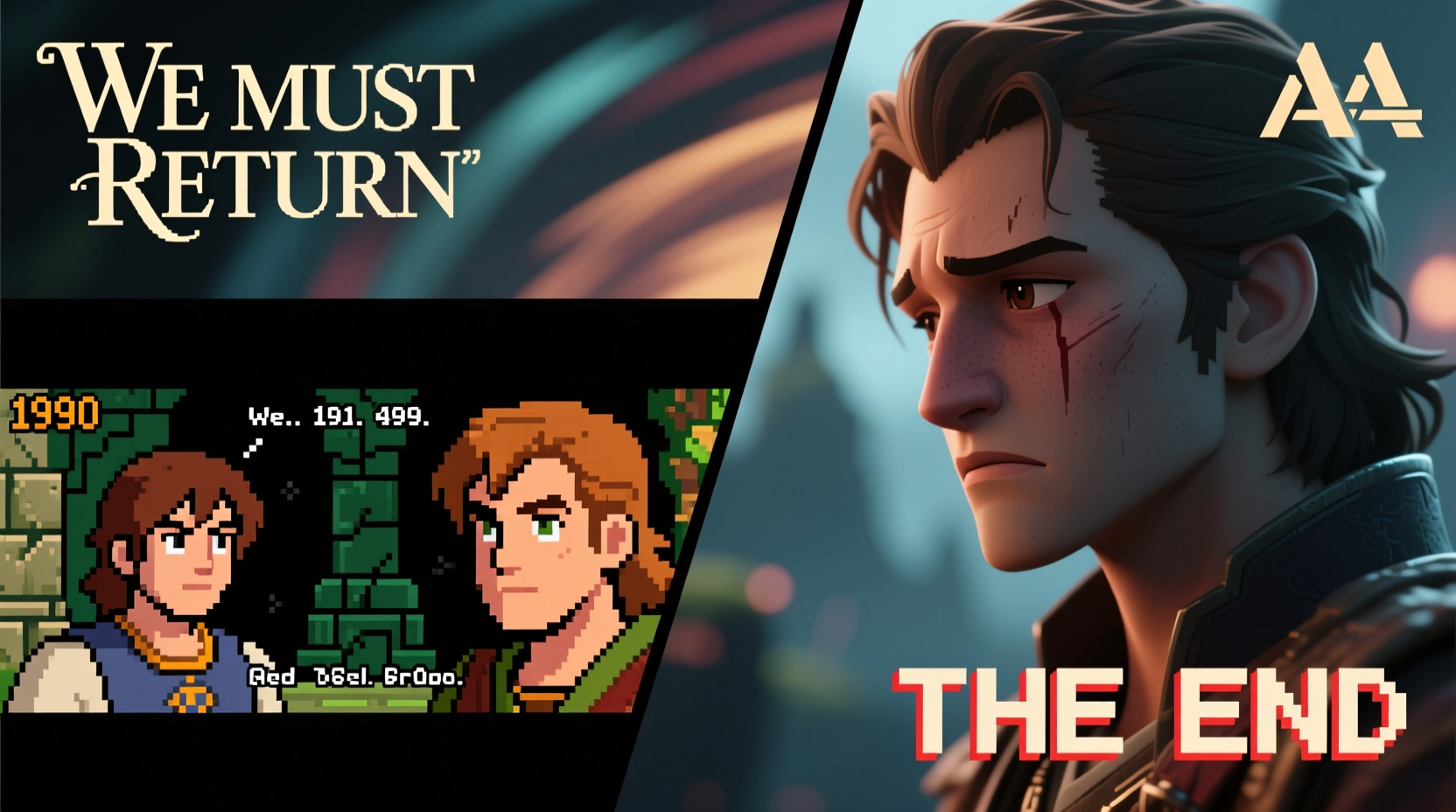
Early video games had no capacity for elaborate storytelling. With limited processing power and storage, narrative was delivered through text screens or simple animations. The original Final Fantasy (1987) used still images and dialogue boxes to convey plot. Even by the mid-90s, games like Resident Evil relied on pre-rendered full-motion videos (FMVs) that were impressive for their time but clearly separated from gameplay.
As technology advanced, real-time rendering allowed developers to integrate story sequences directly into the game engine. Titles like Half-Life (1998) pioneered seamless storytelling by eliminating traditional cutscenes altogether—events unfolded in-engine, preserving player immersion. This approach was revolutionary because it maintained continuity between action and narrative.
Fast forward to the 2010s and 2020s, and the pendulum has swung dramatically. Games like The Last of Us Part II, Red Dead Redemption 2, and God of War Ragnarök feature cinematic cutscenes that rival Hollywood productions in length, quality, and emotional weight. These scenes often last 5–10 minutes and are punctuated with dramatic music, motion-captured performances, and intricate camera work.
Yet despite their technical brilliance, many players find themselves skipping them—or worse, feeling disconnected from the experience. Why?
Pacing and Player Agency: The Core Conflict
One of the primary reasons modern cutscenes feel longer is the erosion of player agency. In a medium defined by interactivity, any moment where the player cannot act creates a psychological pause. When a cutscene begins, the controller becomes inert. This sudden loss of control can make even a two-minute scene feel tedious, especially if the player has already anticipated its outcome.
Compare this to film or television, where passivity is expected. Viewers don’t feel restless during a monologue because they’re conditioned to receive information without response. But gamers are trained to respond—to jump, shoot, explore, decide. When that loop is broken, the brain registers downtime, and time perception distorts.
Research in cognitive psychology supports this: people perceive time as moving slower during passive tasks compared to active engagement. A 2020 study published in Computers in Human Behavior found that participants reported significantly longer perceived durations during non-interactive sequences in games, even when actual time was identical to interactive segments.
This explains why older games with simpler graphics but constant interaction—like Super Mario 64 or The Legend of Zelda: Ocarina of Time—felt faster-paced despite having similar or even greater total cutscene time. Their pacing was dynamic; story was delivered through exploration, NPC dialogue, and real-time events, not static viewing.
Cinematic Influence and Narrative Ambition
Modern game development is increasingly influenced by film. Studios hire directors from Hollywood, invest in performance capture, and structure games around three-act narratives. While this elevates storytelling quality, it also imports pacing conventions unsuited to interactive media.
Films rely on extended dialogue, slow builds, and visual symbolism—all valid tools in cinema—but these can clash with gameplay rhythm. A lingering close-up that conveys grief in a movie may feel like wasted time when it interrupts a tense combat sequence in a game.
“We’re seeing games try to be more like movies, but forget that games are powerful because of what the player does, not just what they see.” — Amy Hennig, former creative director at Naughty Dog
Hennig, known for her work on the Uncharted series, has spoken openly about the challenges of balancing cinematic flair with gameplay flow. She advocates for “in-camera” storytelling—delivering narrative through playable moments rather than cutaways.
Still, the industry trend leans toward spectacle. Marketing materials highlight cinematic trailers. Awards celebrate voice acting and scriptwriting. Players expect emotional depth. All of this pushes developers to allocate more time and resources to cutscenes, sometimes at the expense of pacing.
A Comparative Look: Cutscene Trends Across Major Franchises
To illustrate how cutscene usage has evolved, consider the following comparison across key titles in major franchises. The data reflects average cutscene length per hour of gameplay, based on community playthrough analyses and developer disclosures.
| Game | Release Year | Avg. Cutscene Time per Hour | Narrative Delivery Style |
|---|---|---|---|
| Metroid Prime | 2002 | 3 minutes | Diegetic logs, minimal cutscenes |
| God of War (2005) | 2005 | 6 minutes | Pre-rendered cutscenes, over-the-top drama |
| Uncharted 2: Among Thieves | 2009 | 12 minutes | Film-style editing, frequent transitions |
| The Last of Us Part II | 2020 | 18 minutes | Real-time cinematics, heavy emotional focus |
| Starfield | 2023 | 15 minutes | Mixed: long dialogues, mission briefings |
The data shows a clear upward trajectory. While earlier games used cutscenes sparingly to establish stakes or transition levels, modern titles treat them as central pillars of storytelling. However, increased frequency doesn’t always mean better engagement. In fact, some players report tuning out during lengthy dialogues, particularly when choices are predetermined.
Design Trade-offs: Immersion vs. Exposition
Developers face a difficult balancing act. On one hand, deep narratives require exposition—backstory, character motivation, world-building. On the other, too much exposition halts momentum. The solution isn’t to eliminate cutscenes, but to rethink their role.
Some studios have experimented with hybrid models. Death Stranding, for instance, uses “Timefall” mechanics where cutscenes can be partially skipped, but skipping reduces resource recovery—a clever way to incentivize watching without forcing it. Meanwhile, Disco Elysium delivers nearly all narrative through in-game dialogue trees, keeping the player engaged even during exposition-heavy moments.
Another approach is environmental storytelling. Games like Bloodborne and Elden Ring convey lore through item descriptions, architecture, and enemy placement, minimizing reliance on cutscenes. Players piece together the story actively, which enhances immersion and rewards exploration.
Mini Case Study: Red Dead Redemption 2 – Pacing Under Pressure
Red Dead Redemption 2 (2018) is frequently cited as both a triumph of narrative and a cautionary tale in pacing. The game features over 60 hours of story content, with cutscenes accounting for nearly 20% of total playtime. Its opening chapter alone includes a 15-minute sequence of the gang riding through snow—beautifully animated, but unskippable.
Many players praised the realism and emotional depth, but others expressed frustration. A Reddit thread titled “Is RDR2 too slow?” garnered over 3,000 comments, with users describing zoning out during campfire scenes or fast-forwarding through horse grooming tutorials.
Rockstar’s intent was clear: simulate the quiet rhythms of 1899 frontier life. But in doing so, they risked alienating players accustomed to tighter pacing. The game’s brilliance in animation and writing was undermined, for some, by an overabundance of passive moments.
This case highlights a crucial insight: emotional realism doesn’t always align with engagement. Just because a moment feels authentic doesn’t mean it sustains attention in an interactive context.
Tips for Better Cutscene Integration
For developers and designers aiming to maintain narrative depth without sacrificing pace, here are actionable strategies:
- Keep cutscenes under 3 minutes when possible. Longer scenes should be reserved for pivotal story beats.
- Allow skipping after first viewing. Once players know the content, forced repetition breaks immersion.
- Blend narrative into gameplay. Use contextual dialogue during travel or combat prep to deliver information naturally.
- Leverage player choice. Even minor dialogue options keep players engaged during story sequences.
- Use dynamic camera systems. Let players adjust angles during cutscenes to maintain a sense of control.
Checklist: Evaluating Your Game’s Cutscene Pacing
- Are cutscenes skippable after the first playthrough?
- Do they advance the plot or repeat known information?
- Is player agency preserved during key decisions?
- Could this information be conveyed through gameplay or environment?
- Are emotional beats earned through gameplay, or solely through cutscenes?
- Is there variety in pacing—moments of intensity balanced with downtime?
Frequently Asked Questions
Why do developers make cutscenes so long if players skip them?
Many developers prioritize narrative completeness and artistic vision. They assume players will watch at least once, and marketing often highlights cinematic quality. However, increasing evidence suggests that even dedicated players skip cutscenes when they feel redundant or disruptive.
Are longer cutscenes a sign of lazy storytelling?
Not necessarily. Length alone isn’t the issue—poor integration is. A 10-minute cutscene that delivers critical emotional payoff can be effective. But using cutscenes to dump lore or rehash events could indicate weak in-game storytelling mechanics.
Will we see a return to shorter, integrated storytelling?
Yes—there are signs of pushback. Indie titles like Kena: Bridge of Spirits and Viewfinder emphasize environmental storytelling and minimal cutscenes. Additionally, player feedback is influencing AAA studios; recent patches in some games have added skip functions or shortened intros.
Conclusion: Reclaiming the Rhythm of Play
The growing sense that video game cutscenes feel longer isn’t just about duration—it’s about rhythm. As games strive for cinematic grandeur, they risk losing the very quality that defines them: interactivity. The most memorable moments in gaming history aren’t the ones we watched, but the ones we lived.
The future of game storytelling lies not in mimicking film, but in mastering the unique language of play. By integrating narrative into action, respecting player agency, and using cutscenes as punctuation rather than paragraphs, developers can create experiences that are both emotionally rich and dynamically paced.




 浙公网安备
33010002000092号
浙公网安备
33010002000092号 浙B2-20120091-4
Comments
No comments yet. Why don't you start the discussion?