
Video game remakes have become a cornerstone of modern gaming culture. From beloved classics like Resident Evil and Final Fantasy VII to cult favorites such as Baldur’s Gate and Suikoden, studios are investing heavily in reimagining past hits for new generations. Yet, despite growing anticipation, these projects consistently face delays—sometimes stretching years beyond their original release windows. For fans eagerly awaiting a return to nostalgic worlds with modern enhancements, these postponements can be frustrating. But behind every delay lies a complex web of development challenges, shifting expectations, and evolving industry standards.
This article explores the root causes of remake delays, how they affect players and developers alike, and what fans can realistically expect moving forward. By understanding the pressures behind the scenes, gamers can better appreciate the effort required to revive a classic—and advocate for sustainable development practices that benefit everyone.
The Growing Demand for Remakes
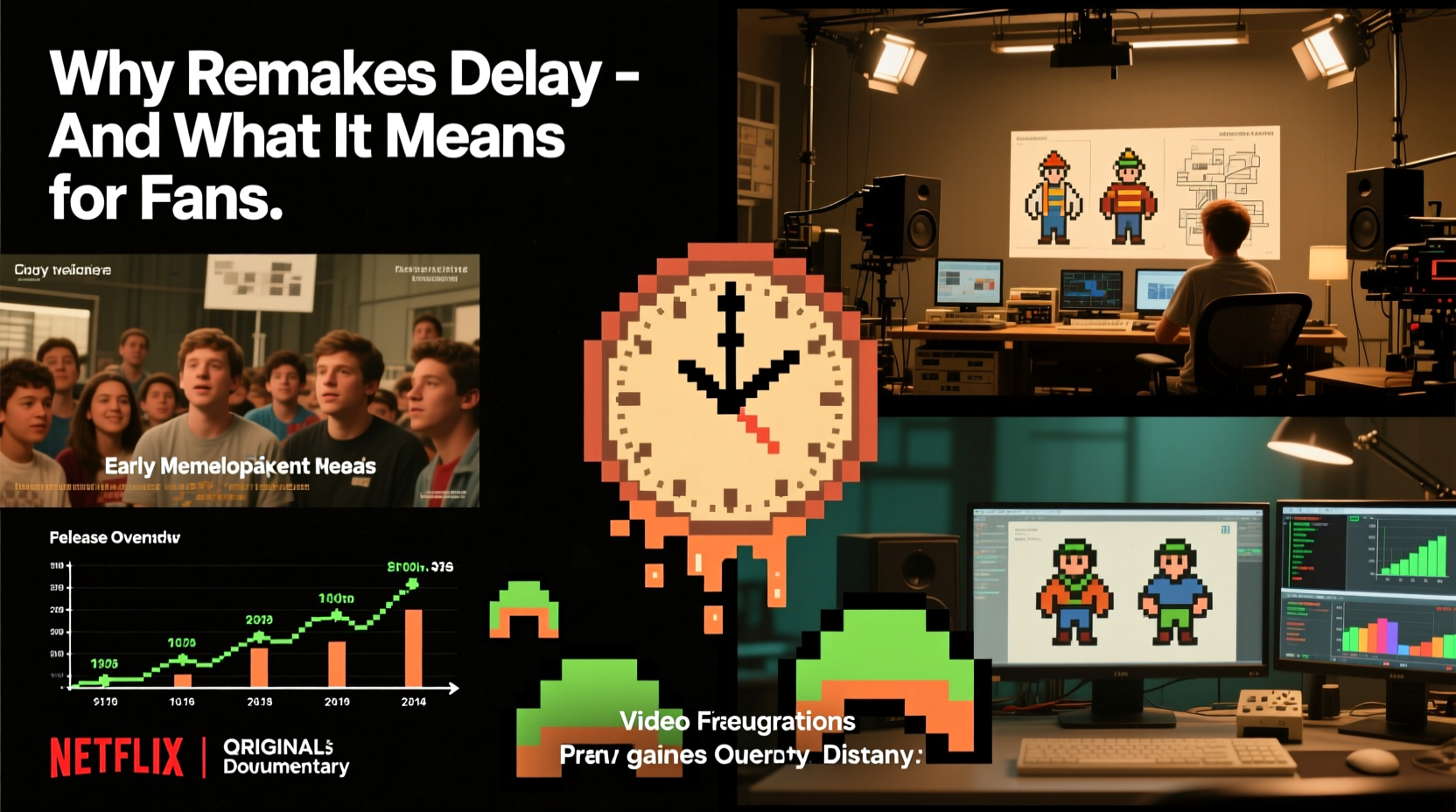
In recent years, there's been a noticeable shift toward nostalgia-driven content across entertainment. The gaming industry is no exception. Publishers and developers recognize that remakes offer a lower-risk investment compared to entirely new IPs. A built-in fanbase ensures immediate interest, marketing traction, and strong pre-order potential.
However, this demand comes with high expectations. Fans don’t just want updated graphics—they expect deeper gameplay improvements, expanded narratives, modern control schemes, and seamless integration with current platforms. Meeting these demands requires more than a simple visual overhaul; it often involves rebuilding entire games from the ground up using contemporary engines and tools.
Why Remakes Take Longer Than Expected
At first glance, remaking an existing game might seem simpler than creating one from scratch. After all, the story, characters, and core mechanics already exist. But in practice, remakes often require more work than original sequels due to technical, creative, and logistical hurdles.
1. Legacy Code and Asset Limitations
Many classic games were developed with proprietary engines, outdated tools, or source code that may no longer be available. In some cases, original developers have left the company or retired, leaving behind incomplete documentation. Reconstructing levels, animations, and systems without reliable references forces teams to reverse-engineer or recreate assets manually.
For example, when Capcom remade Resident Evil 2, they had to rebuild the entire RPD station from memory and concept art because much of the original data was lost or incompatible with modern software. This process added months to development time.
2. Scope Creep and Feature Expansion
Once a team begins working on a remake, it’s common for ambitions to grow. What starts as a faithful recreation evolves into a full reimagining. New side quests, voice acting, dynamic lighting, physics-based interactions, and quality-of-life improvements are added mid-development, significantly expanding the project scope.
This phenomenon, known as \"scope creep,\" is one of the leading causes of delays. Developers want to honor the original while also making the game feel fresh and competitive with modern titles. However, each new feature requires additional testing, balancing, and polish—extending timelines unpredictably.
3. Balancing Nostalgia and Innovation
Fans are divided on how much change is acceptable in a remake. Some want pixel-perfect recreations with only graphical upgrades. Others welcome bold reinterpretations that modernize gameplay. Striking the right balance is difficult and often leads to internal debates, design pivots, and even partial reworks.
The 2020 Final Fantasy VII Remake faced criticism from purists who felt the shift to real-time combat strayed too far from the original turn-based system. At the same time, others praised the innovation. Such polarized feedback pressures developers to refine their vision repeatedly, contributing to delays.
4. Crunch Culture and Burnout
Tight deadlines and high expectations often lead to extended crunch periods—where developers work excessive hours to meet milestones. While this may accelerate short-term progress, it results in long-term inefficiencies. Burnout reduces creativity, increases error rates, and leads to higher staff turnover, all of which slow down production.
“Delays aren't failures—they're acknowledgments that quality takes time. Rushing a beloved title risks alienating the very audience you're trying to serve.” — Maria Chen, Game Producer at Obsidian Entertainment
Real-World Example: The Case of Fable
No recent remake has drawn more attention for its delays than Fable. Announced in 2020 as a reboot of the cherished Xbox franchise, the game was initially projected for a 2025 release. However, by early 2023, insiders reported significant setbacks due to internal restructuring at Playground Games, shifting design goals, and dissatisfaction with early builds.
Rumors suggested that the initial version leaned too heavily on open-world tropes without capturing the whimsical tone and moral choices that defined the original series. Leadership decided to pause development, reassess the direction, and bring in veteran designers to realign the project.
As a result, the release window was pushed to 2026 at the earliest. While disappointing for fans, the decision reflects a growing industry awareness that delivering a hollow, rushed product does more harm than good. The Fable case illustrates how ambition, legacy, and studio dynamics intersect to impact timelines.
How Delays Impact Fans and the Industry
Repeated delays don’t just affect release calendars—they influence player trust, community morale, and corporate reputations.
Player Disappointment and Erosion of Trust
When a highly anticipated remake is delayed multiple times, fans may begin to question whether the project will ever ship. Each postponement chips away at excitement and breeds skepticism. Social media becomes flooded with memes, complaints, and speculation, sometimes escalating into harassment of developers.
Worse, some fans lose faith in publishers altogether. If a company repeatedly overpromises and underdelivers, consumers may hesitate to support future titles—regardless of quality.
Financial and Marketing Consequences
Delays disrupt marketing campaigns, retail partnerships, and hardware bundling strategies. A game originally slated for holiday season may miss peak sales opportunities, affecting revenue forecasts. Investors may react negatively, especially if delays become a pattern across a publisher’s portfolio.
Additionally, prolonged development increases costs. Salaries, licensing fees, and engine subscriptions accumulate over time, squeezing profit margins and reducing funds available for other projects.
A Silver Lining: Higher Quality Outcomes
Not all delays are detrimental. Some of the most acclaimed remakes benefited from extra development time. Shadow of the Colossus (2018) was delayed to refine its camera system and horse controls, resulting in a critically praised experience. Similarly, the Dead Space (2023) remake used its additional year to perfect audio immersion and zero-gravity movement, earning widespread acclaim upon release.
In these cases, delays allowed teams to address feedback, fix bugs, and elevate the final product beyond initial expectations.
What Fans Can Do: Supportive Engagement
Fans play a crucial role in shaping the development environment. While expressing disappointment is valid, how that frustration is communicated matters. Constructive dialogue fosters healthier developer-fan relationships and encourages transparency.
- Practice patience: Understand that game development is inherently unpredictable. Technical debt, staffing changes, and creative decisions all influence schedules.
- Engage respectfully: Avoid toxic comments or personal attacks on social media. Developers read them, and hostile environments contribute to burnout.
- Support transparency: Applaud studios that share honest updates—even if the news is a delay. These teams prioritize integrity over hype.
- Purchase ethically: Wait for finished products rather than pre-ordering based on trailers alone. This reduces financial pressure to rush releases.
- Advocate for sustainable practices: Support unions, fair labor initiatives, and companies that reject crunch culture.
Comparison: Successful vs. Problematic Remake Timelines
| Game | Original Announcement | Initial Release Window | Actual Release | Key Reasons for Delay |
|---|---|---|---|---|
| Final Fantasy VII Remake | 2015 | 2017–2018 | 2020 | Engine transition, scope expansion, narrative rework |
| Dead Space (2023) | 2021 | 2022 | 2023 | Audio refinement, accessibility features, polish |
| Baldur’s Gate: Enhanced Edition | 2012 | Late 2012 | Nov 2012 (minor delay) | Compatibility fixes for modern OS |
| Fable (Reboot) | 2020 | 2025 | TBD (~2026+) | Design overhaul, leadership changes, engine adaptation |
| Suikoden I & II HD Remaster | 2019 | 2022 | 2024 | Art style disputes, outsourcing challenges, music licensing |
Frequently Asked Questions
Are game remakes harder to make than sequels?
Not necessarily harder, but different in complexity. Remakes require deep respect for the original while integrating modern standards. Sequels have more creative freedom but lack the built-in recognition. Remakes often involve asset reconstruction and emotional expectations that sequels don’t face.
Should I be worried if my favorite remake gets delayed?
Not automatically. A delay doesn’t mean cancellation or failure. Many delayed remakes end up being superior products. However, indefinite silence from the developer or repeated pushes without explanation may signal deeper issues.
Can fans influence development timelines?
Indirectly, yes. Public feedback can shape priorities—especially regarding features or fidelity to the original. However, core scheduling is determined by internal resources, budgets, and technical readiness, not fan demand alone.
Conclusion: Patience as an Act of Support
Video game remakes occupy a unique space between reverence and reinvention. They carry the weight of memory, the promise of improvement, and the challenge of living up to decades of affection. Delays are not signs of failure but reflections of the immense care—and difficulty—involved in doing justice to a beloved title.
For fans, the best response isn’t frustration, but informed patience. By understanding the realities of game development, supporting ethical practices, and engaging constructively, players become allies in the creative process. Every extra month spent refining a mechanic, polishing a cutscene, or preserving the spirit of the original is an investment in a better experience.
The next time a remake is delayed, consider what it truly means: a team choosing quality over speed, craftsmanship over convenience. That’s a sign not of weakness, but of respect—for the game, the craft, and you, the player.




 浙公网安备
33010002000092号
浙公网安备
33010002000092号 浙B2-20120091-4
Comments
No comments yet. Why don't you start the discussion?