
In an age where distractions are constant and attention spans are shrinking, students and professionals alike are searching for tools that help them stay focused. One surprising but increasingly popular solution? Video game soundtracks. Once considered background noise for digital adventures, these compositions are now being used in libraries, coffee shops, and home offices as powerful aids for deep concentration. But what makes them so effective? The answer lies in the intentional design of game music, cognitive psychology, and the way our brains respond to structured auditory environments.
The Science Behind Sound and Focus
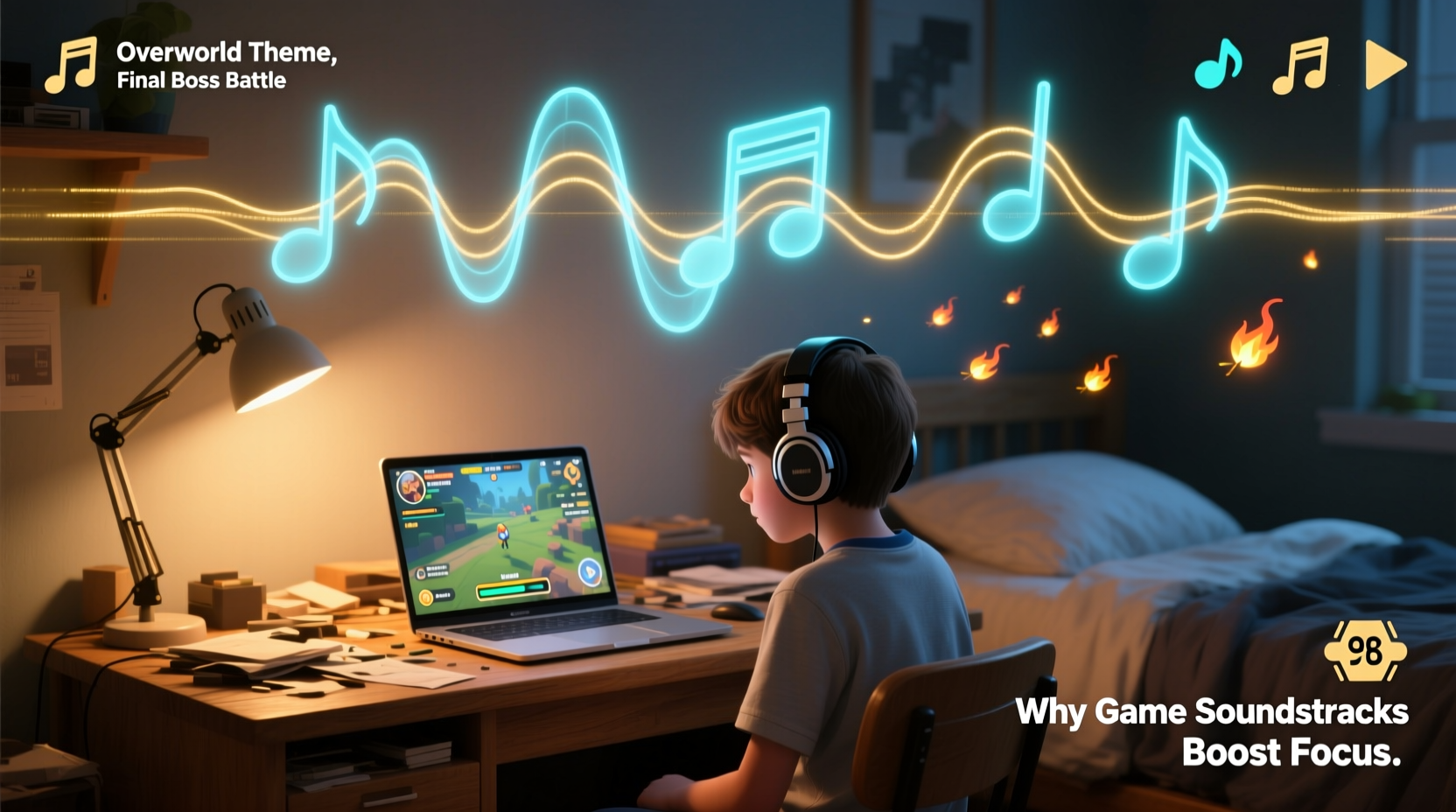
Sound plays a crucial role in shaping mental states. Ambient noise, silence, or music can either sharpen or disrupt focus depending on their characteristics. Research in cognitive neuroscience shows that certain types of music engage the brain’s default mode network—the system responsible for maintaining alertness without triggering emotional distraction.
Video game soundtracks are engineered with this balance in mind. Unlike pop songs with lyrics, dynamic shifts, and emotional crescendos, game music is designed to be “functional.” It supports immersion without demanding attention. This concept, known as non-intrusive audio scaffolding, allows players (and now students) to remain engaged in a primary task—whether navigating a virtual world or solving calculus problems—while the music subtly enhances arousal and vigilance.
A 2020 study published in *Psychology of Music* found that participants exposed to instrumental, repetitive soundscapes similar to those in open-world games demonstrated improved sustained attention and reduced mind-wandering compared to those listening to lyrical music or complete silence.
“Game composers don’t write for the foreground—they write to live in the periphery of awareness, which makes their work uniquely suited for concentration tasks.” — Dr. Lena Park, Cognitive Psychologist at University of Edinburgh
How Game Music Differs from Traditional Study Playlists
Most conventional study music—such as classical symphonies or lo-fi hip-hop—can be helpful, but they often lack the adaptive structure found in video game scores. Consider the differences:
| Feature | Traditional Study Music | Video Game Soundtracks |
|---|---|---|
| Lyrics | Often present (e.g., vocal classical, rap in lo-fi) | Rare; mostly instrumental |
| Dynamic Range | High (loud/soft shifts in symphonies) | Controlled (minimal sudden changes) |
| Repetition & Looping | Limited (songs end or change) | Designed to loop seamlessly |
| Emotional Intensity | Can evoke strong feelings | Neutral or gently uplifting |
| Adaptive Design | Static playback | Often layered (music responds to action) |
This structural consistency helps prevent cognitive disruption. When a song ends or a dramatic violin solo begins unexpectedly, your brain may briefly disengage from reading or writing to process the change. Game soundtracks avoid this by using long, evolving loops that maintain a steady emotional tone.
The Role of Flow State and Immersion
One of the most compelling reasons video game music works so well for studying is its ability to foster a state of flow—a psychological condition in which a person becomes fully absorbed in an activity, losing track of time and external distractions.
Game developers invest heavily in audio design to keep players in flow. Composers like Austin Wintory (*Journey*) and Hirokazu Tanaka (*Metroid*) craft scores that evolve gradually, matching the pacing of gameplay. These same qualities make the music ideal for academic work, where uninterrupted focus is essential.
For example, consider the soundtrack of *Stardew Valley*. Its gentle acoustic melodies repeat with slight variations across seasons, creating a sense of continuity and calm progression. Students report that this kind of music helps simulate a productive rhythm, almost like a metronome for the mind.
The absence of vocals is especially critical. Lyrics activate language-processing regions in the brain, competing with reading and writing tasks. Instrumental game music bypasses this interference, allowing cognitive resources to remain dedicated to learning.
Mini Case Study: A College Student’s Experiment
Sophia, a third-year biology major at Northwestern University, struggled with focus during long study sessions. She tried white noise, classical playlists, and even complete silence—but frequently caught herself checking her phone or zoning out.
On a whim, she played the ambient forest theme from *The Legend of Zelda: Breath of the Wild* while reviewing for her genetics exam. To her surprise, she completed two hours of dense material without interruption. Over the next week, she tested different game soundtracks using a focus timer app and tracked her retention through self-quizzing.
Her results: average session length increased by 47%, and she scored 15% higher on practice tests when using game music versus silence. “It’s not just about blocking noise,” she said. “It feels like the music creates a little bubble where I’m supposed to be working. Like my brain recognizes it as a signal.”
Best Game Soundtracks for Studying (And Why They Work)
Not all game music is equally effective for concentration. The best choices share specific traits: minimalism, slow tempo, harmonic stability, and no sudden sonic events. Here are some top recommendations backed by user reports and cognitive principles:
- Celeste – Its piano-driven score blends emotional warmth with structural simplicity, making it ideal for reflective or creative work.
- Minecraft – C418’s ambient tracks use sparse melodies and long silences, reducing cognitive load while maintaining presence.
- Outer Wilds – The haunting, space-themed soundtrack uses reverb-heavy tones that promote introspection without agitation.
- Animal Crossing: New Horizons – Repetitive, cheerful loops create a low-stress environment conducive to routine tasks like note-taking.
- Abzû – Underwater soundscapes with fluid orchestration mimic the calming effects of nature sounds.
Platforms like Spotify, YouTube, and Apple Music now host curated playlists such as “Lo-fi Video Game Study Beats” and “Ambient RPG Soundtracks,” making access easier than ever.
Checklist: How to Use Game Music Effectively for Studying
- Choose instrumental tracks without sudden volume spikes.
- Test different genres—exploration > combat-focused games.
- Keep volume low to moderate (background level, not dominant).
- Use playlists that loop seamlessly to avoid interruptions.
- Pair music with a consistent study routine to build auditory cues.
- Avoid multitasking; let the music support one focused task.
- Take breaks every 50–90 minutes to prevent auditory fatigue.
Step-by-Step Guide to Building Your Ideal Study Soundtrack
Creating a personalized audio environment can significantly improve your concentration. Follow this timeline to build a tailored playlist:
- Week 1: Audit Your Current Habits
Track when you lose focus and what you’re listening to. Note patterns—do lyrical songs distract you? Does silence feel too empty? - Week 2: Sample 3–5 Game Soundtracks
Pick titles from different genres (e.g., *Minecraft* for minimalism, *Journey* for emotional neutrality). Use them during short study blocks (25 mins). - Week 3: Evaluate and Refine
After each session, rate focus level (1–10) and retention. Keep tracks that score 7+ and remove disruptive ones. - Week 4: Build Themed Playlists
Create sets for different tasks: “Deep Focus” (slow, ambient), “Active Review” (slightly rhythmic), “Creative Writing” (melodic but soft). - Ongoing: Rotate and Refresh
Every few weeks, introduce new tracks to prevent habituation. The brain adapts to repeated stimuli, so variety maintains effectiveness.
Frequently Asked Questions
Can any video game music help with studying?
No—not all game soundtracks are suitable. Avoid titles with intense battle themes, loud sound effects, or frequent shifts in tempo (e.g., *Doom*, *Call of Duty*). Stick to exploration, simulation, or puzzle games with ambient scores.
Is it better than classical music?
For many people, yes—especially if classical pieces have strong dynamics or vocals. Game music is often more consistently paced and designed specifically to coexist with cognitive tasks. However, personal preference matters; some find Mozart or Bach equally effective.
Does this work for everyone?
While many benefit, individuals with sensory sensitivities or certain neurodivergent conditions (e.g., some forms of autism) may find any background sound distracting. If music hinders focus, consider brown noise or total silence instead.
Conclusion: Turning Sound Into a Study Superpower
Video game soundtracks represent a quiet revolution in how we think about focus-enhancing tools. Far from mere entertainment, they are sophisticated auditory environments built on decades of design research. Their ability to sustain attention without intrusion makes them uniquely powerful for students seeking deeper concentration.
The key isn’t just playing any game music—it’s choosing the right kind, integrating it into a structured routine, and treating sound as a deliberate part of your cognitive toolkit. When used intentionally, these compositions do more than fill silence; they shape the mental space in which learning happens.




 浙公网安备
33010002000092号
浙公网安备
33010002000092号 浙B2-20120091-4
Comments
No comments yet. Why don't you start the discussion?