
Blinking is one of the most frequent actions our bodies perform without conscious thought. It happens in a fraction of a second, yet it plays a vital role in maintaining eye health, protecting vision, and even supporting cognitive function. Despite its simplicity, blinking is a complex physiological process influenced by environment, emotion, and neurological activity. On average, a person blinks between 15,000 and 20,000 times per day—yet few understand why this reflex exists or what deviations from the norm might indicate.
This article explores the science behind blinking, identifies what constitutes a normal blinking rate, and examines how factors like screen use, dryness, and neurological conditions affect this essential function. Whether you’ve noticed excessive blinking, infrequent blinking, or simply want to understand more about your body’s automatic processes, this guide provides practical insights grounded in medical research and expert opinion.
The Biological Purpose of Blinking
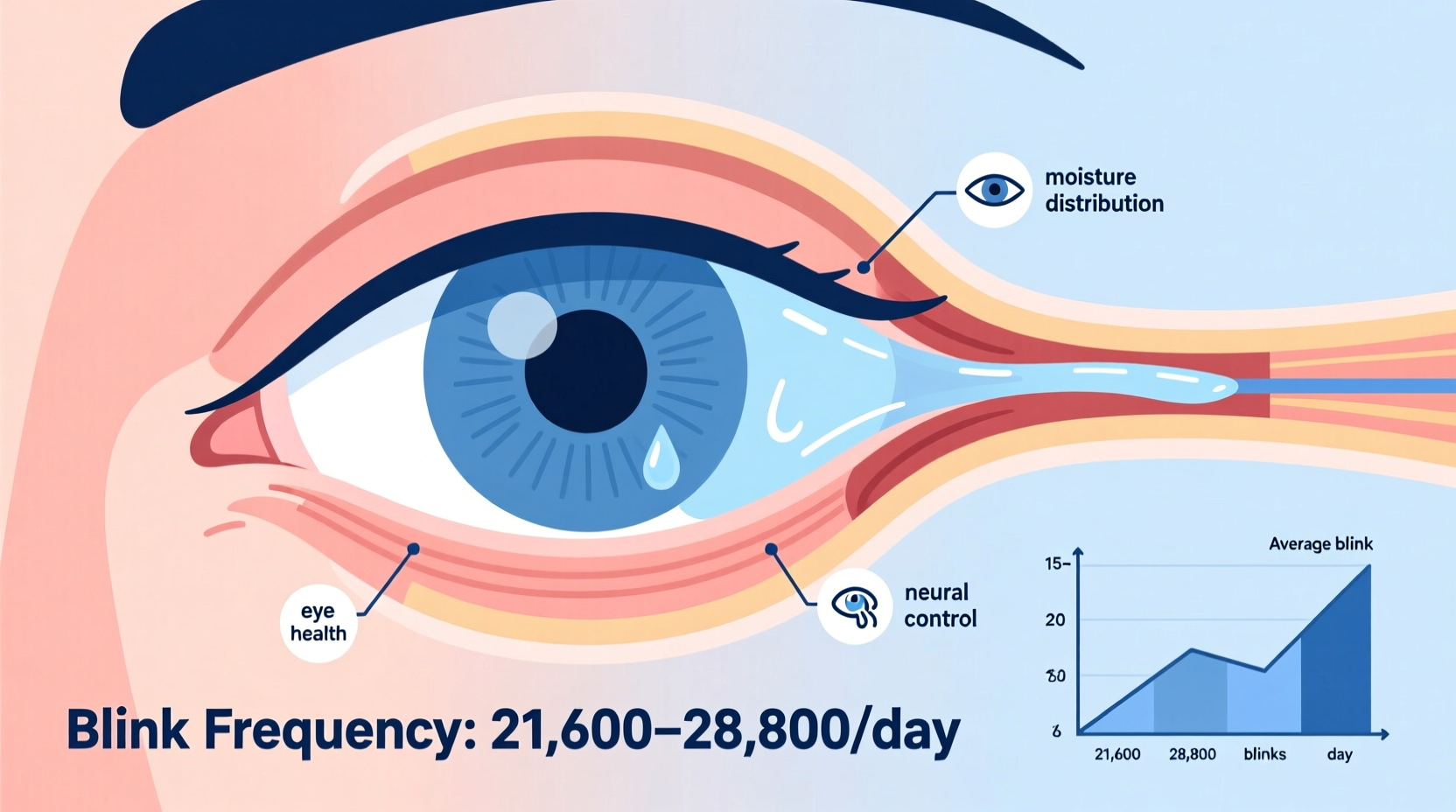
Blinking is far more than just a reflex—it serves multiple critical functions that keep the eyes healthy and functional. Each blink spreads a thin layer of tears across the surface of the eye, ensuring consistent moisture and optical clarity. This tear film consists of three layers: oil, water, and mucus, all working together to prevent dryness, wash away debris, and protect against infection.
The eyelids act as windshield wipers for the eyes. With every blink, they sweep away dust, allergens, and microscopic particles that could irritate or damage the cornea. This mechanical cleaning is especially important in polluted or dry environments where airborne particles are abundant.
Additionally, blinking helps maintain visual stability. Although each blink interrupts vision for about 100 to 150 milliseconds, the brain compensates by suppressing visual processing during the blink, preventing a jarring \"blackout\" effect. This seamless integration allows us to remain visually oriented despite thousands of daily interruptions.
“Blinking isn’t just about lubrication—it’s an integrated system involving nerves, muscles, and brain circuits that ensure ocular comfort and visual continuity.” — Dr. Lena Patel, Neuro-Ophthalmologist, Massachusetts Eye and Ear
How Many Times Do We Blink Per Day?
The average adult blinks between 15 and 20 times per minute, which translates to roughly 900 to 1,200 blinks per hour and 15,000 to 20,000 per day. However, this number varies significantly based on context, age, health, and behavior.
Infants blink far less frequently—only about 1 to 2 times per minute—while children gradually increase their blink rate until reaching adult levels around adolescence. Interestingly, blink rates tend to decline slightly with age, though this is often offset by increased dry eye symptoms that may prompt more frequent blinking as a compensatory mechanism.
One of the most influential factors on blink frequency is visual task engagement. During activities requiring intense concentration—such as reading, driving, or staring at digital screens—blink rates can drop by up to 60%. This phenomenon, known as “task-induced blink suppression,” contributes to digital eye strain and dryness among office workers and students.
| Activity | Average Blinks per Minute | Notes |
|---|---|---|
| Resting (conversation) | 15–20 | Baseline rate for relaxed states |
| Reading (print) | 8–10 | Reduced due to focus demands |
| Computer work | 5–7 | Strongly linked to eye strain |
| Watching TV | 12–15 | Moderate reduction from baseline |
| Sleeping | 0–2 | Eyes remain closed; minimal blinking |
What Influences Blink Rate?
Blinking is not solely a mechanical response—it’s modulated by psychological, environmental, and neurological factors. Understanding these influences can help explain changes in blinking behavior and identify potential health concerns.
Emotional State and Cognitive Load
Stress, anxiety, and excitement can increase blink frequency. Studies have shown that people blink more rapidly when lying or under pressure, making blink rate a subtle but measurable indicator of emotional arousal. Conversely, deep concentration often suppresses blinking, particularly during tasks like problem-solving or video gaming.
Environmental Conditions
Dry air, wind, smoke, and bright light all trigger protective blinking. Air-conditioned offices and airplane cabins, which have low humidity, are common culprits behind increased eye discomfort and altered blink patterns. Wearing contact lenses also increases sensitivity, often leading to more frequent blinking to alleviate dryness.
Neurological and Medical Factors
Certain neurological conditions directly affect blinking. For example, Parkinson’s disease is associated with reduced blink rates due to dopamine deficiency, while Tourette syndrome and other tic disorders may cause excessive or involuntary blinking. Dry eye syndrome, blepharitis (eyelid inflammation), and allergies can also lead to either too much or too little blinking depending on symptom severity.
Digital Screen Exposure
Prolonged screen time is one of the leading causes of abnormal blink patterns today. When focusing on screens, people not only blink less but often perform incomplete blinks—where the eyelids don’t fully close. This prevents proper tear distribution and accelerates evaporation, contributing to chronic dryness and fatigue.
When Is Blinking Abnormal?
While occasional fluctuations in blink rate are normal, persistent changes may signal underlying issues. Recognizing the signs of abnormal blinking can prompt early intervention and prevent complications.
Excessive Blinking
Frequent blinking beyond the typical range may be caused by:
- Dry eye syndrome
- Allergies or eye irritation
- Uncorrected vision problems (e.g., astigmatism)
- Stress or anxiety
- Tics or neurological disorders
In children, sudden onset of excessive blinking often stems from visual strain or habit tics rather than serious pathology, but evaluation by an eye care professional is still recommended.
Reduced Blinking
Infrequent blinking can lead to corneal exposure, dryness, and blurred vision. Common causes include:
- High-concentration tasks (e.g., surgery, coding)
- Parkinson’s disease and other movement disorders
- Facial nerve palsy (e.g., Bell’s palsy)
- Side effects of certain medications
“In neurology, blink rate is a window into basal ganglia function. A patient with Parkinson’s may blink only twice a minute—less than 10% of normal—which contributes to eye discomfort and visual fatigue.” — Dr. Rajiv Mehta, Movement Disorder Specialist, Johns Hopkins Medicine
Improving Blink Health: A Practical Checklist
Maintaining healthy blinking habits supports long-term eye comfort and performance, especially in modern digital environments. Follow this checklist to optimize your blink function:
- Stay hydrated: Drink adequate water to support tear production.
- Use artificial tears: Apply preservative-free lubricating drops if eyes feel dry.
- Blink consciously: Remind yourself to blink fully during screen work.
- Adjust screen position: Keep monitors slightly below eye level to reduce corneal exposure.
- Take regular breaks: Follow the 20-20-20 rule to rest your eyes.
- Humidify your space: Use a humidifier in dry indoor environments.
- Manage underlying conditions: Treat allergies, blepharitis, or vision problems promptly.
- Avoid eye irritants: Limit exposure to smoke, dust, and strong airflow (e.g., fans, AC vents).
Real-Life Example: The Office Worker’s Breakthrough
Sarah, a 34-year-old data analyst, began experiencing persistent eye dryness, blurred vision, and headaches after transitioning to full-time remote work. She spent 8–10 hours daily in front of dual monitors, often forgetting to take breaks. Her optometrist noted her blink rate was only 6 per minute—well below normal—and that she performed many partial blinks.
After being diagnosed with mild dry eye syndrome, Sarah implemented several changes: she set hourly reminders to blink fully, adjusted her monitor height, started using artificial tears, and introduced short outdoor walks into her routine. Within three weeks, her symptoms improved dramatically. A follow-up test showed her blink rate had increased to 14 per minute, and she reported greater focus and comfort throughout the workday.
Sarah’s case illustrates how small, intentional adjustments can restore natural blinking rhythms and alleviate digital eye strain—a common issue affecting millions worldwide.
Frequently Asked Questions
Is it bad to blink too much?
Occasional increases in blinking due to fatigue, dryness, or stress are normal. However, persistent excessive blinking—especially if accompanied by facial twitching, redness, or pain—should be evaluated by an eye doctor or neurologist to rule out underlying conditions such as tics, dry eye, or nerve irritation.
Why do I forget to blink when looking at screens?
Your brain prioritizes visual input during focused tasks, suppressing the blink reflex to minimize interruptions. This subconscious process, while efficient, disrupts tear film stability. Consciously reminding yourself to blink or using timed break alerts can counteract this effect.
Can blinking improve concentration?
Yes. Research suggests that blinks may serve as “reset points” in cognitive processing. Functional MRI studies show that blinking correlates with shifts in brain activity, particularly in the default mode network, potentially helping the brain transition between mental tasks. While not a concentration tool per se, healthy blinking supports overall brain-eye coordination.
Conclusion: Listen to Your Eyes
Blinking is a silent guardian of eye health—one that operates tirelessly in the background. By understanding why we blink and recognizing what a normal blink rate looks like, you gain valuable insight into your physical and mental well-being. Whether you're navigating long hours at a desk, managing a chronic condition, or simply curious about human biology, paying attention to your blinking habits is a simple yet powerful step toward better eye care.
Start today: notice your blink pattern, hydrate, take breaks, and protect your vision. Small changes compound into lasting benefits. Your eyes blink for you—now it’s your turn to blink back with care.




 浙公网安备
33010002000092号
浙公网安备
33010002000092号 浙B2-20120091-4
Comments
No comments yet. Why don't you start the discussion?