
Dreams are one of the most mysterious and personal experiences of human consciousness. They can feel vivid, emotional, and real while they unfold—only to vanish seconds after opening your eyes. You might sit up in bed trying desperately to recall a story that felt like a full-length movie just moments ago, but it slips away like smoke. Why does this happen? The answer lies deep within the brain’s architecture, chemistry, and sleep cycles. This article breaks down the neuroscience behind dream forgetting in clear, accessible terms—and offers practical ways to improve dream recall.
The Brain During Sleep: A Dynamic Landscape
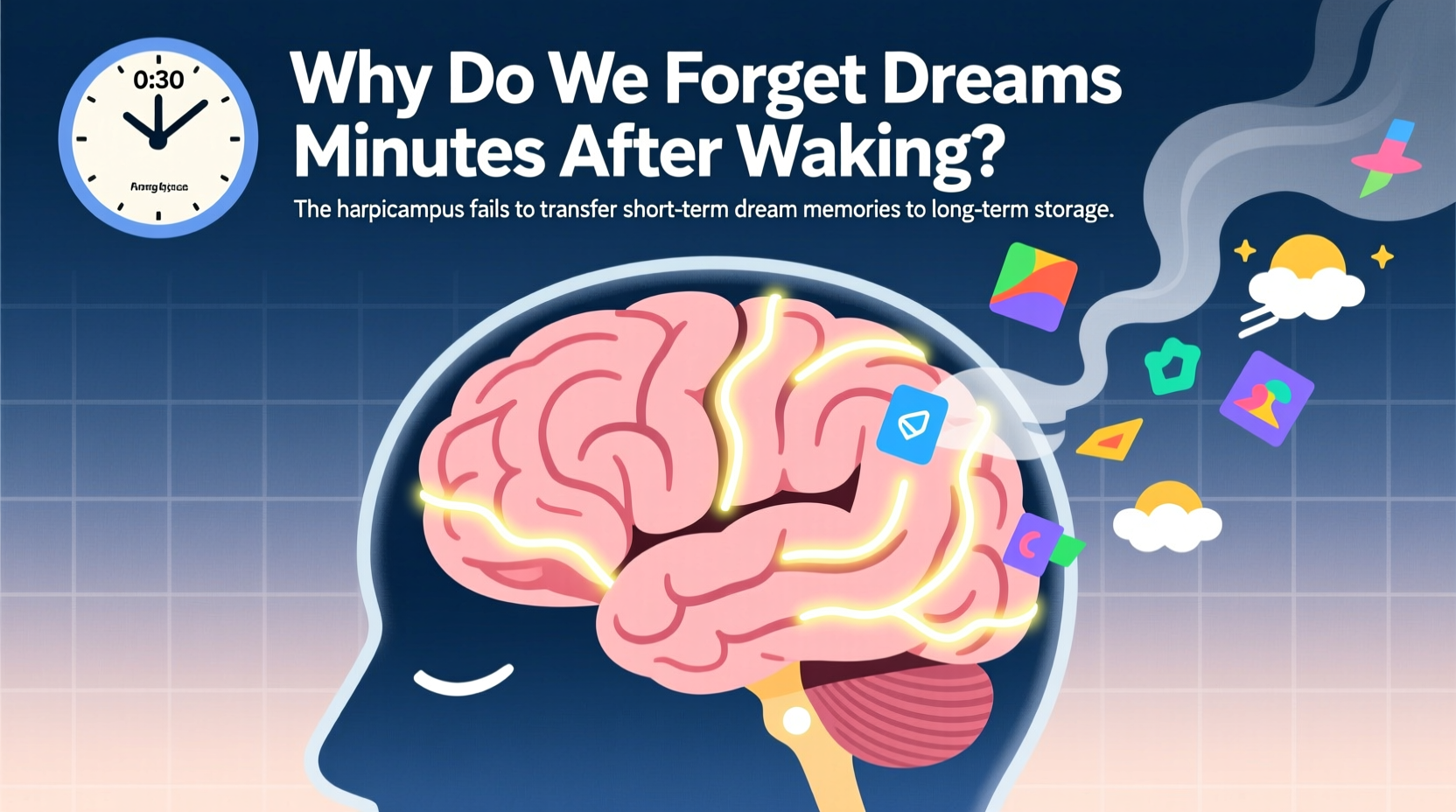
Sleep isn’t a passive state. Your brain remains highly active, cycling through distinct stages every 90 minutes. These include non-rapid eye movement (NREM) sleep and rapid eye movement (REM) sleep—the stage most closely associated with vivid dreaming.
During REM sleep, brainwave activity resembles that of wakefulness. The visual, emotional, and memory-processing regions—including the amygdala, hippocampus, and visual cortex—light up. Meanwhile, areas responsible for logic and self-awareness, such as the prefrontal cortex, are significantly quieter. This explains why dreams often feel emotionally intense but logically disjointed.
Despite this neural fireworks, dream memories rarely transfer into long-term storage. The primary reason? A lack of memory consolidation during REM sleep.
“Dreams are born in a brain state that’s hostile to memory formation.” — Dr. Robert Stickgold, Cognitive Neuroscientist, Harvard Medical School
Neurochemistry of Forgetting: Why Memories Fade Fast
Memory formation depends on neurotransmitters—chemical messengers that help neurons communicate and strengthen connections. Two key players are norepinephrine and acetylcholine.
- Norepinephrine: Associated with attention, alertness, and memory encoding. Levels are very low during REM sleep.
- Acetylcholine: High during REM, promoting internal brain activity and dream generation—but without norepinephrine, this activity doesn’t get “tagged” as important for later recall.
Think of it like filming a movie without saving the file. The action happens, the scenes play out, but there’s no storage mechanism to preserve it. Without sufficient norepinephrine, the brain doesn’t prioritize dream content for long-term memory.
Additionally, the hippocampus—the brain’s temporary memory hub—functions differently during sleep. It replays recent waking experiences to consolidate them, but it doesn’t typically integrate dream narratives unless they’re emotionally charged or repeatedly revisited upon waking.
Sleep Cycles and Dream Recall Timing
Not all dreams are created equal when it comes to memorability. Most vivid dreams occur during the final REM phase of the night, which can last up to an hour and happens closest to morning. If you wake naturally at the end of a REM cycle, you're far more likely to remember your dream than if an alarm jolts you awake mid-sleep.
Here’s a simplified breakdown of a typical sleep cycle:
| Stage | Duration | Dream Activity | Recall Likelihood |
|---|---|---|---|
| NREM 1 | 5–10 min | Minimal, thought-like | Very Low |
| NREM 2 | 10–60 min | Rare, fragmented | Low |
| NREM 3 (Deep Sleep) | 20–40 min | Almost none | Negligible |
| REM Sleep | 10–60 min (increases each cycle) | Highly vivid, narrative-driven | High—if awakened directly after |
The longer you stay asleep, especially through multiple REM phases, the more complex and memorable dreams become. But if you don’t wake up immediately after a REM burst, the memory trace fades rapidly due to shifting brain states.
How Memory Consolidation Works (And Why Dreams Are Left Behind)
To be remembered, an experience must go through three stages: encoding, consolidation, and retrieval. Dreams often fail at the first two.
- Encoding: During REM, the brain is internally focused. There’s no external sensory input to anchor the dream, making initial encoding weak.
- Consolidation: After waking, the brain quickly shifts from sleep mode to wakefulness. Without immediate rehearsal—like mentally replaying the dream—the fragile memory trace disintegrates.
- Retrieval: Even if partially stored, dream memories lack strong contextual cues. Unlike waking events tied to time, place, and people, dreams exist in surreal, shifting landscapes that are hard to re-access.
A 2017 study published in Cerebral Cortex found that individuals who regularly recall dreams show increased activity in the medial prefrontal cortex and temporo-parietal junction—areas linked to introspection and attention—even during wakefulness. This suggests that some people train their brains to pay attention to internal experiences, improving dream recall over time.
Practical Strategies to Remember More Dreams
While dream forgetting is normal, it’s not inevitable. With consistent practice, you can enhance your ability to remember dreams. The key is creating conditions that support encoding and immediate consolidation.
Step-by-Step Guide to Improving Dream Recall
- Set Intentions Before Sleep: Tell yourself, “I will remember my dreams when I wake up.” This simple act primes the subconscious to prioritize dream awareness.
- Wake Up Naturally When Possible: Alarms disrupt sleep cycles. If your schedule allows, let your body wake after a full night’s rest, ideally after a REM phase.
- Lie Still Upon Waking: Keep your eyes closed and remain in the same position. Movement signals the brain to switch modes. Focus inward and scan for images, emotions, or fragments.
- Replay Mentally: Reconstruct the dream in your mind. Ask: Who was there? What did I feel? Was there a setting or storyline?
- Record Immediately: Speak into a voice memo app or write notes. Don’t wait—even brief delays cause rapid decay.
- Name the Dream: Give it a title like “The Flying Over the City Dream.” This creates a retrieval cue for later reflection.
- Keep a Regular Journal: Over time, patterns emerge. Recurring symbols, themes, or emotions may reveal subconscious concerns or creativity.
Checklist: Daily Habits for Better Dream Recall
- ☑ Place a dream journal or recorder next to your bed
- ☑ Practice intention-setting before sleep
- ☑ Avoid alcohol and heavy meals before bedtime (they disrupt REM)
- ☑ Maintain a consistent sleep schedule
- ☑ Lie still and reflect for 2–5 minutes upon waking
- ☑ Record even vague feelings or single images
- ☑ Review past entries weekly to spot patterns
Real Example: Sarah’s Journey to Lucid Dreaming
Sarah, a 32-year-old graphic designer, used to remember only one or two dreams a year—usually nightmares that startled her awake. Frustrated by missed creative inspiration, she decided to try dream journaling. She started by placing a notebook on her nightstand and repeating, “I will remember my dreams,” each night.
For the first week, she recalled nothing. Then, one morning, she jotted down a single image: “a blue door floating in fog.” The next day, she remembered a conversation with her childhood dog. By week three, she was recording full narratives. Within two months, she began recognizing recurring symbols—a clock tower, a forest path—which eventually led to her first lucid dream, where she realized she was dreaming and chose to fly.
Sarah’s experience isn’t unique. Many people discover that dream recall improves dramatically with patience and routine. The brain learns what matters to you.
Frequently Asked Questions
Do people who don’t remember dreams not dream at all?
No. Everyone dreams, even if they don’t recall them. Studies using EEG monitoring show that all individuals experience REM sleep and brain activity consistent with dreaming. Forgetting dreams is a memory issue, not a dreaming deficiency.
Can certain medications affect dream recall?
Yes. Antidepressants, particularly SSRIs, can suppress REM sleep and reduce dream vividness. Beta-blockers and antihistamines may also interfere with dream formation. Conversely, some supplements like vitamin B6 have been reported to enhance dream intensity and recall, though evidence is mixed.
Is forgetting dreams a sign of poor sleep quality?
Not necessarily. Even people with excellent sleep hygiene forget most of their dreams. However, consistently disrupted REM sleep—due to sleep apnea, alcohol, or irregular schedules—can reduce both dream frequency and overall sleep quality.
Conclusion: Embrace the Mystery, Train the Mind
Forgetting dreams minutes after waking is a universal experience rooted in brain biology. The neurochemical environment of REM sleep, combined with rapid state shifts upon awakening, makes dream retention inherently fragile. But this doesn’t mean the dream world is inaccessible.
With intentional habits—journaling, stillness upon waking, and consistent sleep—you can train your brain to preserve these fleeting stories. Whether you seek creative insight, emotional clarity, or simply a deeper connection to your inner life, remembering dreams is a skill within reach.




 浙公网安备
33010002000092号
浙公网安备
33010002000092号 浙B2-20120091-4
Comments
No comments yet. Why don't you start the discussion?