
Every night, your mind journeys into a surreal world of images, emotions, and narratives—yet by morning, most of it vanishes. You may recall a fleeting image, a sensation, or a vague emotion, but the full story is often gone. This phenomenon isn’t random; it’s rooted in neuroscience, sleep architecture, and the way memory functions during different stages of consciousness. Understanding why we forget dreams so fast can help us reclaim them, improve mental clarity, and even gain insight into our subconscious.
The Neuroscience of Dreaming and Memory Encoding
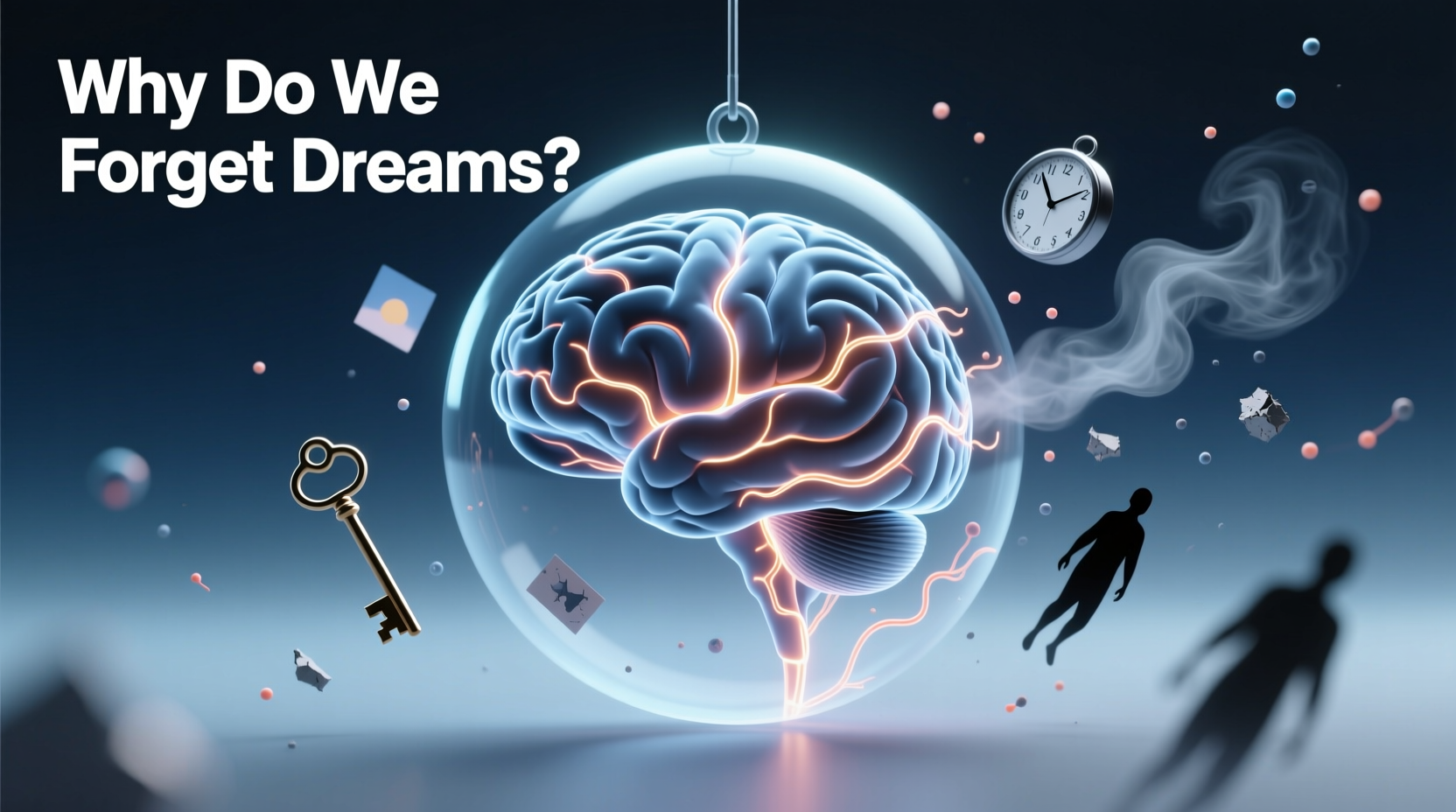
Dreams primarily occur during rapid eye movement (REM) sleep, a phase characterized by high brain activity, vivid imagery, and temporary muscle paralysis. During REM, the brain's electrical patterns resemble those seen in wakefulness. However, despite this activity, the mechanisms for forming lasting memories are significantly impaired.
The hippocampus, a region critical for consolidating short-term memories into long-term storage, behaves differently during REM sleep. While it remains active, its communication with the neocortex—the part responsible for higher-order thinking and conscious awareness—is disrupted. This disconnection means that although you're experiencing complex scenarios in your dreams, they aren’t being effectively \"saved\" into durable memory files.
Neurochemical conditions also play a role. Levels of norepinephrine, a neurotransmitter linked to attention and memory formation, are nearly undetectable during REM sleep. In contrast, acetylcholine—an excitatory neurotransmitter involved in learning—is highly active. This imbalance creates an environment where information is generated rapidly but not retained efficiently.
“During REM sleep, the brain is in a state of hyper-associative processing, ideal for creativity but poor for memory consolidation.” — Dr. Robert Stickgold, Cognitive Neuroscientist, Harvard Medical School
Sleep Cycles and When Dreams Are Most Likely Remembered
The human sleep cycle lasts about 90 minutes and repeats four to six times per night. Each cycle consists of four stages: N1, N2, N3 (non-REM), and REM. Early in the night, deep non-REM sleep dominates, while REM periods grow longer toward morning. Most vivid dreams occur in the final third of the night when REM phases extend up to 30–40 minutes.
This timing explains why people often recall dreams best upon natural awakening in the morning. If you wake directly from a REM phase, especially without an alarm disrupting the transition, you’re more likely to retain some dream content. Conversely, if you’re pulled out of deep sleep earlier in the night, dream recall drops sharply.
| Sleep Stage | Duration | Dream Frequency | Memory Retention Likelihood |
|---|---|---|---|
| N1 (Light Sleep) | 5–10 min | Low, thought-like | Very Low |
| N2 (Intermediate) | 10–60 min | Rare | Low |
| N3 (Deep Sleep) | 20–40 min | Minimal | Nearly None |
| REM Sleep | 10–40 min (increasing) | High, vivid | Moderate to High (if woken directly) |
The longer and more intense the REM period, the richer the dream experience. But unless you awaken during or immediately after REM, the brain transitions back into waking mode without retrieving those memories.
Cognitive Factors That Influence Dream Recall
Beyond biology, cognitive habits shape how much of your dream life you remember. People who report frequent dream recall often share certain traits: they pay attention to their inner experiences, maintain consistent sleep schedules, and practice reflection.
One key factor is **metacognition**—the awareness of one’s own thoughts. Individuals who regularly reflect on their mental states, such as through journaling or meditation, tend to have better dream recall. This suggests that memory retrieval isn't just passive; it's influenced by intention and mental training.
Another aspect is emotional salience. Dreams with strong emotional content—fear, joy, surprise—are more likely to be remembered, even if only partially. The amygdala, which processes emotions, remains highly active during REM sleep, tagging certain dreams as significant, even if the details fade.
Common Barriers to Dream Recall
- Rushing awake: Jumping out of bed immediately disrupts fragile memory traces.
- Poor sleep continuity: Fragmented sleep reduces time in REM and impairs memory integration.
- Lack of attention: Not prioritizing dream recall weakens retrieval pathways.
- Alcohol and medications: These suppress REM sleep and reduce dream vividness.
How to Improve Dream Recall: A Step-by-Step Guide
While forgetting dreams is normal, it’s possible to train your brain to remember more. The process involves adjusting both behavior and mindset. Here’s a practical, science-backed approach:
- Set intention before sleep: Tell yourself, “I will remember my dreams when I wake up.” This primes your brain to prioritize dream content.
- Wake up gradually: Avoid jarring alarms. Allow yourself to lie still for 30–60 seconds upon waking to capture fading images.
- Stay in bed posture: Keep your eyes closed and remain in the same position you woke in. Movement signals the brain to shift fully into wakefulness, erasing dream memories.
- Reconstruct the narrative: Mentally replay any fragment—colors, sounds, emotions—and try to piece together sequences.
- Write it down immediately: Even a few keywords can trigger fuller recall later. Use a dedicated dream journal.
- Review regularly: Re-reading past entries reinforces neural pathways associated with dream memory.
Real Example: Sarah’s Journey to Consistent Dream Recall
Sarah, a 34-year-old graphic designer, rarely remembered her dreams until she began experiencing recurring nightmares. Determined to understand them, she started setting an intention each night and placed a notebook by her bed. At first, she only recalled single images—a staircase, a locked door. But within two weeks, she began capturing full scenes. One dream revealed a symbolic confrontation with a former boss, helping her recognize unresolved stress at work. Over time, her dream recall improved dramatically, and the nightmares subsided. Her experience illustrates how intentional practice can unlock hidden layers of the mind.
Do’s and Don’ts of Dream Memory Practice
| Do’s | Don’ts |
|---|---|
| Keep a consistent sleep schedule | Use alcohol before bed |
| Journal dreams daily, even if blank | Dismiss fragments as unimportant |
| Practice mindfulness during the day | Hit snooze repeatedly (disrupts memory chains) |
| Review old dream entries weekly | Expect immediate results |
| Stay still upon waking | Check your phone instantly |
Frequently Asked Questions
Can everyone dream, even if they don’t remember?
Yes. Research confirms that all humans experience REM sleep and therefore dream, regardless of recall ability. People who claim they “don’t dream” are simply not accessing those memories upon waking. With practice, most can improve recall.
Why do some people remember dreams every day?
High dream recallers often have increased activity in the medial prefrontal cortex and temporo-parietal junction—areas linked to introspection and attention. They also tend to wake up more frequently during REM cycles and engage in reflective practices like journaling or meditation.
Does remembering dreams improve mental health?
Not inherently—but exploring dreams can enhance self-awareness. For some, dream analysis helps uncover hidden anxieties, creative ideas, or emotional patterns. However, obsessing over dreams or fearing their content can increase anxiety. Balance is key.
Conclusion: Reclaiming the Lost World of Dreams
Forgetting dreams is not a flaw—it’s a feature of how the sleeping brain manages memory. Yet this natural tendency doesn’t mean we must lose touch with our nocturnal experiences. By understanding the science behind dream amnesia and applying deliberate strategies, we can reconnect with a rich inner world that influences mood, creativity, and self-understanding.
Your dreams are not meaningless noise. They are expressions of your brain making sense of emotions, memories, and experiences. With patience and consistency, you can learn to remember them, interpret them, and even use them as tools for personal growth.




 浙公网安备
33010002000092号
浙公网安备
33010002000092号 浙B2-20120091-4
Comments
No comments yet. Why don't you start the discussion?