
It starts with a sharp, stabbing pain behind the forehead—just seconds after sipping an icy drink or biting into a frozen treat. Known colloquially as \"brain freeze,\" this sudden headache is familiar to nearly everyone who’s enjoyed a cold beverage on a hot day. While brief and harmless, it can be startling and uncomfortable. But what exactly causes this phenomenon, and more importantly, can you stop it once it starts? Understanding the biology behind brain freeze reveals not only how common bodily reactions work but also practical strategies to prevent and manage them.
The Science Behind Brain Freeze
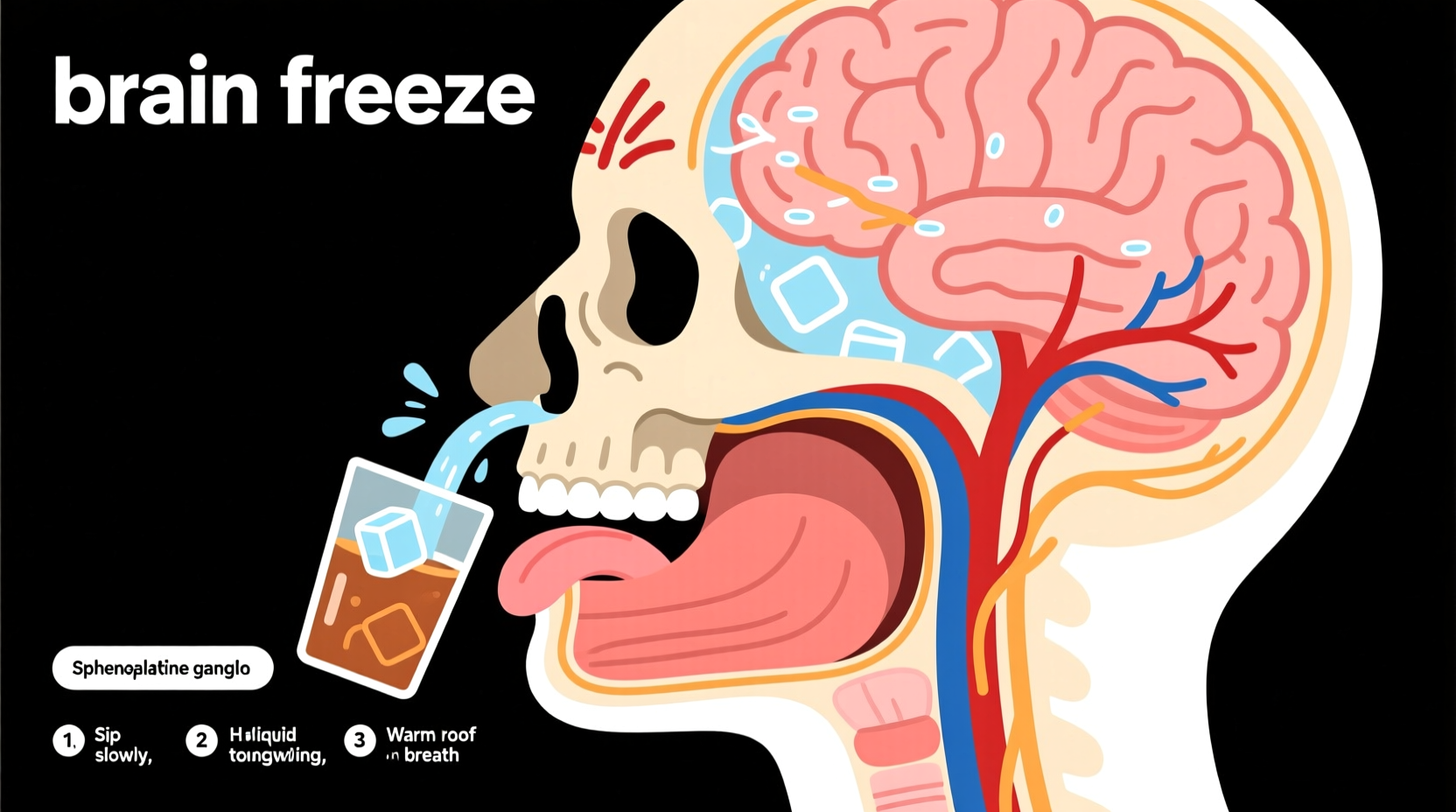
Despite its dramatic nickname, brain freeze isn’t your brain literally freezing. Medically referred to as *sphenopalatine ganglioneuralgia*, it’s a type of referred pain caused by rapid temperature changes in the mouth. When something very cold touches the roof of your mouth (the palate), blood vessels in that area constrict and then rapidly dilate. This triggers a reaction in the trigeminal nerve—one of the largest nerves in the head—which interprets the sensation as pain radiating across the forehead.
This nerve pathway is the same one involved in migraines, which explains why brain freeze feels so intense and why people prone to migraines may experience brain freeze more frequently or severely. The body essentially misinterprets the sudden cooling as a threat, prompting a neurological alarm that results in a quick, sharp headache.
How Blood Vessels React to Cold
The key mechanism behind brain freeze involves cerebral blood flow regulation. When the palate cools rapidly, the body responds by constricting blood vessels to reduce heat loss—a normal thermoregulatory response. But as the cold stimulus passes, those same vessels dilate quickly to restore normal blood flow. This rapid expansion is detected by pain receptors surrounding the vessels, which send signals via the trigeminal nerve to the brain.
Interestingly, researchers at the University of Ireland conducted a study where participants drank ice water through a straw pressed against the roof of their mouths. Using transcranial Doppler ultrasound, they observed a significant increase in blood flow to the anterior cerebral artery within seconds of cold exposure. As the artery expanded, participants reported the onset of brain freeze. When the artery constricted again, the pain subsided—confirming the vascular theory of this phenomenon.
“Brain freeze is a window into how our vascular system responds to sudden stimuli. It’s a benign example of how blood flow changes can generate pain signals.” — Dr. Jorge Serrador, Neurophysiologist, Harvard Medical School
Effective Ways to Stop Brain Freeze Immediately
Once brain freeze hits, waiting it out isn’t the only option. Several immediate interventions can shorten its duration or stop it altogether by stabilizing blood vessel behavior and warming the palate.
- Press your tongue to the roof of your mouth: This transfers warmth from your body directly to the affected area, helping normalize temperature and calm blood vessel activity.
- Drink warm (not hot) liquid slowly: A few sips of room-temperature or slightly warm water can accelerate palate warming without causing new irritation.
- Breathe through your mouth rapidly: Inhaling cold air over the palate may seem counterintuitive, but controlled breathing increases oral temperature gradually and stimulates blood flow regulation.
- Wait it out while leaning forward: If no intervention is available, staying upright and avoiding swallowing can help minimize pressure shifts that might prolong discomfort.
Prevention Strategies for Frequent Sufferers
For those who regularly enjoy smoothies, slushies, or ice cream, preventing brain freeze is more effective than treating it after onset. The goal is to minimize rapid cooling of the palate by altering consumption habits.
- Eat or drink cold items slowly, allowing them to warm slightly in the front of the mouth before reaching the palate.
- Avoid directing straws toward the roof of the mouth; angle them toward the front teeth instead.
- Let frozen treats sit for a minute or two before consuming to reduce initial thermal shock.
- Take smaller bites or sips, especially with dense frozen desserts like gelato or sorbet.
| Behavior | Increases Risk? | Why? |
|---|---|---|
| Drinking icy beverages quickly | Yes | Rapid cooling overwhelms temperature regulation mechanisms |
| Using a straw aimed at the palate | Yes | Directly exposes sensitive nerve-rich tissue to cold |
| Sipping warm liquids between cold ones | No | Maintains stable oral temperature and prevents vessel spasm |
| Eating ice cream with a spoon slowly | No | Allows gradual warming and reduces palatal contact speed |
Who Is More Susceptible to Brain Freeze?
Not everyone experiences brain freeze equally. Research suggests several factors influence susceptibility:
- Migraine sufferers: Due to heightened trigeminal nerve sensitivity, individuals with migraines are more likely to experience brain freeze—and often more intensely.
- Children and teenagers: Faster metabolism and more reactive blood vessels make younger people particularly prone.
- People with larger anterior cerebral arteries: Anatomical variation affects how dramatically blood flow changes during cold exposure.
A 2012 study published in *BioMed Central Neuroscience* found that 37% of migraine patients reported frequent brain freeze compared to only 12% of non-migraine controls. This correlation supports the idea that similar neural pathways are involved in both conditions, making brain freeze a potential model for studying headache disorders.
Mini Case Study: Competitive Ice Cream Eaters
Professional food eaters competing in ice cream challenges often face debilitating brain freeze mid-event. During the 2022 National Dessert Championship, contestant Maria Tran struggled after consuming three pints of frozen yogurt in under five minutes. Midway through her final round, she paused, clutching her temples. “It hit me like a wall,” she later described. “I couldn’t see straight for ten seconds.” Her recovery strategy? She immediately drank a small amount of warm tea provided by her coach and pressed her thumbs firmly against the roof of her mouth. Within 15 seconds, the pain subsided enough for her to continue. Though she didn’t win, her ability to manage brain freeze prevented disqualification. Her experience underscores the importance of having a real-time response plan when consuming large volumes of cold food quickly.
Step-by-Step Guide to Avoid Brain Freeze
Follow this simple sequence whenever consuming cold foods or drinks to significantly reduce your chances of experiencing brain freeze:
- Prepare your palate: Before taking a sip or bite, let the item sit in the front of your mouth for 2–3 seconds.
- Use proper technique: If using a straw, position it near your front teeth rather than aiming upward.
- Control portion size: Take small sips or bites to limit sudden temperature drops.
- Monitor your pace: Allow at least 10–15 seconds between servings of very cold items.
- Have a warm drink nearby: Keep water or herbal tea accessible to reset oral temperature if needed.
- Pause if you feel tingling: Early signs like numbness or pressure mean cooling is happening too fast—slow down immediately.
Frequently Asked Questions
Can brain freeze cause lasting damage?
No. Brain freeze is temporary and does not harm the brain or nervous system. The pain resolves completely within seconds to a minute and has no long-term effects.
Why don’t all cold foods cause brain freeze?
The likelihood depends on temperature, speed of consumption, and contact with the palate. Foods eaten slowly or that don’t touch the roof of the mouth—like chilled fruit salad—are far less likely to trigger it.
Is there a genetic component to brain freeze sensitivity?
While no specific gene has been identified, family patterns suggest a possible inherited sensitivity in nerve response or vascular reactivity. However, environmental factors like eating habits play a larger role.
Conclusion: Take Control of Your Cool Treats
Brain freeze is a fascinating example of how the body interprets rapid physical changes—even harmless ones—as threats. While it’s impossible to eliminate entirely, understanding its causes empowers you to enjoy cold drinks and desserts without fear of sudden pain. By adjusting how you consume icy treats, recognizing early warning signs, and knowing how to respond quickly, you can keep refreshments refreshing. Whether you're cooling off on a summer afternoon or indulging in winter comfort foods, these strategies ensure comfort without compromise.




 浙公网安备
33010002000092号
浙公网安备
33010002000092号 浙B2-20120091-4
Comments
No comments yet. Why don't you start the discussion?