
At first glance, having two nostrils might seem redundant—after all, one opening could technically allow air to enter the lungs. But evolution rarely includes unnecessary features. The dual-nostril system is a finely tuned biological mechanism that enhances respiration, olfaction, and even cognitive performance. From filtering pathogens to supporting our sense of smell and influencing brain activity, the design of our nasal passages reveals a deeper purpose than meets the eye.
The human nose is more than just a facial centerpiece; it’s a sophisticated gateway for air and scent. Understanding why we have two nostrils opens a window into respiratory efficiency, sensory perception, and neurological balance—all quietly operating beneath conscious awareness.
The Functional Anatomy of the Nose
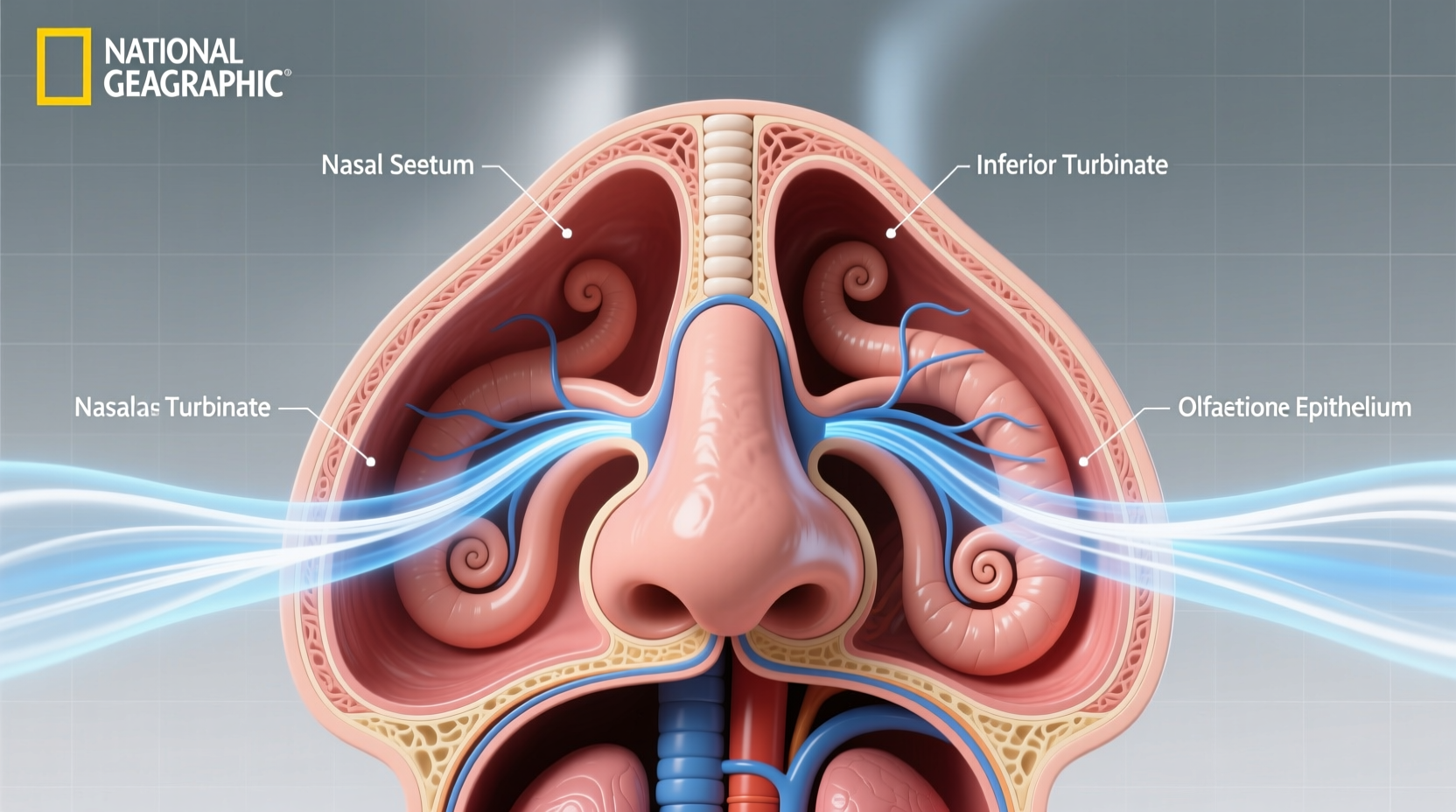
The human nasal cavity is divided by the nasal septum into two separate but symmetrical chambers, each leading from a nostril to the nasopharynx. While structurally similar, these chambers are not always equally active at the same time. This phenomenon, known as the nasal cycle, involves alternating congestion and decongestion of erectile tissue inside each nostril, typically shifting every 2 to 7 hours.
This cyclical pattern means one nostril usually handles about 70–80% of airflow at any given moment, while the other rests. The dominant side changes periodically, regulated by the autonomic nervous system. This isn’t a flaw—it’s a feature designed to optimize mucus production, air humidification, and odorant detection.
“Having two nostrils allows for differential processing of air and scents, which improves both respiratory control and olfactory discrimination.” — Dr. Lena Patel, Olfaction Researcher, University of California
Enhanced Smell Through Stereo Olfaction
Just as two ears enable stereo hearing—allowing us to locate sound sources—two nostrils contribute to what scientists call “stereo olfaction.” When odor molecules enter each nostril at slightly different concentrations or times, the brain uses this disparity to pinpoint the direction and intensity of smells.
In a 2006 study published in *Nature Neuroscience*, researchers blindfolded participants and released odors to one side of their face. Subjects were significantly better at identifying the direction of the scent when using both nostrils compared to when one was blocked. This directional sensitivity would have been crucial for early humans tracking food sources or avoiding predators.
Stereo olfaction also enhances scent discrimination. The olfactory bulbs in the brain receive input from each nostril separately, allowing neural circuits to compare signals and extract more nuanced information about complex odors.
Respiratory Efficiency and Air Conditioning
Breathing through the nose does more than deliver oxygen—it conditions the air before it reaches the delicate tissues of the lungs. The nasal passages warm, humidify, and filter incoming air, protecting the lower respiratory tract from irritants and pathogens.
Each nostril contributes to this process through specialized structures:
- Nasal turbinates: Bony shelves lined with mucous membranes that increase surface area for heat and moisture exchange.
- Ciliated epithelium: Hair-like cells that trap dust, bacteria, and allergens, moving them toward the throat to be swallowed or expelled.
- Paranasal sinuses: Hollow spaces around the nasal cavity that lighten the skull and add resonance to the voice, while contributing to air modulation.
The division of labor between the two nostrils ensures continuous operation. While one side is congested during the nasal cycle, the other maintains airflow, preventing interruption in breathing. Simultaneously, the resting nostril regenerates its mucus layer, preserving filtration capacity over time.
Brain Connection: The Nostril-Brain Feedback Loop
Emerging research suggests a surprising link between nostril dominance and brain hemisphere activity. Studies indicate that when the right nostril is dominant (i.e., more open), left-brain functions such as logical reasoning and language processing tend to increase. Conversely, left-nostril dominance correlates with heightened right-brain activity, associated with creativity and spatial awareness.
This cross-lateral connection stems from the cranial nerves involved in nasal sensation and motor control. Though the exact mechanisms remain under investigation, practices like alternate nostril breathing (a technique used in yoga known as *Nadi Shodhana*) leverage this relationship to promote mental balance and reduce stress.
| Nostril Dominance | Associated Brain Activity | Potential Cognitive Effects |
|---|---|---|
| Right Nostril Open | Left Hemisphere Activation | Improved focus, analytical thinking |
| Left Nostril Open | Right Hemisphere Activation | Enhanced creativity, emotional processing |
| Both Balanced | Synchronized Hemispheric Activity | Mental clarity, relaxation |
This bidirectional communication between breathing patterns and brain states underscores the integrative role of the dual-nostril system—not just for survival, but for optimal mental performance.
Practical Implications and Breathing Optimization
Understanding the role of two nostrils isn’t merely academic—it has real-world applications for health and well-being. Whether you're an athlete, a meditator, or someone managing chronic sinus issues, optimizing nasal breathing can yield tangible benefits.
- Monitor your nasal cycle: Notice if one side feels consistently blocked. Chronic obstruction may signal deviated septum or inflammation.
- Practice unilateral breathing: Try alternate nostril breathing for 5–10 minutes daily to enhance respiratory symmetry and calm the nervous system.
- Support nasal hygiene: Use saline rinses to maintain clear passages and healthy cilia function.
- Avoid mouth breathing: Especially during sleep, as it bypasses nasal filtration and humidification, increasing risk of dryness and infection.
- Optimize sleep position: Elevating your head slightly can reduce nighttime congestion and support balanced airflow.
Mini Case Study: A Musician’s Discovery
Julia, a professional violinist, struggled with anxiety before performances. Her breathing became shallow, often resorting to rapid mouth breaths. After learning about the nasal cycle and its impact on mental state, she began practicing alternate nostril breathing 15 minutes before concerts.
Within weeks, she noticed improved calmness and sharper focus on stage. “It felt like I had access to a switch,” she said. “When I needed precision, I focused on right-nostril breathing. For expressive pieces, I leaned into the left. It gave me a sense of control I never had before.”
Frequently Asked Questions
Why does one nostril feel blocked sometimes?
This is due to the nasal cycle—a normal physiological rhythm where blood flow increases to one side of the nasal passage, causing temporary swelling. It’s not a sign of illness unless accompanied by pain, discharge, or prolonged blockage.
Can I breathe better with both nostrils open?
Yes, but total bilateral openness is rare. Even when both nostrils are functional, one typically dominates. However, conditions like allergies or a deviated septum can impair this balance, reducing overall airflow efficiency.
Does losing smell affect breathing?
Not directly in terms of lung function, but anosmia (loss of smell) can reduce awareness of air quality—such as smoke or spoiled food—and diminish the pleasure of breathing fresh air, potentially affecting respiratory habits.
Conclusion: Embracing the Wisdom of Two Nostrils
The presence of two nostrils is far from arbitrary. It reflects millions of years of evolutionary refinement, enabling superior air processing, directional smell detection, and even subtle influences on brain function. By paying attention to how we breathe—through which nostril, how deeply, and how regularly—we gain access to a powerful tool for physical health and mental clarity.




 浙公网安备
33010002000092号
浙公网安备
33010002000092号 浙B2-20120091-4
Comments
No comments yet. Why don't you start the discussion?