
Procrastination is more than just poor time management—it's a deeply rooted psychological habit that affects students, professionals, creatives, and leaders alike. Despite knowing the consequences, millions delay important tasks every day, often not from laziness, but from emotional resistance, fear, or misaligned motivation. Understanding why we procrastinate is the first step toward breaking free. The second is implementing consistent, science-backed strategies that rewire our behavior over time.
The Psychology Behind Procrastination
At its core, procrastination is not a time issue—it’s an emotion regulation problem. Dr. Piers Steel, author of *The Procrastination Equation*, defines it as “the voluntary delay of an intended act despite expecting to be worse off for the delay.” This means people aren’t putting things off because they don’t care; they’re doing so despite caring deeply.
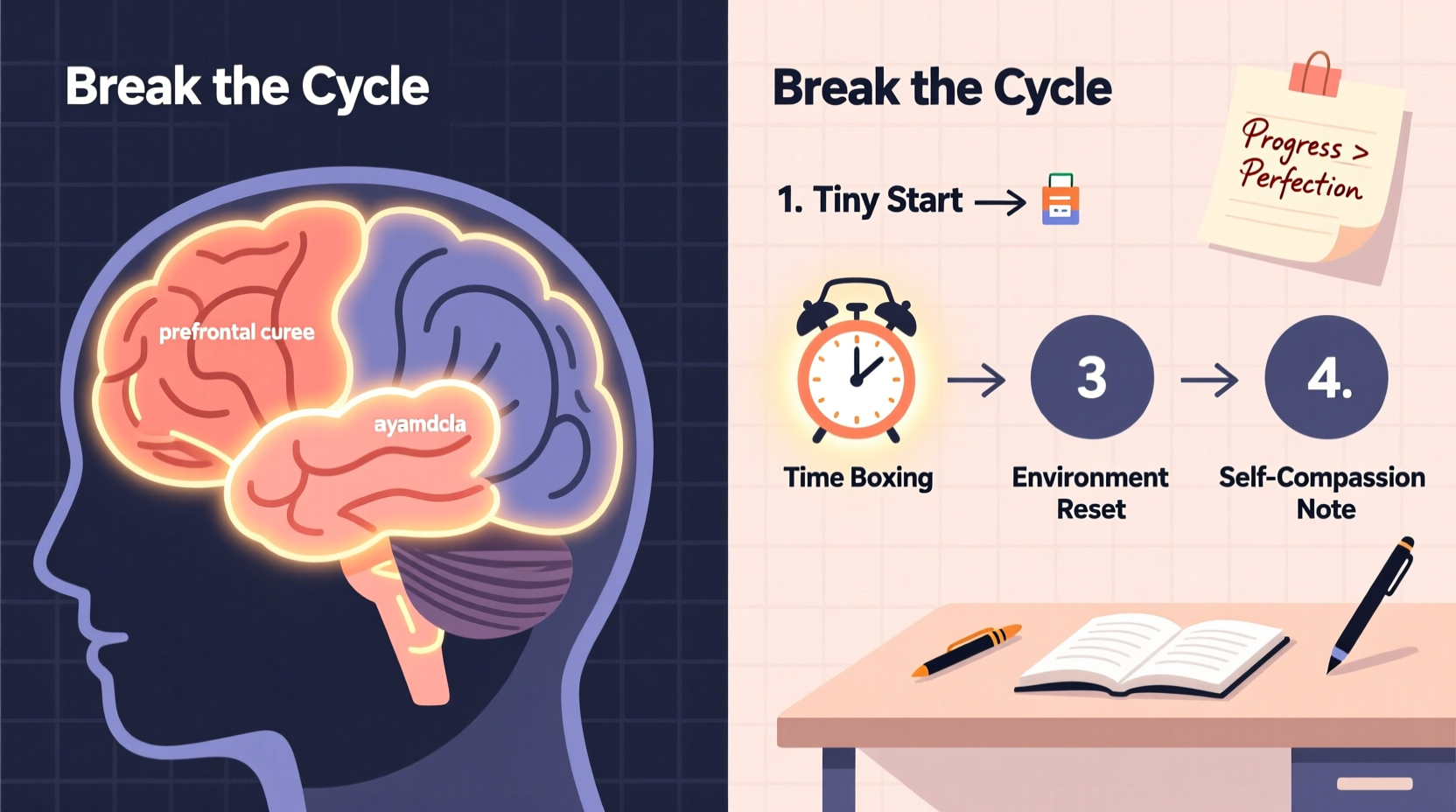
The brain’s limbic system—the emotional center—often overrides the prefrontal cortex, which handles planning and decision-making. When a task feels overwhelming, boring, or anxiety-inducing, the limbic system triggers avoidance as a form of immediate relief. This temporary emotional comfort reinforces the habit, even though long-term consequences grow worse.
Common emotional drivers include:
- Fear of failure or perfectionism
- Lack of clarity or perceived control
- Task aversion due to boredom or complexity
- Low self-efficacy (“I won’t do this well anyway”)
“Procrastination is less about time management and more about mood management.” — Dr. Timothy Pychyl, procrastination researcher, Carleton University
The Hidden Costs of Delay
While delaying a task might offer momentary relief, the long-term effects are far-reaching. Chronic procrastinators report higher levels of stress, lower performance, and diminished well-being. In academic settings, procrastination correlates with lower GPAs. In the workplace, it leads to missed deadlines, strained relationships, and reduced career advancement.
More insidiously, repeated procrastination erodes self-trust. Each time you say, “I’ll do it tomorrow,” and fail to follow through, you weaken your internal belief in your own reliability. Over time, this can lead to a cycle of guilt, shame, and further avoidance—a feedback loop that’s difficult to escape without intervention.
Breaking the Cycle: A Step-by-Step Framework
Escaping chronic procrastination requires more than willpower. Lasting change comes from altering your environment, mindset, and daily routines. Here’s a practical, research-supported approach to dismantle the habit for good.
- Start with a 2-Minute Task
Use the \"Two-Minute Rule\" popularized by James Clear: commit to working on a task for just two minutes. Often, starting is the hardest part. Once you begin, momentum takes over. Open the document, write one sentence, or sketch one idea—small actions reduce resistance. - Break Tasks into Micro-Steps
Large projects feel daunting because they lack clear entry points. Break them into tiny, specific actions. Instead of “write report,” try “outline three main sections” or “find five sources.” Small wins build confidence and progress. - Use Timeboxing, Not Deadlines
Assign fixed blocks of time to work (e.g., 25 minutes), rather than relying on distant due dates. The Pomodoro Technique works because it creates urgency and prevents burnout. After four sessions, take a longer break. - Design Your Environment
Remove distractions before they arise. Turn off notifications, use website blockers, and create a dedicated workspace. If your phone tempts you, leave it in another room. Environment shapes behavior more than motivation ever will. - Reframe the Task Emotionally
Ask: “What would I tell a friend who felt anxious about this?” Self-compassion reduces avoidance. Replace “I have to” with “I choose to” to regain a sense of autonomy. Focus on progress, not perfection.
Real Example: How Sarah Regained Control
Sarah, a freelance graphic designer, consistently delayed client proposals until the night before deadlines. She’d stay up late, deliver subpar work, and feel ashamed. After tracking her patterns, she realized her procrastination spiked when clients gave vague briefs—triggering fears of getting it “wrong.”
She implemented a new rule: within 24 hours of receiving a project, she’d send three quick concept sketches—even if rough. This shifted her focus from judgment to creation. The small action built momentum, and clients appreciated early engagement. Within six weeks, her turnaround time improved by 70%, and her stress levels dropped significantly.
Do’s and Don’ts of Overcoming Procrastination
| Do | Don’t |
|---|---|
| Break tasks into specific, actionable steps | Use vague goals like “work on project” |
| Schedule focused work blocks in advance | Rely on motivation to start |
| Practice self-compassion after setbacks | Criticize yourself harshly for delays |
| Remove digital distractions proactively | Assume you can multitask effectively |
| Review progress weekly to adjust strategy | Ignore patterns of delay |
Building Sustainable Anti-Procrastination Habits
Short-term fixes rarely last. To prevent relapse, embed anti-procrastination practices into your daily rhythm. Habit stacking—linking a new behavior to an existing one—is highly effective. For example:
- After morning coffee, review your top three priorities.
- Before checking email, complete one 25-minute focused session.
- At the end of each day, reflect: What did I accomplish? What blocked me?
Tracking your efforts increases awareness. Use a simple journal or app to log when and why you procrastinate. Patterns will emerge—maybe you avoid certain tasks on Mondays or after meetings. With data, you can design targeted interventions.
“The key to overcoming procrastination isn’t perfection—it’s persistence. Small, consistent actions compound into massive results.” — BJ Fogg, behavior scientist, Stanford University
Your 7-Day Action Plan to Stop Procrastinating
Change begins with action. Follow this structured plan to disrupt old patterns and establish new ones.
- Day 1: Audit Your Delays
List all pending tasks. Note which ones you’ve been avoiding and why. Be honest about emotions tied to each. - Day 2: Chunk & Clarify
Break the top three tasks into micro-steps. Make each step small enough to feel manageable (e.g., “draft subject line” instead of “write email campaign”). - Day 3: Design Your Environment
Eliminate one major distraction. Delete social media apps for the week, set up website blockers, or designate a distraction-free zone. - Day 4: Start Tiny
Pick one avoided task and work on it for two minutes. Celebrate the act of starting, regardless of output. - Day 5: Timebox with Purpose
Use the Pomodoro method: 25 minutes of work, 5-minute break. Complete two full cycles on a priority task. - Day 6: Reflect & Adjust
Review what worked and what didn’t. Did you start more easily? What still feels hard? Adjust your approach accordingly. - Day 7: Build a Ritual
Create a pre-work routine: 5 minutes of deep breathing, reviewing goals, or playing focus music. Rituals cue the brain that it’s time to work.
FAQ: Common Questions About Procrastination
Is procrastination a sign of laziness?
No. Procrastination is often driven by fear, anxiety, or perfectionism—not lack of effort. Many chronic procrastinators are highly capable and motivated, but their emotional barriers override their intentions.
Can ADHD cause procrastination?
Yes. Individuals with ADHD often struggle with executive function, including task initiation, time estimation, and impulse control. While not all procrastinators have ADHD, those who do may need tailored strategies like external accountability and structured routines.
How do I stay consistent when motivation fades?
Motivation is unreliable. Instead, rely on systems: scheduled work blocks, habit triggers, and accountability partners. Focus on showing up, not feeling inspired. Action often precedes motivation, not the other way around.
Conclusion: Take Back Control—One Step at a Time
Procrastination doesn’t define you. It’s a habit shaped by years of emotional responses, environmental cues, and subconscious beliefs. But habits can be changed. By understanding the root causes and applying consistent, compassionate strategies, you can dismantle the cycle permanently.
Start small. Be kind to yourself when you slip. Track your progress and celebrate forward motion, not perfection. Every time you choose action over avoidance, you rebuild self-trust and reclaim your time.




 浙公网安备
33010002000092号
浙公网安备
33010002000092号 浙B2-20120091-4
Comments
No comments yet. Why don't you start the discussion?