
Dreams have fascinated humans for centuries, inspiring myths, art, and scientific inquiry. Yet one of the most common mysteries remains: why can we vividly recall some dreams while forgetting others moments after waking? The answer lies in the intricate relationship between brain activity, sleep architecture, and memory processing. Modern sleep science reveals that dream recall is not random—it’s governed by biological rhythms, cognitive habits, and even emotional intensity. Understanding these mechanisms doesn’t just satisfy curiosity; it offers practical insights into improving mental clarity, emotional regulation, and even creativity through better dream awareness.
The Role of Sleep Cycles in Dream Formation and Recall
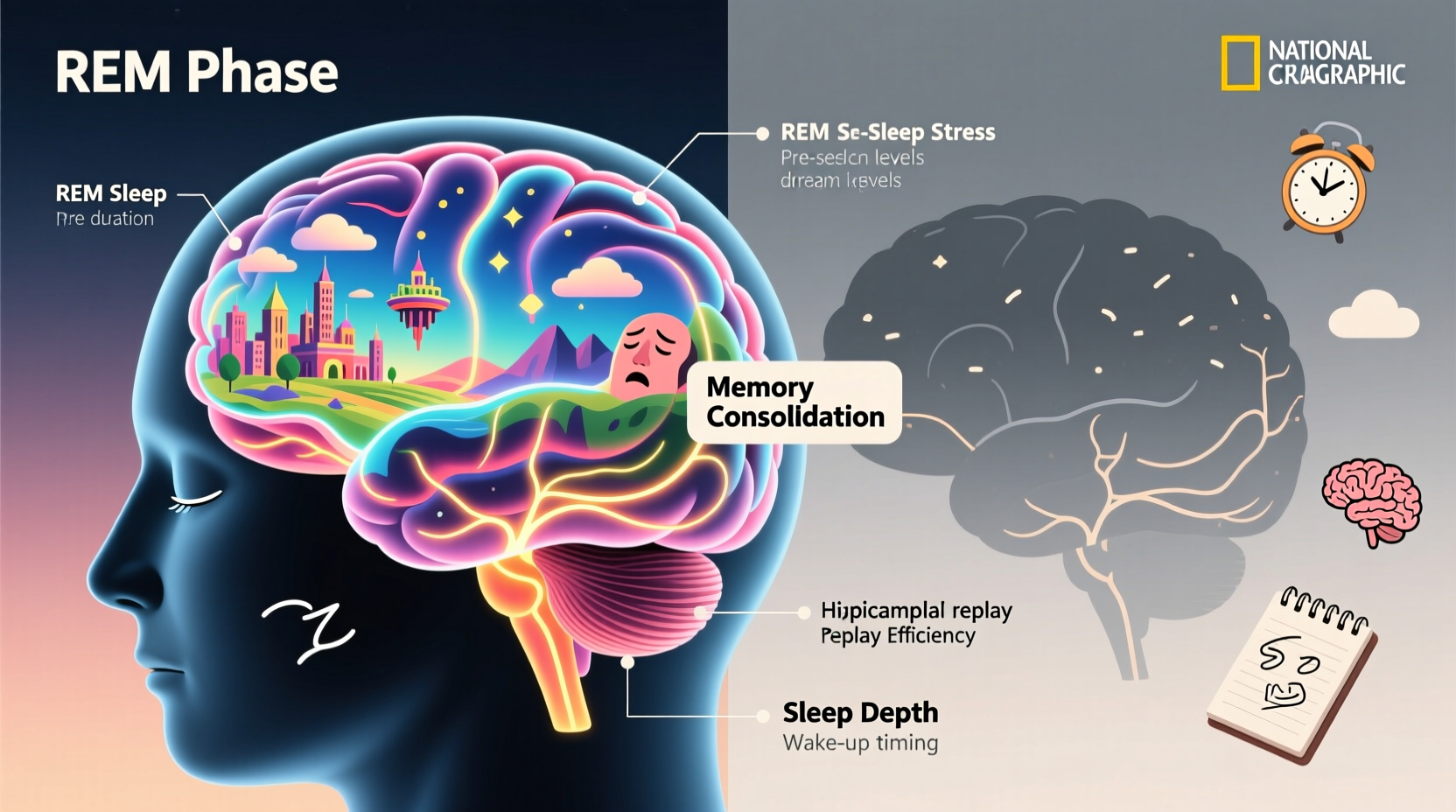
Sleep is not a uniform state but a dynamic process composed of distinct stages that repeat in cycles throughout the night. These stages—ranging from light NREM (Non-Rapid Eye Movement) to deep NREM and finally REM (Rapid Eye Movement) sleep—play different roles in dreaming and memory retention.
Most dreaming occurs during REM sleep, which typically begins about 90 minutes after falling asleep and recurs every 90–120 minutes, lengthening with each cycle. The final REM period before waking can last up to an hour, making it the most likely window for vivid dream experiences. Because REM sleep involves heightened brain activity resembling wakefulness—especially in regions linked to emotion, visual processing, and memory—dreams formed here are often rich in narrative and sensory detail.
However, dreaming isn't exclusive to REM. Studies using EEG monitoring have shown that people can report dream-like thoughts during NREM stages, particularly in Stage 2 and slow-wave sleep. These dreams tend to be more fragmented, abstract, or thought-based rather than cinematic. Still, they are less frequently remembered due to lower neural activation in memory-related areas like the hippocampus.
The timing of awakening is crucial. If you wake up naturally at the end of a REM cycle—often near morning—you’re far more likely to remember your dream. Conversely, if you transition directly from deep NREM sleep into wakefulness (such as being jolted awake by an alarm), the brain hasn’t had time to consolidate fleeting dream impressions into short-term memory.
Neurological Mechanisms Behind Dream Memory Consolidation
Remembering a dream depends on whether the brain successfully transfers information from temporary storage into conscious awareness. This process hinges on two key factors: activation of the prefrontal cortex and communication between the hippocampus and neocortex.
During REM sleep, the prefrontal cortex—the area responsible for logical reasoning, self-awareness, and memory organization—is significantly less active. This explains why dreams often feel illogical or surreal: there’s minimal oversight from the part of the brain that would normally question inconsistencies. But this same suppression also impairs the encoding of dream content into long-term memory.
In contrast, upon waking, if the brain rapidly reactivates the prefrontal cortex, especially within the first few seconds, it may “capture” residual dream fragments before they fade. Neuroimaging studies show that individuals who frequently recall dreams exhibit stronger baseline connectivity between the medial prefrontal cortex and the temporo-parietal junction—regions involved in attention and autobiographical memory—even during wakefulness.
“Dream recall isn’t just about what happens during sleep—it’s about how quickly the brain regains executive function upon waking.” — Dr. Robert Stickgold, Harvard Medical School, sleep and cognition researcher
This suggests that some people are neurologically predisposed to remember dreams more easily. However, this ability can also be trained through behavioral techniques, much like improving any other form of memory.
Factors That Influence Whether We Remember Dreams
Not all dreams are created equal when it comes to memorability. Several internal and external variables determine whether a dream sticks in your mind or vanishes instantly.
Emotional Intensity
Dreams laden with strong emotions—fear, joy, anxiety—are more likely to be remembered. The amygdala, which processes emotional stimuli, remains highly active during REM sleep. When a dream triggers this system, it signals the brain to prioritize that experience, increasing the likelihood of memory encoding.
Level of Bizarreness
Paradoxically, the more unusual or surreal a dream, the more memorable it tends to be. While dreams usually lack coherence, elements that stand out—like flying, meeting deceased relatives, or being chased by a talking animal—create cognitive dissonance that captures attention upon waking.
Sleep Quality and Fragmentation
Frequent awakenings, especially during or immediately after REM periods, enhance dream recall. People with insomnia or those who drink alcohol before bed (which disrupts later REM cycles) may wake up multiple times, creating opportunities to remember dreams—even if the overall quality of sleep suffers.
Attention and Intent
Psychological readiness plays a major role. Individuals who place importance on dreams—such as those practicing lucid dreaming or keeping a dream journal—are more attuned to their nocturnal experiences. Simply intending to remember dreams before sleep has been shown in clinical studies to boost recall rates over time.
| Factor | Increases Recall? | Why? |
|---|---|---|
| Waking from REM sleep | Yes | Dream content is freshest; brain is closer to wakeful state |
| High emotional arousal | Yes | Amygdala activation strengthens memory tagging |
| Dream bizarreness | Yes | Unusual content draws attention upon waking |
| Alcohol consumption | No (long-term) | Disrupts late-night REM, reduces total dream time |
| Pre-sleep intention | Yes | Mental priming enhances post-wake awareness |
How to Improve Dream Recall: A Practical Guide
Dream memory is malleable. With consistent practice, nearly anyone can become more proficient at remembering dreams. The key is creating a feedback loop between sleep, waking behavior, and documentation.
- Set a clear intention before sleep: As you lie down, silently affirm, “I will remember my dreams when I wake up.” This primes the subconscious to pay attention to dream content.
- Wake up gradually: Avoid abrupt alarms. Use a gentle sunrise simulator or smart alarm that detects lighter sleep phases. Allow yourself a few quiet minutes upon waking to scan your mind for dream remnants.
- Stay still and focus inward: Keep your eyes closed and replay any images, emotions, or sensations from the dream. Movement and external stimuli accelerate forgetting.
- Speak or write it down immediately: Even a brief voice memo or one-sentence note in a journal can anchor the memory. Writing engages motor and linguistic centers, reinforcing retention.
- Keep a dedicated dream journal: Place it beside your bed. Record every detail you can recall, no matter how trivial. Over time, patterns emerge, and recall frequency increases.
- Review past entries weekly: This reinforces memory pathways and helps identify recurring symbols or themes.
Mini Case Study: From Blank Mind to Vivid Recall
Sarah, a 34-year-old graphic designer, rarely remembered her dreams despite being a vivid imagination in waking life. After learning about the connection between REM sleep and creativity, she decided to experiment. For two weeks, she placed a notebook by her bed and repeated the phrase “I will remember my dreams” each night. She also replaced her harsh alarm with a gradual light-based wake-up system.
Within five days, she began recalling fragments—a color, a location, a feeling. By day ten, she recorded her first full dream: walking through a forest where trees whispered design ideas. Over the next month, her dream journal filled with symbolic imagery that later inspired a new branding project. Sarah didn’t change her sleep duration, only her approach to waking and attention. Her case illustrates that dream recall is less about innate ability and more about cultivating mindful transitions between sleep and wakefulness.
Common Myths About Dream Forgetting Debunked
Several misconceptions persist about why dreams disappear so quickly.
- Myth: Forgetting dreams means you aren’t dreaming.
Reality: Everyone dreams, even if they don’t remember. PET scans confirm brain activity consistent with dreaming across all sleepers. - Myth: Only important or prophetic dreams are remembered.
Reality: There’s no evidence dreams carry predictive power. Recall is influenced by neurobiology, not spiritual significance. - Myth: Dream amnesia indicates poor mental health.
Reality: Many mentally healthy people rarely recall dreams. However, sudden changes in dream patterns—like intense nightmares or complete cessation—can signal stress or medication side effects and warrant evaluation.
Frequently Asked Questions
Do blind people dream?
Yes, but the content varies. Those born blind typically experience dreams rich in sound, touch, smell, and emotion, with little to no visual imagery. People who lost sight later in life may still have visual components in their dreams, drawn from stored memories.
Can medications affect dream recall?
Absolutely. Antidepressants, especially SSRIs, often suppress REM sleep and reduce dream vividness. Beta-blockers and antipsychotics can also alter dream content and memory. Conversely, some supplements like vitamin B6 have been shown in studies to increase dream salience and recall frequency.
Is it possible to never dream?
No. Brain imaging confirms that all humans experience dream-like mental activity during sleep, primarily in REM. Claims of “never dreaming” usually reflect poor recall, not absence of dreaming.
Conclusion: Harnessing the Power of Your Nocturnal Mind
The fluctuating nature of dream recall is not a flaw in our biology but a feature shaped by evolution. In ancestral environments, remembering every dream would be inefficient—only emotionally significant or potentially threatening dreams needed to be retained. Today, however, understanding and enhancing dream memory opens doors to greater self-awareness, emotional processing, and creative insight.
You don’t need special genetics or mystical practices to remember your dreams. By aligning your habits with the science of sleep cycles, memory consolidation, and intentional awareness, you can transform fleeting nighttime visions into a valuable resource. Start small: keep a notebook, pause before rising, and honor the fragile bridge between sleeping and waking mind.




 浙公网安备
33010002000092号
浙公网安备
33010002000092号 浙B2-20120091-4
Comments
No comments yet. Why don't you start the discussion?