
Yawning is one of the most universal yet mysterious behaviors in the animal kingdom. From newborns to seniors, humans yawn frequently—often without conscious control. But why do we yawn? And perhaps more intriguingly, why does seeing someone else yawn make us yawn too? Even more fascinating: can this phenomenon cross species boundaries? Scientists have spent decades studying the physiology, psychology, and social dimensions of yawning. The answers reveal insights into brain function, empathy, and even evolutionary biology.
The Physiology Behind Yawning
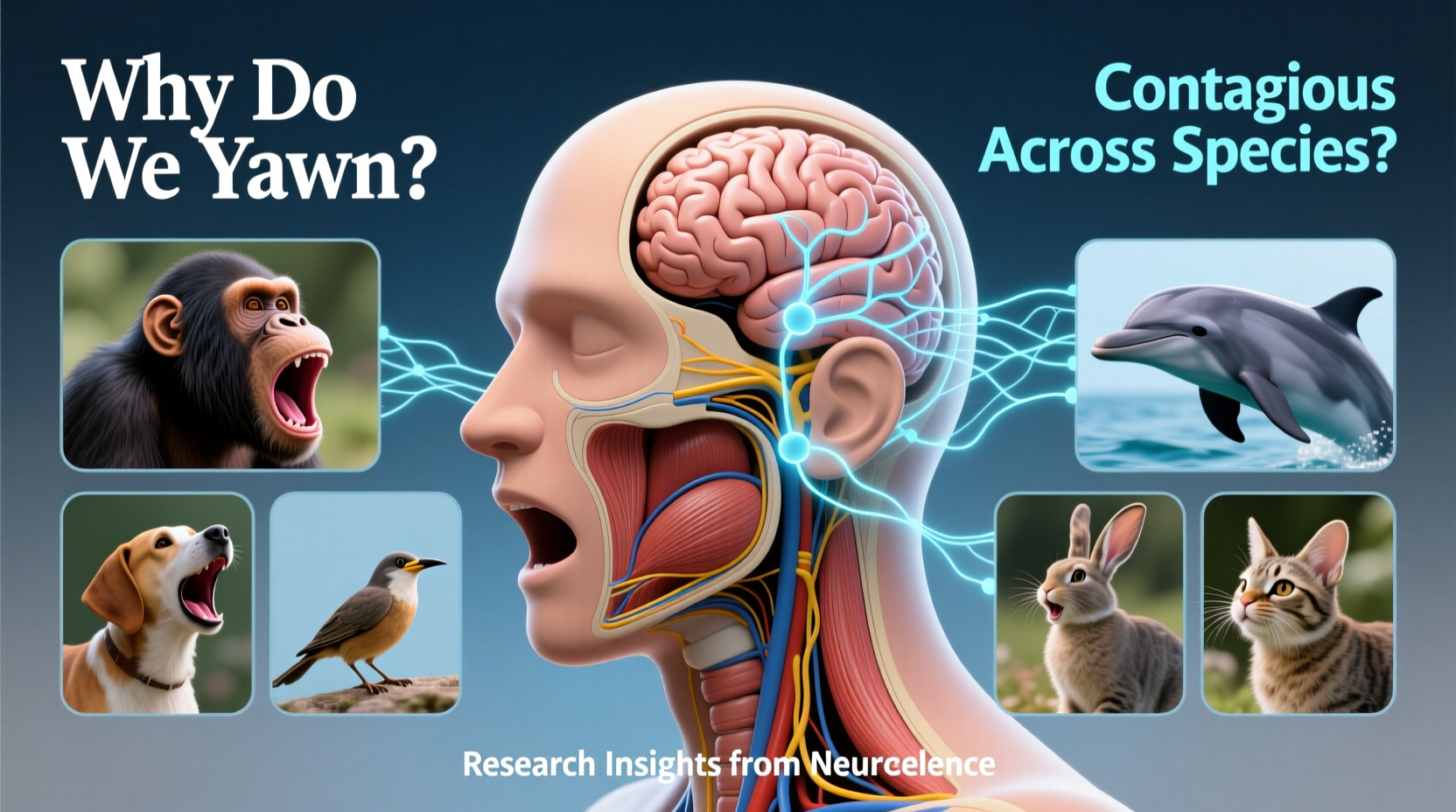
At its core, a yawn is a reflex involving a deep inhalation through an open mouth, followed by a brief exhalation. This action stretches the eardrums, flexes the jaw, and increases heart rate slightly. While commonly associated with tiredness or boredom, yawning occurs in many contexts—including before stressful events like public speaking or athletic competitions.
One long-standing theory suggests that yawning helps regulate brain temperature. Research by Gallup and Gallup (2007) demonstrated that yawning frequency decreases when individuals apply cold packs to their foreheads or breathe cool air. The act of yawning may cool blood in the maxillary sinuses, which then circulates to the brain, preventing overheating during periods of high mental activity.
Another physiological explanation involves arousal regulation. Yawning triggers increased alertness by stimulating the sympathetic nervous system. This explains why people often yawn upon waking or before engaging in demanding tasks. It’s not merely a sign of fatigue but possibly a mechanism to prepare the body for action.
Is Yawning Contagious? The Human Experience
Most people are familiar with the experience: someone nearby yawns, and within seconds, you feel the urge to do the same. This phenomenon—contagious yawning—is well-documented in humans. Studies show that approximately 40–60% of adults will yawn after seeing or hearing someone else yawn.
Interestingly, susceptibility to contagious yawning appears linked to empathy. Functional MRI scans reveal that when people observe others yawning, brain regions involved in social cognition and mirror neuron systems—such as the precuneus and posterior cingulate cortex—become active. Children under four years old rarely exhibit contagious yawning, which aligns with the development of empathetic abilities around that age.
“Contagious yawning isn’t just mimicry—it reflects our neural capacity for emotional resonance.” — Dr. Steven Platek, Cognitive Neuroscientist, Drexel University
Conditions affecting social perception, such as autism spectrum disorder, are associated with reduced contagious yawning. Similarly, individuals with psychopathic traits show lower rates of contagious yawning, further supporting the empathy connection.
Do Animals Yawn, and Is It Contagious Among Them?
Yawning is far from uniquely human. It has been observed in mammals, birds, reptiles, and even fish. However, contagious yawning—the social transmission of yawning—is rarer and appears limited to species with advanced social cognition.
Dogs, for example, have shown clear signs of contagious yawning. A 2013 study published in *Animal Cognition* found that dogs were significantly more likely to yawn after watching their owners yawn compared to strangers. This suggests that emotional closeness enhances the contagious effect, reinforcing the idea that empathy plays a role beyond human interactions.
Bonobos and chimpanzees also exhibit contagious yawning. In controlled experiments, bonobos yawned more frequently when observing familiar group members than unfamiliar individuals. This pattern mirrors human behavior and underscores the evolutionary continuity of social bonding mechanisms.
Even some non-mammalian species display primitive forms of contagious yawning. Budgerigars (parakeets), for instance, show synchronized yawning in captivity, though researchers debate whether this reflects true empathy or simple behavioral mimicry driven by environmental cues.
Contagious Yawning Across Species: A Comparative Table
| Species | Exhibits Yawning? | Contagious Yawning Observed? | Social Bonding Link? |
|---|---|---|---|
| Humans | Yes | Yes | Strong (empathy-dependent) |
| Dogs | Yes | Yes (especially with owners) | Moderate to strong |
| Chimpanzees | Yes | Yes | Strong (group familiarity) |
| Bonobos | Yes | Yes | Strong |
| Cats | Yes | Limited evidence | Weak |
| Budgerigars | Yes | Possible synchronization | Uncertain |
| Rats | Yes | No conclusive evidence | None established |
A Real-Life Example: The Rescue Dog Study
In a small-scale observational study conducted at a canine behavior clinic in Oregon, researchers monitored eight rescue dogs during daily interactions with staff. Each dog was exposed to two conditions: a caregiver yawning naturally during petting sessions, and a neutral facial expression control.
Over three weeks, five of the eight dogs yawned within one minute of their handler’s yawn in at least 60% of trials. Notably, these responses occurred only when the handler was someone the dog had bonded with over time. New volunteers who mimicked yawning received no response.
This case supports the hypothesis that contagious yawning in animals depends not just on visual stimuli but on the quality of the social relationship. It also raises practical implications for animal shelters: monitoring yawning patterns could potentially help assess attachment levels between animals and caregivers.
Why Might Yawning Be Contagious Across Species?
The cross-species occurrence of contagious yawning points to deeper evolutionary roots. One theory posits that it evolved as a form of nonverbal communication within social groups. Synchronized yawning may have helped early humans and other social animals coordinate rest periods, maintain group vigilance, or signal trust.
In wolves and wild dogs, for example, yawning often precedes pack movement or den entry. When one member yawns, others may follow—not out of sleepiness, but as a subtle cue to transition activities. This kind of behavioral synchrony strengthens cohesion and reduces conflict.
Another perspective comes from neuroscience: mirror neurons fire both when an individual performs an action and when they observe it in others. These neurons are thought to underlie imitation, language acquisition, and empathy. Contagious yawning may be one of the simplest expressions of this system—a hardwired echo of another’s state.
Step-by-Step: How to Test for Contagious Yawning Responsiveness
If you’re curious whether you or your pet are susceptible to contagious yawning, here’s a simple self-assessment protocol based on clinical research methods:
- Set up a distraction-free environment. Choose a quiet room where you won’t be interrupted.
- Watch a 5-minute video of natural yawning. Use validated clips from scientific studies or documentaries showing people or animals yawning spontaneously.
- Observe your response. Note if you yawn within 5 minutes of viewing. Avoid forcing a yawn; wait for a genuine impulse.
- Repeat over multiple days. Conduct the test 3–5 times to account for variability due to fatigue or mood.
- Compare results. If you yawn in at least 3 out of 5 trials, you’re likely responsive to contagious yawning.
- Try with pets (if applicable). Play the video near your dog or cat and record any yawning within 2 minutes. Repeat with different family members present to test bonding effects.
Common Misconceptions About Yawning
Despite growing scientific understanding, several myths persist:
- Myth: Yawning means you’re not getting enough oxygen.
Reality: Studies show blood oxygen levels remain stable before and after yawning. The brain-cooling hypothesis is now better supported. - Myth: Only bored or tired people yawn contagiously.
Reality: People yawn contagiously regardless of alertness, and it’s more tied to social awareness than energy levels. - Myth: All animals catch yawns from humans.
Reality: Most reptiles, amphibians, and rodents show no evidence of contagious yawning, suggesting it’s limited to socially complex species.
Frequently Asked Questions
Can you suppress a contagious yawn?
While you may delay a yawn briefly, attempts to suppress it often fail. Brain imaging shows that the urge activates subcortical areas involved in automatic behaviors, making it difficult to override consciously. However, shifting attention—such as focusing on breathing or counting backward—can reduce the likelihood.
Why don’t babies and young children yawn contagiously?
Children typically begin exhibiting contagious yawning around ages 4–5, coinciding with the development of theory of mind—the ability to understand others’ thoughts and feelings. This delay supports the link between empathy and contagious yawning.
Can medical conditions affect yawning frequency?
Yes. Excessive yawning can be a symptom of neurological conditions such as multiple sclerosis, epilepsy, or brainstem injuries. Conversely, certain antidepressants and dopamine-blocking medications may reduce yawning. Always consult a healthcare provider if yawning changes suddenly and significantly.
Final Thoughts and Practical Takeaways
Yawning is far more than a sign of sleepiness. It’s a window into brain function, emotional connectivity, and evolutionary adaptation. The fact that it spreads between humans—and even between humans and certain animals—suggests it plays a subtle but meaningful role in social bonding.
Understanding yawning can improve how we interpret behavior in ourselves and others. For pet owners, recognizing contagious yawning in dogs might deepen the sense of connection. For educators and therapists, awareness of its empathetic roots could inform strategies for building rapport.
“We don’t just yawn when we’re tired—we yawn when our brains need recalibration, and when our social circuits detect alignment with others.” — Dr. Adrian Guggisberg, Neurology Researcher, University of Geneva
Checklist: What You Can Do With This Knowledge
- Use yawning as a natural alertness booster before mentally demanding tasks.
- Pay attention to yawning patterns in pets as potential indicators of stress or bonding.
- Avoid stigmatizing yawning in classrooms or workplaces—it may reflect cognitive engagement, not disinterest.
- Test your own contagious yawning sensitivity to better understand your empathetic responsiveness.
- Stay informed about sudden changes in yawning habits, especially if accompanied by fatigue or dizziness.
Conclusion: The Ripple Effect of a Simple Yawn
From the cradle to the workplace, from domestic dogs to jungle-dwelling primates, yawning transcends mere physiology. It connects individuals through invisible threads of biology and emotion. Science continues to unravel its complexities, but one thing is clear: a single yawn can ripple across minds and species, echoing ancient mechanisms of unity and survival.




 浙公网安备
33010002000092号
浙公网安备
33010002000092号 浙B2-20120091-4
Comments
No comments yet. Why don't you start the discussion?