
Yawning is one of the most common yet mysterious behaviors humans—and many animals—experience daily. It happens when we're tired, bored, or even just seeing someone else yawn. Despite its ubiquity, the exact reasons behind yawning remain a subject of scientific curiosity and debate. While it was once assumed that yawning simply increases oxygen intake, modern research suggests far more complex neurological, physiological, and social explanations. This article dives deep into the science behind yawning, examining leading theories, biological mechanisms, and the role of empathy in contagious yawning.
The Physiology of a Yawn
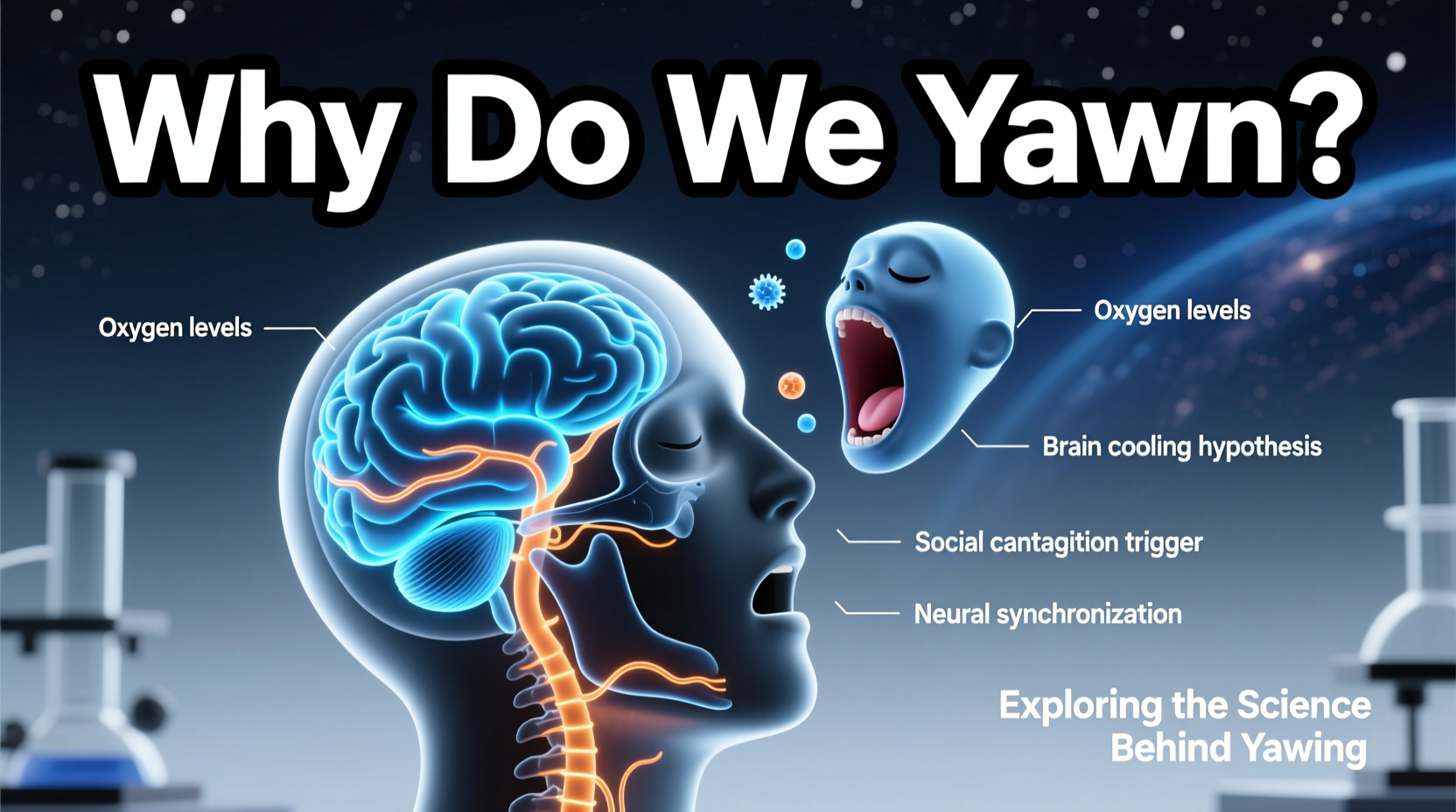
A yawn is a reflex characterized by a deep inhalation through an open mouth, followed by a brief pause and a slow exhalation. This action engages muscles in the face, neck, and diaphragm, stretching the jaw and increasing heart rate temporarily. The entire process typically lasts about six seconds and occurs at a frequency of around 5–10 times per day in healthy adults.
What triggers this reflex? Scientists believe multiple systems are involved:
- The hypothalamus: A region in the brain that regulates body temperature, hunger, and sleep cycles may initiate yawning in response to subtle changes in alertness or thermal regulation.
- The brainstem: Neural pathways originating in the brainstem coordinate the motor components of yawning, including jaw opening and respiratory control.
- Dopamine and serotonin: Neurotransmitters like dopamine can stimulate yawning when released in certain brain regions, which explains why some medications affecting these chemicals increase yawning frequency.
The Brain-Cooling Hypothesis
One of the most compelling modern theories is the brain-cooling hypothesis. According to researchers at Princeton University and the University of Vienna, yawning may serve as a natural mechanism to regulate brain temperature.
The brain operates optimally within a narrow thermal range. When brain temperature rises—due to drowsiness, prolonged concentration, or environmental heat—cognitive efficiency declines. A yawn, with its deep inhalation of cooler air, may help cool blood flowing to the brain via the maxillary sinuses and enhance cerebral circulation.
Support for this theory comes from studies showing that people yawn more frequently in cooler ambient temperatures than in warm ones. In one experiment, participants were significantly less likely to yawn when holding warm packs to their foreheads compared to cold packs, suggesting that external temperature modulation affects yawning behavior.
“We believe yawning is a thermoregulatory mechanism that helps maintain optimal brain function.” — Dr. Andrew Gallup, Evolutionary Psychologist, State University of New York
Contagious Yawning and Social Connection
Perhaps the most fascinating aspect of yawning is its contagious nature. Seeing, hearing, or even reading about someone yawning can trigger the same response—an effect observed not only in humans but also in chimpanzees, dogs, and bonobos.
Contagious yawning appears to be linked to empathy and social bonding. Studies using fMRI scans show increased activity in the prefrontal cortex—a region associated with social cognition—during contagious yawning episodes. Children under the age of four rarely experience contagious yawning, which coincides with the developmental stage before they fully grasp theory of mind (the ability to understand others’ mental states).
Interestingly, individuals with autism spectrum disorder or schizophrenia, both of which involve challenges in social processing, exhibit reduced susceptibility to contagious yawning. This further supports the idea that empathy plays a central role.
| Group | Contagious Yawning Response | Possible Reason |
|---|---|---|
| Neurotypical Adults | High | Strong empathetic processing |
| Children Under 4 | Low | Underdeveloped theory of mind |
| Autism Spectrum Individuals | Reduced | Impaired social mirroring |
| Dogs Living with Humans | Moderate | Social attachment to owners |
Medical and Psychological Triggers
While occasional yawning is normal, excessive yawning may signal underlying health issues. Certain medical conditions and treatments are known to increase yawning frequency due to their impact on brain chemistry or autonomic function.
Conditions associated with frequent yawning include:
- Sleep disorders: Narcolepsy and sleep apnea often present with excessive daytime yawning due to disrupted rest.
- Migraines: Some patients report yawning as an early warning sign before an attack, possibly due to hypothalamic activation.
- Medication side effects: SSRIs, antipsychotics, and dopamine agonists can induce yawning by altering neurotransmitter levels.
- Cardiovascular events: Rarely, excessive yawning has been documented prior to heart attacks, potentially linked to vagus nerve stimulation.
If you notice a sudden spike in yawning unrelated to tiredness or boredom, especially accompanied by dizziness, chest discomfort, or cognitive fog, consult a healthcare provider.
When to Seek Medical Advice: Checklist
- Yawning more than 20 times per hour without fatigue
- Yawning episodes preceding headaches or vision changes
- Experiencing shortness of breath or palpitations alongside yawning
- New onset of yawning after starting a new medication
- Persistent yawning disrupting daily activities or sleep quality
Debunking Common Myths About Yawning
Despite decades of research, several misconceptions about yawning persist. Here’s a breakdown of what’s been disproven:
Reality: Controlled studies show no change in blood oxygen or carbon dioxide levels before or after yawning.
- Myth: Only tired people yawn.
Truth: People yawn during transitions between mental states—before public speaking, during meditation, or upon waking—regardless of sleepiness. - Myth: Animals yawn for the same reasons as humans.
Truth: While similar, animal yawning often serves dominance displays or threat signaling, especially in reptiles and birds. - Myth: Holding back a yawn is harmful.
Truth: Suppressing a yawn occasionally is harmless, though it may reduce the potential brain-cooling benefit.
Real-Life Example: The Classroom Contagion
In a high school biology class on a rainy Monday morning, Ms. Rivera noticed her students growing sluggish. As she explained photosynthesis, one student stifled a loud yawn. Within minutes, three others followed. By the end of the lecture, nearly half the class had yawned at least once.
This chain reaction wasn’t just about fatigue. The classroom was warm, mentally taxing, and socially connected—ideal conditions for contagious yawning. Interestingly, students who arrived late and hadn’t seen the initial yawns didn’t join in until they visually registered their peers doing it. This mirrors research showing that visual cues are stronger triggers than auditory ones in social yawning.
Ms. Rivera later introduced short “brain breaks” involving movement and cooler air circulation. Reports of drowsiness and group yawning dropped by over 60% in subsequent weeks, illustrating how environment and awareness can modulate this reflex.
Frequently Asked Questions
Why do I yawn when I’m not tired?
Yawning often occurs during shifts in alertness, such as transitioning from focus to relaxation, or in response to mental load. It may help stabilize arousal levels and prepare the brain for a new task.
Can I stop myself from yawning in meetings?
You can suppress a yawn momentarily by pressing your tongue to the roof of your mouth or taking slow, deep nasal breaths. However, if yawning is frequent, consider evaluating sleep quality or room ventilation.
Do all animals yawn for the same reason?
No. While mammals share similar physiological yawning patterns, the purpose varies. In wolves, yawning can be a pacifying gesture; in snakes, it may assist in realigning the jaw after eating. The social and emotional components appear strongest in highly social species.
Conclusion: Understanding a Universal Reflex
Yawning is far more than a sign of boredom or sleepiness—it’s a sophisticated neurophysiological behavior tied to brain regulation, social connection, and even health monitoring. From cooling an overheated mind to strengthening group empathy, each yawn may carry subtle messages about our internal state and relationships with others.
By recognizing the science behind this everyday act, we gain insight into human biology and behavior. Next time you feel a yawn coming on—or catch one from a colleague—take a moment to appreciate the complexity beneath such a simple reflex.




 浙公网安备
33010002000092号
浙公网安备
33010002000092号 浙B2-20120091-4
Comments
No comments yet. Why don't you start the discussion?