
Yawning is one of the most universal yet mysterious behaviors humans share. We do it when tired, bored, or stressed—but also when someone near us simply opens their mouth wide. This phenomenon, known as contagious yawning, occurs across cultures, ages, and even species. While it may seem like a trivial reflex, scientists have uncovered compelling evidence linking it to empathy, social bonding, and neural mirroring. Understanding why we yawn when others do offers insight into how our brains are wired for connection.
The Science Behind Contagious Yawning
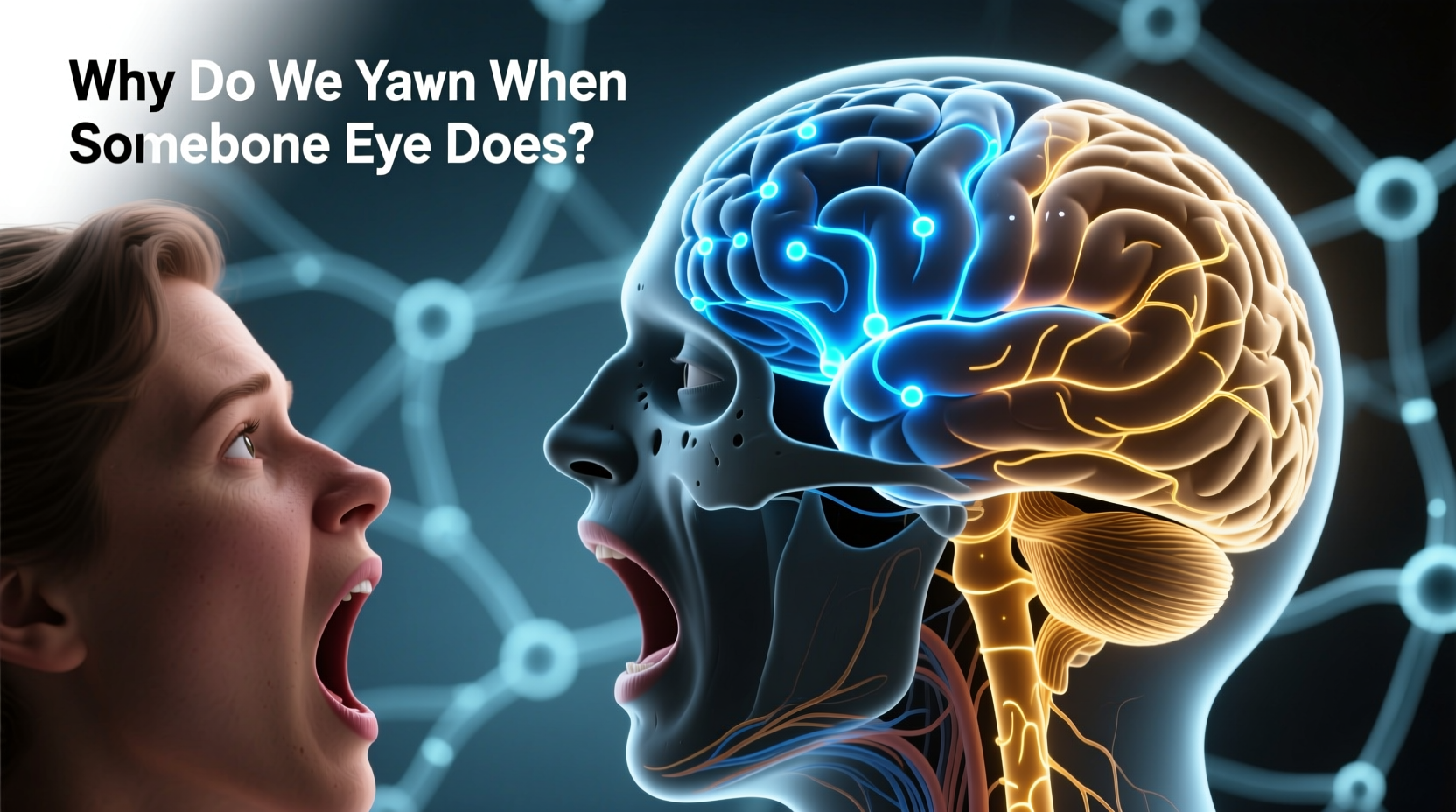
Contagious yawning is not unique to humans. Studies show that chimpanzees, dogs, bonobos, and even some birds exhibit similar behavior when observing others yawn. In humans, it typically begins around age four—coinciding with the development of social awareness and theory of mind, the ability to understand others’ mental states.
Neurologically, contagious yawning appears tied to the mirror neuron system—a network of brain cells that fire both when we perform an action and when we observe someone else doing it. These neurons are thought to underpin imitation, learning, and empathy. When you see someone yawn, your brain simulates the act as if you were yawning yourself, triggering the physical response.
Functional MRI studies reveal that regions associated with social cognition—such as the precuneus, posterior cingulate cortex, and inferior frontal gyrus—activate during contagious yawning. These areas overlap significantly with those involved in empathy and emotional processing, reinforcing the idea that yawning is more than just a physiological quirk—it’s a subtle form of nonverbal communication.
Empathy and the Mirror Effect
The link between yawning and empathy has been demonstrated in multiple psychological experiments. One landmark study conducted at the University of Pisa found that participants were significantly more likely to yawn after watching videos of close relatives yawn compared to unfamiliar individuals. Strikingly, children with autism spectrum disorder (ASD), who often struggle with social reciprocity and empathy, showed lower rates of contagious yawning than neurotypical peers.
This correlation suggests that the strength of the contagious yawning response may serve as a behavioral marker for empathetic capacity. It's not that people with ASD don’t yawn—they do so just as frequently spontaneously—but the social trigger seems less potent.
“Contagious yawning isn't about fatigue; it's about attunement. It reflects our brain’s instinct to synchronize with others emotionally.” — Dr. Sophie Schwartz, Cognitive Neuroscientist, University of Geneva
The mechanism mirrors other forms of unconscious mimicry, such as matching posture, speech patterns, or facial expressions during conversation. These behaviors foster rapport and trust, helping individuals feel connected without saying a word. Yawning may be one of the oldest tools in our social toolkit—an involuntary signal of alignment.
Biological and Evolutionary Roots
From an evolutionary standpoint, contagious yawning might have served a survival function. Early human groups relied on coordination and vigilance. A sudden wave of yawning could have signaled shifts in alertness levels across a group, prompting collective transitions between rest and activity.
Some researchers propose that yawning helps regulate brain temperature. The deep inhalation increases heart rate and blood flow, cooling the brain slightly. If true, then contagious yawning could help synchronize arousal states within a social group—ensuring everyone is equally alert or ready to rest.
Another theory posits that yawning evolved as a way to maintain group cohesion. In primates, yawning can be a display of dominance or tension, but in humans, its contagious nature transforms it into a prosocial gesture. By mimicking each other’s yawns, individuals unconsciously affirm their belonging to the same social unit.
Species Comparison: Who Experiences Contagious Yawning?
| Species | Exhibits Contagious Yawning? | Social Complexity |
|---|---|---|
| Humans | Yes | High |
| Chimpanzees | Yes | High |
| Dogs | Yes (especially with owners) | Moderate-High |
| Birds (e.g., budgerigars) | Limited evidence | Moderate |
| Cats | No conclusive evidence | Low-Moderate |
| Rodents | No | Low |
The pattern supports a strong correlation between contagious yawning and complex social structures. Species that rely on cooperation, recognition, and emotional signaling are far more likely to \"catch\" yawns.
Factors That Influence Contagious Yawning
Not everyone yawns when they see another person do it. Research estimates that between 40% and 70% of people experience contagious yawning, with variation influenced by several factors:
- Emotional closeness: People are more likely to catch yawns from loved ones than strangers.
- Age: Children under four rarely show contagious yawning, suggesting it develops alongside social cognition.
- Stress and fatigue: While these increase spontaneous yawning, they don’t necessarily enhance the contagious effect.
- Neurological conditions: Lower rates are observed in individuals with autism, schizophrenia, and certain forms of psychopathy, all of which involve disruptions in empathy circuits.
Mini Case Study: The Office Yawn Wave
In a small tech startup, employees often work late hours. During a particularly grueling week, team leads noticed a recurring pattern: whenever one person began yawning during meetings, within minutes nearly half the room would follow. Curious, the HR manager reviewed meeting logs and video recordings over three weeks. They found that contagious yawning occurred most frequently during high-stress decision-making sessions—not when people were actually tired, but when mental load peaked.
Interestingly, remote workers reported fewer instances of catching yawns, even when viewing colleagues on screen. The effect was strongest in-person, especially among teams with high mutual trust scores in internal surveys. This real-world example illustrates how stress, proximity, and emotional bonds amplify the contagious yawning response—suggesting it functions as a subconscious stress-relief ritual and solidarity signal.
Practical Implications and Everyday Awareness
While we can’t control whether we yawn after seeing someone else do it, understanding the underlying mechanisms allows us to appreciate the deeper layers of human interaction. Recognizing that a simple yawn may reflect neural empathy can shift how we view seemingly mundane behaviors.
In professional settings, leaders might use awareness of nonverbal synchrony—including yawning—to assess team cohesion. Educators can consider how emotional safety in classrooms affects students' social responsiveness. Therapists may explore yawning patterns as part of broader assessments of social engagement in clients with developmental disorders.
Step-by-Step Guide: Enhancing Empathetic Awareness Through Body Signals
- Observe nonverbal cues: Pay attention to subtle mimicry in conversations—mirrored gestures, postures, and yes, even yawns.
- Note timing and context: Ask yourself: Did the yawn happen during a tense moment? Was it triggered by someone close to you?
- Reflect on emotional resonance: Consider whether you felt aligned or disconnected from the group at that moment.
- Practice active listening: Strengthen empathy by focusing fully on others, which naturally enhances neural mirroring.
- Monitor changes over time: As relationships deepen, notice if contagious behaviors like yawning become more frequent.
FAQ
Is it normal not to yawn when others do?
Yes. Around 30–60% of people don’t experience contagious yawning regularly. This doesn’t mean you lack empathy—it may reflect individual differences in neural sensitivity or attention focus. Some highly empathetic people still don’t “catch” yawns, while others with low empathy might. It’s one indicator among many.
Can animals really catch yawns from humans?
Yes—particularly dogs. Multiple studies confirm that dogs yawn more frequently after seeing their owners yawn compared to strangers or non-social stimuli. This supports the idea that cross-species emotional bonding can trigger similar neural responses.
Does suppressing a yawn stop the empathetic connection?
No. The brain processes the visual cue and triggers the impulse regardless of whether you suppress the physical act. The empathetic circuit activates upon perception, not expression. So even if you cover your mouth or hold back, the internal synchronization has already occurred.
Checklist: Signs You’re Experiencing Social Mirroring (Including Yawning)
- ☑ You start tapping your foot after someone else does
- ☑ You find yourself crossing your arms when your conversation partner does
- ☑ You laugh shortly after someone nearby laughs, even if you didn’t hear the joke
- ☑ You feel suddenly tired or alert after spending time with someone expressing those states
- ☑ You catch yawns more often from close friends than coworkers
These behaviors indicate your mirror neuron system is actively engaged, promoting social harmony and emotional attunement.
Conclusion: Embracing the Unconscious Language of Connection
Contagious yawning is far more than a quirky habit—it’s a window into the subconscious machinery of empathy. Every time you yawn because someone else did, your brain is silently affirming a shared state, reinforcing bonds, and aligning your inner rhythm with those around you. This tiny, involuntary act speaks volumes about our innate need to connect.
In a world increasingly mediated by screens and algorithms, recognizing these organic moments of synchrony becomes even more valuable. They remind us that beneath language, logic, and culture lies a deeper layer of communication—one built on mimicry, feeling, and mutual awareness.




 浙公网安备
33010002000092号
浙公网安备
33010002000092号 浙B2-20120091-4
Comments
No comments yet. Why don't you start the discussion?