
Apple’s advertising budget consistently dwarfs that of its closest competitor, Samsung. In recent years, Apple has spent over $1 billion annually on marketing—sometimes nearing $2 billion—while Samsung, despite being a global electronics giant with a broader product portfolio, typically spends around $400–600 million on mobile device promotions alone. This disparity raises an important question: Why does Apple invest so heavily in advertising compared to Samsung, and is this strategy actually paying off?
The answer lies not just in visibility or branding, but in a calculated long-term strategy rooted in perception, ecosystem loyalty, and premium positioning. While Samsung competes across price tiers and markets, Apple focuses its messaging with surgical precision to reinforce exclusivity, innovation, and emotional connection.
The Scale of the Advertising Gap
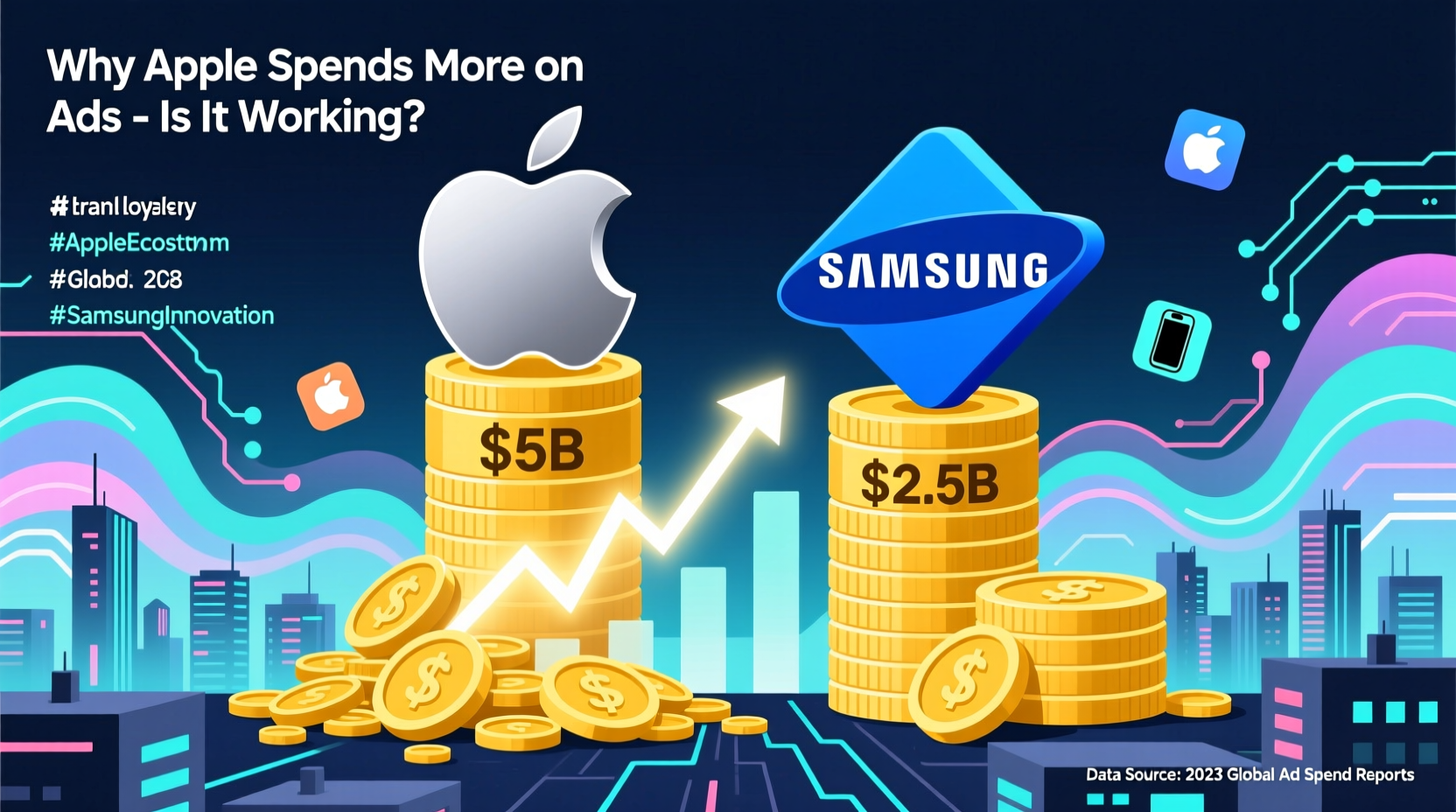
According to data from Statista and Kantar Media, Apple’s U.S. advertising spend in 2023 exceeded $1.5 billion, with significant allocations going toward TV spots, digital campaigns, and high-profile product launches. Samsung, by comparison, spent approximately $550 million in the same region on mobile-related advertising. Globally, Apple’s total ad expenditure is estimated to be nearly three times that of Samsung’s smartphone division.
This gap isn’t accidental. Apple treats advertising not as a cost center but as a strategic investment in brand equity. Every commercial, billboard, and social media post reinforces a singular narrative: Apple products are not just devices—they are tools for creativity, connection, and self-expression.
“Apple doesn’t sell phones. It sells identity. Their ads don’t list specs—they tell stories.” — Lisa Chen, Brand Strategist at MarketDepth Insights
Different Branding Philosophies: Premium vs. Performance
Samsung and Apple operate under fundamentally different marketing philosophies:
- Apple emphasizes emotion, simplicity, and lifestyle integration. Its ads often feature minimal dialogue, focusing instead on visuals that highlight user experience—like a child filming a school play on an iPhone or an artist sketching on an iPad.
- Samsung, meanwhile, leans into technical superiority. Campaigns frequently compare pixel density, battery life, or camera zoom capabilities directly against the iPhone. The messaging is functional: “We have better hardware.”
This divergence reflects their target audiences. Apple cultivates a loyal base willing to pay a premium for seamless integration and design elegance. Samsung targets tech-savvy consumers who prioritize customization, flexibility, and value across Android’s diverse ecosystem.
Is Apple’s Ad Spend Working? The Evidence
The return on Apple’s advertising investment is visible in multiple key metrics:
- Brand Loyalty: Over 90% of iPhone users plan to stick with Apple for their next phone, according to a 2023 CIRP report—significantly higher than Samsung’s ~75% retention rate.
- Premium Pricing Power: Despite similar hardware, iPhones command higher average selling prices. The iPhone 15 Pro Max starts at $1,199; Samsung’s Galaxy S24 Ultra starts at $1,299, yet Apple outsells it by a wide margin in the U.S.
- Ecosystem Lock-In: Apple’s ads subtly promote services like iCloud, Apple Music, and Fitness+, encouraging deeper engagement across devices.
Moreover, Apple’s consistent messaging builds trust. A 2022 YouGov survey ranked Apple as the most trusted tech brand in the U.S., ahead of Samsung and Google. Trust translates directly into reduced customer acquisition costs and higher lifetime value.
Comparative Advertising Strategy: A Side-by-Side Look
| Factor | Apple | Samsung |
|---|---|---|
| Annual Ad Spend (Est.) | $1.5–2 billion (U.S.) | $550 million (mobile, U.S.) |
| Core Message | Lifestyle, emotion, simplicity | Performance, features, innovation |
| Tone of Ads | Cinematic, minimalist, human-centric | Technical, comparative, energetic |
| Product Launch Focus | Experience and ecosystem | Specs and benchmarks |
| Customer Retention Rate | ~90% | ~75% |
The table illustrates a clear contrast: Apple spends more because its advertising serves a dual purpose—driving immediate sales while strengthening long-term brand equity. Samsung’s approach, while effective in certain markets, often fails to create the same emotional resonance.
A Real-World Example: The “Shot on iPhone” Campaign
One of Apple’s most enduring and successful campaigns is “Shot on iPhone.” Launched in 2015, it features stunning photos and videos taken entirely by users on their iPhones, displayed on billboards in major cities and during primetime TV.
In Seoul, a city where Samsung dominates local pride, Apple placed massive digital billboards showcasing night photography captured on iPhones. The message wasn’t about megapixels—it was about artistry. Locals began asking, “How can a phone take pictures like that?”
This campaign didn’t rely on technical jargon. Instead, it created aspiration. By 2022, Apple’s market share in South Korea had doubled from 2018 levels, despite Samsung’s dominance and aggressive pricing.
“The ‘Shot on iPhone’ campaign turned customers into storytellers. That’s organic reach powered by smart advertising.” — Raj Patel, Digital Marketing Consultant
Why Samsung Doesn’t Need to Spend as Much
Samsung operates in a different competitive landscape. Unlike Apple, which controls both hardware and software, Samsung must compete within the fragmented Android ecosystem. It also sells across all price segments—from budget Galaxy A-series phones to flagship Z Fold models.
This diversity dilutes brand focus. While Apple can afford to run one unified global campaign, Samsung must tailor messages regionally and by product tier. Additionally, Samsung benefits from carrier partnerships and retail incentives that reduce its reliance on direct-to-consumer advertising.
Still, analysts argue Samsung underinvests in emotional branding. “They know how to make a better camera,” says Chen, “but they haven’t convinced people they make a better life.”
Actionable Takeaways for Businesses and Consumers
Understanding these strategies offers valuable insights, whether you’re a marketer or a consumer making purchasing decisions.
Checklist: What Makes Apple’s Advertising Effective
- ✅ Focuses on user experience over technical specs
- ✅ Maintains consistent visual and tonal identity
- ✅ Reinforces ecosystem integration across devices
- ✅ Leverages real customer content for authenticity
- ✅ Aligns advertising with long-term brand values
Frequently Asked Questions
Does Apple advertise more globally than Samsung?
Yes, Apple concentrates its advertising spend in key markets like the U.S., UK, Japan, and Australia, where premium pricing is sustainable. Samsung advertises widely but spreads its budget thinner across emerging and developed markets alike.
Do Apple’s ads actually influence sales?
Data suggests yes. Following major ad pushes—such as the launch of the iPhone 14 Pro with the Dynamic Island feature—Apple saw a 20% increase in upgrade intent among existing users, per a 2023 Consumer Intelligence Research Partners study.
Could Samsung close the brand gap with bigger ad spending?
Potentially, but only if the messaging shifts. More spending alone won’t work without a cohesive narrative. Samsung would need to move beyond spec comparisons and craft stories that resonate emotionally—something Apple has mastered over two decades.
Conclusion: Advertising as Long-Term Investment
Apple’s decision to spend significantly more on advertising than Samsung isn’t about outshouting competitors—it’s about shaping perception. Each ad reinforces a world where Apple products are essential, intuitive, and aspirational. This consistency builds trust, drives loyalty, and justifies premium pricing.
Samsung, despite technological parity in many areas, struggles to match that emotional footprint. Until it crafts a story as compelling as Apple’s, it may continue winning on specs but lose on sentiment.
For businesses, the lesson is clear: great products need great narratives. For consumers, it’s a reminder that every ad is designed not just to inform, but to influence. Understanding that power helps you make smarter choices—whether you’re buying a phone or building a brand.




 浙公网安备
33010002000092号
浙公网安备
33010002000092号 浙B2-20120091-4
Comments
No comments yet. Why don't you start the discussion?