
In recent years, audiences have grown increasingly vocal about a troubling trend: despite leaps in computing power and rendering technology, CGI in films, television, and video games often looks worse than expected—sometimes even regressing. What was once considered cutting-edge now appears artificial, lifeless, or jarringly out of place. The paradox is clear: we have more tools than ever, yet the results often fall short. This isn’t just a matter of personal taste; it reflects systemic issues in production culture, workflow decisions, and creative direction.
The Illusion of Progress: More Power, Less Fidelity
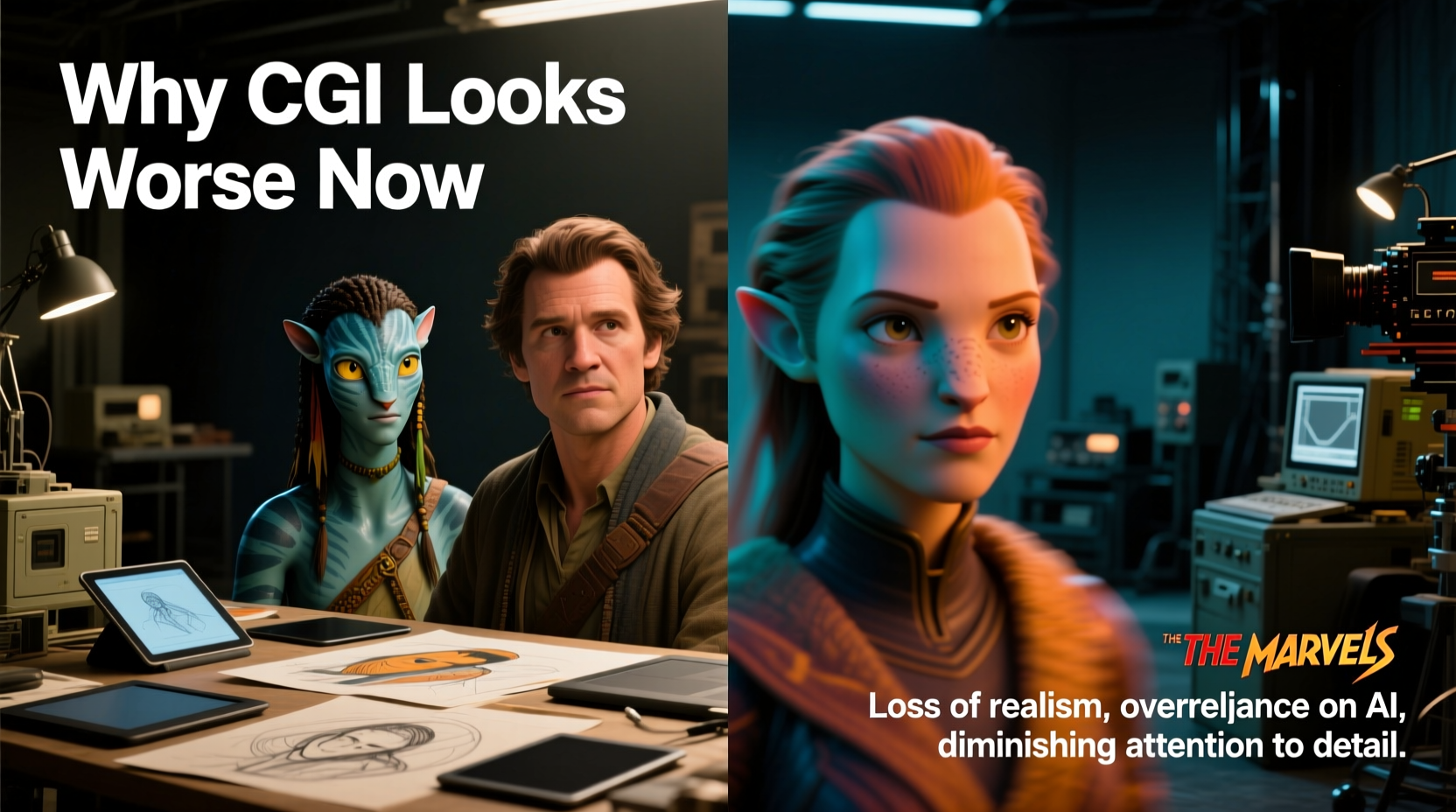
On paper, today’s rendering engines, motion capture systems, and GPU capabilities far surpass those of a decade ago. Yet, many high-budget productions deliver visuals that feel hollow or uncanny. One reason lies in the misconception that better hardware automatically leads to better results. In reality, raw computational power doesn’t compensate for poor lighting, weak textures, or shallow depth of field.
Modern pipelines often prioritize speed over quality. Studios under tight deadlines may skip critical stages like texture refinement, subsurface scattering calibration, or physics-based simulations. As a result, characters can appear plasticky, environments lack atmospheric depth, and lighting fails to mimic natural diffusion. The end product feels synthetic because, too often, it is.
“Technology enables realism, but only artistry achieves believability.” — Lena Torres, Senior Visual Effects Supervisor at FrameLight Studios
Rushed Production Cycles and Crunch Culture
One of the most significant contributors to declining CGI quality is the relentless pressure to meet release dates. Whether it’s a summer blockbuster or a triple-A game launch, studios face immense financial and marketing incentives to stick to fixed timelines. This often means outsourcing complex sequences to multiple vendors with inconsistent standards, or approving unfinished renders due to time constraints.
Crunch culture—the expectation of extended work hours during final development phases—further degrades output. Artists burn out, attention to detail wanes, and last-minute fixes introduce artifacts like clipping, floating objects, or mismatched lighting. A 2023 survey by the International VFX Guild found that 68% of artists reported delivering shots they knew were subpar due to deadline pressure.
Overreliance on Motion Capture Without Artistic Refinement
Motion capture has revolutionized character animation, allowing for lifelike movement with minimal keyframing. However, an overdependence on mocap data without proper cleanup leads to the “dead eyes” effect—animations that are technically accurate but emotionally flat.
Raw mocap data often includes micro-jitters, unnatural weight shifts, or facial twitches that need manual correction. Skipping this step results in characters who move like robots draped in human skin. Additionally, when directors treat mocap as a finished product rather than a foundation, performances lose nuance. The infamous “uncanny valley” isn’t caused by realism itself, but by incomplete realism—close enough to fool the eye, but not the brain.
Common Mocap Pitfalls
- Unprocessed facial rig data leading to stiff expressions
- Lack of secondary motion (e.g., cloth, hair, muscle jiggle)
- Over-smoothed animations that remove organic imperfections
- Poor integration with non-mocap elements (props, environments)
Artistic Misjudgment and Style Over Substance
Some CGI looks bad not because of technical failure, but due to flawed artistic choices. Directors and VFX supervisors sometimes opt for hyper-stylized aesthetics that clash with photorealism. For example, oversaturated colors, exaggerated proportions, or unnatural lighting setups can make digital scenes feel artificial—even if rendered with perfect precision.
Additionally, there's a growing trend of replacing practical effects with fully digital environments. While green screens offer flexibility, they strip away tangible interaction. Actors perform in voids, and lighting must be simulated rather than captured. The disconnect becomes visible in reflections, shadows, and environmental cohesion. A digitally inserted rainstorm rarely interacts convincingly with a physical set unless meticulously calibrated.
| Approach | Pros | Cons |
|---|---|---|
| Practical Effects + CGI Enhancement | Natural lighting, actor immersion, realistic physics | Higher cost, limited scalability |
| Fully Digital Environments | Total control, easy revisions, scalable assets | Flat lighting, artificial textures, lack of tangibility |
| Hybrid Workflow | Balances realism and flexibility | Requires expert coordination, longer integration time |
The Commoditization of VFX Labor
The global VFX industry has become highly competitive, with studios bidding aggressively for contracts. This race to the bottom drives down budgets and forces companies to cut corners. Many major films outsource hundreds of shots to low-cost regions where labor is cheaper but oversight is minimal. Without consistent supervision, quality fluctuates dramatically between sequences.
Moreover, the lack of standardized compensation models means artists are often paid per shot, incentivizing speed over excellence. A study by the Visual Effects Society revealed that nearly half of all VFX work is done at a loss, sustained only by hopes of future contracts. This unsustainable model directly impacts output quality—when survival depends on volume, craftsmanship suffers.
“We’re not lacking talent. We’re lacking respect for the craft.” — Rajiv Mehta, Lead Animator, Nexus FX
Step-by-Step Guide to Improving CGI Quality
While systemic change is needed, individual creators and teams can take steps to elevate their work. Here’s a proven workflow for maintaining high visual standards:
- Pre-Production Planning: Define visual goals early. Use concept art, mood boards, and tech tests to align expectations.
- Asset Development: Prioritize high-resolution textures, accurate material properties (PBR), and detailed topology.
- Animation Polish: Never use raw mocap. Clean up data, add secondary motion, and refine facial rigs manually.
- Lighting & Integration: Match digital lighting to real-world references. Use HDRI maps and ensure shadow consistency.
- Compositing Review: Check edge blending, color grading, and atmospheric effects across multiple monitors and viewing conditions.
- Feedback Loops: Conduct peer reviews and test screenings before final delivery.
Mini Case Study: The Fall and Rise of ‘Galactic Odyssey’
In 2021, the sci-fi film *Galactic Odyssey* faced widespread criticism for its CGI-heavy finale. Audiences called the space battle “cartoonish” and “weightless,” citing unrealistic explosions and floating debris. Internal reports later revealed that the sequence was completed in three weeks by a third-party vendor using outdated asset libraries.
For the 2024 re-release, the studio invested in a full visual overhaul. They rebuilt key assets, reshot select plates with practical elements, and hired senior compositors to rework lighting. The revised version received praise for its improved depth and realism. The lesson? Time and expertise matter more than budget alone.
FAQ
Is older CGI actually better than modern CGI?
Not inherently. Older CGI was often simpler but more carefully crafted due to slower production cycles. Today’s tools allow greater complexity, but only when used thoughtfully. The issue isn't the era—it's the approach.
Can AI-generated imagery fix current CGI problems?
AI can accelerate certain tasks like texture generation or in-betweening, but it cannot replace artistic judgment. Poorly trained models can amplify existing flaws, such as unnatural skin tones or repetitive patterns. AI should assist artists, not replace them.
Why do some indie games have better CGI than big-budget films?
Smaller teams often have tighter creative control, fewer compromises, and more passion-driven development. Without corporate mandates or rigid deadlines, they can focus on polish and coherence—even with limited resources.
Checklist: Ensuring High-Quality CGI Output
- ✅ Conduct pre-visualization to identify potential integration issues
- ✅ Use physically based rendering (PBR) materials for realism
- ✅ Allocate time for animation cleanup and refinement
- ✅ Match digital lighting to real-world physics
- ✅ Test renders on multiple display types (HDR, SDR, mobile)
- ✅ Limit reliance on fully digital environments without practical anchors
- ✅ Schedule post-mortems to learn from past mistakes
Conclusion
The decline in CGI quality isn’t inevitable—it’s a consequence of choices. Prioritizing speed over substance, undervaluing artistic input, and relying on automation without oversight have eroded the integrity of digital visuals. But the tools for improvement exist. By restoring respect for the craft, investing in skilled labor, and embracing hybrid workflows, creators can deliver CGI that doesn’t just look impressive, but feels authentic.




 浙公网安备
33010002000092号
浙公网安备
33010002000092号 浙B2-20120091-4
Comments
No comments yet. Why don't you start the discussion?