
For most people, a cup of coffee means a jolt of energy, sharper focus, and a temporary shield against fatigue. But if you’ve ever taken a sip of your morning brew only to feel more tired—especially if you have ADHD—you’re not imagining things. This paradoxical reaction isn’t rare, and it’s not just in your head. In fact, it’s rooted in neurochemistry, genetics, and the unique way stimulants interact with an ADHD brain. Understanding why coffee makes you sleepy instead of alert requires unpacking how caffeine affects neurotransmitters, the role of adenosine, and the nuanced response patterns common in individuals with attention-deficit/hyperactivity disorder.
The Science Behind Caffeine and Alertness
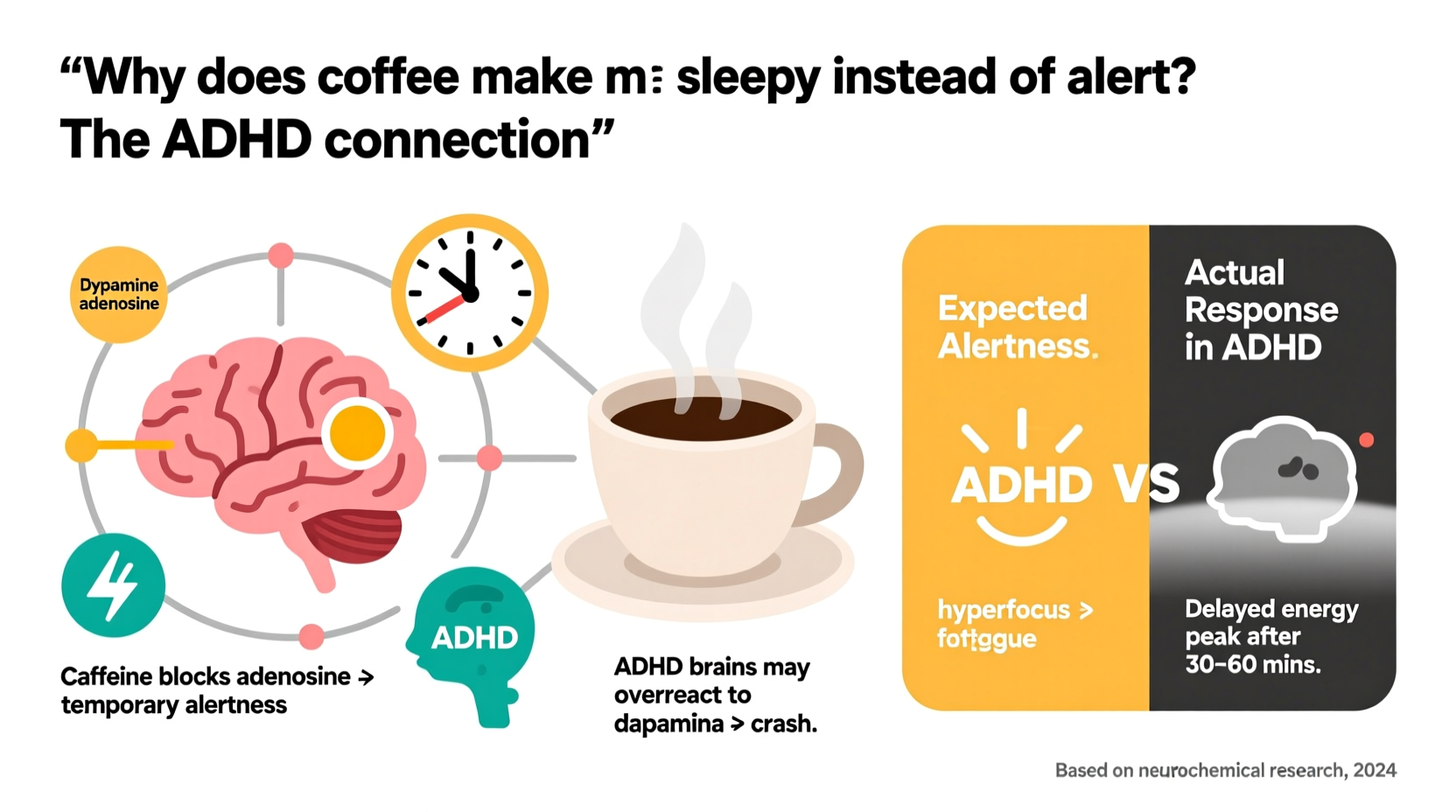
Caffeine is a central nervous system stimulant that primarily works by blocking adenosine receptors in the brain. Adenosine is a chemical that builds up throughout the day as neurons fire, creating a sense of drowsiness. As adenosine binds to its receptors, especially A1 and A2A, it slows neural activity and promotes sleep. Caffeine mimics adenosine’s shape, binding to these receptors without activating them, effectively preventing the “tired” signal from being transmitted.
At the same time, caffeine indirectly increases dopamine and norepinephrine levels—neurotransmitters linked to motivation, attention, and arousal. In neurotypical individuals, this cascade results in increased alertness, improved concentration, and reduced perception of effort.
However, this process doesn’t unfold the same way for everyone. Genetic variations in enzymes like CYP1A2—which metabolizes caffeine—and ADORA2A—the gene encoding the adenosine A2A receptor—can influence whether someone feels energized or anxious, focused or fatigued after drinking coffee.
ADHD and the Paradoxical Response to Stimulants
One of the most counterintuitive aspects of ADHD treatment is that many patients are prescribed stimulant medications—like methylphenidate (Ritalin) or amphetamines (Adderall)—to manage hyperactivity and improve focus. To outsiders, this seems contradictory: giving more stimulation to someone already struggling with restlessness. Yet, for those with ADHD, these drugs often have a calming, focusing effect.
This phenomenon, known as a “paradoxical response,” occurs because the ADHD brain operates with lower baseline levels of dopamine and norepinephrine in key regions like the prefrontal cortex. Rather than overstimulating, stimulants help normalize neural activity, allowing better executive function and emotional regulation.
Caffeine, though milder than prescription stimulants, acts on similar pathways. For some individuals with ADHD, caffeine doesn’t produce jitteriness or anxiety; instead, it helps stabilize mood and enhance concentration. But here’s where it gets complex: in certain cases, this stabilization can feel like sedation, particularly if the person was previously operating in a state of chronic overarousal or mental fatigue.
“Many of my ADHD patients report feeling calmer and more grounded after coffee—not wired. That calmness is often mistaken for tiredness, but it’s actually the brain reaching equilibrium.” — Dr. Lena Reyes, Neuropsychiatrist specializing in adult ADHD
Why Coffee Might Make You Sleepy: Key Factors
The sensation of sleepiness after coffee isn’t always due to one single cause. Often, it’s a combination of physiological, neurological, and behavioral factors. Below are the most common contributors:
1. Adenosine Rebound Effect
After caffeine wears off—typically 3 to 5 hours post-consumption—adenosine floods back into the receptors it was blocked from earlier. If you consumed caffeine when already fatigued, this rebound can feel like a sudden crash, amplifying feelings of sleepiness. This is especially pronounced in people who rely on coffee to override chronic sleep debt.
2. Cortisol and Circadian Timing
Your body naturally releases cortisol, a stress hormone tied to wakefulness, during peak alertness windows—usually between 8–9 AM, 12–1 PM, and 5:30–6:30 PM. Drinking coffee during these peaks may provide little additional benefit and could blunt your natural cortisol rhythm over time. If you drink coffee when your body is already producing high cortisol, the net effect might be negligible—or even dysregulating—leading to fatigue.
3. Dehydration and Diuretic Effects
Coffee is a mild diuretic. Without adequate water intake, dehydration can set in quickly, impairing cognitive function and causing lethargy. Many people forget to hydrate alongside their caffeine consumption, mistaking dehydration-induced fatigue for a direct effect of the coffee itself.
4. Individual Metabolism Differences
Fast metabolizers break down caffeine efficiently, experiencing shorter but sharper effects. Slow metabolizers—often due to genetic variants in the CYP1A2 gene—process caffeine more gradually, leading to prolonged exposure and potential side effects like jitteriness followed by exhaustion. Some slow metabolizers report feeling “wired then wiped,” where initial alertness gives way to deep fatigue.
5. Underlying Anxiety and Overstimulation
In individuals with ADHD, especially those with comorbid anxiety, caffeine can heighten internal tension. When the nervous system becomes overloaded, the body may respond with a parasympathetic “shutdown”—a protective mechanism that induces drowsiness or mental fog as a way to restore balance.
Real-Life Scenario: Emma’s Morning Routine
Emma, a 29-year-old graphic designer diagnosed with ADHD at age 24, has struggled for years with her relationship to coffee. She starts her day with a large black coffee at 7:30 AM, hoping to jumpstart her focus. By 9:00 AM, she feels unusually calm—almost too calm. Her thoughts slow down, her eyelids grow heavy, and she finds herself fighting the urge to nap despite having had eight hours of sleep.
Confused, she cuts back on coffee, thinking she’s drinking too much. But when she switches to decaf, she feels scattered and unfocused. Eventually, she consults a functional medicine practitioner who explains the paradox: her brain isn’t overstimulated by caffeine—it’s being regulated by it. The “sleepiness” she feels isn’t fatigue; it’s the absence of mental chaos. Once her mind stops racing, she interprets the calm as tiredness, even though her productivity improves.
With guidance, Emma adjusts her routine: she reduces her coffee volume, drinks it later in the morning (after her cortisol peak), and pairs it with water and a protein-rich breakfast. She also begins tracking her energy levels and discovers that moderate caffeine helps her maintain steady focus—without the crash.
Do’s and Don’ts: Managing Caffeine with ADHD
| Action | Do | Don’t |
|---|---|---|
| Caffeine Timing | Consume 90 minutes after waking, avoiding cortisol peaks | Drink first thing on an empty stomach |
| Dosage | Start with 50–100mg (half a cup); assess response | Begin with double espressos or energy drinks |
| Hydration | Drink 1 glass of water per cup of coffee | Replace all fluids with caffeinated beverages |
| Sleep Hygiene | Avoid caffeine within 8 hours of bedtime | Use coffee to push through late-night work sessions |
| Monitoring Effects | Track mood, focus, and energy in a journal | Assume all fatigue is caused by caffeine |
Step-by-Step Guide: Optimizing Your Caffeine Use with ADHD
- Assess your current pattern: Note when, how much, and why you consume caffeine. Are you using it to compensate for poor sleep?
- Pause and reset: Take 3–5 days off caffeine to reset your adenosine receptors and observe baseline energy levels.
- Reintroduce strategically: Start with 50–100mg of caffeine (e.g., half a cup of brewed coffee) 90 minutes after waking.
- Pair with hydration and nutrition: Drink water before and after coffee. Eat a balanced breakfast to stabilize blood sugar.
- Monitor for 3–7 days: Track changes in focus, mood, heart rate, and energy. Use a simple log or app.
- Adjust based on response: If you feel calm and focused, continue. If you crash or feel anxious, reduce dose or shift timing.
- Consider alternatives: Try matcha, yerba mate, or L-theanine supplements if coffee continues to disrupt your state.
Frequently Asked Questions
Can ADHD medication and coffee be taken together?
Yes, but caution is advised. Both prescription stimulants and caffeine increase dopamine and norepinephrine. Combining them may amplify side effects like anxiety, elevated heart rate, or insomnia. Always consult your healthcare provider before mixing substances, especially if you have cardiovascular concerns.
Is it normal to feel sleepy after coffee if I have ADHD?
Yes. What feels like sleepiness may actually be your brain achieving a regulated state after reducing hyperactivity. If you were previously mentally overstimulated or distracted, the contrast can mimic fatigue. Monitor whether your focus improves even if you feel calmer.
Does caffeine worsen ADHD symptoms in the long term?
Not necessarily. Moderate caffeine use may support attention and executive function in some individuals with ADHD. However, excessive intake, poor timing, or reliance on caffeine to override sleep deficits can exacerbate symptoms like impulsivity, anxiety, and emotional dysregulation. Balance and consistency matter more than avoidance.
Final Thoughts and Moving Forward
The idea that coffee should universally make you alert overlooks the vast individual differences in brain chemistry, metabolism, and neurodevelopmental conditions like ADHD. Feeling sleepy after coffee doesn’t mean something is wrong—it may mean your brain is responding exactly as it should. For people with ADHD, caffeine isn’t just a stimulant; it’s a modulator. It can quiet mental noise, enhance clarity, and bring structure to a normally chaotic cognitive landscape.
The key lies in intentionality. Instead of consuming caffeine automatically, treat it as a tool—one that requires calibration. Pay attention to timing, dosage, hydration, and how you interpret your body’s signals. That wave of calmness after your morning cup might not be fatigue. It might be focus finally arriving.




 浙公网安备
33010002000092号
浙公网安备
33010002000092号 浙B2-20120091-4
Comments
No comments yet. Why don't you start the discussion?