
For most people, a cup of coffee is synonymous with alertness—a quick fix to combat grogginess and sharpen focus. But if you've ever taken a sip of espresso only to feel your eyelids grow heavy minutes later, you're not imagining things. This paradox—where caffeine seems to induce drowsiness rather than energy—is more common than many realize, especially among individuals with Attention-Deficit/Hyperactivity Disorder (ADHD). While it may seem counterintuitive, there's solid neuroscience behind why coffee can make you sleepy, particularly when ADHD is part of the equation.
The interaction between caffeine, dopamine, adenosine, and neurochemistry in ADHD brains creates a unique physiological landscape. What works as a stimulant for one person may function almost like a sedative for another. Understanding this phenomenon requires unpacking how caffeine affects brain chemistry, how ADHD alters that response, and what alternatives might better support focus and wakefulness.
The Science of Caffeine: Not Always a Stimulant
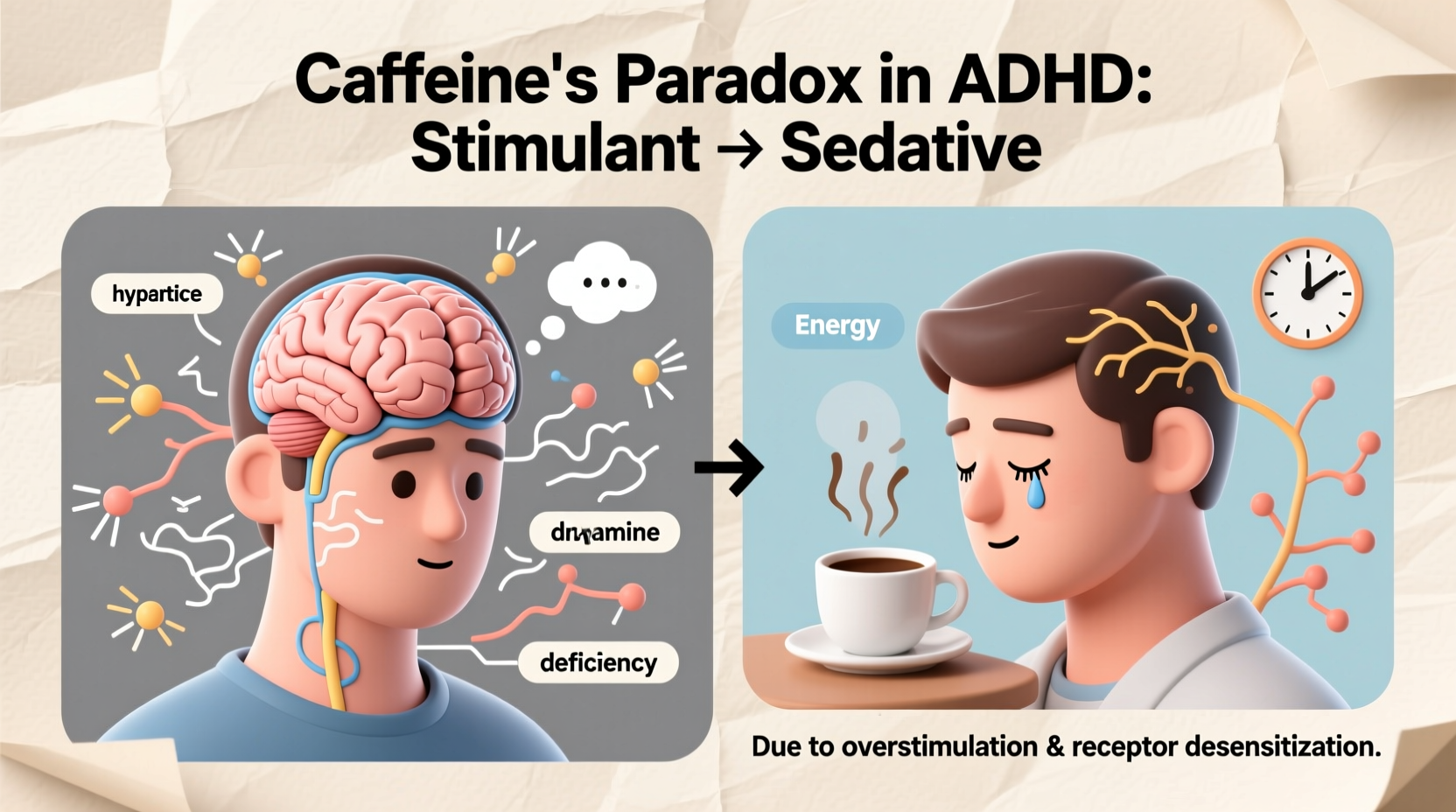
Caffeine is classified as a central nervous system stimulant, but its mechanism isn’t as straightforward as “wake up.” It primarily works by blocking adenosine receptors in the brain. Adenosine is a neurotransmitter that accumulates throughout the day, promoting sleepiness as levels rise. By binding to adenosine receptors without activating them, caffeine prevents adenosine from slowing neural activity, which delays fatigue and increases alertness.
However, this process doesn’t occur in isolation. Caffeine also influences other systems:
- Dopamine modulation: Caffeine indirectly increases dopamine availability, enhancing mood and motivation—key factors in attention and reward processing.
- Adrenaline release: It triggers a mild stress response, elevating heart rate and sharpening senses via epinephrine.
- Glutamate and GABA balance: Caffeine affects excitatory and inhibitory neurotransmitters, potentially altering overall brain equilibrium.
In some individuals, particularly those with ADHD, these interactions don’t produce uniform stimulation. Instead, the net effect can be calming or even sedating. This isn’t a malfunction—it’s a reflection of individual neurochemistry.
ADHD and Brain Chemistry: Why Caffeine Acts Differently
ADHD is characterized by dysregulation in dopamine and norepinephrine pathways—neurotransmitters essential for attention, executive function, and arousal. Many standard ADHD medications, such as methylphenidate (Ritalin) and amphetamines (Adderall), work by increasing the availability of these neurotransmitters in the prefrontal cortex.
Caffeine, while weaker, has a similar—but less targeted—effect. It enhances dopamine signaling and mildly boosts norepinephrine. In neurotypical brains, this amplifies alertness. But in ADHD brains, where baseline dopamine levels are often suboptimal, the effect can be paradoxical: the slight increase helps normalize neural activity, leading to improved focus and reduced mental noise. This normalization can feel like calmness, not stimulation.
Dr. Russell Barkley, a leading ADHD researcher, explains:
“Stimulant medications don’t ‘energize’ people with ADHD—they bring their brain function closer to typical regulation. The same principle applies to substances like caffeine, which can act as mild self-medicants.”
In this context, feeling “sleepy” after coffee isn’t actual drowsiness—it’s the sensation of mental quiet. The racing thoughts, restlessness, or hyperactivity that characterize untreated ADHD may diminish, creating a subjective sense of relaxation. This is often mistaken for fatigue, but it’s more accurately described as neurological stabilization.
The Crash Effect: When Energy Turns to Exhaustion
Another reason coffee might make you feel sleepy is the post-caffeine crash. After caffeine wears off—typically 3 to 5 hours depending on metabolism—adenosine receptors are no longer blocked. The accumulated adenosine floods back, often causing sudden tiredness. This rebound effect is stronger if you’re already sleep-deprived or sensitive to blood sugar fluctuations.
People with ADHD are disproportionately affected by sleep issues. Studies show that up to 75% of adults with ADHD experience chronic sleep disturbances, including delayed sleep phase syndrome and insomnia. When someone with poor sleep quality consumes caffeine late in the day, the initial alertness may mask underlying fatigue. Once the caffeine clears, exhaustion hits harder.
Additionally, caffeine can disrupt deep sleep stages even if consumed earlier in the day. A 2013 study published in the Journal of Clinical Sleep Medicine found that consuming caffeine even 6 hours before bedtime significantly reduces total sleep time and quality. For ADHD individuals already struggling with sleep regulation, this creates a vicious cycle: poor sleep → increased caffeine use → worsened sleep → greater daytime fatigue.
Paradoxical Reactions and Individual Sensitivity
Not everyone metabolizes caffeine the same way. Genetic variations in the CYP1A2 gene determine how quickly your liver processes caffeine. “Slow metabolizers” experience prolonged effects, including jitteriness, anxiety, and eventually, fatigue. Conversely, “fast metabolizers” clear caffeine quickly and may barely feel its impact.
Moreover, habitual use leads to tolerance. Regular coffee drinkers develop more adenosine receptors over time, requiring higher doses for the same effect. When tolerance builds but consumption remains constant, perceived benefits decrease—and side effects like fatigue may dominate.
In ADHD populations, this sensitivity is compounded by coexisting conditions. Anxiety, depression, and sensory processing sensitivities—common in ADHD—can amplify negative reactions to stimulants. Some individuals report that caffeine increases internal restlessness despite reducing external hyperactivity, leading to mental fatigue.
Real Example: Sarah’s Experience
Sarah, a 29-year-old graphic designer diagnosed with ADHD at age 24, used coffee to power through deadlines. She’d drink two large lattes by noon, expecting clarity. Instead, she found herself zoning out by 2 PM, struggling to stay awake during client calls.
After consulting her psychiatrist, she realized her afternoon slump wasn’t due to laziness—it was a combination of caffeine crash, poor nighttime sleep, and an overstimulated nervous system seeking recovery. Switching to green tea (lower caffeine, plus L-theanine) and reserving coffee for mornings helped stabilize her energy. More importantly, prioritizing consistent sleep hygiene made the biggest difference.
“I thought I needed more caffeine,” she said. “But really, I needed less reliance on it and better foundational habits.”
Strategies to Optimize Caffeine Use with ADHD
If coffee consistently makes you feel sluggish, it doesn’t mean you must give it up entirely. With strategic adjustments, you can harness its benefits while minimizing drawbacks. Consider the following approach:
- Time your intake wisely: Consume caffeine early in the day—ideally within 90 minutes of waking—to align with natural cortisol rhythms and avoid disrupting sleep.
- Limit quantity: Stick to 100–200 mg per dose (about 8–12 oz of brewed coffee). Excessive intake increases crash severity.
- Pair with hydration: Caffeine is a diuretic. Dehydration contributes to fatigue. Drink water alongside coffee.
- Avoid sugar-laden drinks: Sweetened lattes or energy drinks cause blood sugar spikes and crashes, worsening energy instability.
- Monitor sleep patterns: Use a sleep tracker or journal to assess whether caffeine affects your rest.
Checklist: Assessing Your Caffeine Response
- ☑ Do I feel calm or focused after coffee, not jittery?
- ☑ Does my energy dip sharply 2–4 hours after drinking it?
- ☑ Am I using caffeine to compensate for poor sleep?
- ☑ Do I consume caffeine after 2 PM?
- ☑ Have I ruled out dehydration or low blood sugar as fatigue causes?
- ☑ Have I discussed my reaction with a healthcare provider?
If multiple answers are “yes,” your relationship with caffeine may need reevaluation.
Alternatives to Coffee for ADHD Energy Support
If coffee consistently undermines your energy, consider alternatives that support focus without overstimulation:
| Beverage/Supplement | Key Benefits | Considerations |
|---|---|---|
| Green Tea | Contains L-theanine, which promotes relaxed focus; moderate caffeine | Lower stimulant effect; ideal for sustained attention |
| Yerba Mate | Natural source of caffeine + antioxidants; smoother energy curve | Still contains stimulants; monitor tolerance |
| L-Theanine (supplement) | Reduces brain fog, enhances alpha waves for calm alertness | Best paired with small caffeine doses (e.g., half-cup coffee) |
| Rhodiola Rosea | An adaptogen that combats mental fatigue and stress | May interact with medications; consult doctor first |
| Water + Movement | Hydration and light exercise boost cerebral blood flow | No side effects; underutilized natural energizers |
Non-pharmacological strategies are equally important. Prioritizing sleep, protein-rich meals, regular physical activity, and structured routines can reduce dependence on stimulants altogether.
Frequently Asked Questions
Can caffeine worsen ADHD symptoms?
For some individuals, yes. While low to moderate doses may improve focus, high doses can increase anxiety, agitation, and emotional dysregulation—side effects that mimic or exacerbate ADHD symptoms. The key is individual response and dosage control.
Is it normal to feel sleepy after coffee if I have ADHD?
Yes. Due to dopamine regulation and potential calming effects on overactive neural circuits, many with ADHD report feeling more focused and less restless after caffeine—which can be misinterpreted as sleepiness. True fatigue may indicate a crash or underlying sleep debt.
Should I stop drinking coffee if it makes me tired?
Not necessarily. First, evaluate timing, dose, and lifestyle factors like sleep and diet. If adjustments don’t help, consider switching to gentler stimulants or focusing on non-caffeinated energy supports. Always consult a healthcare provider before making major changes, especially if taking ADHD medication.
Conclusion: Rethinking Stimulation in ADHD
Feeling sleepy after coffee isn’t a flaw—it’s a signal. It reflects the complex interplay between your brain’s wiring, lifestyle habits, and biochemical responses. For people with ADHD, caffeine isn’t just a stimulant; it’s a modulator. Its effects depend not on universal rules, but on personal neurology.
Instead of forcing yourself to tolerate coffee because “it should” energize you, listen to your body. Experiment mindfully. Address foundational needs like sleep, nutrition, and stress management. And remember: true cognitive enhancement comes not from a single cup, but from a holistic approach to brain health.




 浙公网安备
33010002000092号
浙公网安备
33010002000092号 浙B2-20120091-4
Comments
No comments yet. Why don't you start the discussion?