
Coffee that tastes sour—sharp, acidic, or green—is one of the most common complaints among home brewers. While some acidity is desirable in high-quality beans, excessive sourness often signals under-extraction, where not enough flavor compounds have dissolved from the grounds into your cup. The good news? This issue is rarely about the beans themselves and almost always solvable by adjusting key brewing variables. Understanding the science behind extraction and how factors like grind size, water temperature, and brew time interact empowers you to consistently produce balanced, flavorful coffee.
The Science Behind Sour Coffee: Under-Extraction Explained
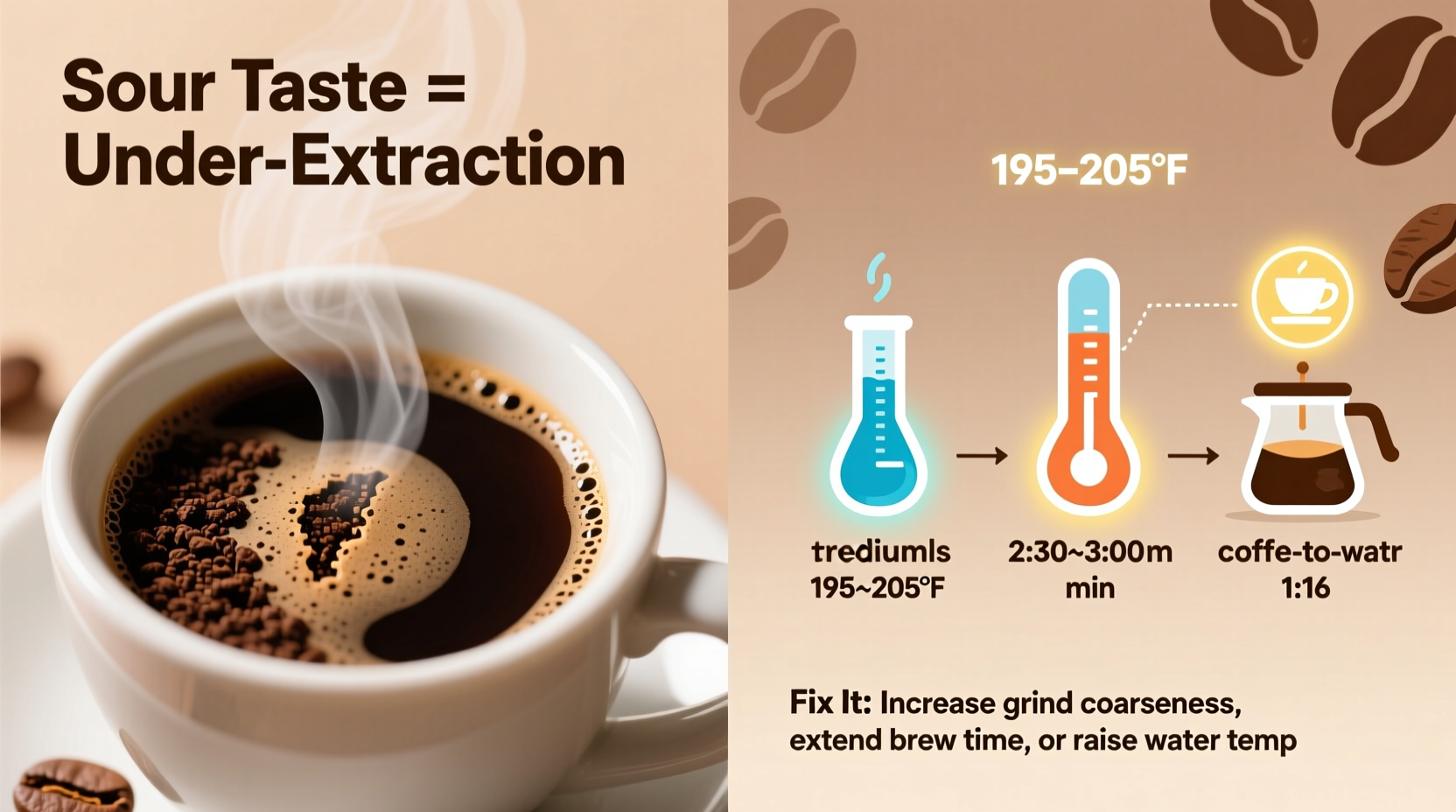
Sourness in coffee typically results from under-extraction—the process where hot water fails to dissolve enough soluble compounds from the coffee grounds. Extraction is a time-dependent chemical process: as water passes through ground coffee, it pulls out sugars, acids, and bitter compounds in a predictable sequence. First come the bright, acidic notes; then sweetness; finally, the deeper, more bitter tones. When brewing stops too early or conditions aren’t optimal, only the initial acids are extracted, leaving behind the balancing sugars and body.
This imbalance creates a thin, sharp, or vinegary flavor profile. It’s often mistaken for a flaw in the beans, but more frequently, it's a symptom of incorrect brewing technique. Specialty roasters now favor lighter roasts to preserve origin characteristics, which naturally contain higher levels of organic acids. Without proper extraction control, these desirable acids dominate, making the coffee taste unpleasantly sour.
“Under-extracted coffee isn’t broken—it’s just unfinished. The right adjustments can unlock the full spectrum of flavors already present.” — Dr. Kaitlyn Smith, Coffee Chemist & Sensory Analyst
Key Brew Variables That Influence Extraction
Fixing sour coffee means optimizing the four primary variables that govern extraction: grind size, water temperature, brew time, and coffee-to-water ratio. These elements work together like dials on a machine—tweak one, and the others may need adjustment to maintain balance.
1. Grind Size: The Most Impactful Control
Grind size determines the surface area of coffee exposed to water. Finer grinds increase contact, speeding up extraction; coarser grinds slow it down. If your coffee tastes sour, the grind is likely too coarse, especially in methods like pour-over or drip.
2. Water Temperature: Heat Drives Solubility
Water temperature affects how efficiently compounds dissolve. Below 195°F (90°C), extraction slows dramatically, favoring acid release over sugars. Ideal brewing temperature ranges between 195°F and 205°F (90–96°C). Electric kettles with temperature control are invaluable for consistency.
3. Brew Time: Duration Matters
Longer contact between water and coffee allows more complete extraction. In immersion methods like French press, under two minutes is insufficient; aim for 4–5. For pour-over, total brew time should be 2:30 to 3:30 minutes. Shorter times often leave coffee sour.
4. Coffee-to-Water Ratio: Strength vs. Balance
While ratio doesn’t directly cause sourness, an overly weak brew (too much water) can amplify perceived acidity. A standard starting point is 1:16 (1 gram of coffee per 16 grams of water). Adjust within 1:15 to 1:17 based on taste.
Brew Method-Specific Fixes for Sour Coffee
Different brewing methods respond uniquely to variable changes. Here’s how to troubleshoot sourness across popular techniques:
Pour-Over (V60, Kalita Wave)
Pour-over is highly sensitive to grind and timing. Sourness usually points to a coarse grind or rushed pouring. Try slowing down your pour and increasing agitation during the bloom phase to improve evenness.
French Press
If your French press coffee tastes sour, check brew time first. Two minutes is insufficient. Extend steeping to 4 minutes, then plunge slowly. Also, ensure your grind is medium-coarse—not too gritty, not sandy.
AeroPress
The AeroPress is versatile but prone to under-extraction if the recipe is too short. Increase total brew time to 2–3 minutes before pressing. Use water at 200°F (93°C) and stir thoroughly after adding water.
Espresso
Espresso that tastes sour and thin is under-extracted. This usually means the shot pulled too fast (<20 seconds). Adjust by grinding finer, tamping evenly, or increasing dose. Target 18–22 seconds for a double shot.
Step-by-Step Guide to Fixing Sour Coffee
Follow this logical sequence to diagnose and correct sourness in any brew method:
- Start with fresh beans. Stale or poorly stored coffee loses volatile compounds and extracts unevenly. Use beans roasted within the last 2–4 weeks.
- Weigh your coffee and water. Guessing leads to inconsistency. Use a digital scale for precision.
- Check your grind size. If sour, go finer by one setting. Re-brew and evaluate.
- Verify water temperature. If below 195°F, increase heat. Boil water, then let sit 15–30 seconds if no temp control.
- Extend brew time. For pour-over, slow pours; for immersion, add 30–60 seconds to steep.
- Taste and repeat. After each change, assess flavor. Aim for balance—brightness without harshness, sweetness without dullness.
Do’s and Don’ts: Common Mistakes That Cause Sourness
| Action | Do | Don't |
|---|---|---|
| Adjusting grind | Change one setting at a time | Make multiple changes simultaneously |
| Measuring ingredients | Use a scale for accuracy | Scoop by volume (inconsistent) |
| Water use | Use filtered water at 195–205°F | Use boiling water straight off boil or cold tap water |
| Brew time | Time your entire process | Guess or eyeball duration |
| Troubleshooting | Isolate one variable per test | Blame the beans immediately |
Mini Case Study: Fixing Morning Pour-Over Woes
Julia, a remote worker in Portland, loved her morning V60 ritual but grew frustrated when every cup tasted sour and thin. She used freshly roasted Ethiopian beans and a gooseneck kettle but skipped weighing her coffee, using a scoop instead. Her grind was set to “medium,” and she poured quickly to save time.
After reading about extraction, she made three changes: she began weighing 20g of coffee and 320g of water, adjusted her burr grinder one notch finer, and slowed her pour to extend brew time from 2:00 to 2:45. The difference was immediate—her next cup had honey-like sweetness, floral notes, and balanced citrus acidity instead of sharp sourness. Julia now logs each brew in a notebook and shares her progress online with fellow enthusiasts.
Expert Insight: Why Acidity Isn’t Always Bad
Not all sourness is undesirable. High-quality specialty coffees often showcase vibrant, wine-like acidity as a positive trait. The distinction lies in balance. A well-extracted light roast should have brightness tempered by sweetness and body. When sourness dominates, it indicates incomplete extraction—not poor bean quality.
“The best coffees have complex acidity, but they also have structure. If it tastes like lemon juice without sugar, you haven’t extracted enough.” — Carlos Mendez, World Brewers Cup Competitor
Learning to distinguish between pleasant acidity and unpleasant sourness is part of developing your palate. Cupping sessions, where multiple brews are compared side-by-side, help train your taste buds to identify extraction flaws.
Comprehensive Checklist: Eliminate Sour Coffee for Good
- ✅ Use freshly roasted beans (within 4 weeks of roast date)
- ✅ Weigh coffee and water with a digital scale
- ✅ Grind coffee just before brewing with a burr grinder
- ✅ Set water temperature between 195°F and 205°F (90–96°C)
- ✅ Adjust grind size: finer if sour, coarser if bitter
- ✅ Extend brew time if under-extracted (e.g., 3+ min for pour-over)
- ✅ Stir or agitate properly during brewing for even extraction
- ✅ Clean equipment regularly—old oils impede flow and extraction
- ✅ Keep a brewing log to track changes and results
- ✅ Taste objectively: note sweetness, bitterness, and balance
Frequently Asked Questions
Can old coffee cause sourness?
Yes. As coffee ages, it loses volatile compounds and becomes less soluble. Stale grounds extract unevenly, often yielding flat, sour cups. For best results, use beans within 2–4 weeks of roasting and store them in an airtight container away from light and moisture.
Is sour coffee harmful to drink?
No, sour coffee is not dangerous. It’s simply under-extracted and unbalanced. While high acidity may bother people with sensitive stomachs, the sour taste itself comes from natural organic acids in coffee and poses no health risk.
Why does my espresso taste sour but my drip coffee doesn’t?
Espresso requires precise balance due to its short contact time. If the grind is too coarse or the shot pulls too quickly (<20 seconds), acids extract while sugars and body lag behind. Drip coffee has longer brew time, allowing more complete extraction even with slight inconsistencies. Calibrate your espresso grind and dose carefully to resolve this.
Master Your Brew, Transform Your Coffee
Sour coffee isn’t a dead end—it’s feedback. Each cup tells you something about your process. By understanding the role of grind, temperature, time, and ratio, you gain control over the final flavor. Small, deliberate adjustments lead to dramatic improvements. The beans you thought were too acidic might turn out to be exceptional once properly extracted.
Beyond fixing sourness, mastering these variables opens the door to exploring nuance—how a 5-degree temperature shift highlights fruit notes, or how extending brew time brings out chocolatey depth. Coffee brewing is both science and craft, and every adjustment brings you closer to the perfect cup tailored to your taste.




 浙公网安备
33010002000092号
浙公网安备
33010002000092号 浙B2-20120091-4
Comments
No comments yet. Why don't you start the discussion?