
In the chaotic, fast-paced world of Plants vs. Zombies 2, players are constantly searching for the most efficient, reliable plants to anchor their defenses. Among the sea of options—Peashooters, Wall-nuts, Chompers—one plant consistently rises to the top: the humble Cactus. Whether you're playing through Ancient Egypt, Pirate Seas, or the neon-lit Future, you'll find Cactus lining lawns like a silent guardian. But why? Is this spiky succulent just a fan favorite, or is it hiding overpowered mechanics beneath its prickly exterior?
The answer lies not in flashy animations or high damage output, but in utility, versatility, and game mechanics that quietly dominate across timelines. Let’s dissect why Cactus has become the go-to choice for casual players and seasoned veterans alike—and whether its widespread use signals a hidden imbalance in the game’s design.
The Role of Cactus in Defense Strategy
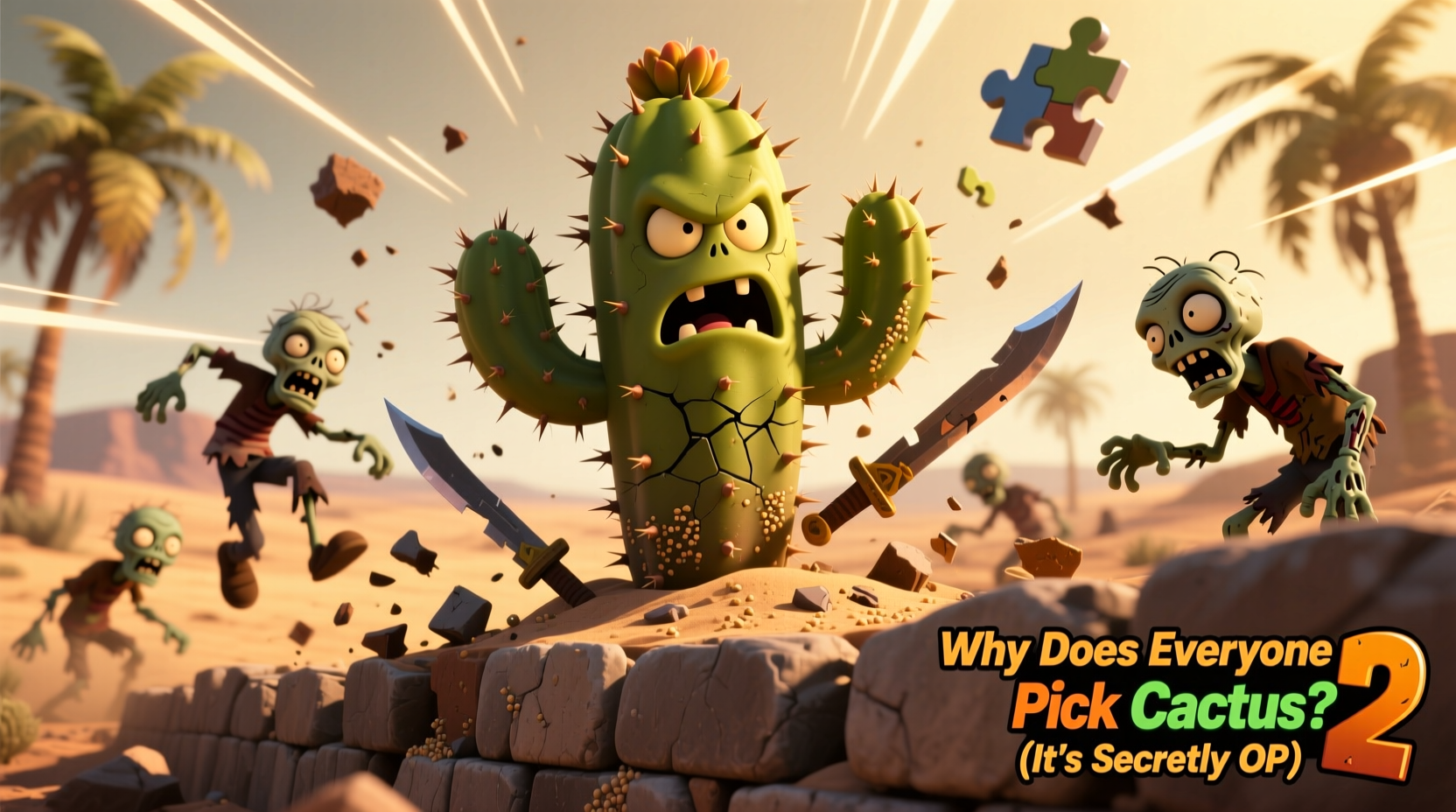
Cactus is classified as a defensive plant with an added twist: it can attack aerial threats. At first glance, it seems like a Wall-nut with extra perks. It has moderate health (60 bites), costs only 75 sun, and unlike other defensive plants, it deals contact damage to ground zombies and shoots spines at flying enemies like Balloon Zombies and Gargantuars with jetpacks.
This dual functionality makes Cactus uniquely valuable. Most defensive plants either block or deal damage—but rarely both, especially against air units. For example, Tall-nut blocks but can’t hit fliers; Bloomerang hits air but doesn’t tank. Cactus bridges that gap effortlessly, making it a “two-in-one” solution in scenarios where slot efficiency is critical.
Mechanical Advantages That Make Cactus Stand Out
Let’s break down what sets Cactus apart from other defensive plants:
- Airborne Threat Neutralization: Unlike Wall-nut or Tall-nut, Cactus automatically targets Balloon Zombies without needing a separate anti-air plant like Cattail or Blover.
- Low Sun Cost: At 75 sun, it’s cheaper than Tall-nut (125) and even some offensive plants. This allows early deployment and better economy management.
- No Special Conditions: Unlike Cattail (requires Lily Pad on water) or Winter Melon (high cost, slow recharge), Cactus works anywhere, anytime.
- Durable Against Swarms: Its piercing spine shots can hit multiple airborne zombies in a line, offering soft area denial.
These traits combine into something rare in PvZ2: a plant that scales well across difficulty levels. In early waves, it saves sun. In late-game chaos, it holds lanes while mitigating air pressure—a role usually requiring two or three different plants.
Expert Insight: The Designer’s Perspective
“Cactus was designed to solve a very specific problem: giving players a reliable, low-cost option to handle both physical barriers and aerial nuisances without cluttering the board.” — George Fan, Lead Designer of Plants vs. Zombies series
Fan’s statement confirms what many players have intuitively discovered: Cactus isn’t just useful—it was intentionally engineered to be a universal tool. Its balance between cost, durability, and functionality reflects careful tuning rather than accidental power creep.
Is Cactus Overpowered? A Balanced Analysis
To determine if Cactus is truly OP, we need to define what \"overpowered\" means in PvZ2. An overpowered plant would dominate so thoroughly that it invalidates alternatives, trivializes challenges, or enables unbeatable strategies regardless of level design.
By that standard, Cactus falls short of being broken—but it comes dangerously close to optimal in too many situations.
| Criteria | Cactus Performance | Comparison Plant (Wall-nut) |
|---|---|---|
| Sun Cost | 75 | 50 |
| Health | 60 bites | 40 bites |
| Anti-Air Capability | Yes (spine shots) | No |
| Placement Flexibility | Any terrain | Any terrain |
| Lane Efficiency | High (dual-purpose) | Medium (defensive only) |
While Wall-nut costs less, its lack of anti-air forces players to spend additional sun on support plants. Cactus eliminates that need, effectively saving 25–50 sun per lane when facing air threats. Over multiple lanes and extended levels, that efficiency compounds dramatically.
Mini Case Study: Pyramid Panic Level 4-8
In the Ancient Egypt timeline, level 4-8 features frequent Balloon Zombie drops combined with heavy ground pressure. Players using Wall-nut must pair them with Cattail or rely on Blovers, increasing complexity and sun strain.
A player using Cactus, however, can deploy a single plant per lane to handle both threats. One user reported reducing average completion time by 2 minutes and decreasing plant slot usage by 30% simply by switching from Wall-nut + Cattail to Cactus-only defense.
This isn’t exploiting a glitch—it’s leveraging superior synergy baked into the plant’s design.
When Cactus Falls Short: Limitations and Counters
No plant is perfect, and Cactus has notable weaknesses:
- Vulnerable to Snorkel Zombies: In aquatic levels, Snorkels bypass Cactus entirely underwater.
- No Splash Damage: While it hits air units, it doesn’t affect groups efficiently like Squash or Jalapeño.
- Outclassed in Pure Defense: In levels without flying zombies, Wall-nut or Tall-nut offer better value per bite.
- Slow Recharge: Cactus has a relatively long cooldown, limiting rapid redeployment.
Moreover, certain events and epic quests disable Cactus entirely, suggesting developers recognize its influence and occasionally nerf it indirectly through exclusion.
Step-by-Step Guide: Maximizing Cactus Effectiveness
- Assess the Threat Mix: Check if Balloon Zombies, Jetpack Zombies, or other fliers appear in the level.
- Plan Your Economy: With 75 sun, Cactus frees up resources for offensive plants like Fume-shroom or Snapdragon.
- Combine with Spikeweed/Spikerock: Stack ground damage underneath to deter digging and shielded zombies.
- Protect from Back Attacks: Use Banana Bomb or Chili Bean to stop Digger Zombies from undermining your Cactus line.
- Use in Conjunction with Kernel-pult: Slow zombies with butter while Cactus holds and damages fliers—ideal for survival modes.
FAQ: Common Questions About Cactus
Can Cactus shoot down all types of flying zombies?
Yes. Cactus automatically targets any airborne zombie, including Balloon Zombies, Flying Imps, and Jetpack Zombies. It cannot target zombies mid-leap (like Dolphin Riders during jump), but resumes firing once they’re airborne again.
Why don’t more players use Tall-nut instead?
Tall-nut has higher health (80 bites) and blocks Gargantuars longer, but offers zero offense. In levels with mixed threats, dedicating a second plant to anti-air reduces flexibility. Cactus consolidates roles, making it more efficient despite lower raw durability.
Has Cactus been nerfed in any updates?
Not directly. However, newer updates have introduced more flying-heavy levels where Cactus excels, which some argue is indirect buffing. Conversely, limited-time events sometimes exclude it, balancing its presence.
Conclusion: The Quiet Dominance of a Desert Survivor
Cactus isn’t overpowered in the traditional sense—it doesn’t one-shot bosses or break game mechanics. But its quiet, consistent utility across timelines, low cost, and dual-role capability make it the closest thing to a “meta-defining” plant in Plants vs. Zombies 2. It doesn’t scream for attention, yet it solves problems others require two plants to handle.
So yes—everyone picks Cactus because it’s secretly optimized. Not broken, not unfair, but *exceptionally well-designed*. In a game where every sun counts and every plant slot matters, choosing Cactus isn’t just popular—it’s often the smartest move.




 浙公网安备
33010002000092号
浙公网安备
33010002000092号 浙B2-20120091-4
Comments
No comments yet. Why don't you start the discussion?