
Flossing is a non-negotiable part of oral hygiene, yet many people experience the same frustrating issue: floss that tears, frays, or gets stuck between their teeth. This problem often occurs in what dentists call “tight contact areas”—spots where adjacent teeth meet closely, making it difficult for standard floss to pass through smoothly. While occasional shredding may seem minor, persistent tearing can signal underlying dental concerns or improper technique. More importantly, if floss consistently breaks in the same spot, plaque may remain trapped, increasing the risk of decay and gum disease.
Understanding why floss shreds—and knowing how to address it—can transform your daily routine from a battle into a seamless process. The causes range from mechanical issues like worn fillings to anatomical factors such as naturally narrow gaps. Fortunately, most cases are manageable with the right tools, techniques, and awareness.
Common Causes of Floss Shredding
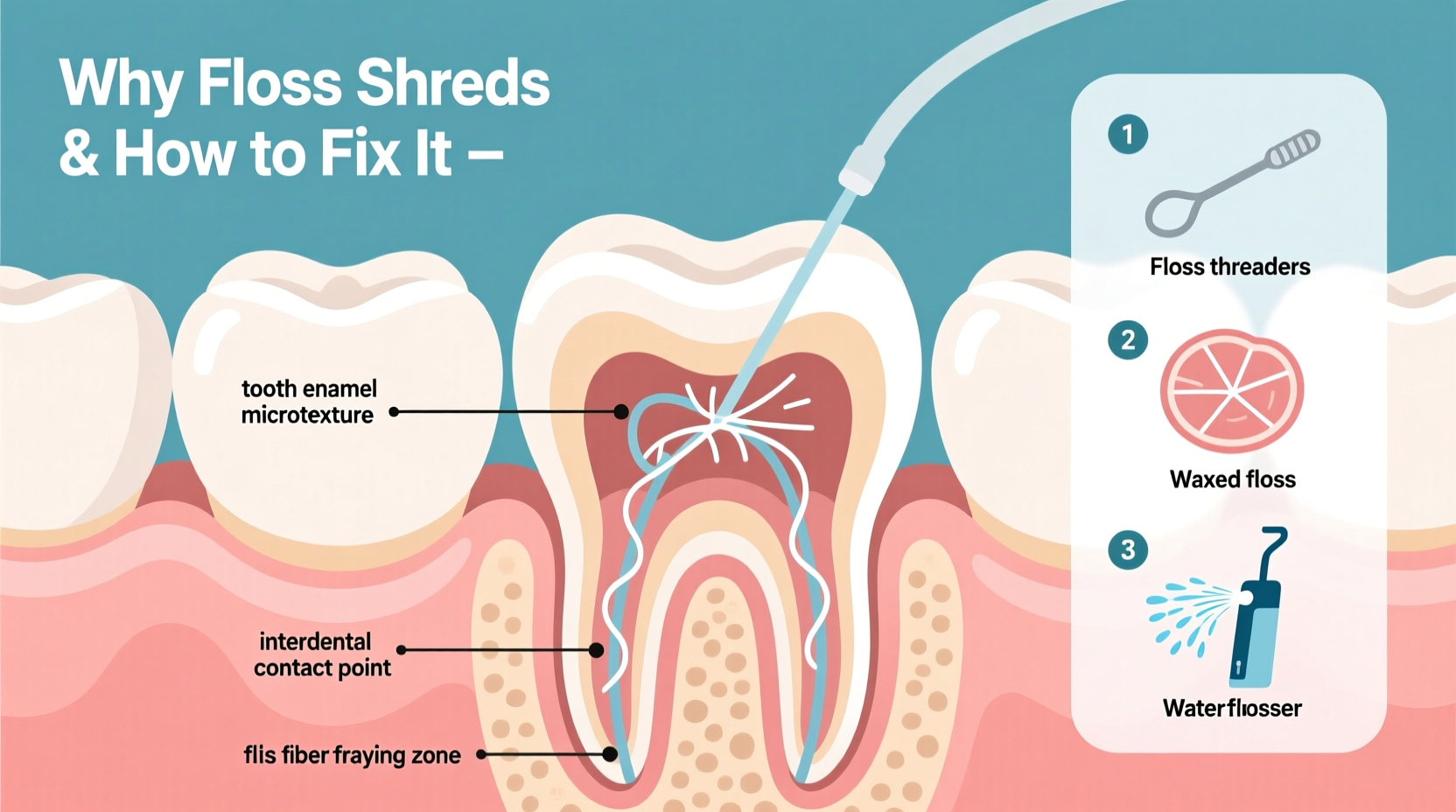
Floss doesn’t just disintegrate on its own. When it repeatedly shreds between specific teeth, there’s almost always a physical reason. Identifying the root cause is essential before selecting a solution.
- Rough edges on dental restorations: Fillings, crowns, or bridges with uneven margins can act like tiny blades, slicing through floss during use.
- Natural tooth anatomy: Some individuals have teeth that are naturally closer together due to genetics or alignment, creating high-friction zones.
- Food debris buildup: Hardened particles lodged between teeth can create abrasive surfaces that damage floss fibers.
- Worn or defective dental work: Over time, fillings may crack or pull away from the tooth edge, forming micro-gaps with sharp ridges.
- Poor floss quality: Thin, low-grade floss made from inferior materials tends to fray more easily under pressure.
- Incorrect flossing technique: Using a sawing motion instead of a gentle glide increases friction and stress on the floss strand.
In some cases, chronic shredding may indicate early signs of interproximal decay—the type that develops between teeth and isn't visible during casual inspection. If left unchecked, these cavities erode enamel and create jagged openings that catch floss threads.
Solutions for Tight Contact Areas
Tight spaces between teeth don’t have to mean painful flossing or compromised hygiene. With targeted strategies and appropriate tools, you can maintain effective cleaning without damaging your floss—or your gums.
Choose the Right Type of Floss
Not all flosses are created equal. Standard nylon floss, while common, is prone to breaking when encountering resistance. Switching to a stronger, smoother alternative often resolves the issue immediately.
| Type of Floss | Best For | Why It Helps Prevent Shredding |
|---|---|---|
| PTFE (Glide-type) floss | Tight contacts, sensitive gums | Slippery fluoropolymer coating reduces friction and resists shredding. |
| Waxed floss | Narrow gaps, moderate tightness | Wax allows easier gliding; less likely to catch than unwaxed varieties. |
| Expanded PTFE (superfloss) | Bridges, implants, braces | Stiff end threader helps navigate complex areas without snagging. |
| Floss picks with reinforced strands | Dexterity limitations, hard-to-reach molars | Preshread design avoids manual threading, reducing tension-related breakage. |
Use Proper Flossing Technique
The way you floss matters as much as the product you use. Aggressive back-and-forth sawing motions increase wear and tear on both floss and gum tissue. Instead, adopt a controlled C-shape method recommended by dental professionals.
- Cut about 18 inches of floss and wind most around one middle finger, leaving 1–2 inches taut between hands.
- Gently guide the floss between teeth using a zigzag motion—never force it straight down.
- Once below the contact point, curve the floss into a C against one tooth and move up and down along the side.
- Repeat on the adjacent tooth before moving to the next gap.
This approach minimizes lateral pressure and ensures thorough cleaning without unnecessary strain on the floss.
When Home Fixes Aren’t Enough: Seeing Your Dentist
If changing your floss type and improving technique doesn’t resolve the issue, the cause may be clinical rather than behavioral. Persistent shredding in one area could reflect an undiagnosed structural flaw in your mouth.
“Recurrent floss breakage is a red flag we take seriously. It often points to marginal discrepancies in restorations or incipient decay hidden beneath the surface.” — Dr. Alan Zhou, Restorative Dentistry Specialist
A dentist can examine the affected area using tactile probes and bitewing X-rays to detect problems invisible to the naked eye. Common findings include:
- Overhanging filling material creating a shelf-like edge
- Microleakage around crown margins allowing bacterial infiltration
- Interproximal caries beginning just below the contact point
- Tooth wear patterns causing abnormal occlusion and pressure distribution
In such cases, corrective treatment might involve polishing rough edges, replacing defective restorations, or restoring early cavities. These interventions not only eliminate floss shredding but also prevent future complications like deep decay or periodontal pockets.
Step-by-Step Guide to Diagnose and Fix Floss Shredding
Follow this systematic plan to determine the source of the problem and apply lasting solutions.
- Observe the pattern: Note which teeth consistently cause shredding. Is it isolated to one side? One tooth pair?
- Switch floss types: Try switching from regular nylon to waxed or PTFE floss for one week. Track improvements.
- Inspect visually: Use a mirror and good lighting to look for visible irregularities—dark lines, shadows, or chipped edges near the gumline. <4> Test with different tools: Experiment with floss picks, water flossers, or interdental brushes to see if alternative methods reduce breakage.
- Assess technique: Record yourself flossing (if possible) or ask your hygienist to evaluate your form during a cleaning.
- Schedule a checkup: If no improvement after two weeks, book a dental visit focused on evaluating contact points and restoration integrity.
This timeline allows you to rule out simple fixes before escalating to professional care—saving time and money while ensuring accuracy.
Alternative Cleaning Tools for Problematic Areas
Floss isn’t the only option for cleaning between teeth. For those with chronically tight contacts or dental work, adjunctive tools offer efficient alternatives.
- Interdental brushes: Small cone-shaped brushes designed to fit between teeth. Ideal for larger gaps or around orthodontic hardware.
- Water flossers: Devices like Waterpik use pulsating water streams to flush out debris. Clinically proven to reduce gingivitis and reach areas traditional floss struggles with.
- Soft picks: Rubberized, flexible picks that conform to tooth contours. Less likely to shred since they aren’t fibrous.
- Electric flossers: Motorized units that guide floss automatically, reducing user error and excessive force.
These tools shouldn’t replace floss entirely unless advised by a dentist, but they can complement your routine, especially in stubborn zones.
Mini Case Study: Resolving Chronic Floss Breakage
Sarah, a 38-year-old teacher, noticed her floss kept tearing between her lower molars. She tried multiple brands and even switched to floss picks, but the problem persisted in the same location. Concerned, she mentioned it during her six-month cleaning.
Her hygienist used an explorer to test the margin of a 10-year-old silver filling and detected a slight overhang. A bitewing X-ray confirmed microleakage and early secondary decay underneath. The dentist smoothed the edge and replaced the filling with a bonded composite restoration.
After the procedure, Sarah reported immediate improvement. Her floss now glided smoothly, and she experienced less gum irritation. More importantly, catching the decay early prevented the need for a root canal or crown.
This case illustrates how a seemingly minor annoyance—a shredded floss strand—can reveal significant underlying conditions when investigated properly.
FAQ
Can floss shredding lead to cavities?
Indirectly, yes. If floss breaks frequently, you may avoid cleaning that area altogether, allowing plaque to accumulate. Over time, this increases the risk of interproximal decay—cavities between teeth.
Is it normal for new fillings to cause floss shredding?
No. While mild tightness may occur initially as teeth adjust, any sharp edge or persistent shredding should be evaluated. A well-finished restoration should allow smooth floss passage within a few days.
Should I stop flossing if it keeps breaking?
No—avoiding flossing worsens oral health. Instead, switch to a more durable floss type or try alternative tools like interdental brushes until you can consult your dentist.
Checklist: Stop Floss Shredding in 7 Steps
- ☑ Identify the exact tooth location where floss breaks
- ☑ Upgrade to waxed or PTFE floss for smoother gliding
- ☑ Apply proper C-shape flossing technique—no sawing
- ☑ Test interdental brushes or water flossers for tough spots
- ☑ Visually inspect teeth for dark lines or rough edges
- ☑ Schedule a dental exam if the issue persists beyond two weeks
- ☑ Follow up on any recommended polishing or restoration adjustments
Conclusion
Floss shredding between teeth isn’t just a nuisance—it’s a signal. Whether caused by suboptimal technique, inferior materials, or underlying dental flaws, ignoring it compromises your long-term oral health. By understanding the mechanics behind tight contact areas and applying targeted solutions, you regain control over your hygiene routine.
Start today: assess your current flossing habits, experiment with better tools, and listen to what your mouth is telling you. If one spot keeps tearing your floss, don’t dismiss it. Address it proactively. Your teeth, gums, and future self will thank you.




 浙公网安备
33010002000092号
浙公网安备
33010002000092号 浙B2-20120091-4
Comments
No comments yet. Why don't you start the discussion?