
Every holiday season, the frustration is familiar: you plug in your string of Christmas lights, only to find that half the strand remains stubbornly dark. It’s not magic — it’s electricity. The reason behind this common issue lies in how the lights are wired: either in series or in parallel. Understanding the difference between these two circuit types is key to diagnosing and fixing partial failures in your light strands.
While modern LED strings have improved reliability, many traditional incandescent sets still use series wiring, making them vulnerable to single-point failures. A single burnt-out bulb can break the circuit and plunge an entire section into darkness. This article breaks down the science, offers practical troubleshooting steps, and explains how to prevent future issues — all without requiring an engineering degree.
How Series Circuits Work (And Why Half the Strand Fails)
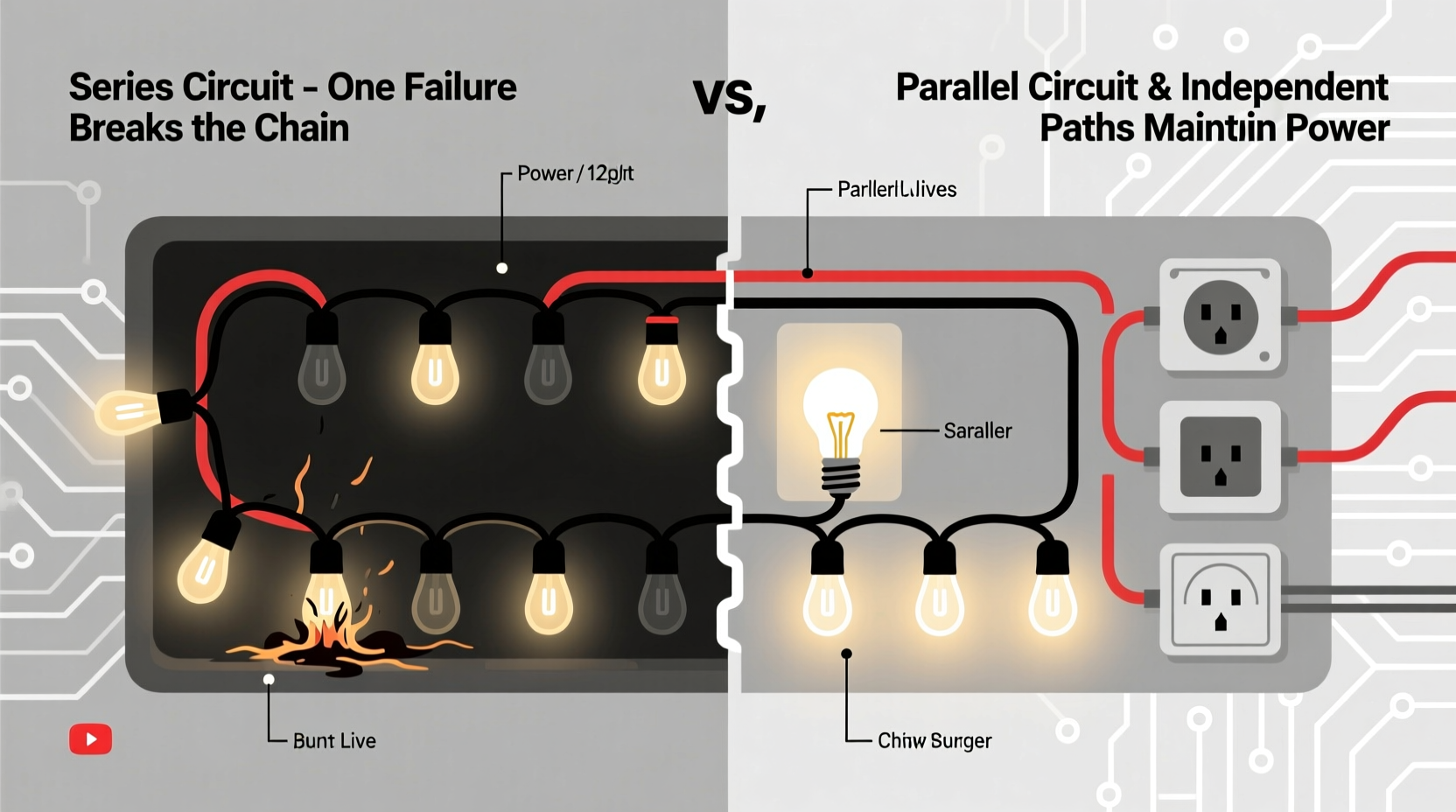
In a series circuit, electrical current flows through each bulb one after another in a single continuous path. If any part of that path is interrupted — by a loose bulb, broken filament, or damaged socket — the entire circuit stops working downstream from the break.
This is why so many older Christmas light strands go dark halfway through. The strand is divided into two or more sections, each wired in series. When one bulb fails in a section, that entire segment shuts off while the rest may remain lit.
The design choice comes down to cost and simplicity. Series circuits require less wiring and fewer components, making them cheaper to manufacture. However, they come with a significant trade-off: vulnerability. One weak link collapses the chain.
“Series-wired lights were standard for decades because they were economical, but their fragility became a notorious downside during the holidays.” — Dr. Alan Reeves, Electrical Systems Educator
Parallel Circuits: The Reliable Alternative
In contrast, parallel circuits provide each bulb with its own independent connection to the power source. If one bulb burns out, the others continue shining unaffected. This is the same principle used in household lighting — when one lamp fails, the rest stay on.
Modern LED Christmas light strings increasingly use parallel or shunted wiring designs to improve reliability. Some combine both approaches: grouping several LEDs in small series clusters, then wiring those clusters in parallel. This hybrid model balances efficiency with fault tolerance.
The advantage is clear: fewer cascading failures. But even parallel systems aren’t immune to problems. Issues like damaged wires, faulty plugs, or power surges can still affect entire strands, though total failure is less common.
Troubleshooting Step-by-Step: Fixing a Partially Lit Strand
When half your Christmas light strand won't light up, follow this systematic approach to identify and resolve the issue efficiently.
- Unplug the strand immediately — safety first. Never handle electrical components while powered.
- Inspect visually — look for obvious signs: cracked bulbs, frayed wires, bent sockets, or loose connections.
- Check the fuse compartment — most strands have fuses inside the plug. Use a multimeter or visual inspection (if transparent) to test continuity.
- Identify the affected section — determine whether the dark portion starts at a specific point. This helps isolate the problem zone.
- Test each bulb in the dead section — remove bulbs one by one and check for darkened filaments or broken glass. Replace suspect bulbs with known-good spares.
- Use a light tester tool — specialized tools like the \"LightKeeper Pro\" can send pulses to bypass shunt failures and restore continuity.
- Examine wire integrity — run fingers along the wire for kinks, cuts, or soft spots that indicate internal damage.
- Reconnect and test — after repairs, plug in the strand away from flammable materials and observe behavior.
If the problem persists despite replacing bulbs, the issue may be deeper — such as a broken conductor inside the wire or a failed shunt mechanism within a socket.
Do’s and Don’ts of Christmas Light Maintenance
| Do | Don’t |
|---|---|
| Store lights coiled loosely around a cardboard reel or spool | Wrap tightly around sharp objects or staple wires to surfaces |
| Label strands by location and color for easy setup next year | Mix different voltage or wattage types on the same extension run |
| Test each strand before decorating | Leave lights unattended or on overnight |
| Use weatherproof connectors for outdoor setups | Plug more than three strands end-to-end unless rated for it |
| Clean gently with a dry cloth before storage | Submerge electrical components in water or cleaning solutions |
Real-World Example: The Living Room Wreath That Wouldn’t Shine
Sarah had a favorite pre-lit wreath she used every December. Last year, upon unpacking, she noticed only the top half lit up. She followed online advice, replacing every visible bulb in the dark section with no success. Frustrated, she nearly discarded it — until her neighbor suggested checking the shunts.
Many modern bulbs include a “shunt” — a tiny wire designed to activate when the filament burns out, maintaining circuit continuity. But sometimes, the shunt fails to engage due to corrosion or manufacturing defect.
Sarah used a multimeter to test continuity across each socket in the dark half. She found one socket showing infinite resistance. After carefully removing the bulb, she saw the shunt was intact but not making contact. Using needle-nose pliers, she gently pressed the shunt into place. When reassembled and tested, the entire wreath lit up perfectly.
This case illustrates that not all failures are obvious. Sometimes, the fix requires patience and a closer look at internal components rather than just swapping bulbs.
Advanced Tip: Identifying Shunted vs. Non-Shunted Bulbs
Not all replacement bulbs are compatible with your strand’s design. Using the wrong type can lead to incomplete circuits or premature burnout.
- Shunted sockets have connected contacts at the base, allowing current to jump if the filament fails. These require bulbs with insulating bases.
- Non-shunted sockets rely solely on the bulb’s filament to complete the circuit. They need conductive-based bulbs.
To avoid mismatched parts, always bring an old bulb to the store when buying replacements. Look for packaging labeled “shunt-compatible” or “series replacement.” Mismatching can render even new bulbs ineffective.
Prevention Checklist: Extend the Life of Your Lights
Follow this checklist annually to minimize failures and maximize performance:
- ✅ Test all strands before storing the off-season
- ✅ Replace any flickering or dim bulbs immediately
- ✅ Store in a climate-controlled area to prevent plastic brittleness
- ✅ Keep away from pets and rodents — they chew wires
- ✅ Use surge protectors instead of direct wall outlets
- ✅ Avoid daisy-chaining more than manufacturer recommends
- ✅ Label spare bulbs and keep them with the lights
- ✅ Clean dust from sockets and plugs before use
Proactive maintenance reduces emergency fixes during busy holiday prep. A few minutes of care now can prevent disappointment later.
Frequently Asked Questions
Can I convert a series-wired strand to parallel?
No — rewiring a commercial light strand from series to parallel is impractical and unsafe. It would require completely disassembling the strand, adding additional wiring paths, and ensuring proper voltage distribution. Instead, consider upgrading to a modern LED set designed with parallel or segmented circuitry.
Why do some strands have three wires?
Three-wire strands often use a combination of series and parallel configurations. Two wires carry the main circuit, while the third acts as a common return or enables dual-circuit operation (e.g., steady vs. flashing modes). In multi-function strings, the extra wire allows independent control of different light patterns without affecting overall continuity.
Is it worth repairing old light strands?
It depends. If the strand is inexpensive and frequently failing, replacement may be more cost-effective. However, for specialty items like pre-lit trees, vintage decorations, or custom arrangements, repair makes sense. Consider sentimental value, availability, and safety. Frayed insulation or melted sockets are red flags — retire those units.
Expert Insight: The Future of Holiday Lighting
Advancements in LED technology and smart circuitry are transforming holiday lighting. Many new products feature built-in diagnostics, automatic shunting, and even Wi-Fi connectivity to report faults via smartphone apps.
“Within five years, we’ll see widespread adoption of self-diagnosing light strings that notify users of failing segments before they go dark.” — Lena Park, Smart Home Product Designer
These innovations reduce troubleshooting time and enhance user experience. Still, basic electrical principles remain essential knowledge — especially when dealing with legacy systems or budget-friendly options that dominate retail shelves.
Final Thoughts and Action Plan
Half-lit Christmas lights are more than a seasonal annoyance — they’re a lesson in basic electronics. Whether your strand uses series, parallel, or hybrid wiring, understanding the underlying structure empowers you to fix problems quickly and confidently.
Start by identifying which sections fail and inspecting for simple causes: blown bulbs, loose connections, or tripped fuses. Use proper tools, follow safety protocols, and maintain your lights diligently. Upgrade aging strands when necessary, prioritizing durability and safety over initial cost.
The holidays should be joyful, not spent chasing electrical gremlins. With the right knowledge and preparation, you can spend less time troubleshooting and more time enjoying the glow.




 浙公网安备
33010002000092号
浙公网安备
33010002000092号 浙B2-20120091-4
Comments
No comments yet. Why don't you start the discussion?