
If you've ever plugged in a string of holiday lights only to find that half the strand remains dark, you're not alone. This common frustration stems from the way most traditional light strings are wired—specifically, whether they use a series or parallel circuit design. Understanding the difference between these two electrical configurations isn't just useful for fixing broken lights; it's essential for making informed choices when purchasing new ones. The behavior of a single failed bulb can either take down an entire section or leave the rest glowing brightly, depending on the circuit type. By learning how electricity flows through your light strands, you gain the power to diagnose issues quickly and extend the life of your decorations.
How Series Circuits Work in Light Strands
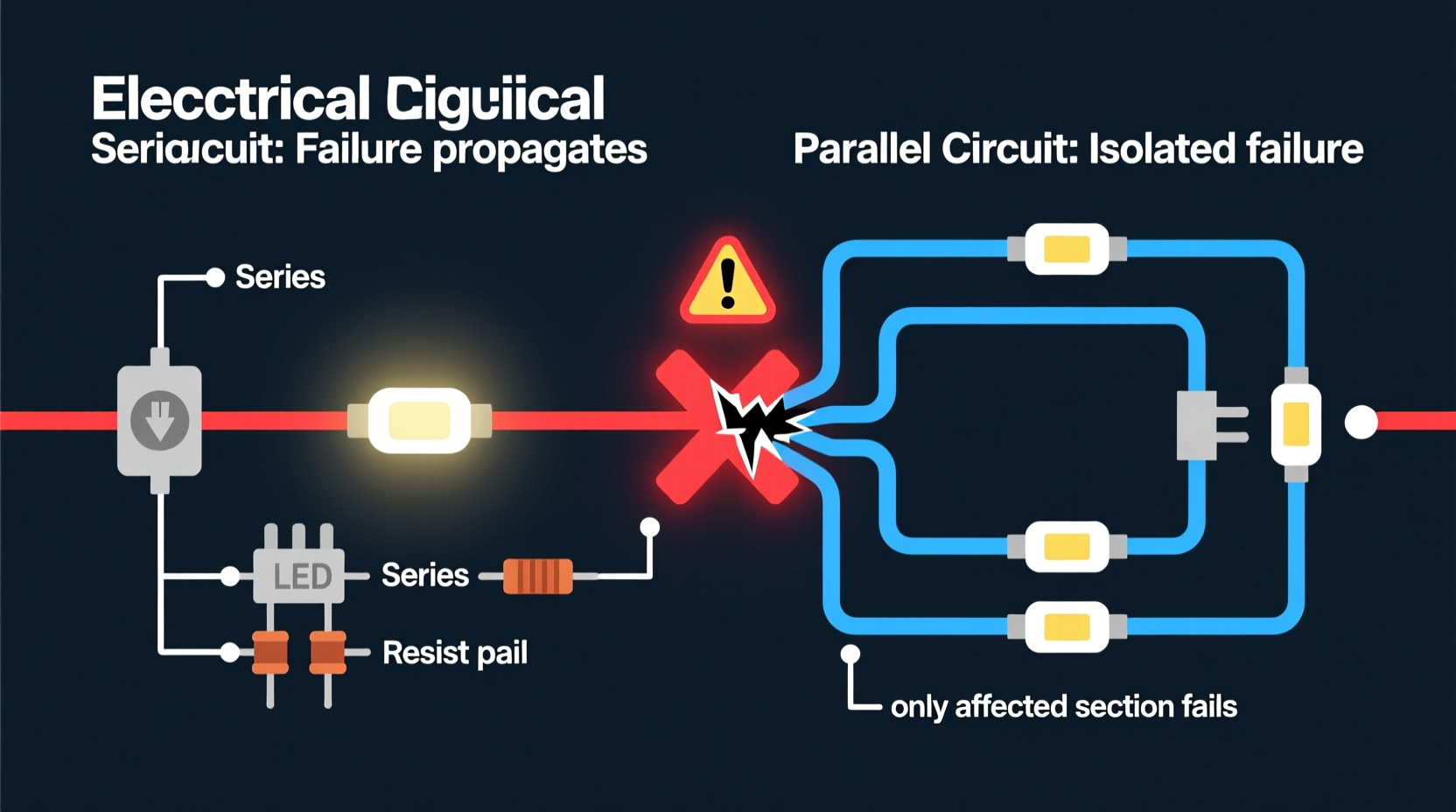
In a series circuit, each bulb is connected in a single continuous path. Electricity must flow through one bulb to reach the next, like a relay race where the baton must be passed perfectly at every handoff. If one bulb burns out, becomes loose, or is removed, the circuit breaks—stopping the flow of electricity to all bulbs downstream. This is why entire sections or even full strands often go dark with just one faulty bulb.
Many older and budget-friendly Christmas light sets use this configuration because it’s simpler and cheaper to manufacture. However, the trade-off is reliability. A strand with 50 bulbs wired in series has 50 potential points of failure. Even a slightly misaligned bulb in its socket can interrupt the current.
Some modern series-wired strands include shunt wires inside each bulb. These tiny bypass conductors activate when a filament fails, allowing current to continue flowing to the remaining bulbs. While this improves performance, it doesn’t eliminate all problems. Shunts can fail too, especially after repeated use or exposure to moisture.
Parallel Circuits: Why They’re More Reliable
In contrast, parallel circuits provide each bulb with its own independent path to the power source. Think of it like multiple lanes on a highway—closing one lane doesn’t stop traffic in the others. If a single bulb burns out in a parallel setup, the rest stay lit. This makes parallel-wired strands far more reliable and easier to maintain.
High-end decorative lighting, such as commercial-grade displays or LED rope lights, often uses parallel wiring or a hybrid approach. In many cases, what appears to be a single long strand is actually several shorter parallel segments powered along a common cord. This explains why sometimes only half the strand goes out: you're likely dealing with two separate circuits within one string.
The downside? Parallel circuits require more wire and complex construction, which increases manufacturing costs. As a result, they’re less common in mass-market holiday lights. But for those who value longevity and low maintenance, they’re worth the investment.
“Most consumer light strings labeled 'mini-lights' are series-wired. If half go out, it’s usually a break in the loop. Parallel designs are more resilient but pricier.” — Alan Reeves, Electrical Technician & Holiday Lighting Installer
Diagnosing a Half-Out Light Strand: Step-by-Step Guide
When half your light strand fails, follow this systematic process to identify and resolve the issue efficiently.
- Unplug the strand immediately. Safety first—never handle damaged lights while powered.
- Determine if it’s truly half out. Trace the lit and unlit sections. Are exactly 50% dark, or is it a pattern (e.g., every other bulb)? Symmetry often indicates a split circuit.
- Inspect for visible damage. Look for cracked bulbs, frayed wires, or bent plug pins. Also check the male and female ends for corrosion or debris.
- Check the fuses. Most light strands have small replaceable fuses in the plug. Use a fuse tester or swap in a known-good fuse. Many “dead” strands are simply blown fuses.
- Examine each bulb in the dark section. Remove them one by one and look for blackening, broken filaments, or loose bases. Reinsert firmly—even slight looseness can break a series circuit.
- Test with a known-working bulb. Replace suspect bulbs with spares from the spare pack. If the section lights up, you’ve found the problem.
- Use a circuit tester or voltage detector. Advanced users can trace live voltage along the wire to pinpoint where current stops.
- Check for severed internal wires. If no bulb or fuse issue is found, gently flex the wire near the halfway point. A break inside the insulation may intermittently restore contact.
This methodical approach saves time and reduces unnecessary replacements. Most half-out strands are fixable with basic tools and patience.
Series vs Parallel: Key Differences at a Glance
| Feature | Series Circuit | Parallel Circuit |
|---|---|---|
| Current Path | Single path through all bulbs | Multiple independent paths |
| Bulb Failure Impact | Can darken entire section | Only the failed bulb goes out |
| Voltage per Bulb | Divided (e.g., 2.5V for 50 bulbs on 120V) | Full line voltage (with regulation) |
| Cost | Lower | Higher |
| Common Use | Budget Christmas lights | Premium/LED strips, commercial displays |
| Troubleshooting Difficulty | High—requires bulb-by-bulb check | Low—failures are isolated |
This comparison highlights why understanding your strand’s design matters. If you frequently deal with outages, upgrading to parallel-based or LED modular systems may save time and hassle in the long run.
Real-World Example: Fixing a Problematic Porch Display
Jamie had a 100-light red mini-string that consistently went half-dark every season. Each year, she’d spend hours pulling out bulbs, testing them, and reseating them—only for the same issue to return weeks later. Frustrated, she brought the strand to a local hardware store with a light-testing station.
The technician discovered two issues: first, the strand was divided into two 50-bulb series circuits, and one side had a blown fuse. Second, three bulbs in the dark half were slightly loose, preventing the shunt from activating properly. After replacing the fuse and securing the bulbs, the strand worked—but the tech advised Jamie to consider switching to a parallel-wired LED alternative.
She did. The new strand cost more upfront but has operated flawlessly for three seasons without maintenance. Her annual troubleshooting ritual became a thing of the past. This case illustrates how recurring issues often point to underlying design limitations, not user error.
Prevention and Maintenance Tips
Extending the life of your light strands starts with smart usage and storage habits. Follow these tips to minimize future failures.
- Always unplug lights when not in use or during storms.
- Store strands coiled loosely around a cardboard reel—never yank or crush them into tight boxes.
- Keep lights dry. Moisture accelerates corrosion in sockets and wires.
- Use a surge protector when plugging in multiple strands.
- Label replacement fuses and keep spares with your decorations.
- Inspect strands before and after each season for early signs of wear.
Frequently Asked Questions
Why do only half my Christmas lights work?
This typically happens because the strand is divided into two series circuits. A single fault—a blown fuse, loose bulb, or broken wire—in one half will disable that section while the other remains lit. It’s a design feature, not a defect.
Can I convert a series strand to parallel?
Not practically. Rewiring a series strand into parallel would require completely reconstructing the circuit, replacing sockets, and recalculating voltage loads. It’s safer and more cost-effective to purchase a purpose-built parallel strand.
Do LED light strands use series or parallel circuits?
Many LED strands use a hybrid approach. Some are wired in short series groups (e.g., 3 LEDs in series) that are then connected in parallel. This balances efficiency, brightness, and reliability. High-quality LED strings often include built-in resistors and protection circuits to prevent cascading failures.
Final Checklist: Troubleshooting Half-Out Light Strands
Use this checklist the next time part of your light string fails:
- ✅ Unplug the strand
- ✅ Check for physical damage (cracks, cuts, corrosion)
- ✅ Locate and inspect the fuses in the plug
- ✅ Examine each bulb in the dark section for looseness or burn marks
- ✅ Test or replace suspect bulbs with known-working ones
- ✅ Plug in briefly to test after each change
- ✅ If still not working, check for internal wire breaks near the midpoint
- ✅ Consider retiring old strands prone to repeated issues
Following these steps ensures you don’t overlook simple fixes while avoiding unnecessary replacements.
Conclusion: Take Control of Your Lighting Setup
Half-out light strands aren’t magic—they’re physics. Whether your lights are wired in series or parallel determines how they respond to failure. While series circuits dominate the market due to cost, their vulnerability to single-point failures leads to predictable frustrations. By applying the right troubleshooting techniques and upgrading strategically, you can reduce seasonal headaches and enjoy brighter, more reliable displays.




 浙公网安备
33010002000092号
浙公网安备
33010002000092号 浙B2-20120091-4
Comments
No comments yet. Why don't you start the discussion?