
It’s a familiar holiday frustration: you plug in your string of Christmas lights, and only half of them illuminate. The rest remain stubbornly dark, ruining the festive glow you were hoping to create. While it might seem like the entire strand is faulty, this issue is actually very common—and usually fixable. For many modern light strings, especially mini-lights wired in series, losing half the strand doesn’t mean the whole set is done for. With a few simple tools and some patience, you can often restore full brightness without buying a replacement.
This guide walks through why half a strand goes dark, how to identify the root cause, and what you can do to fix it—no electrician required. Whether you're dealing with indoor or outdoor lights, older sets or newer LED models, these practical steps will help you troubleshoot efficiently and safely.
Understanding How Christmas Light Strands Work
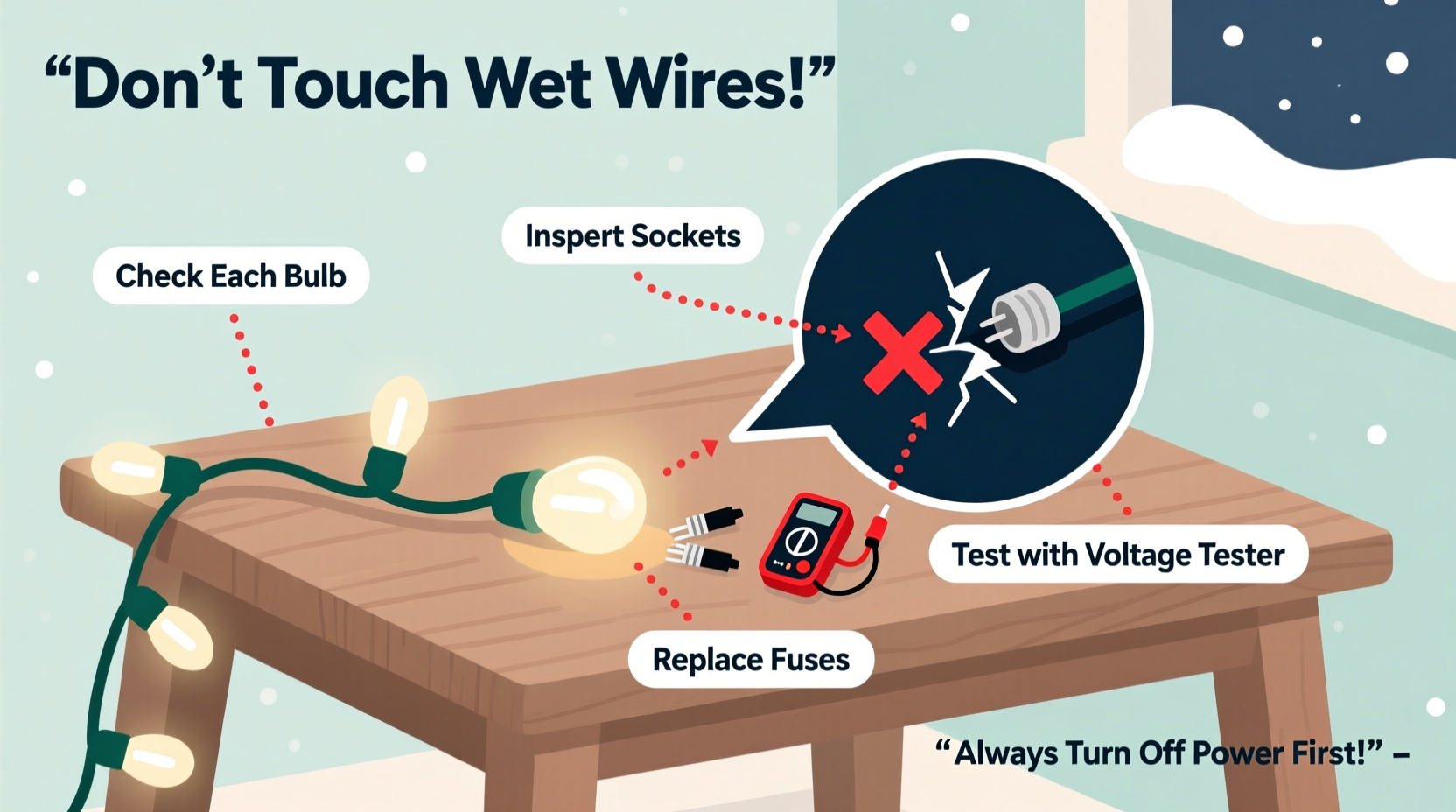
Most traditional incandescent Christmas light strands are wired in a **series circuit**. This means electricity flows from one bulb to the next in a single path. If one bulb burns out or becomes loose, the circuit breaks, and power stops flowing to all bulbs downstream. However, many modern strands are designed with a clever workaround: each bulb has a small shunt—a tiny wire coated in insulating material—that activates when the filament fails.
When a bulb burns out, the increased voltage across that socket melts the coating on the shunt, allowing current to bypass the dead bulb and keep the rest lit. But if multiple bulbs fail, or if the shunt doesn’t activate properly (common in older or low-quality sets), the entire second half of the strand may go dark.
LED strands operate differently. They typically use lower voltage and may be wired in a combination of series and parallel circuits. Still, they’re not immune to partial failures. A damaged section, faulty connector, or defective controller chip can cause half the strand to stop working.
Common Causes of Half-Lit Light Strands
Before diving into repairs, it helps to know what you’re up against. Here are the most frequent reasons why only half your Christmas lights work:
- A single faulty bulb: Even one dead or loose bulb can break the circuit, especially if its shunt fails to activate.
- Loose bulb connections: Vibration during storage or improper seating can disconnect a bulb from its socket.
- Damaged wires or insulation: Cracked or pinched wires—especially near plugs or connectors—can interrupt current flow.
- Bad shunts: In older strands, shunts may not engage due to corrosion or manufacturing defects.
- Split-circuit design failure: Some strands are split into two independent circuits; a fault in one half won't affect the other—but a broken connection at the midpoint can.
- Defective fuse or plug: Though rare, internal damage to the plug or blown fuses can result in partial operation.
Identifying which of these applies to your situation determines your next move.
Step-by-Step Troubleshooting Guide
Follow this systematic approach to diagnose and repair your half-dark light strand. Most issues can be resolved in under 30 minutes with basic tools.
- Unplug the lights and inspect visually. Look for obvious signs of damage: cracked bulbs, frayed wires, discolored sockets, or bent metal contacts inside the bulb holders.
- Check the fuses (if applicable). Many plug ends have a small compartment containing two fuses. Use a spare fuse or test with a multimeter. Replace if blown. Note: A blown fuse usually kills the entire strand, but partial failure could indicate an overloaded circuit.
- Test each bulb in the dark half. Starting near the first non-working bulb, remove and reseat each one firmly. Sometimes, simply jostling a bulb back into place restores contact.
- Use a light tester or multimeter. A non-contact voltage tester or specialized Christmas light tester (like the \"LightKeeper Pro\") can send a pulse through the strand to clear shunt failures or detect open circuits.
- Replace suspect bulbs. Swap out any bulbs that look darkened, rattling (indicating broken filament), or corroded. Use exact replacements—mixing voltages or wattages can worsen the problem.
- Inspect the midsection connector. On split strands, there's often a connecting point halfway through. Ensure it’s fully seated and dry. Clean any corrosion with rubbing alcohol and a cotton swab.
- Check continuity in wiring. If no bulbs appear faulty, use a multimeter to test for continuity between sections. A break in the wire requires splicing or retirement of the strand.
If the strand still doesn’t work after these steps, consider whether it’s worth repairing versus replacing—especially if it’s more than five years old.
Tips and Tools That Make a Difference
Having the right supplies on hand turns a frustrating night into a quick fix. Keep these items in your holiday toolkit:
| Tool/Item | Purpose | Recommended? |
|---|---|---|
| Extra bulbs (same type) | Immediate replacement for dead ones | Yes – always keep a pack |
| Christmas light tester | Bypasses shunts and detects open circuits | Highly recommended |
| Multimeter | Tests voltage, continuity, and resistance | Yes, for advanced users |
| Needle-nose pliers | Removes stubborn bulbs safely | Yes |
| Rubbing alcohol & cotton swabs | Cleans corroded sockets and connectors | Yes |
Real Example: Fixing a 50-Bulb Mini-Light Strand
Sarah had a favorite white mini-light strand she used every year on her mantel. Last season, only the first 25 bulbs lit up. She followed a methodical process:
First, she unplugged the strand and checked the fuses—both were intact. Then, she inspected each bulb in the dark half. One near the middle looked slightly darker than the others. She removed it and noticed the filament was broken. After inserting a new bulb, the rest still didn’t light.
Next, she used a LightKeeper Pro tool, pressing the trigger over each socket starting from the first dark one. On the third try, there was a faint pop—and suddenly, the entire second half illuminated. The tool had cleared a failed shunt that wasn’t conducting electricity.
Sarah saved her $12 strand with less than 15 minutes of effort. “I almost threw them away,” she said. “Now I check all my old strings before buying new ones.”
“Over 80% of partially dark light strands can be repaired by addressing just one or two bad bulbs or shunts.” — Greg Thompson, Holiday Lighting Technician with 15+ years of experience
Prevention: Extending the Life of Your Lights
Once you’ve fixed your lights, take steps to prevent future issues. Proper care significantly reduces the chances of mid-strand failures.
Storage Tips
- Wrap lights around a cardboard reel or plastic spool to avoid tangling and wire stress.
- Store in a cool, dry place—avoid attics or damp basements where temperature swings and humidity accelerate wear.
- Keep lights in breathable containers (cloth bags or vented bins), not sealed plastic, to prevent condensation.
Handling During Installation
- Avoid yanking or stretching the strand when unwrapping.
- Don’t staple or nail through wires. Use insulated clips designed for outdoor lighting.
- Plug lights into a surge protector, especially outdoors, to guard against voltage spikes.
Frequently Asked Questions
Can I mix different brands or types of bulbs in the same strand?
No. Mixing bulb types—even if they fit physically—can disrupt voltage distribution and lead to premature burnout or uneven brightness. Always use manufacturer-recommended replacements.
Why do only the lights after a certain point go out?
This indicates a break in the circuit at or near that location. It could be a missing/bad bulb, failed shunt, or wire damage. The fault blocks electricity from reaching downstream bulbs.
Are LED Christmas lights less prone to this issue?
Generally, yes. LEDs last longer and draw less power, reducing heat stress. Many are also wired in parallel segments, so one failure doesn’t kill half the strand. However, cheap LED sets can still suffer from poor solder joints or driver failures that mimic partial outages.
Checklist: Quick-Fix Routine for Half-Dark Lights
Print or save this checklist for fast reference during your next holiday setup:
- ☐ Unplug the light strand
- ☐ Visually inspect for damaged bulbs, wires, or connectors
- ☐ Check and replace fuses if needed
- ☐ Reseat all bulbs in the dark section
- ☐ Replace any visibly burnt-out bulbs
- ☰ Use a light tester to clear shunt failures
- ☐ Examine midpoint connector for tightness and corrosion
- ☐ Test the repaired strand before installation
- ☐ Store properly after the season ends
Conclusion: Don’t Toss It—Fix It
Half-dark Christmas lights are a common seasonal annoyance, but they rarely mean the end of the strand. With a clear understanding of how series circuits work and a few essential tools, most people can restore full function in minutes. The key is patience and a logical approach: inspect, test, replace, and verify.
By mastering basic troubleshooting now, you’ll save money, reduce waste, and enjoy more reliable displays year after year. And remember—many holiday lighting problems are shared by thousands of others. You’re not alone, and you don’t need to start over.




 浙公网安备
33010002000092号
浙公网安备
33010002000092号 浙B2-20120091-4
Comments
No comments yet. Why don't you start the discussion?