
There’s nothing more frustrating during the holiday season than plugging in your favorite string of Christmas lights only to find that half of them are dark. You check the outlet, confirm power is flowing, and still—only a portion of the bulbs glow. This issue is more common than you might think, especially with older incandescent mini-light strings. The root causes range from simple bulb failures to design flaws inherent in how these lights are wired. Understanding why this happens not only helps you fix the problem quickly but also prevents it in future seasons.
How Christmas Light Strings Are Wired
The behavior of your lights—especially when half go out—largely depends on their wiring configuration. Most traditional mini Christmas light strings use a **series circuit**, meaning electricity flows through each bulb in sequence before returning to the power source. If one bulb fails or becomes loose, it breaks the entire circuit downstream, causing all subsequent bulbs to go dark.
In many modern strings, manufacturers split the series into two parallel circuits within the same strand. This means the string has two separate loops of lights. When one loop fails due to a single faulty bulb, the other loop remains lit—giving the appearance of “half the string” being out.
This design improves reliability compared to a single long series, but it doesn’t eliminate failure points. Each loop is still vulnerable to individual bulb issues.
Common Causes of Half-Lit Light Strings
Several specific problems can lead to partial illumination. Identifying which one applies to your situation will determine how you fix it.
1. A Single Burned-Out Bulb
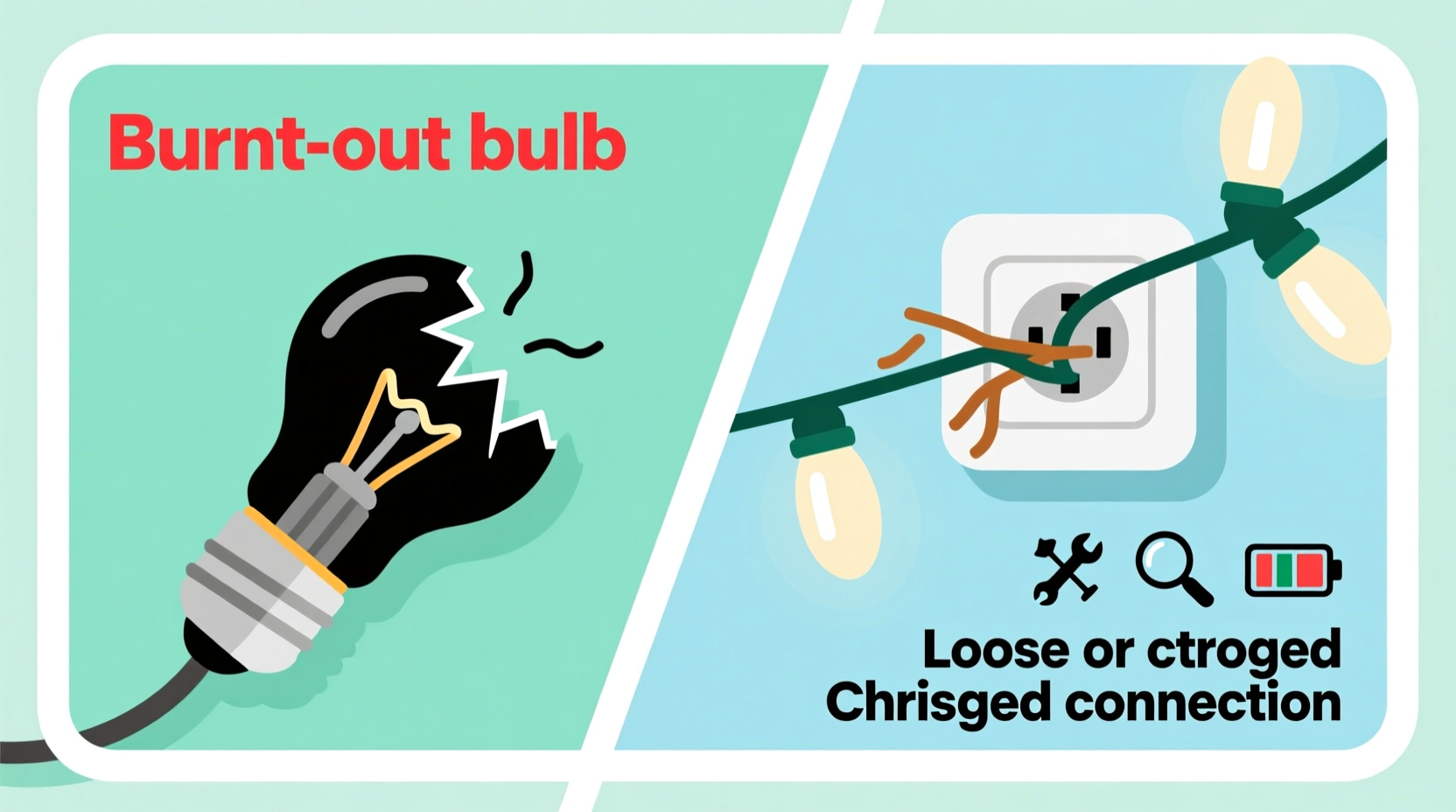
In a series circuit, one dead bulb interrupts the flow of electricity to all bulbs after it. Even though the rest of the bulbs are functional, they receive no power. Many light sets include shunt wires inside the bulb socket designed to bypass a failed filament, but these don’t always work—especially if the bulb burns out violently or corrodes over time.
2. Loose or Poorly Seated Bulb
If a bulb isn’t fully inserted into its socket, it creates an open circuit. The contact points fail to connect properly, stopping the current. This often happens during storage or installation when lights are handled roughly. Wiggling each bulb gently can sometimes restore the connection temporarily, but a permanent fix requires securing the bulb correctly.
3. Damaged Wiring or Insulation
Physical damage—such as pinching, chewing (by pets or rodents), or exposure to extreme weather—can compromise internal wires. A break in the conductor for one leg of the parallel circuit will knock out half the string. In some cases, the damage may be visible; in others, it requires careful inspection along the entire length.
4. Faulty Shunt or Non-Shunted Bulbs
Bulbs in Christmas light strings often come with tiny backup pathways called shunts. These are meant to activate when the filament burns out, allowing current to continue flowing. However, shunts can fail due to corrosion, age, or manufacturing defects. Some replacement bulbs also lack shunts entirely, making them incompatible with self-bypassing systems.
5. Blown Fuse in the Plug
While a blown fuse typically kills the entire string, certain dual-circuit designs may allow partial lighting if only one fuse blows. Most plug ends contain two small fuses housed under a sliding panel. Using a multimeter or visual inspection (a darkened or broken filament inside the glass tube) can confirm whether a fuse needs replacing.
“Over 70% of partial-light failures in vintage-style light strings stem from just one or two defective bulbs disrupting the series path.” — David Langford, Electrical Systems Technician with Holiday Lighting Co.
Step-by-Step Guide to Diagnose and Fix Half-Dead Lights
Follow this systematic approach to identify and resolve the issue efficiently.
- Unplug the lights – Safety first. Never handle electrical components while powered.
- Inspect the plug end – Open the fuse compartment and examine both fuses. Replace any that appear damaged using identical replacements (usually 3A or 5A depending on voltage).
- Check for obvious damage – Run your hands along the wire, looking for cuts, kinks, or chew marks. Pay special attention near the plug and where the wire splits into branches.
- Examine each bulb in the dark section – Remove and inspect every bulb in the unlit half. Look for darkened glass, broken filaments, or corroded bases. Reinsert each firmly to ensure good contact.
- Use a light tester or multimeter – For faster diagnosis, use a non-contact voltage detector or a dedicated Christmas light tester. These tools can detect live current up to the point of failure without removing every bulb.
- Replace suspect bulbs – Swap out any questionable bulbs with new ones of the exact same voltage and wattage. Mixing types can cause uneven load distribution and premature burnout.
- Test after each change – Plug the string back in after replacing a bulb to see if the circuit restores. This helps isolate the faulty unit quickly.
- Consider rewiring or retiring old strings – If multiple repairs are needed or the insulation is brittle, it may be safer and more cost-effective to replace the entire set with LED lights.
Do’s and Don’ts When Repairing Partially Lit Strings
| Do | Don’t |
|---|---|
| Use gloves when handling old bulbs to avoid oil transfer that accelerates corrosion. | Mix different brands or voltages of bulbs—even if they fit physically. |
| Label repaired sections with colored tape to track recurring issues. | Force bulbs into sockets; misalignment can damage internal contacts. |
| Store lights wrapped around a cardboard reel to prevent tangles and wire stress. | Leave lights outdoors year-round; moisture degrades insulation and metal parts. |
| Upgrade to LED strings with parallel wiring—they’re less prone to cascading failures. | Use household tools like pliers to insert bulbs; they can crush the base. |
| Test lights before decorating to catch issues early. | Ignore flickering bulbs—they often precede complete failure. |
Mini Case Study: The Persistent Porch Lights
Sarah in Milwaukee had used the same icicle lights on her front porch for eight years. Every season, she’d hang them with pride—until last year, when only the top half illuminated. She replaced the fuses, checked the outlet, and even bought a new timer, assuming the issue was external.
After reading about series circuits, she decided to test each bulb manually. On the third night, she found a single bulb near the middle of the dark segment with a nearly invisible crack in its base. Though the filament appeared intact, the internal shunt had failed to engage. Once replaced, the entire lower half lit up instantly.
She now keeps a log of which strings get heavy wind exposure and rotates them annually to reduce strain. Her repair took less than 20 minutes but saved her $35 on a new set—and preserved a sentimental decoration from her first home.
When to Upgrade: Benefits of Modern LED Strings
While repairing old incandescent strings is possible, newer LED options offer significant advantages:
- Parallel wiring – Most LED strings use independent circuits per bulb, so one failure doesn’t affect others.
- Lower energy consumption – LEDs use up to 90% less power than incandescents.
- Longer lifespan – Quality LEDs last 25,000–50,000 hours versus 1,000–3,000 for traditional bulbs.
- Cool operation – Reduced fire risk, especially important indoors or near dry trees.
- Durability – Solid-state construction resists shock, vibration, and temperature swings.
Many modern LED strings also feature built-in controllers for effects like fading, twinkling, or color shifting—all without sacrificing reliability. While the upfront cost is higher, the long-term savings in replacement frequency, energy, and troubleshooting time make them a smart investment.
Frequently Asked Questions
Can I mix different types of bulbs in the same string?
No. Mixing bulb types—even if they fit—can alter the voltage distribution and cause overheating or premature failure. Always replace bulbs with the exact model specified on the packaging or original string label.
Why do only half my lights go out after it rains?
Moisture intrusion is likely seeping into a damaged section of wire or a compromised bulb socket, creating a short in one leg of the circuit. Inspect the lowest-hanging areas or any part exposed to runoff. Consider switching to outdoor-rated, sealed LED strings for better weather resistance.
Is it safe to cut off the unlit section of a string?
No. Cutting a light string disrupts the designed circuit balance and can create a fire hazard due to increased amperage in the remaining section. Only cut lights if they are explicitly marked as “cut-to-length” LED strips with integrated resistors.
Prevention Checklist for Long-Lasting Lights
Extend the life of your Christmas lights with these proactive steps:
- ✔️ Unplug lights during storms or high winds
- ✔️ Store coiled loosely around a wide spool or flat reel
- ✔️ Keep in a dry, climate-stable location (avoid attics or damp basements)
- ✔️ Use a surge protector or timer to reduce electrical stress
- ✔️ Label sets by location and bulb type for easier maintenance
- ✔️ Test all strings before and after storage each year
- ✔️ Replace frayed cords or cracked plugs immediately
“The best holiday lighting system is one you don’t have to troubleshoot. Invest in quality LEDs and consistent care—it pays off in fewer ladder trips and more joy.” — Rebecca Tran, Home Automation Specialist
Conclusion: Shine Bright Without the Half-Light Hassle
Half-dead Christmas lights are a common seasonal annoyance, but they’re rarely random. Behind every dimmed strand lies a diagnosable cause—often a single bulb, loose connection, or aging component. With a methodical approach and basic tools, most issues can be resolved in under an hour. Yet the real solution lies in prevention: proper storage, routine testing, and upgrading to modern, resilient lighting technology.
As holiday traditions evolve, so should our tools. Letting go of unreliable incandescent strings doesn’t mean losing charm—it means gaining peace of mind. Whether you choose to repair, replace, or retrofit, take action now so next December, your lights stay fully lit from the first night to the last.




 浙公网安备
33010002000092号
浙公网安备
33010002000092号 浙B2-20120091-4
Comments
No comments yet. Why don't you start the discussion?