
In the fast-moving world of Twitch streaming, personal dynamics between creators often ripple through communities, sparking speculation, debate, and sometimes misinformation. One such point of intrigue in recent months has been the apparent tension between popular streamer Jynxzi and fellow content creator 7. While neither party has issued a formal statement detailing every nuance, patterns in behavior, public commentary, and viewer observations suggest a deeper undercurrent to their relationship. Understanding why Jynxzi appears to dislike 7 requires looking beyond surface-level interactions and into the broader ecosystem of competitive gaming culture, online reputation, and digital persona management.
The Background: Who Are Jynxzi and 7?
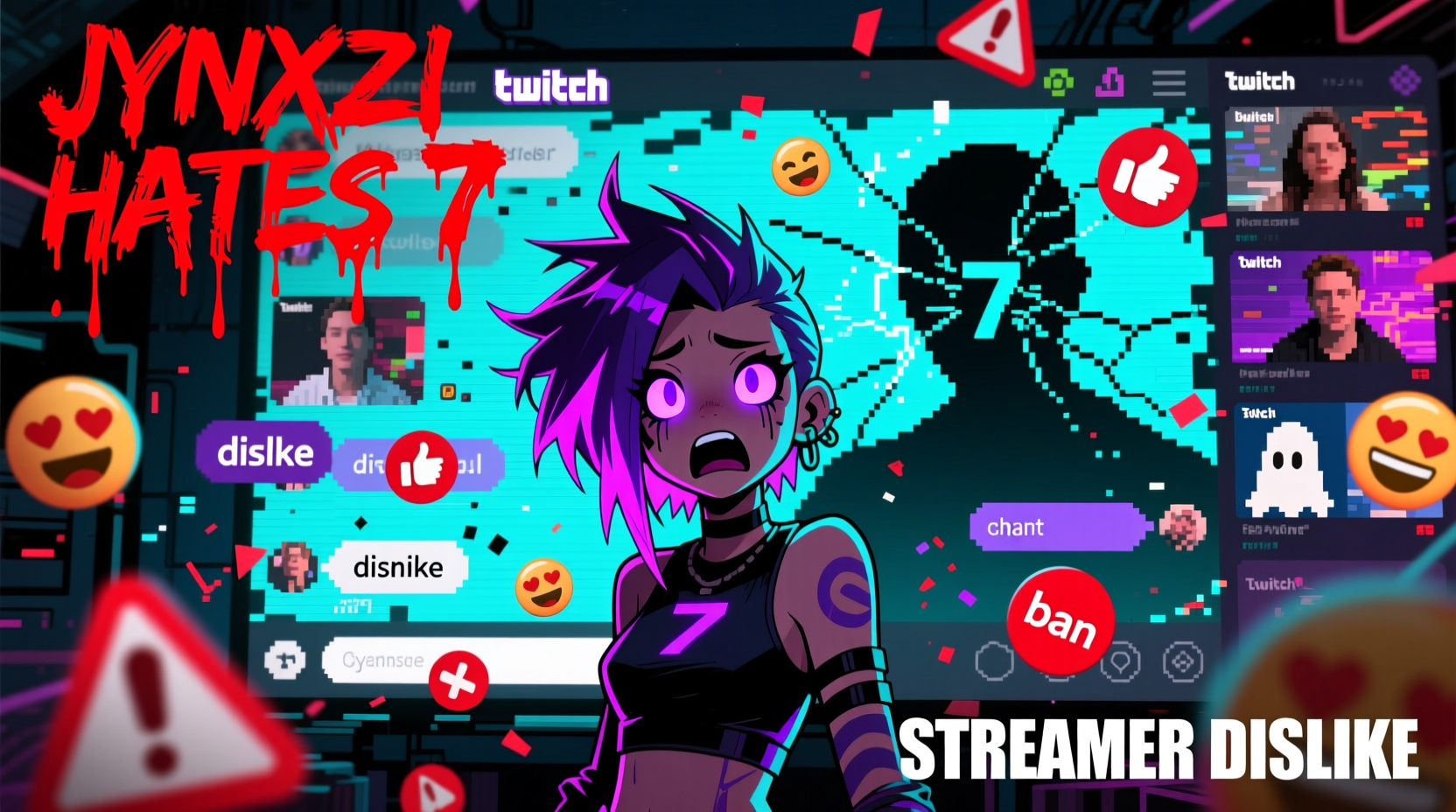
Jynxzi, known for his high-energy Apex Legends gameplay and sharp in-game mechanics, rose rapidly through the ranks of Twitch’s FPS community. His authenticity, unfiltered reactions, and consistent climb in skill have earned him a loyal following. He often emphasizes meritocracy—success through effort—and holds strong opinions about integrity in competitive spaces.
On the other hand, 7 (also known as S7 or Seven) built a presence around similar games but with a different tone—one that some viewers describe as more performative. Over time, accusations have surfaced questioning the legitimacy of certain clips and highlights attributed to 7, particularly those showcasing near-impossible flick shots or clutch moments. Whether verified or not, these rumors contributed to a growing skepticism among parts of the community.
The friction isn’t rooted solely in gameplay differences. It reflects a clash of values: one streamer prioritizing transparency and demonstrable skill, the other perceived by critics as leveraging spectacle over substance.
Public Interactions and Subtle Signals
There is no record of an outright confrontation or direct insult from Jynxzi toward 7. However, indirect signals abound. During live streams, Jynxzi has made offhand remarks about “certain creators” who rely on editing tricks or staged scenarios to inflate their image. While never naming 7 explicitly, the timing and context of these comments—often following viral clips involving 7—suggest targeted critique.
Additionally, Jynxzi has declined to participate in collabs or events where 7 was involved, even when mutual connections were present. In the tight-knit world of streaming, such omissions speak volumes. Community members noted that when 7 was mentioned in chat, Jynxzi typically changed the subject or muted related messages quickly—an act interpreted as deliberate distancing.
Cultural Context: Authenticity vs. Entertainment
The core of this dynamic lies in a larger debate within the streaming community: What defines a legitimate content creator? Is it raw skill, entertainment value, audience engagement, or consistency?
- Jynxzi aligns with the “skill-first” philosophy. His brand thrives on real-time performance, progression, and accountability.
- 7, meanwhile, operates closer to the “entertainment-first” model, where curated content and viral potential take precedence.
This divide isn’t inherently hostile, but it becomes problematic when lines blur—such as when edited montages are presented without clear disclaimers, leading audiences to believe they reflect live gameplay. Jynxzi has previously criticized this practice, calling it misleading to newer players who look up to streamers as benchmarks of ability.
“People come to us because they want to learn, to see what’s possible. If we fake that, we’re failing them.” — Jynxzi, during a community Q&A stream (paraphrased)
A Closer Look: The Clip Controversy
In early 2023, a now-deleted clip from 7 went viral showing a 1v3 finish using a sniper rifle under highly improbable conditions. Frame analysis by community moderators suggested inconsistencies in animation timing and hit registration, raising suspicions of editing. Though 7 never confirmed or denied manipulation, the video was later removed without explanation.
Shortly after, Jynxzi uploaded a short rant-style segment criticizing unnamed streamers who “fake plays to chase clout.” He emphasized that such actions damage trust across the entire platform. While circumstantial, the proximity of events led many viewers to draw connections.
Mini Case Study: The Ripple Effect of One Clip
Consider the perspective of a new Apex Legends player named Marcus. After seeing 7’s viral clip, he spent weeks trying to replicate the same flick shot, believing it reflected achievable skill. Frustrated and discouraged, he posted in a Discord server asking for coaching tips. A moderator linked him to Jynxzi’s breakdown of common \"fake skill\" edits, explaining frame duplication and camera tricks.
Marcus realized he’d been misled—not maliciously, perhaps, but effectively. He switched to watching Jynxzi, citing appreciation for transparency. This scenario played out dozens of times across forums and social media, amplifying grassroots support for creators like Jynxzi who advocate for honesty.
Do’s and Don’ts in Streamer Conduct
| Behavior | Recommended? | Reason |
|---|---|---|
| Using edits for comedic effect with clear labels | ✅ Yes | Transparency maintains trust |
| Publishing unmarked edited clips as live gameplay | ❌ No | Misleads audience, especially newcomers |
| Calling out questionable practices anonymously | ⚠️ Caution | Can fuel drama if not substantiated |
| Engaging in public feuds for attention | ❌ No | Detracts from content quality |
| Setting clear expectations about content type | ✅ Yes | Builds long-term credibility |
Expert Insight: Navigating Online Reputation
Dr. Lena Torres, a digital media sociologist at the University of Austin, studies parasocial relationships in streaming ecosystems. She notes:
“The most enduring streamers aren’t always the most talented or entertaining—they’re the ones perceived as genuine. When audiences feel deceived, even subtly, loyalty erodes quickly. Dislike between creators often mirrors collective community sentiment.” — Dr. Lena Torres, Digital Culture Researcher
This insight helps explain why Jynxzi’s subtle disapproval resonates so strongly. He’s not just expressing personal opinion—he’s channeling concerns shared by a significant portion of the viewer base.
Step-by-Step: How Tension Builds in Streaming Circles
- Rumor Emerges: Doubts arise about authenticity of specific content from a creator.
- Community Scrutiny: Viewers analyze footage, compare frame rates, discuss in forums.
- Influencer Reaction: Respected figures comment indirectly, validating concerns.
- Public Silence: Accused party doesn’t respond, fueling speculation.
- Behavioral Shifts: Avoidance, refusal to collaborate, altered chat moderation.
- Narrative Solidifies: A widely accepted understanding forms, regardless of official confirmation.
This pattern fits the Jynxzi–7 situation closely. Notably, no legal claims or formal accusations have been made—yet perception has shaped reality within the community.
Frequently Asked Questions
Has Jynxzi ever directly called out 7?
No verified instance exists of Jynxzi naming 7 in a negative context. His critiques remain general, referring to “some creators” or “certain types of content.” However, contextual clues lead many to infer targeting.
Is there evidence that 7 fakes gameplay?
There is no conclusive proof. Some clips have raised red flags due to technical anomalies, but none have been officially debunked. Without admission or investigation, allegations remain speculative.
Could this be jealousy or competition-driven?
Possibly, but unlikely as the primary driver. Jynxzi has consistently criticized deceptive practices regardless of the individual involved. His criticism predates 7’s rise and applies broadly to trends he views as harmful to the community.
Conclusion: Values Shape Relationships
The apparent dislike between Jynxzi and 7 isn’t about personality clashes or petty rivalry—it reflects a fundamental misalignment in values. One prioritizes verifiable skill and educational integrity; the other embodies a style of content where entertainment and virality may outweigh strict authenticity.
In an era where digital personas can be meticulously crafted, audiences increasingly seek truth in performance. Jynxzi’s stance, whether intentional or not, positions him as a defender of merit-based recognition. Whether 7 changes approach or doubles down on spectacle, the tension underscores a pivotal moment in streaming culture: the demand for accountability is growing.




 浙公网安备
33010002000092号
浙公网安备
33010002000092号 浙B2-20120091-4
Comments
No comments yet. Why don't you start the discussion?